Pull to refresh
Logo
Daily Brief
Following
Why
Targeted killings strike Russia's military elite in Moscow

Targeted killings strike Russia's military elite in Moscow

Force in Play
By Newzino Staff | |

FSB releases suspect confession; Alekseyev stable after surgery; Ukraine denies SBU involvement as peace talks continue

February 12th, 2026: Geneva peace talks scheduled for next week

Overview

Since Russia's 2022 invasion of Ukraine, a campaign of assassinations has targeted its military elite in Moscow. On February 6, 2026, Lieutenant General Vladimir Alekseyev—first deputy head of Russian military intelligence (GRU), accused of masterminding the 2018 Salisbury nerve agent attack—was shot three times in his apartment building by an attacker posing as a delivery person. He underwent emergency surgery, regained consciousness on February 7, and stabilized under intensive care. Russia's FSB detained three suspects: Lyubomir Korba, a 65-year-old Russian citizen extradited from Dubai whom the FSB claims confessed to SBU recruitment; Viktor Vasin, detained in Moscow; and Zinaida Serebritskaya, who fled to Ukraine. Kyiv has officially denied involvement.

Alekseyev is the fourth senior general targeted since December 2024, following the killings of three others by bombs. The FSB released a confession video on February 8 in which Korba allegedly stated he was recruited by Ukraine's SBU in August 2025 in Ternopil and promised $30,000 in cryptocurrency for the assassination. The attacks expose deep security failures and coincide with fragile peace negotiations—trilateral talks in Abu Dhabi on February 4-5 produced a prisoner exchange of 157 people but minimal progress on core issues. New rounds of US-brokered talks are scheduled for Geneva in mid-February, with Russia's chief negotiator Medinsky reportedly returning to discussions.
Key Indicators

4
Generals targeted in Moscow
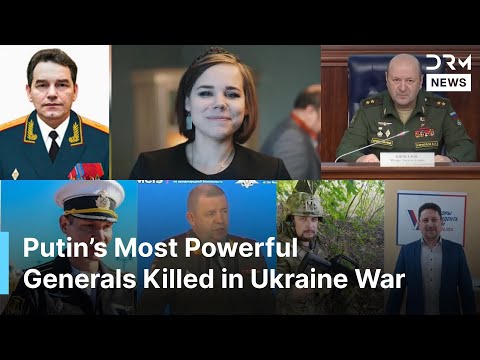
Since December 2024, four senior Russian generals targeted in assassination attempts inside the capital; Alekseyev wounded but stabilized after surgery.
3
Generals killed in 14 months
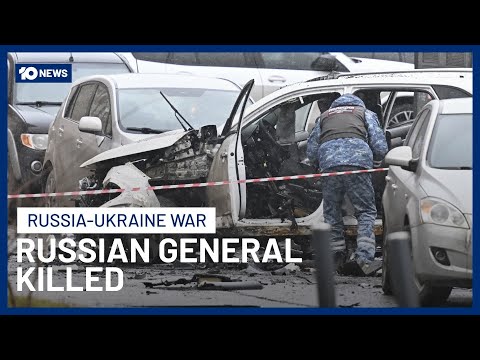
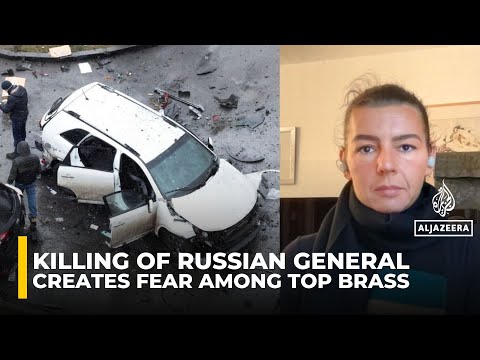
Kirillov (December 2024), Moskalik (April 2025), and Sarvarov (December 2025) killed by bombs in or near Moscow.
3
Suspects in Alekseyev case
Korba extradited from Dubai and released confession video; Vasin detained in Moscow; Serebritskaya fled to Ukraine.
$30,000
Alleged payment promised
FSB claims Korba stated SBU promised $30,000 in cryptocurrency for Alekseyev assassination.
15
Years as GRU deputy
Alekseyev has served as first deputy head of Russian military intelligence since 2011.

Interactive

Exploring all sides of a story is often best achieved with Play.

Cornelius Vanderbilt

Cornelius Vanderbilt

(1794-1877) · Gilded Age · industry

Fictional AI pastiche — not real quote.

"The generals thought their headquarters invincible—but no fortress stands when the enemy finds the door, and no title stops a bullet. In my day, we crushed competitors in the market; these Russians are learning that when you make war your business, someone will eventually bring the competition to your doorstep."

Ever wondered what historical figures would say about today's headlines?

Sign up to generate historical perspectives on this story.

Sign Up

Debate Arena

Two rounds, two personas, one winner. You set the crossfire.

People Involved

Vladimir Stepanovich Alekseyev
First Deputy Head, Russian Military Intelligence (GRU) (Stable after surgery, regained consciousness February 7, undergoing intensive care)
Lieutenant General Igor Kirillov
Head, Nuclear, Biological and Chemical Defense Troops (Killed December 17, 2024)
Lieutenant General Yaroslav Moskalik
Deputy Head, Main Operational Directorate, General Staff (Killed April 25, 2025)
Lieutenant General Fanil Sarvarov
Head, Operational Training Directorate, General Staff (Killed December 22, 2025)
Igor Kostyukov
Igor Kostyukov
Director, Russian Military Intelligence (GRU) (Active, Alekseyev's superior)
Lyubomir Korba
Lyubomir Korba
Alleged shooter in Alekseyev assassination attempt (Extradited from Dubai to Moscow; released confession video February 8)

Organizations Involved

Main Directorate of the General Staff (GRU)
Military Intelligence Agency
Status: Primary target of assassination campaign

Russia's military intelligence agency responsible for foreign intelligence collection, covert operations, and special forces.

Security Service of Ukraine (SBU)
Intelligence Agency
Status: Officially denied involvement in Alekseyev shooting; accused by FSB of orchestrating attack

Ukraine's primary security and intelligence agency, responsible for counterintelligence, counterterrorism, and special operations.

Timeline

  1. Geneva peace talks scheduled for next week

    Diplomatic

    US-brokered talks between Russia and Ukraine scheduled to resume in Geneva following two rounds in Abu Dhabi. Russian chief negotiator Medinsky reportedly returning to discussions, signaling potential shift toward political issues.

  2. FSB releases suspect confession video

    Investigation

    Russian FSB released video of alleged shooter Lyubomir Korba confessing to the assassination attempt. Korba claimed he was recruited by Ukraine's SBU in August 2025 in Ternopil and promised $30,000 in cryptocurrency.

  3. Ukraine officially denies SBU involvement

    Diplomatic

    Kyiv rejected Russian FSB accusations that Ukraine's SBU orchestrated the Alekseyev shooting, denying any involvement in the assassination attempt.

  4. Third suspect identified; FSB accuses SBU

    Investigation

    Russian FSB identified third suspect Zinaida Serebritskaya as accomplice who fled to Ukraine. FSB formally accused Ukraine's SBU of orchestrating the assassination attempt, claiming Polish intelligence recruited the shooter.

  5. Alekseyev regains consciousness after surgery

    Medical

    Lieutenant General Vladimir Alekseyev regained consciousness following emergency surgery. Doctors confirmed he was stable and undergoing intensive care with round-the-clock medical supervision.

  6. GRU deputy Alekseyev shot in Moscow

    Assassination Attempt

    First deputy head of Russian military intelligence shot multiple times in apartment building by attacker posing as delivery person. Alekseyev in intensive care with wounds to arm, leg, and chest.

  7. Ukraine-Russia peace talks resume in Abu Dhabi

    Diplomatic

    Second round of trilateral talks between Ukraine, US, and Russia focus on ceasefire implementation. Agreement reached for prisoner exchange of 314 people.

  8. Abu Dhabi talks produce prisoner exchange

    Diplomatic

    Second round of trilateral US-Ukraine-Russia talks in Abu Dhabi resulted in exchange of 157 prisoners of war but minimal progress on core ceasefire and territorial issues. Kremlin maintained maximalist demands including Ukrainian surrender of Donbas.

  9. Kirillov's assassin sentenced to life

    Legal

    Akhmad Kurbanov, who planted the bomb that killed General Kirillov, sentenced to life imprisonment. Three accomplices received 18-25 years.

  10. General Fanil Sarvarov killed in Moscow

    Assassination

    Head of General Staff's operational training directorate killed by bomb under his car in southern Moscow as he left for work.

  11. General Yaroslav Moskalik killed near Moscow

    Assassination

    Deputy head of General Staff's main operations directorate killed by remotely detonated car bomb in Balashikha. He personally briefed Putin on Ukraine.

  12. General Igor Kirillov assassinated in Moscow

    Assassination

    Head of Russia's chemical, biological, and nuclear defense forces killed by bomb in electric scooter outside his apartment. SBU claims responsibility.

  13. Military blogger Vladlen Tatarsky killed in St. Petersburg

    Assassination

    Pro-war blogger Maxim Fomin, known as Vladlen Tatarsky, killed by bomb hidden in statuette at St. Petersburg cafe. 42 others injured.

  14. Darya Dugina killed in Moscow car bombing

    Assassination

    Daughter of nationalist ideologue Alexander Dugin killed by car bomb outside Moscow. US intelligence assessed Ukrainian government elements authorized the killing.

Scenarios

1

Alekseyev Dies, Prompting Russian Retaliation

Discussed by: Western security analysts and European officials discussing escalation risks

If Alekseyev succumbs to his injuries, Russia would lose its longest-serving GRU deputy director and a figure central to Wagner Group coordination. Moscow could respond with intensified attacks on Ukrainian intelligence leadership, expanded strikes on Kyiv, or pressure to derail ongoing peace negotiations. The death of such a senior figure—personally linked to operations from election interference to the Skripal poisoning—would mark the highest-profile assassination of the campaign.

2

Campaign Continues, More Generals Targeted

Discussed by: Ukrainian officials and SBU statements warning of ongoing operations

The SBU has stated that 'many more Russian war criminals' remain on their target list. With four generals attacked in 14 months—three fatally—the operational pattern suggests continued strikes against senior military leadership in Moscow. Future targets could include other General Staff officers, military district commanders, or officials tied to war crimes accusations. Each successful operation demonstrates Ukraine can penetrate Moscow's security apparatus.

3

Russia Hardens Security, Attacks Decrease

Discussed by: Russian security officials and state media emphasizing countermeasures

Moscow could significantly enhance protective measures for senior military officials—relocating residences, expanding security details, restricting public appearances. If Russia's Federal Security Service identifies and closes the operational vulnerabilities that enabled these attacks, the assassination campaign could stall. However, the variety of methods used (scooter bombs, car bombs, shooting) suggests multiple operational approaches that complicate defensive measures.

4

Assassinations Disrupt Peace Negotiations

Discussed by: Russian Foreign Minister Lavrov and Kremlin officials

Russian Foreign Minister Sergey Lavrov immediately framed the Alekseyev shooting as demonstrating 'Ukraine's desire to undermine the peace process.' The attack came two days after productive trilateral talks in Abu Dhabi. If Russia uses the assassination campaign as justification to withdraw from negotiations or harden its territorial demands, the path to a ceasefire would narrow significantly.

5

Confession Video Becomes Diplomatic Flashpoint

Discussed by: Ukrainian officials, Western analysts, Russian security establishment

The FSB's release of Korba's confession video claiming SBU recruitment and payment could become a major diplomatic incident if verified or disputed. If Ukraine can demonstrate the video was coerced or fabricated, it could undermine Russian credibility at Geneva talks. Conversely, if independent verification supports the confession, it would validate Russian accusations and potentially derail peace negotiations by providing Moscow justification to withdraw.

6

Serebritskaya Extradition Becomes Negotiation Leverage

Discussed by: Russian security officials, Ukrainian negotiators

The third suspect Zinaida Serebritskaya's presence in Ukraine could become a bargaining chip in peace negotiations. Russia may demand her extradition as a precondition for progress, while Ukraine could use her as leverage to demonstrate good faith or deny her presence entirely. Her fate may become intertwined with broader ceasefire and prisoner exchange discussions.

7

Alekseyev's Recovery Accelerates Retaliation Planning

Discussed by: Russian military and intelligence officials

If Alekseyev makes a full recovery, he will likely become a symbol of Russian resilience and a focal point for Moscow's response. The GRU leadership may accelerate counterintelligence operations against Ukrainian intelligence networks in Europe, or authorize retaliatory strikes against Ukrainian officials. His survival could paradoxically intensify the assassination campaign rather than deter it.

Historical Context

Operation Wrath of God (1972-1992)

1972-1992

What Happened

After Palestinian militants killed 11 Israeli athletes at the 1972 Munich Olympics, Prime Minister Golda Meir authorized a two-decade covert assassination campaign. Mossad hit squads systematically hunted and killed individuals linked to the attack across Europe and the Middle East, using methods including bombs hidden in telephones and car bombs.

Outcome

Short Term

Mossad eliminated most of the Munich operation's planners within the first few years, though a 1973 case of mistaken identity in Norway—where they killed an innocent waiter—created a diplomatic crisis.

Long Term

The operation established Israel's doctrine of extraterritorial retaliation against those who attack its citizens. It demonstrated that sustained assassination campaigns can continue for years and that no location is truly safe for targets.

Why It's Relevant Today

Ukraine appears to be applying a similar doctrine: systematically targeting Russian military officials responsible for the war, demonstrating reach into enemy territory, and accepting that the campaign will span years. The Mossad precedent shows such operations can be sustained but also carry risks of escalation and operational errors.

World War II German General Assassinations (1944)

July-October 1944

What Happened

The French Resistance and Allied intelligence targeted German general officers in occupied France as the Normandy invasion progressed. General Karl Heinrich von Stülpnagel, military governor of France, was wounded and later executed after the failed July 20 plot. Other senior officers were killed by Resistance ambushes or targeted operations.

Outcome

Short Term

Assassinations of senior commanders disrupted German defensive coordination during critical months of the Allied advance, contributing to command confusion.

Long Term

Research on wartime assassinations shows they can hasten the end of large-scale conflicts already underway by disrupting leadership continuity and organizational effectiveness.

Why It's Relevant Today

The targeting of Russian generals follows a historical pattern where eliminating senior military leadership during active conflict aims to degrade command effectiveness. Like WWII resistance operations, Ukraine's campaign targets officers central to war planning and execution.

CIA Cold War Assassination Attempts (1960s)

1960-1965

What Happened

The United States CIA conducted multiple assassination attempts against foreign leaders, most notably Fidel Castro and Patrice Lumumba of Congo. The Church Committee later documented at least eight CIA plots against Castro involving poison, explosives, and recruited assassins.

Outcome

Short Term

Most attempts failed. Castro survived all known assassination plots and remained in power for decades.

Long Term

Congressional investigations led to Executive Order 12333 (1981) prohibiting US government involvement in assassinations. The failures demonstrated that targeted killings of well-protected leaders are extremely difficult to execute.

Why It's Relevant Today

The contrast with Ukraine's campaign is notable: while CIA Cold War attempts largely failed, Ukraine has successfully killed three Russian generals in Moscow within 14 months. The difference may lie in operational security—Russian generals appear more accessible than Cold War-era targets.

21 Sources: