

Pull to refresh
Logo
Sri Lanka awards 11 contracts for the first phase of the Ruwanpura expressway

Sri Lanka awards 11 contracts for the first phase of the Ruwanpura expressway

Built World

Rs 251.37 billion for 22.18 kilometres, against Rs 45.68 billion budgeted across 2026 and 2027

Overview

Updated Yesterday

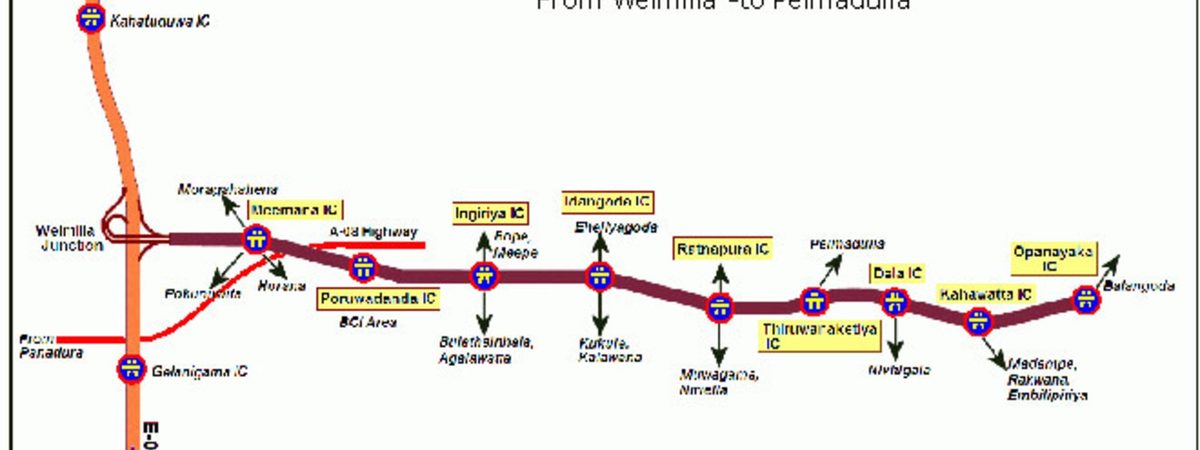
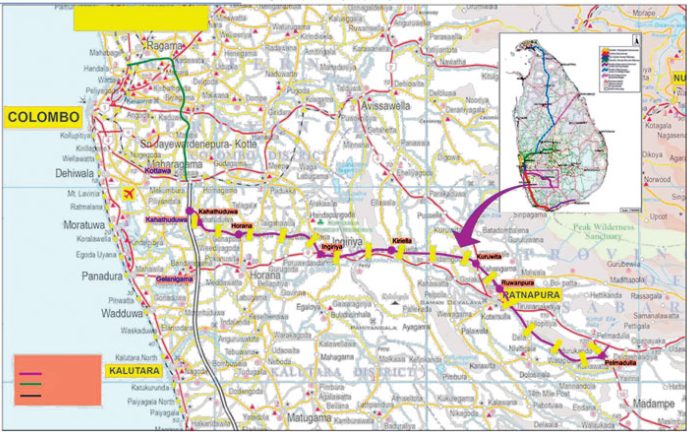
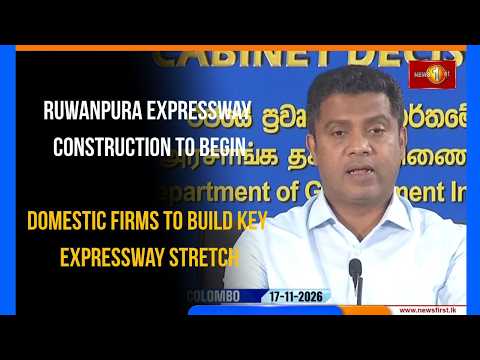
Sri Lanka's cabinet has chosen the builders for the first 22.18 kilometres of the Ruwanpura Expressway, the road meant to connect the Southern Expressway at Kahathuduwa with Ratnapura. Eleven contracts, worth Rs 251.37 billion, went to nine bidders.

The 2026 and 2027 budgets together set aside Rs 45.68 billion for the phase, about 18% of the contract value, and the government says it will pay from tax revenue rather than borrow. No start date, construction period or payment schedule has been published.

Why it matters

Sri Lanka is testing whether it can build expressways from tax revenue alone, having ruled out loans for these two.

Questions about this story

Free account needed to ask — your question is kept and asked for you right after sign-up. Answers are public.

No questions yet — be the first to ask.

Key Indicators

Rs 251.37B
Value of the 11 Ruwanpura contracts
The combined cabinet-approved value of the packages covering Kahathuduwa to Ingiriya.
22.18 km
Length of the section under contract
The figure given in the award announcement, down from about 24.3 kilometres in earlier project documents.
11
Construction packages awarded
Split among nine bidders, with Access Engineering and Maga Engineering taking two each.
Rs 45.68B
Budgeted for the phase in 2026 and 2027
Rs 18.68 billion in 2026 and a proposed Rs 27 billion for 2027.
18.2%
Share of contract value covered by two years of budgets
Leaves Rs 205.69 billion to be funded in later years or through other arrangements.
Rs 205.69B
Gap between contracts and two-year allocations
At an unchanged Rs 27 billion a year, that balance would take about 7.6 more years to provide.
Rs 494.81B
Combined value of both expressway approvals
23 packages in total, including 12 for the Kurunegala–Galewala section of the Central Expressway.
10-12%
Ruwanpura awards above engineering estimates
The Road Development Authority's director general put the Central Expressway gap at 8-10%.

Voices

Curated perspectives — historical figures and your fellow readers.

Sign up to generate historical perspectives on this story.

People Involved

Organizations Involved

Timeline

July 2026 November 2026

6 events Latest: 3 days ago
Tap a bar to jump to that date
  1. Analysis puts two-year funding at 18% of contract value

    Latest Analysis

    The Morning Telegraph reports Rs 45.68 billion budgeted for 2026 and 2027 against Rs 251.37 billion in contracts, a Rs 205.69 billion gap.

  2. Trade press reports the awards, with no start date

    Publication

    Coverage notes the announcements gave no start date, construction period or financing source for the 11 packages.

  3. Spokesman announces Rs 251.37 billion in awards

    Statement

    The post-cabinet briefing pairs the Ruwanpura awards with 12 Central Expressway contracts worth Rs 243.44 billion, Rs 494.81 billion in total.

  4. Minister says tax revenue will pay, no loans taken

    Statement

    A minister named in reports as Rathnayake puts Rs 451 billion behind the two projects, a figure below the Rs 494.81 billion in approved contracts.

  5. Cabinet approves 11 contract awards

    Decision

    The 11 packages go to nine bidders, from International Construction Consortium at Rs 34.94 billion to K.D.A. Weerasinghe at Rs 33.11 billion.

  6. Cabinet approves the first phase and calls for bids

    Decision

    Cabinet approves construction from Kahathuduwa to Ingiriya, including the system interchange, and bids are invited under national competitive procurement.

Scenarios

1

Construction starts on the Kahathuduwa-Ingiriya section

Possible Resolves by Nov 19, 2027

Discussed by: Ministry of Highways and Road Development Authority statements; no start date has been given in the award announcements

Contracts are signed and contractors mobilise. The trigger is a site handover and a first Treasury payment against a highways ministry voucher. If neither happens, the awards stay paper.

2

2027 appropriation lifts first-phase funding above Rs 27 billion

Unlikely Resolves by End of 2026

Discussed by: The Morning Telegraph, which calculated that two years of allocations cover 18.2% of contract value

Parliament passes the 2027 budget. A substantially larger highways allocation would narrow the gap and let work run nearer contract pace. An allocation close to the proposed Rs 27 billion leaves the awards ahead of the money.

3

Treasury publishes a multi-year payment schedule for the 11 packages

Possible Resolves by Q2 2027

Discussed by: The Morning Telegraph, which noted that no financing schedule has been published

A year-by-year funding plan tied to construction milestones is what would show the phase can finish before the mid-2030s. Nothing in the award decisions commits the government to one.

4

Cabinet reopens one or more of the awards

Unlikely Resolves by Q2 2027

Discussed by: Road Development Authority director general H.H.N.A. Hettiarachchi, who said awards ran 10-12% above engineering estimates

If the Treasury resists the price gap or a winning bidder fails to meet conditions, a package could return to cabinet for a revised value or a fresh tender. Cabinet decisions are published weekly, so the outcome would be visible.

Historical Context

3 moments from history that rhyme with this story — and how they unfolded.

April 2022 - March 2023

Sri Lanka's sovereign default (2022)

With foreign reserves nearly exhausted, Sri Lanka suspended payments on its external debt in April 2022. Fuel queues stretched for kilometres and the currency lost much of its value before an International Monetary Fund programme was agreed in March 2023.

Then

The programme brought higher taxes, spending limits and a restructuring of the debt.

Now

Foreign borrowing became politically toxic, and the government now says major projects will be paid from tax revenue.

Why this matters now

That pledge is why the Ruwanpura contracts have no announced lender behind them, and why the budget allocation matters more than usual.

December 2017

Hambantota port lease (2017)

A Chinese-built port and airport in Hambantota, financed with Chinese loans, drew far less traffic than planned. In 2017 the government leased the port to China Merchants Port Holdings for 99 years to raise cash and ease the debt burden.

Then

The lease became a symbol of lost control over a national asset.

Now

It hardened opposition to loan-financed infrastructure and shaped the politics behind the current no-borrowing stance.

Why this matters now

It explains why an expressway contract announcement comes with a promise about tax revenue rather than a lender.

2016-2023

Jakarta-Bandung high-speed rail (2023)

Indonesia's first high-speed line, built with Chinese loans, opened in October 2023, years behind its original schedule and above its first budget. The consortium needed extra state support to finish it.

Then

The overrun turned a construction project into a fiscal argument.

Now

It became the region's reference case for what loan-financed rail costs politically when the bill arrives.

Why this matters now

Fits the same trade-off Sri Lanka faces: faster construction on borrowed money, or slower construction on tax revenue.

Sources

(11)