

Pull to refresh
Logo
San Francisco school board advances plan to replace citywide enrollment lottery

San Francisco school board advances plan to replace citywide enrollment lottery

Rule Changes San Francisco, CA local

Zone-based assignment would replace the lottery system families call unpredictable

Today: Board votes 5-2 to advance new enrollment policy

Overview

Updated 1 hour ago

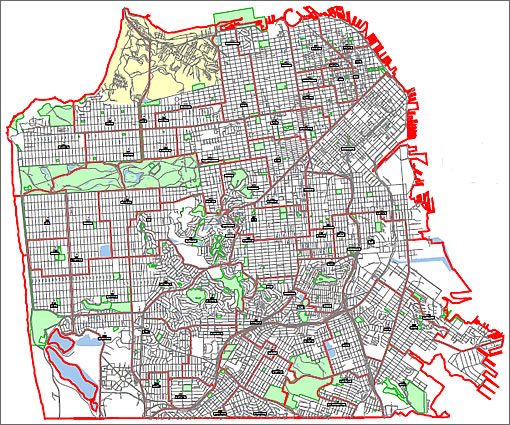
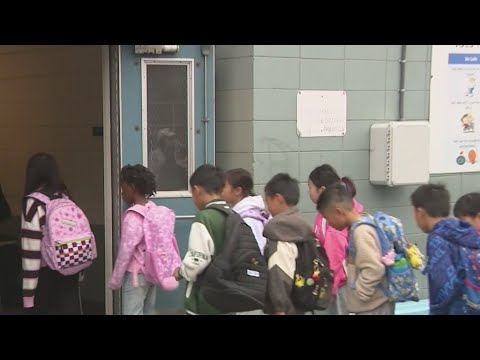
San Francisco's elementary enrollment is a citywide lottery: families rank dozens of schools, then wait months for an assignment that often sends a child across town. On October 14, the school board voted 5-2 to set a path toward replacing that system with zone-based assignment, where a family's address determines which schools they can choose from.

The zone-based policy was approved in 2020 but never implemented. The district now faces years of declining enrollment and tight finances, and Superintendent Maria Su has made simplifying enrollment a cornerstone of her effort to win families back.

Why it matters

The change would replace San Francisco's citywide school lottery with guaranteed neighborhood zones, reshaping how thousands of families choose elementary schools every year.

Monday: what changed in San Francisco, CA

One short email a week with the openings, closings, permits and council votes we covered. Free. Unsubscribe in one click.

Questions about this story

Free account needed to ask — your question is kept and asked for you right after sign-up. Answers are public.

No questions yet — be the first to ask.

Key Indicators

5-2
Board vote margin
Seven-member board voted to advance the zone-based policy after a contentious meeting.
72
Elementary and K-8 schools
Schools families can choose from under the current citywide choice system.
27
Average schools per attendance area
Students from the same neighborhood attend 27 different schools on average, according to SFUSD.
74%
Parents prioritizing proximity
Share of 300 surveyed SF parents who ranked a school close to home as a top priority.

Voices

Curated perspectives — historical figures and your fellow readers.

Ever wondered what historical figures would say about today's headlines?

Sign up to generate historical perspectives on this story.

People Involved

Organizations Involved

Timeline

December 2020 October 2026

6 events Latest: Today
Tap a bar to jump to that date
  1. Board votes 5-2 to advance new enrollment policy

    Today Board Vote

    Contentious meeting ends with a vote to set a path toward implementing the zone-based policy.

  2. SF Parents Coalition surveys families on enrollment

    Survey

    Informal survey of 300 parents finds 74% prioritize a school close to home; 55% prefer a guaranteed nearby school.

  3. District passes three-year balanced budget

    Financial

    SFUSD approves a balanced three-year budget with a healthy reserve, a milestone after years of deficits.

  4. District delays zone-based policy for 2026-27

    Announcement

    SFUSD announces the new policy won't be implemented for the 2026-27 school year as planned.

  5. Maria Su becomes superintendent

    Leadership

    Su takes office, making financial stability and enrollment simplification priorities.

  6. SFUSD board approves zone-based assignment policy

    Policy

    Board passes Board Policy 5101.2, replacing citywide choice with enrollment zones for elementary schools.

Scenarios

1

Board approves zones, implementation by 2028-29

Likely Resolves by Q2 2027

Discussed by: SFUSD administration and Superintendent Maria Su, who has pushed for a simpler system; Mission Local reporting on the board's forward momentum

The board schedules community engagement sessions, drafts zone boundaries, and votes on a formal implementation timeline. Since applications for 2027-28 already opened under the choice system, the earliest realistic start is the 2028-29 school year. A successful path would put guaranteed neighborhood schools in place and end the citywide lottery for elementary families.

2

Implementation delayed again

Possible Resolves by Q2 2027

Discussed by: Critics who note the policy has been postponed repeatedly since its 2020 approval; the SFUSD's own April 2025 announcement

Facing community pushback or budget pressures, the board tables the zone plan and announces another delay. This has happened before: the 2020 policy was originally expected to be in place years ago. The 5-2 vote may be seen as symbolic, while the district shifts attention to school closures and consolidation talks.

3

Hybrid model preserves some citywide choice

Possible Resolves by Q2 2027

Discussed by: SF Parents Coalition survey showing most parents want proximity but also value specialized programs; board members concerned about losing citywide options

The board adopts a modified policy that guarantees students a neighborhood school but preserves citywide choice for specialized programs such as language immersion and K-8 schools. This would respond to the survey finding that 28% of parents value access to special programs, and could ease opposition from families who rely on citywide options.

Historical Context

2 moments from history that rhyme with this story — and how they unfolded.

September 1974

Boston busing crisis (1974)

Federal Judge W. Arthur Garrity ordered Boston to desegregate its schools through busing, reassigning students across neighborhoods. On the first day of school, police escorted buses through hostile crowds; South Boston High School became a flashpoint, with rocks thrown at buses and violent clashes with police.

Then

Years of protests and white flight followed. White enrollment in Boston public schools plunged as families left the district or went private.

Now

The episode became a national symbol of the social cost of top-down assignment changes, and it shaped how districts approach enrollment reform for decades.

Why this matters now

San Francisco's shift from a citywide lottery to zones will also redistribute students, and the board's contentious 5-2 vote shows the political difficulty of changing who gets into which school.

June 2007

Parents Involved v. Seattle School District (2007)

The Supreme Court struck down voluntary desegregation plans in Seattle and Louisville that used individual students' race as a tiebreaker in school assignment. The 5-4 decision held the plans violated the Equal Protection Clause.

Then

Districts nationwide revised assignment plans to use race-neutral criteria such as socioeconomic status or geography to pursue diversity.

Now

The case narrowed the legal tools for integration, pushing districts like San Francisco to design policies that achieve diversity without explicit racial classifications.

Why this matters now

SFUSD's zone-based policy aims to foster integration through geography and socioeconomic factors, a direct response to the post-2007 legal landscape.

Sources

(4)