

Pull to refresh
Logo
San Francisco supervisors pass unpaid-rent threshold for evictions

San Francisco supervisors pass unpaid-rent threshold for evictions

Rule Changes San Francisco, CA local

Measure bars evictions for renters owing less than one month's fair-market rent

Today: Board of Supervisors passes eviction threshold law unanimously

Overview

Updated 56 minutes ago

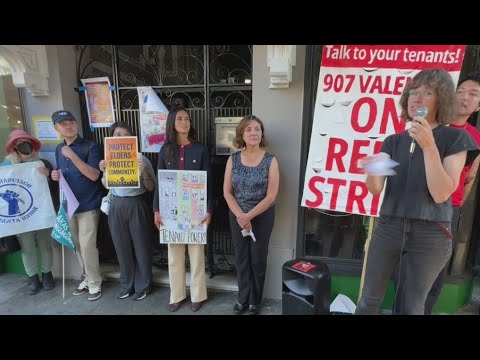
San Francisco landlords can no longer evict a tenant for a small unpaid balance. The Board of Supervisors voted unanimously Oct. 20 to bar evictions unless a renter owes more than one month's fair-market rent — $2,977 for a one-bedroom apartment. The mayor supports the law and is expected to sign it.

The bill targets a pattern in a city with a 26% year-over-year rent spike: landlords waiting for long-term tenants to miss a payment, then using that missed payment to start eviction proceedings. About a quarter of evictions in an Eviction Defense Collaborative sample last year were for unpaid amounts below the fair-market threshold — potentially hundreds of cases a year.

Why it matters

With rents up 26% and AI-industry IPOs looming, this law keeps tenants from eviction over missed payments of a few hundred dollars.

Monday: what changed in San Francisco, CA

One short email a week with the openings, closings, permits and council votes we covered. Free. Unsubscribe in one click.

Questions about this story

Free account needed to ask — your question is kept and asked for you right after sign-up. Answers are public.

No questions yet — be the first to ask.

Key Indicators

$2,977
One-bedroom fair-market rent threshold
Tenants owing less than this amount cannot be evicted for nonpayment under the new law.
25%
Share of nonpayment evictions below threshold
Share of nonpayment evictions below the threshold in Eviction Defense Collaborative sample last year.
26%
Year-over-year rent spike in San Francisco
Reported by Mission Local in September 2026 amid the AI-driven boom.
3
Other California cities with similar laws
Los Angeles, Oakland and Berkeley set the same one-month fair-market threshold.

Voices

Curated perspectives — historical figures and your fellow readers.

Ever wondered what historical figures would say about today's headlines?

Sign up to generate historical perspectives on this story.

People Involved

Organizations Involved

Timeline

June 1979 October 2026

5 events Latest: Today
Tap a bar to jump to that date
  1. Board of Supervisors passes eviction threshold law unanimously

    Today Legislation

    The board votes unanimously to pass the ordinance, supported by Mayor Daniel Lurie. It now heads to the mayor for signature.

  2. Fielder introduces unpaid-rent threshold ordinance

    Legislation

    Supervisor Jackie Fielder proposes barring evictions unless a tenant owes more than one month's fair-market rent; five supervisors co-sponsor, and the mayor voices support.

  3. State rent cap takes effect; SF extends just-cause eviction control

    Policy

    AB 1482 applies to most units not already under local rent control. San Francisco removes the post-1979 exemption for just-cause eviction rules.

  4. California passes AB 1482, statewide rent cap

    Policy

    State law caps annual rent increases at 5% plus inflation (max 10%) and requires just cause for evictions.

  5. San Francisco Rent Ordinance takes effect

    Policy

    City ties rent control to buildings with certificates of occupancy before June 13, 1979.

Scenarios

1

Lurie signs eviction threshold into law

Likely Resolves by End of 2026

Discussed by: Mission Local; Mayor Lurie's public statements

Lurie has already voiced support, calling the measure "much-needed stability for renters." With a unanimous board vote and no veto signal, the ordinance is expected to take effect after his signature, barring evictions for nonpayment below one month's fair-market rent.

2

Landlord groups sue to block the law

Possible Resolves by Q2 2027

Discussed by: Supervisor Jackie Fielder, who anticipated landlord industry opposition

Landlord trade groups could challenge the law in court, arguing it conflicts with state just-cause eviction rules or amounts to an unlawful taking of rental income. Fielder acknowledged this possibility during the debate. A legal challenge would pause implementation while the courts weigh in.

3

Law takes effect, evictions for small debts drop sharply

Possible Resolves by Q1 2028

Discussed by: Eviction Defense Collaborative attorney Tuesday Rose Thornton

If the law survives legal challenges and takes effect, evictions for amounts below the threshold should fall, potentially by hundreds per year, Thornton says. Landlords may adapt by waiting for tenants to cross the threshold or pursuing other just-cause routes, changing the pattern rather than eliminating it.

Historical Context

3 moments from history that rhyme with this story — and how they unfolded.

September 2019

California AB 1482, Tenant Protection Act (September 2019)

California lawmakers approved a statewide rent cap: annual increases limited to 5% plus inflation, never more than 10%, and just-cause eviction rules for most tenants. Governor Gavin Newsom called it "the strongest rent control package in America."

Then

The law took effect January 1, 2020, covering most units not already under local rent control, including post-1979 buildings in San Francisco.

Now

It established a statewide floor that cities like San Francisco have built upon with stricter local rules.

Why this matters now

SF's eviction threshold extends this trajectory: the state capped rents and required just cause; the city now adds a dollar floor below which nonpayment cannot trigger eviction.

June 1979

San Francisco Rent Ordinance (June 1979)

San Francisco established rent control for buildings with certificates of occupancy before June 13, 1979, and created a list of 16 'just causes' for eviction. Post-1979 construction was initially exempt.

Then

Most residential tenants gained inflation-linked rent caps and eviction protection, creating a two-tier market divided by building age.

Now

Just-cause eviction control was later extended to virtually all buildings, including single-family homes and condos, while rent control itself still only covers pre-1979 units.

Why this matters now

The new threshold law operates within this framework, protecting rent-controlled tenants who landlords might target for minor missed payments during boom cycles.

Before 2026

LA, Oakland and Berkeley eviction thresholds (prior to 2026)

Los Angeles, Oakland and Berkeley passed similar laws, each setting the bar at one month of fair-market rent for nonpayment evictions.

Then

Tenants in those cities gained protection from eviction over small unpaid balances.

Now

Their experience provides a model — and a legal template — for San Francisco's version.

Why this matters now

SF's law mirrors these precedents, suggesting a regional convergence in how California cities treat small-scale rent debt.

Sources

(5)