Anchor

AI-driven boom pushes one-bedroom rents past $4,300; mayor proposes eviction holds, rent caps, and $3 million for tenant lawyers
Today: Lurie declares rent emergencyNew here? Follow stories to track developments over time. Create a free account to get updates when stories you care about change.
Overview
Updated 2 hours agoAverage one-bedroom rents in San Francisco hit $4,300 a month, up roughly $1,000 in a year — the fastest growth of any city in the country. Mayor Daniel Lurie is declaring a rent emergency to stall evictions and cap rent hikes.
The declaration itself is largely symbolic, but it sets the agenda. Lurie wants to block evictions for tenants owing less than a month's rent, cap increases at 10 percent for rent-controlled units, and fund lawyers for 400 households facing eviction. Behind the surge sits an AI boom filling downtown offices and pushing median rents up 19 percent in a year.
Why it matters
If rents keep climbing, working-class San Franciscans get priced out of a recovery they helped build.
Questions about this story
Free account needed to ask — your question is kept and asked for you right after sign-up. Answers are public.
No questions yet — be the first to ask.
Key Indicators
$4,300+
Average one-bedroom rent
Up more than $1,000 from last year, per Zillow data.
+19%
Median rent growth, year over year
Median rent reached $3,558 in July, per Apartment List.
1,000+
Eviction notices filed in 2026
On pace for the most evictions in nearly a decade, Lurie's office said.
489
Housing units completed this year
Construction lags despite the Family Zoning Plan passed in 2025.
$3M
Proposed tenant legal aid funding
Would pay for lawyers to represent 400 households in eviction cases.
Related Media

Dozens protest eviction of 3 disabled seniors from rent-controlled apartment in San Francisco - ABC7 San Francisco
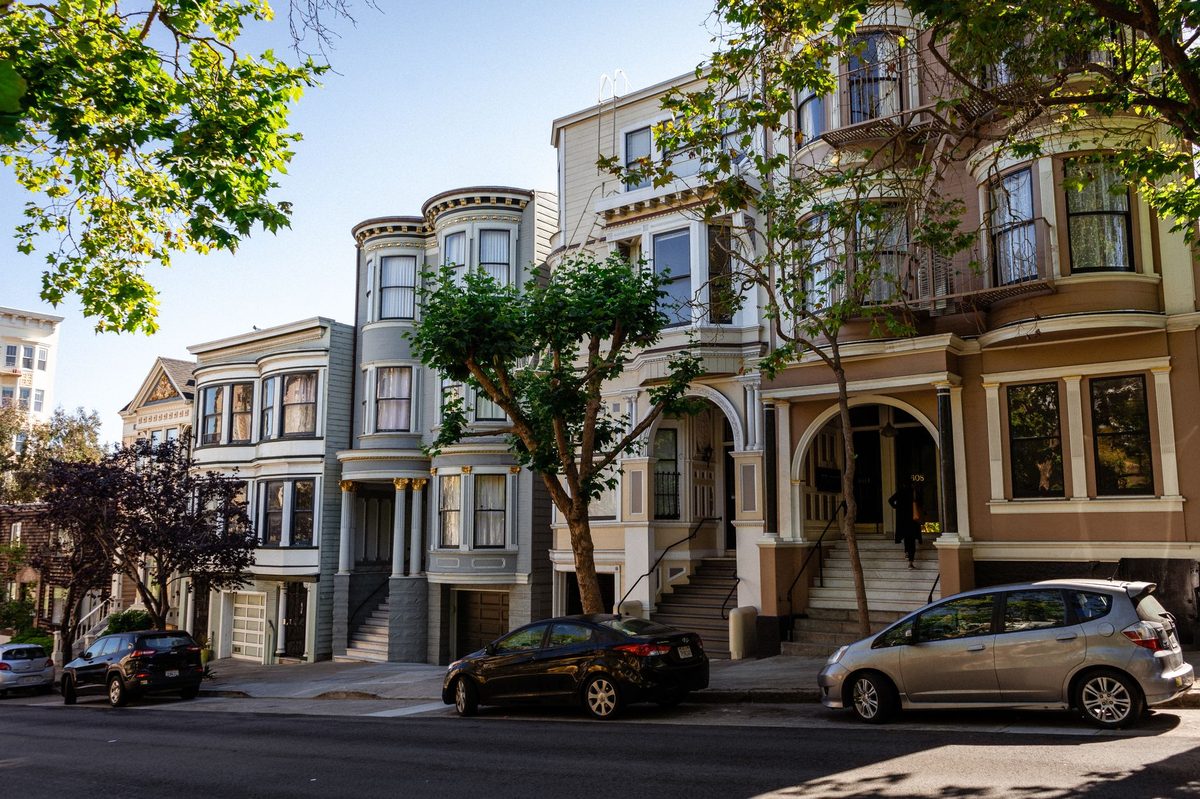
Exterior of elegant residential houses with classic architecture located in San Francisco suburb against cloudless blue sky on sunny day

Beautiful view of San Francisco skyline with tranquil waters and a dramatic sunset sky.

55.7K views
4:45
San Francisco landlord skirts rent control, doubles family's rent
ABC7 News Bay Area

348 views
16:48
Is AI raising your rent? | The Big Story
CityNews
2.8K views
0:38
Tenants accuse landlord of using illegal rent-setting software
WPRI
Images from Openverse under Creative Commons licenses. Videos from YouTube.
Voices
Curated perspectives — historical figures and your fellow readers.
Play
Exploring all sides of a story is often best achieved with Play.
Most of these play right now — no account needed. Sign up to save scores, keep a streak, and unlock Debate and Predict.
Log in
Sign Up
WHO SAID WHAT?
Can you match the quotes to the right people?
Rounds
People
Per question
Scoring
- points for each correct match.
- time bonus when you answer in under seconds.
- streak bonus once you hit correct in a row.
Score:
Round /
streak
— Who said this?
Tip: press 1– to answer.
Score:
Round /
streak
+
Base +
⚡ Speed +
🔥 Streak +
Streak reset · the answer was
No answer in time · it was
Next Up
Round
of
Score
points
Correct
Best Streak
Time Bonus
Avg. Time
points — sign up to put that on the leaderboard.
Now try on this story
Higher or Lower
A number from this story, against one from elsewhere in the news — guess which is bigger, then keep the chain going. 5 rounds, 3 strikes; a miss costs a strike and resets your streak.
Example
Anchor
EU tariff revenue
$52B
Big for this kind of number
Mystery
Pentagon AI contract
?
Round 1
Streak: 0
Mystery
?
Keyboard: ↓/L lower · ↑/H higher
0 pts
Best streak: 0 · Rounds: 0
0 points — sign up to put that on the leaderboard.
Now try on this story
Connections
Sixteen names from the news. Find the four hidden groups of four. Four mistakes max.
Loading today's puzzle…
0/4 groups
Mistakes
Sign up to keep a daily streak — a new puzzle lands every day.
Now try on this story
Exit debate?
Your progress in this debate will be lost.
How it works
- 1 Two AI personas square off on this story.
- 2 You predict who'll win each round — correct picks earn XP.
- 3 One crossfire question is yours to fire. Pick it carefully.
Couldn't generate a topic
Select Your Champions
Choose one persona for each side of the debate
DEBATE TOPIC
Choose personas with different perspectives for a more dynamic debate.
SIDE A (PRO)
Select debater for this side:
No debate personas available right now.
SIDE B (CON)
Select debater for this side:
No debate personas available right now.
VS
Get ready to make your prediction...
Round of
Claim
Evidence
Stakes
Crossfire Answer
Closing Statement
Claim
Evidence
Stakes
Crossfire Answer
Closing Statement
Your Crossfire Question
Generating arguments...
Who's Got This Round?
Make your prediction before the referee scores
The referee scores both sides on
Correct predictions earn +20 XP
· Press 1 or 2 to pick
Evidence
40%
Logic
30%
Detail
20%
Style
10%
Round Results
Your Pick
Not this time
(%)
Overall Score
/10
Your Pick
Not this time
(%)
Overall Score
/10
Set the Crossfire
Pick the question both personas must answer in the final round
Crafting crossfire questions...
Choosing a question earns +10 XP crossfire bonus
🏆
Total XP Earned
Cred Change
Predictions
Debate Oracle! You called every round!
Sharp Instincts! You know your debaters!
The Coin Flip Strategist! Perfectly balanced!
The Contrarian! Bold predictions!
Inverse Genius! Try betting the opposite next time!
XP Breakdown
Base completion
+20 XP
Rounds played ( rounds x 5 XP)
+ XP
Correct predictions ( correct x 20 XP)
+ XP
Crossfire bonus
+10 XP
Accuracy
%
Prediction History
Round
You picked:
✓
✗
Now try on this story
Keep debating to level up your credibility and unlock achievements
People Involved
Daniel Lurie
Mayor of San Francisco
Declared rent emergency September 10, 2026
Jackie Fielder
Member, San Francisco Board of Supervisors
Proposed eviction protection legislation
Danny Sauter
Member, San Francisco Board of Supervisors
Proposed 10% rent cap
Ted Egan
Chief Economist, San Francisco Office of Economic Analysis
Cited in city rent report
Organizations Involved
San Francisco Board of Supervisors
Municipal legislative body
Will vote on tenant protection bills
The 11-member legislative body that must pass any tenant protections or rent cap into law.
San Francisco Office of Economic Analysis
City agency
Provided data behind the declaration
The city's research arm, cited for Apartment List data showing asking rents rose 14 percent from March to July.
Zillow
Real estate data company
Data source for rent and home value figures
Provides the rent and home-value estimates the mayor's office cites.
Timeline
November 2024 September 2026
4 events
Latest: Today
Tap a bar to jump to that date
-
Lurie declares rent emergency
Today PolicyMayor calls for eviction delays, a 10% rent cap, and $3 million in tenant legal aid as rents surge.
-
Eviction notices accelerate
TrendMore than 1,000 eviction notices filed by September, on pace for the most in nearly a decade.
-
Family Zoning Plan passes
PolicyLurie pushes through a zoning overhaul allowing denser residential construction in many areas.
-
Lurie wins mayoral race
ElectionDaniel Lurie defeated incumbent London Breed on a public safety platform, promising a fentanyl emergency.
Historical Context
3 moments from history that rhyme with this story — and how they unfolded.
1995
Costa-Hawkins Rental Housing Act (1995)
California's Costa-Hawkins Act limited rent control statewide, exempting new construction and ending vacancy control. It locked in a rule that only pre-1995 buildings face caps.
Then
New buildings remained free to set market rents, and rent control narrowed over time.
Now
SF's current 10% cap proposal applies only to older rent-controlled stock, so the AI-era boom in new buildings stays unregulated.
Why this matters now
State law caps how far Lurie's rent cap can reach — a key limit on his emergency powers.
1999-2001
Dot-com boom rent surge (1999-2001)
Internet companies flooded San Francisco with high-paid workers, doubling rents and driving evictions upward. The city weighed tenant protection measures as housing construction lagged behind demand.
Then
The 2001 tech crash popped the bubble; rents fell as workers left.
Now
Established a cycle where a single booming industry reshapes the city's housing market, then retreats.
Why this matters now
The AI boom is the latest iteration of the same mechanism — one industry concentrated in a slow-to-build city drives prices out of reach.
2015-2016
Mission District Ellis Act crisis (2015-2016)
The mid-2010s tech boom triggered a wave of Ellis Act evictions in the Mission District, as landlords evicted tenants to exit the rental business and sell buildings. Activists protested tech shuttle buses and the city passed tenant buyout protections.
Then
Tenant protections passed, but displacement continued and the Mission's demographics shifted.
Now
The Ellis Act remains a central pressure point in every SF housing fight.
Why this matters now
Lurie's proposal to fund lawyers and compensate Ellis Act displacees directly targets this same mechanism.
Sources
(2)Related Stories
San Francisco mayor strikes early union deal to avoid layoffs through 2029
Rule Changes
Updated Yesterday
San Francisco jail population drops to pandemic-era low despite rising arrests
Rule Changes
Updated 2 days ago
Lurie extends Mission BART plaza cleanup strategy indefinitely
Rule Changes
Updated 3 days ago
San Francisco's large-vehicle parking ban sweeps in housed van owners
Rule Changes
Updated 2 days ago
San Francisco board saves 25-year-old sycamore as city moves to limit tree appeals
Rule Changes
Updated 6 days ago
San Francisco committee advances OpenGov permitting contract without recommendation
Money Moves
Updated 3 days ago