Anchor

Type 47 permit is one approval, not proof the Alameda venue is open
4 days ago: California ABC activates Hop & Vine's beer-and-wine licenseNew here? Follow stories to track developments over time. Create a free account to get updates when stories you care about change.
Overview
Updated 54 minutes agoCalifornia's Department of Alcoholic Beverage Control activated Hop & Vine's Type 47 license on September 8, 2026. That permit, logged in the department's licensing portal, is what a food-serving business needs to sell beer and wine on site. It's one approval, not a final green light.
Hop & Vine sits at 1435 The Alameda in San Jose's Rose Garden neighborhood. The license decides whether the wine-bar-and-craft-beer concept can pour at all. A restaurant typically needs several permits beyond the alcohol license, so this record alone doesn't confirm the doors are open.
Why it matters
An active beer-and-wine license is what lets Hop & Vine serve its core menu; without it, the Alameda spot can't pour a glass.
Questions about this story
Free account needed to ask — your question is kept and asked for you right after sign-up. Answers are public.
No questions yet — be the first to ask.
Key Indicators
Type 47
California ABC license type
Beer and wine on-sale permit for eating establishments; it excludes distilled spirits.
1
License records filed
One active license record logged on the effective date.
Beer & wine only
What the permit allows
Covers on-site beer and wine sales, matching the venue's no-hard-liquor format.
Related Media
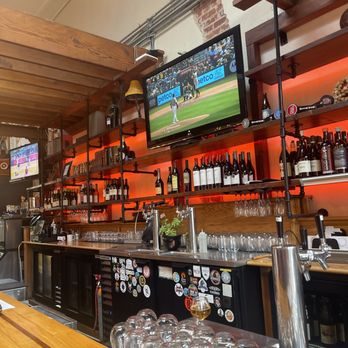
HOP & VINE - Updated September 2026 - 748 Photos & 568 Reviews - 1435 The Alameda, San Jose, California - Wine Bars - Restaurant Reviews - Phone Number - Menu - Yelp
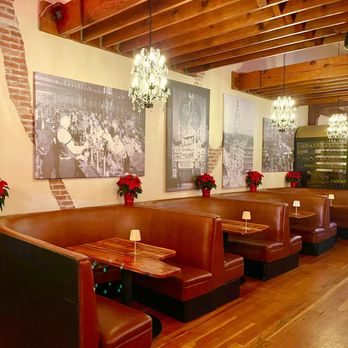
HOP & VINE - Updated September 2026 - 748 Photos & 568 Reviews - 1435 The Alameda, San Jose, California - Wine Bars - Restaurant Reviews - Phone Number - Menu - Yelp

Hop & Vine | Premier Wine Bar & Craft Beer in San Jose, CA | Hop and Vine | American Fare | City, ST
234 views
2:04
Sheetz Sells First Wine At Service Station In Pa.
CBS Pittsburgh
224 views
2:00
New law could bring more brewery locations to Treasure Valley
Idaho News 6

28 views
12:40
Liquor License Application Hearing - July 30, 2026
City of St. Louis, Missouri
Images from Openverse under Creative Commons licenses. Videos from YouTube.
Voices
Curated perspectives — historical figures and your fellow readers.
Play
Exploring all sides of a story is often best achieved with Play.
Most of these play right now — no account needed. Sign up to save scores, keep a streak, and unlock Debate and Predict.
Log in
Sign Up
Higher or Lower
A number from this story, against one from elsewhere in the news — guess which is bigger, then keep the chain going. 5 rounds, 3 strikes; a miss costs a strike and resets your streak.
Example
Anchor
EU tariff revenue
$52B
Big for this kind of number
Mystery
Pentagon AI contract
?
Round 1
Streak: 0
Mystery
?
Keyboard: ↓/L lower · ↑/H higher
0 pts
Best streak: 0 · Rounds: 0
0 points — sign up to put that on the leaderboard.
Now try on this story
Connections
Sixteen names from the news. Find the four hidden groups of four. Four mistakes max.
Loading today's puzzle…
0/4 groups
Mistakes
Sign up to keep a daily streak — a new puzzle lands every day.
Now try on this story
Exit debate?
Your progress in this debate will be lost.
How it works
- 1 Two AI personas square off on this story.
- 2 You predict who'll win each round — correct picks earn XP.
- 3 One crossfire question is yours to fire. Pick it carefully.
Couldn't generate a topic
Select Your Champions
Choose one persona for each side of the debate
DEBATE TOPIC
Choose personas with different perspectives for a more dynamic debate.
SIDE A (PRO)
Select debater for this side:
No debate personas available right now.
SIDE B (CON)
Select debater for this side:
No debate personas available right now.
VS
Get ready to make your prediction...
Round of
Claim
Evidence
Stakes
Crossfire Answer
Closing Statement
Claim
Evidence
Stakes
Crossfire Answer
Closing Statement
Your Crossfire Question
Generating arguments...
Who's Got This Round?
Make your prediction before the referee scores
The referee scores both sides on
Correct predictions earn +20 XP
· Press 1 or 2 to pick
Evidence
40%
Logic
30%
Detail
20%
Style
10%
Round Results
Your Pick
Not this time
(%)
Overall Score
/10
Your Pick
Not this time
(%)
Overall Score
/10
Set the Crossfire
Pick the question both personas must answer in the final round
Crafting crossfire questions...
Choosing a question earns +10 XP crossfire bonus
🏆
Total XP Earned
Cred Change
Predictions
Debate Oracle! You called every round!
Sharp Instincts! You know your debaters!
The Coin Flip Strategist! Perfectly balanced!
The Contrarian! Bold predictions!
Inverse Genius! Try betting the opposite next time!
XP Breakdown
Base completion
+20 XP
Rounds played ( rounds x 5 XP)
+ XP
Correct predictions ( correct x 20 XP)
+ XP
Crossfire bonus
+10 XP
Accuracy
%
Prediction History
Round
You picked:
✓
✗
Now try on this story
Keep debating to level up your credibility and unlock achievements
People Involved
Organizations Involved
Hop & Vine
Wine bar and craft beer restaurant
Holds active Type 47 license as of September 8, 2026
A neighborhood spot on The Alameda serving wine, craft beer, and shareable plates.
California Department of Alcoholic Beverage Control
State agency
Issuer and regulator of the venue's alcohol license
The state agency that licenses and regulates the sale of alcoholic beverages in California.
Timeline
1 event
Latest: 4 days ago
-
California ABC activates Hop & Vine's beer-and-wine license
Latest LicensingThe department's licensing reports log an active Type 47 permit for 1435 The Alameda, enabling on-site beer and wine sales at a food-serving business.
Scenarios
1
Hop & Vine confirms it's pouring on The Alameda
Likely
Resolves by End of 2026
Discussed by: Venue website; San Jose visitor bureau listing
The venue uses its active Type 47 license to serve beer and wine alongside its food menu, formalizing hours, events, and delivery. The trigger would be the business updating its website or listings to explicitly confirm full on-site service. Given the volume of positive customer reviews, this is the most probable near-term outcome.
2
License lapses or goes unused
Unlikely
Resolves by Q2 2027
Discussed by: California ABC records
If the venue fails to complete its remaining approvals, changes ownership, or stops using the permit, the ABC could cancel or refuse to renew the license. Beer-and-wine permits renew annually, and sustained non-use can draw review. This would show up directly in the department's licensing reports.
Historical Context
3 moments from history that rhyme with this story — and how they unfolded.
1933–1935
Repeal of Prohibition and state licensing (1933–1935)
The 21st Amendment ended the federal alcohol ban in 1933 and let each state decide how to regulate sales. California set up a licensing system, first under the Board of Equalization and later the ABC.
Then
A three-tier structure took hold: producers sell to distributors, who sell to licensed retailers.
Now
That 1930s framework still governs every California bar and restaurant today, including the permit Hop & Vine just received.
Why this matters now
Hop & Vine's Type 47 license is a direct product of this post-Prohibition system, where a state permit is the price of pouring alcohol.
1935 onward
California's liquor license quotas
California capped full-liquor on-sale licenses by population, roughly one per 2,000 residents. Beer-and-wine licenses like Type 47 were never subject to those quotas.
Then
New restaurants chasing a full bar often faced long waits or bought licenses on an open market.
Now
Beer-and-wine-only permits became the common first step for food-first businesses.
Why this matters now
It explains why a wine bar would hold a Type 47 rather than a harder-to-get liquor license, and why the permit arrived as a routine filing.
2010s
The craft beer and wine bar wave (2010s)
Across the United States, small breweries, taprooms, and neighborhood wine bars multiplied as drinkers shifted toward local and boutique labels.
Then
Beverage-focused restaurants became a proven model along gentrifying corridors in cities like San Jose.
Now
Formats like Hop & Vine, pairing rotating taps with shareable plates, became fixtures of the Rose Garden area.
Why this matters now
Hop & Vine is an example of this format; its beer-and-wine license lets it shift between wine and craft beer without the cost of a full liquor program.
Sources
(4)Related Stories
Fountainhead Bar secures state liquor license in downtown San Jose
Rule Changes
Updated 6 hours ago
San Jose taqueria gets beer and wine license
Rule Changes
Updated 4 hours ago
San Diego pho restaurant gains beer and wine license
Rule Changes
Updated 1 hour ago
Round Table Pizza receives beer-and-wine license for San Jose Berryessa location
Built World
Updated 6 hours ago
Torino gets San Francisco license to serve beer and wine on Van Ness
New Capabilities
Updated Yesterday
Stop N Save 110 licensed for alcohol sales in San Jose
Rule Changes
Updated 2 hours ago