
Pull to refresh
Logo
Daily Brief
Following
Why Sign Up
Saudi Arabia's NEOM megacity

Saudi Arabia's NEOM megacity

Built World
By Newzino Staff |

Vision 2030's $500 billion Red Sea project, between original ambition and 2026 adjustment

7 days ago: Port of NEOM fully operational

Overview

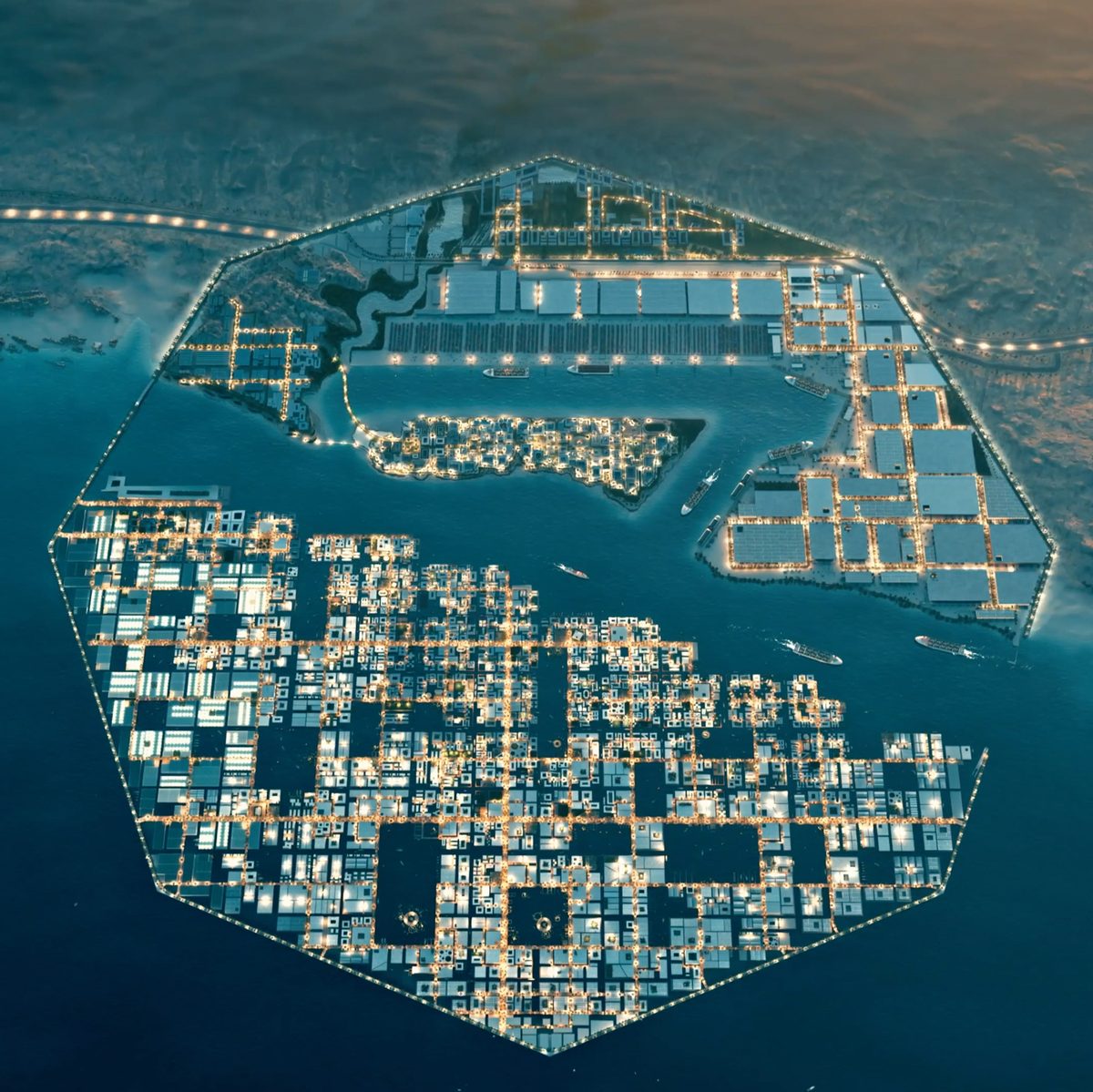
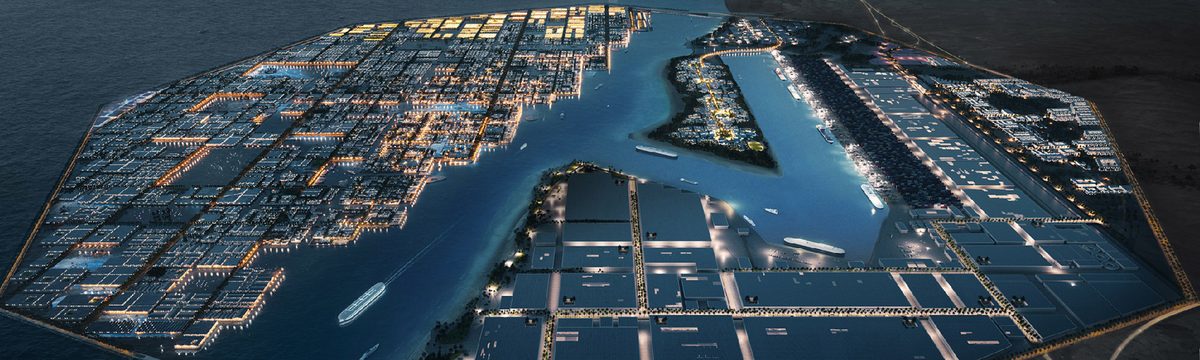
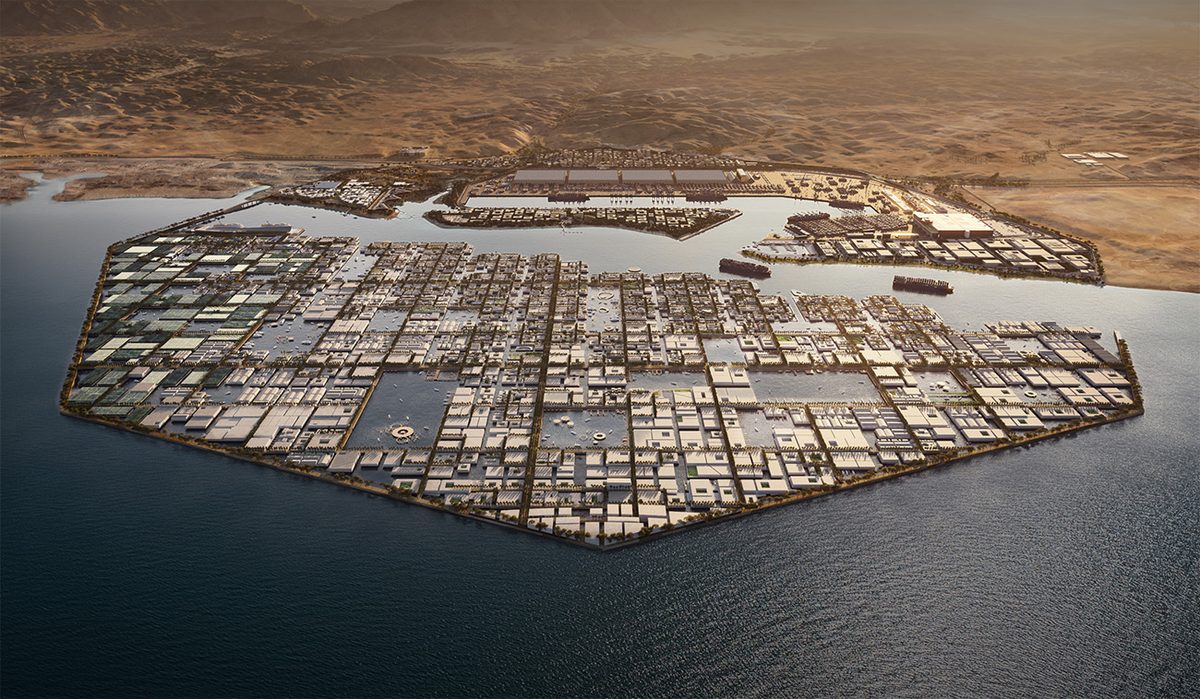
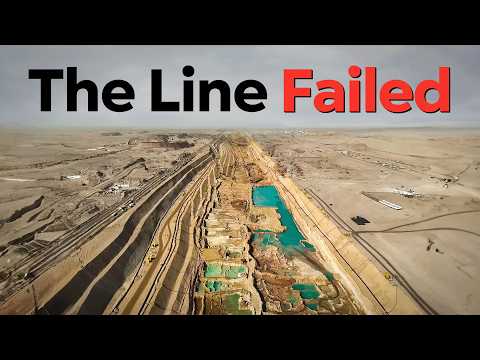
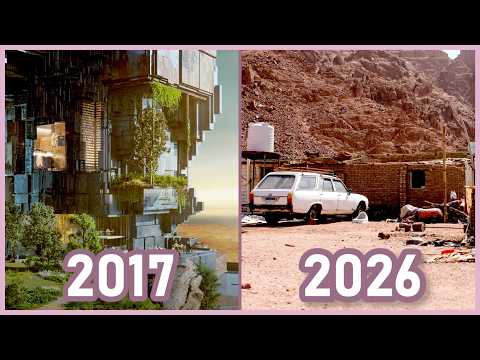
Saudi Arabia announced NEOM in 2017 as a 26,000-square-kilometer city of the future on the Red Sea, headlined by THE LINE — a 170-kilometer ribbon of mirrored 500-meter walls. Nine years and roughly $500 billion of headline budget later, the picture in 2026 has split in two. THE LINE is paused at a 2.4-kilometer foundation. The Port of NEOM, in the industrial city of Oxagon, has just commissioned its first container terminal.

Why it matters

If NEOM's port succeeds where THE LINE stalled, Saudi Arabia's post-oil story shifts from futurist skyline to working Red Sea logistics hub serving Asia–Europe trade.

Key Indicators

$500B
Headline budget
Originally cited price tag for NEOM; internal estimates for THE LINE alone have run far higher.
1.5M TEU
Port of NEOM capacity
Annual container throughput at Terminal 1, with automated cranes and all-electric operations.
2.4 km
THE LINE built
Foundation work completed against the originally planned 170-kilometer length.
60%
Contract reduction
PIF construction contracts for NEOM fell from roughly $71 billion to $30 billion.
13%
World trade nearby
Share of global trade moving through the Suez Canal, the corridor NEOM's port serves.

Interactive

Exploring all sides of a story is often best achieved with Play.

Ever wondered what historical figures would say about today's headlines?

Sign up to generate historical perspectives on this story.

Sign Up

Debate Arena

Two rounds, two personas, one winner. You set the crossfire.

People Involved

Organizations Involved

Timeline

  1. Port of NEOM fully operational

    Infrastructure

    Terminal 1 reaches full operations with 1.5 million TEU annual capacity, automated cranes, and all-electric handling — NEOM's largest working deliverable to date.

  2. NEOM repositioned as logistics hub

    Strategy

    Saudi officials reframe NEOM publicly around the port, hydrogen, and Egypt–Saudi–Iraq trade corridor.

  3. Saudi Arabia formally scales back NEOM

    Project Status

    Reports confirm reduced PIF construction commitments and reallocation of capital to FIFA 2034 and Expo 2030.

  4. BESIX completes marine infrastructure

    Infrastructure

    BESIX delivers more than 4.6 km of quay wall and seven berths up to 18.5 meters deep at the Port of NEOM.

  5. THE LINE construction suspended

    Project Status

    Active construction on THE LINE pauses with foundations for roughly 2.4 km in place; broader vision deferred.

  6. Automated cranes arrive

    Infrastructure

    Saudi Arabia's first fully automated, remote-controlled ship-to-shore and electric gantry cranes commissioned at the Port of NEOM.

  7. NEOM CEO replaced

    Leadership

    Nadhmi Al-Nasr departs as CEO; PIF executive Aiman Al-Mudaifer takes over in an acting capacity.

  8. NEOM scope review begins

    Internal

    Reports surface that the original NEOM masterplan is being reviewed against costs and feasibility.

  9. BESIX consortium awarded port contract

    Contract

    BESIX, Modern Building Leaders, and Boskalis win the Phase 1 marine infrastructure package.

  10. Port of NEOM opens for initial cargo

    Infrastructure

    Port begins handling project cargo for NEOM construction; full container operations targeted for 2026.

  11. 170-km mirrored Line revealed

    Announcement

    Detailed renderings show THE LINE as twin 500-meter mirrored walls running 170 km across the desert.

  12. Oxagon launched

    Announcement

    NEOM unveils Oxagon as its industrial city, anchored by the planned Port of NEOM on the Red Sea.

  13. THE LINE concept unveiled

    Announcement

    MBS introduces THE LINE as a zero-car, zero-emissions linear city within NEOM.

  14. NEOM announced

    Announcement

    Crown Prince Mohammed bin Salman unveils NEOM at the Future Investment Initiative as a $500 billion centerpiece of Vision 2030.

Scenarios

1

Port-and-hydrogen pivot succeeds, NEOM becomes a working logistics anchor

Discussed by: The National, Newsweek, House of Saud analysts

Terminal 1 ramps to its 1.5 million TEU capacity, the green hydrogen plant ships its first ammonia, and Sindalah opens to tourists. NEOM is rebranded around these working components rather than THE LINE. PIF books real revenue from the port, and the Egypt–Saudi–Iraq corridor demonstrably shortens transit times. Saudi Arabia gets a credible non-oil industrial story without delivering the original utopian skyline.

2

Capital keeps flowing to FIFA 2034 and Expo 2030, NEOM further hollowed out

Discussed by: Euronews, Middle East Insider, Grand Pinnacle Tribune

PIF continues redirecting capital toward stadium infrastructure and the Riyadh Expo, with NEOM construction contracts holding near or below the reduced $30 billion level. Trojena's 2029 Asian Winter Games becomes a hard deadline that absorbs remaining attention, while THE LINE's superstructure is indefinitely deferred. The port and hydrogen plant operate, but most of NEOM remains earthworks.

3

THE LINE's full vision quietly abandoned

Discussed by: Architecture critics at ArchDaily, ORF Online, Euronews

Saudi Arabia stops referring to the 170-km mirrored linear city in official communications. The completed 2.4-km foundation either becomes a smaller themed district or is repurposed. Trojena, Sindalah, and Oxagon remain branded as 'NEOM,' but the linear-city concept is treated as a concept piece rather than a buildable plan.

4

Foreign capital influx revives the original vision

Discussed by: Some Vision 2030 boosters; less common in mainstream coverage

A geopolitical or commodity shock sends a wave of foreign direct investment toward NEOM — a sustained oil price spike, a U.S.–Saudi industrial pact, or a major Asian sovereign partner. PIF restores construction budgets, THE LINE's superstructure resumes, and the original 170-km plan is reactivated in stages. Most analysts treat this as a tail scenario.

Historical Context

Brasília inauguration (1960)

April 1960

What Happened

Brazil moved its capital from Rio de Janeiro to a purpose-built city carved out of the central plateau in roughly four years, championed by President Juscelino Kubitschek and designed by Lúcio Costa and Oscar Niemeyer. The build relied on massive state borrowing and fueled hyperinflation.

Outcome

Short Term

Brasília opened on schedule with iconic civic buildings, but residents were stratified into planned superblocks while workers settled in unplanned satellite towns the masterplan never anticipated.

Long Term

Brasília became a UNESCO World Heritage site and a functioning capital, but its modernist street grid and zoning are widely cited as a cautionary case in planned-city design.

Why It's Relevant Today

Like NEOM, Brasília was a top-down city built on political will and state capital; it shows that even when delivered, the lived city tends to diverge sharply from the renderings.

Songdo International Business District (2003–present)

2003 onward

What Happened

South Korea reclaimed 600 hectares of tidal flat near Incheon to build Songdo, a $40 billion 'smart city' designed for 300,000 residents and pitched as a global business hub. Gale International and POSCO led construction.

Outcome

Short Term

Towers, conference centers, and a central park rose on schedule, but office vacancies stayed high and the population came in well below targets through the 2010s.

Long Term

Songdo functions today as an upscale residential and university district rather than the global business capital originally promised; the smart-city pitch has largely faded from marketing.

Why It's Relevant Today

Songdo illustrates the gap between built-from-scratch smart-city marketing and the real economic gravity needed to fill one — a gap NEOM's port may help close, or expose.

Masdar City (2008–present)

2008 onward

What Happened

Abu Dhabi launched Masdar City as a $22 billion zero-carbon, car-free walled city for 50,000 residents, designed by Foster + Partners. The 2008 financial crisis hit the project early.

Outcome

Short Term

The zero-carbon target was abandoned in 2011, the personal-rapid-transit pod system was scaled to a single short loop, and the masterplan was repeatedly trimmed.

Long Term

Masdar today is a working but modest cleantech research and office cluster anchored by a university, far smaller and less ambitious than the original walled city.

Why It's Relevant Today

Masdar is the closest direct analogue to NEOM: a Gulf state's flagship futurist city, scaled back to a workable industrial and research footprint after costs and physics caught up with the renderings.

Sources

(10)