

Pull to refresh
Logo
Physicists film electrons crossing a forbidden energy gap in graphene

Physicists film electrons crossing a forbidden energy gap in graphene

New Capabilities

A laser-driven camera catches Landau–Zener–Majorana transitions in real time, with some jumps reaching 100 percent probability

Overview

Updated 1 hour ago

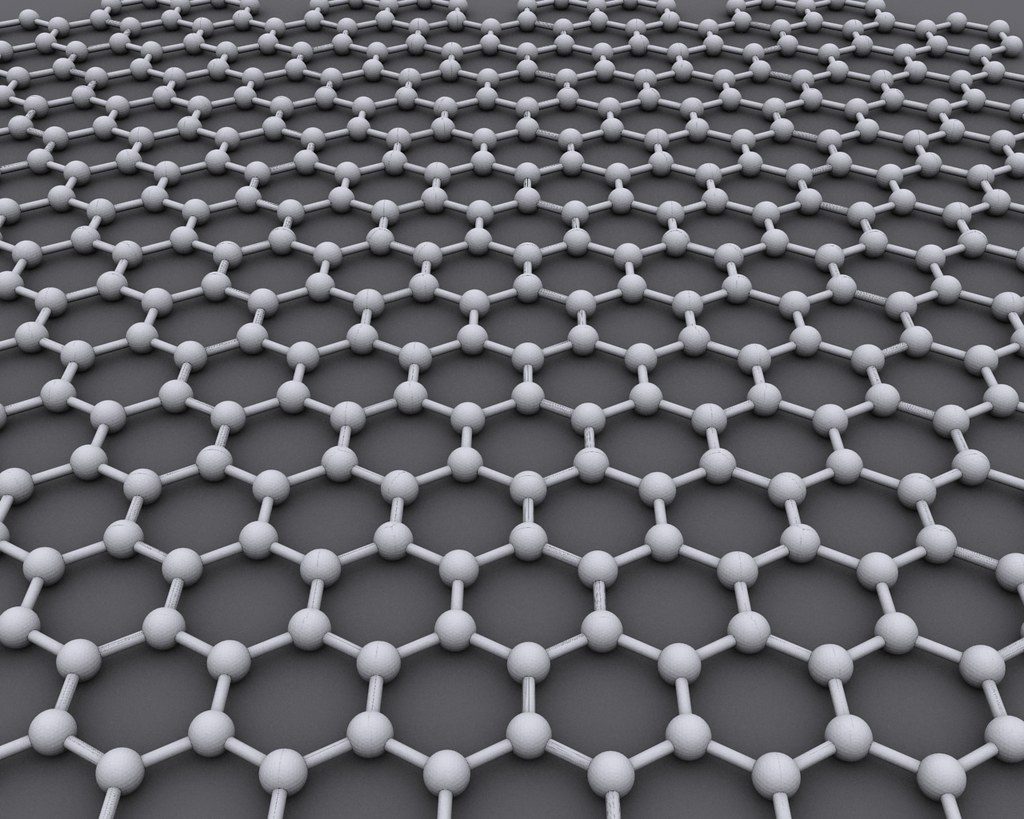
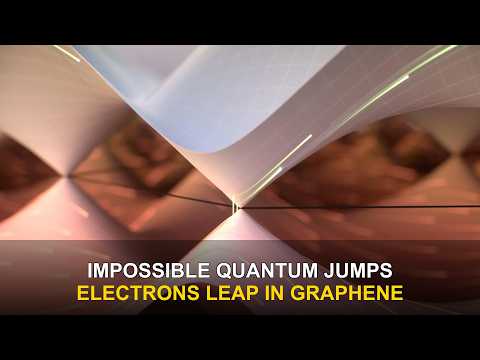
Electrons in a solid are supposed to stay inside their energy band. In graphene, under a strong laser pulse, some cross the forbidden gap into the next band instead. A team in Germany has now filmed that jump as it happens and measured a transition probability of 100 percent.

The jump is the basic move behind lightwave electronics: using a laser's oscillating field, rather than a voltage, to switch current. If the move can be made reliable, it points to circuits running at petahertz frequencies, far above the gigahertz clocks in today's chips.

Why it matters

Lightwave electronics could switch currents at petahertz frequencies, far above today's gigahertz chips, if electrons can be steered reliably.

Questions about this story

Free account needed to ask — your question is kept and asked for you right after sign-up. Answers are public.

No questions yet — be the first to ask.

Key Indicators

100%
Peak transition probability
Share of electrons crossing the band gap under the strongest light fields.
1
Atomic layers in the graphene sample
The carbon film is one atom thick and had to be nearly defect-free.
17
Energy levels skipped in the team's elevator analogy
Electrons go from level 1 to 20 without occupying the floors between.

Voices

Curated perspectives — historical figures and your fellow readers.

Sign up to generate historical perspectives on this story.

People Involved

Organizations Involved

Timeline

May 2025 November 2026

3 events Latest: 2 days ago
  1. Nature publishes subcycle video of band-to-band jumps

    Latest Research

    Regensburg, Marburg and Jülich researchers film Landau–Zener–Majorana transitions in graphene, reaching 100 percent probability.

  2. Modeling finds electrons lag the light field by 500 attoseconds

    Research

    Calculations reproduce light-driven electron motion and find the response is not instantaneous.

  3. Graphene phototransistor reported at petahertz speeds

    Research

    A graphene device modulated by 638-attosecond laser pulses is described as a petahertz-speed phototransistor.

Scenarios

1

Subcycle videography spreads to a second quantum material

Likely Resolves by End of 2027

Discussed by: Giacomo Inzani and the Regensburg team, who say the method can be applied to many other quantum materials

The technique depends on a photoemission momentum microscope paired with strong light fields, not on graphene specifically. If other groups adopt it, the first non-graphene result would show the method travels and that band-resolved filming is becoming a general tool.

2

A light-driven switch breaks the one-femtosecond barrier

Possible Resolves by End of 2028

Discussed by: Groups working on lightwave electronics, including the 2025 petahertz phototransistor team

The graphene result shows electrons can be moved between bands on a subcycle timescale. The harder step is a device that turns on and off in under a femtosecond and can be reproduced by an independent lab. That would move lightwave switching from demonstration to benchmark.

3

The 100 percent jump turns out to need near-perfect graphene

Uncertain Resolves by Q2 2027

Discussed by: Stefan Tautz and the Jülich sample team, who stress the material had to be nearly flawless

The experiment relied on ultraclean, rotated graphene. If the transition probability collapses in ordinary graphene with typical disorder, the effect would be a laboratory curiosity rather than a route to devices. A follow-up that deliberately varies sample quality would settle it.

Historical Context

3 moments from history that rhyme with this story — and how they unfolded.

1932

Landau–Zener–Majorana theory (1932)

Lev Landau, Clarence Zener, Ettore Majorana and Ernst Stückelberg independently derived a formula for the probability that a quantum system jumps between energy levels when a parameter changes quickly. The result depended on how fast the system approached the gap, not on the width of a physical barrier.

Then

The formula became a standard tool for describing field ionization, spin flips and chemical reactions.

Now

It has been tested indirectly for decades, but the transition itself was too fast to watch inside a solid.

Why this matters now

The graphene experiment is a direct, time-resolved test of that 1932 formula, and it found the probability can reach 100 percent.

1999

Femtochemistry and the first ultrafast cameras (1999)

Ahmed Zewail won the Nobel Prize in Chemistry for using femtosecond laser flashes to watch chemical bonds break and form. The work turned reactions that had been inferred from products into sequences that could be filmed.

Then

Femtosecond spectroscopy became a standard laboratory method.

Now

It established the principle that a faster camera produces new physics, not just prettier pictures.

Why this matters now

The graphene team makes the same argument: the transition was suspected for decades, but only a subcycle camera could show how it unfolds.

2023

Attosecond metrology wins the physics Nobel (2023)

Pierre Agostini, Ferenc Krausz and Anne L'Huillier shared the Nobel Prize in Physics for methods that generate attosecond pulses of light, short enough to resolve electron motion in atoms.

Then

Attosecond sources became available in more laboratories.

Now

The field moved from watching atoms to watching electrons inside solids.

Why this matters now

The graphene measurement is a solid-state extension of that program: filming electrons as they move between bands inside a material.

Sources

(4)