


2001
First attosecond pulses (2001)
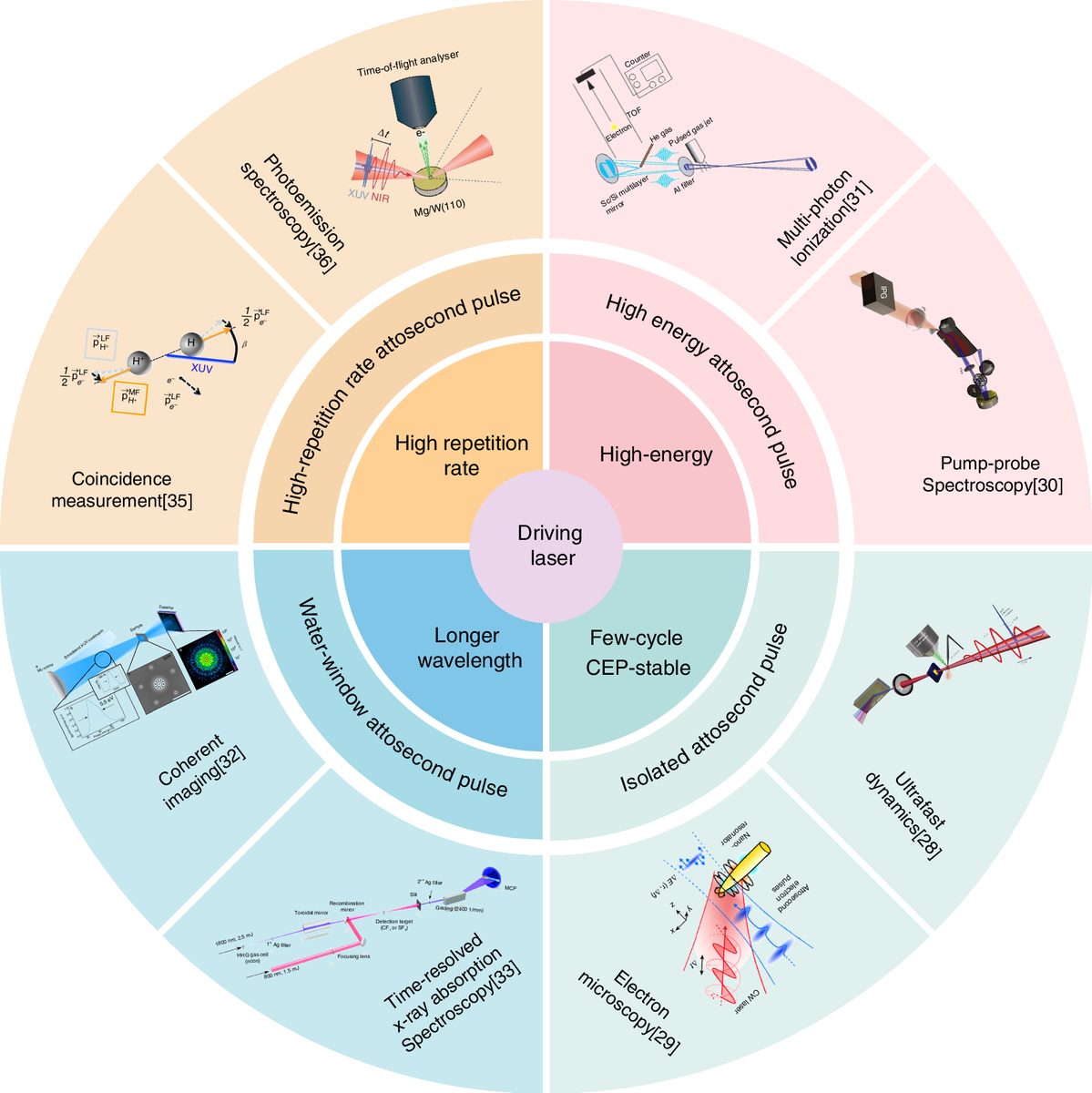
A group led by Ferenc Krausz at TU Vienna generated pulses under a femtosecond, opening the attosecond regime — the natural timescale of electron motion. Attosecond spectroscopy became the standard way to trace how electrons respond to light fields in time.
Then
Researchers could time electron dynamics with sub-femtosecond precision, but measurements were ensemble averages without spatial localization.
Now
The field earned the 2023 Nobel Prize in Physics and established lightwave electronics, where the carrier wave of light itself gates electronic processes.
Why this matters now
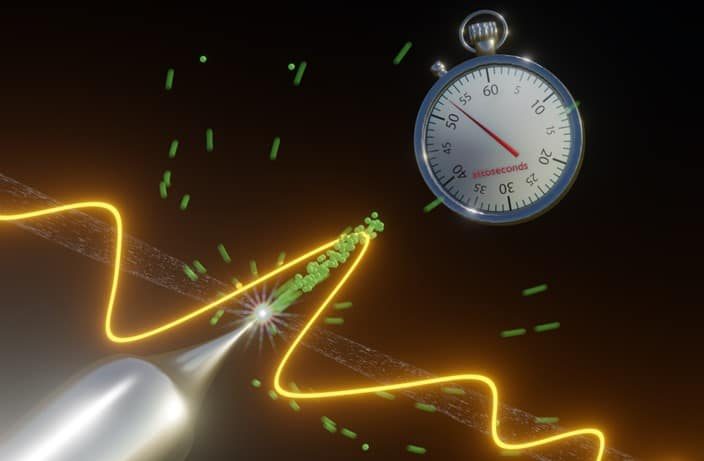
This new STM result attaches that temporal precision to a scanning probe, adding the atomic-scale spatial resolution attosecond spectroscopy never had.