
Pull to refresh
Logo
98-million-year-old amber mantis is the earliest known leaf mimic

98-million-year-old amber mantis is the earliest known leaf mimic

New Capabilities

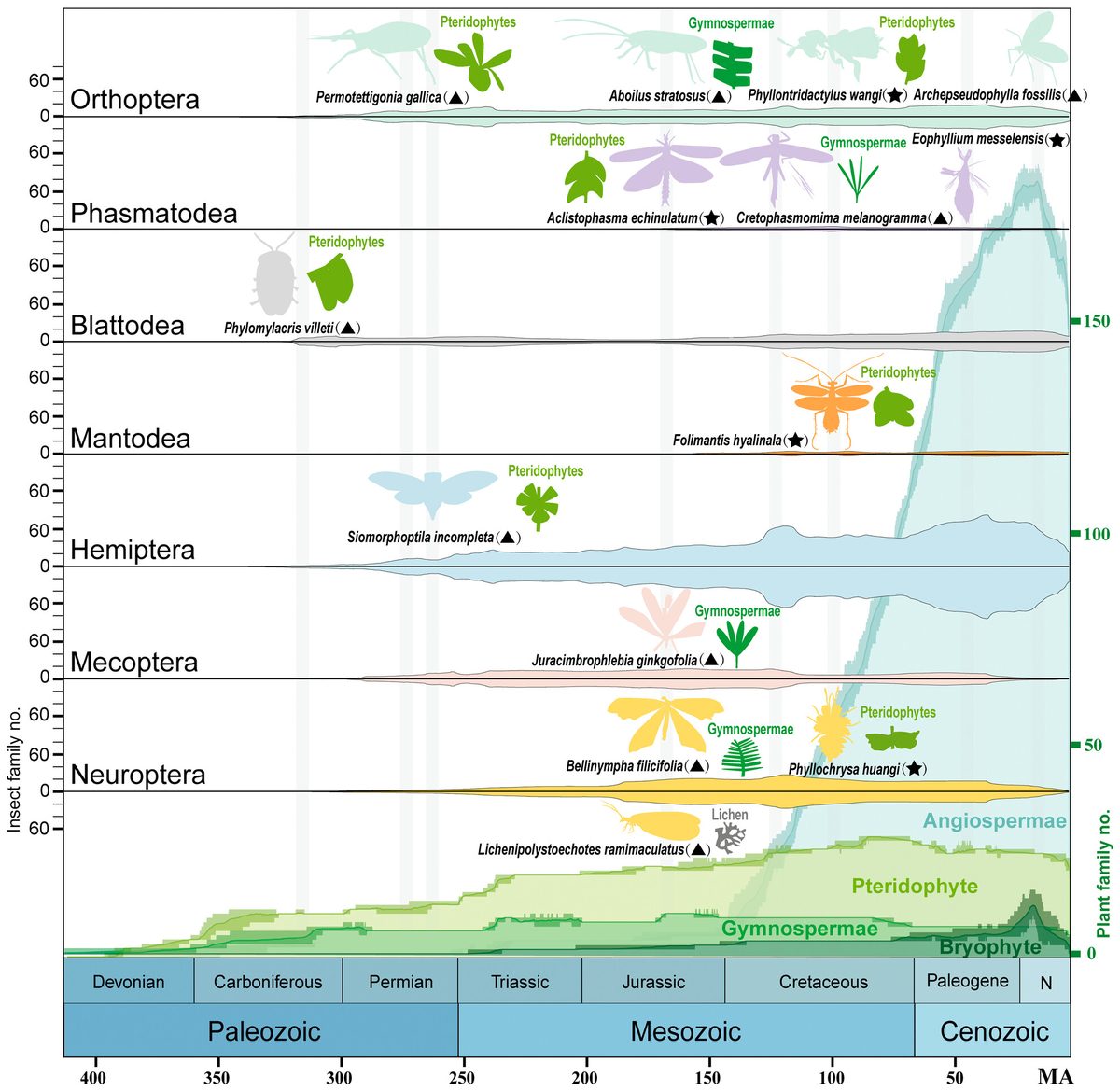
The specimen, named Folimantis hyalinala, has leaf-shaped abdominal flaps matching a spikemoss that grew alongside it.

Overview

Updated 1 hour ago

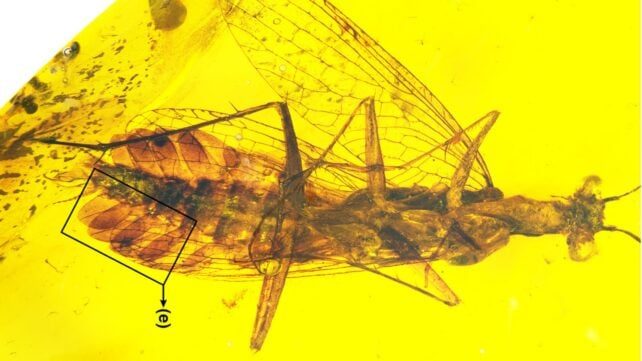
In the mid-Cretaceous, sticky resin in what is now northern Myanmar swallowed a praying mantis. Ninety-eight million years later, the amber specimen is the earliest clear evidence of a mantis mimicking a plant.

The insect, named Folimantis hyalinala, has leaf-shaped flaps along its abdomen that match the leaves of Selaginella, a spikemoss found in the same amber deposits. No living mantis is known to mimic Selaginella, so the fossil offers a rare look at how insect camouflage started.

Why it matters

The fossil pushes the origin of mantis plant mimicry back before flowering plants, and suggests the disguise evolved on the abdomen first.

Questions about this story

Free account needed to ask — your question is kept and asked for you right after sign-up. Answers are public.

No questions yet — be the first to ask.

Key Indicators

98.79 million years
Age of the specimen
The Kachin amber is dated to the mid-Cretaceous, about 98.79 million years ago.
0
Living mantis species known to mimic Selaginella
The paper reports no modern Mantodea species with this mimicry style.
8
Abdominal segments with leaf-like extensions
Extensions run along segments II through IX, largest on segments IV through VIII.
1–2 mm
Length of each leaf-shaped extension
Each flap is about 1 to 2 millimeters long and 0.5 to 1.5 millimeters wide.

Voices

Curated perspectives — historical figures and your fellow readers.

Sign up to generate historical perspectives on this story.

People Involved

Organizations Involved

Timeline

2015 November 2026

4 events Latest: Yesterday
Tap a bar to jump to that date
  1. Discovery reported widely

    Latest Media

    ScienceAlert reported the find as the earliest clear evidence of mantis leaf mimicry.

  2. Study describes Folimantis hyalinala

    Research

    New Phytologist published the description of the 98-million-year-old mantis and its Selaginella-like abdomen.

  3. Paleontology society seeks amber publication moratorium

    Statement

    The Society of Vertebrate Paleontology called for a hard moratorium after Myanmar's coup.

  4. Myanmar bans fossil exports

    Policy

    The ban left amber-embedded specimens in a legal grey area.

Scenarios

1

Second Cretaceous mantis with abdominal leaf mimicry described

Possible Resolves by End of 2029

Discussed by: The study authors, who argue abdominal mimicry came before changes to wings and thorax

The paper proposes that plant mimicry began on the rear of the body, with other appendages modifying later. A second amber mantis with similar abdominal flaps would support that sequence.

2

A journal or publisher restricts Myanmar amber specimens

Possible Resolves by End of 2027

Discussed by: The Society of Vertebrate Paleontology, which sought a moratorium in 2021

Concerns about conflict-linked amber mining could lead a named journal or publisher to bar descriptions of specimens acquired after January 2021. Such a policy would affect how future Kachin amber finds are published.

3

Mantis plant mimicry pushed back beyond 98 million years

Uncertain Resolves by End of 2030

Discussed by: The paper's diversification analysis, which traces insect-plant mimicry to the Late Paleozoic

The authors note that mimicry between insects and gymnosperms, ferns, and Selaginella existed long before the Cretaceous. An older mantis fossil with clear plant-mimicry features would extend the mantis record further.

Historical Context

3 moments from history that rhyme with this story — and how they unfolded.

2023

Orchid mantis camouflage genomics (2023)

Researchers studied the genome of the orchid mantis, Hymenopus coronatus, and its close relative the dead leaf mantis to understand the basis of flower-like camouflage. The work was published in Nature Communications.

Then

The study tied body-shape and color changes to specific genetic and developmental pathways.

Now

It gave researchers a genomic framework for studying mimicry in living mantises.

Why this matters now

Modern mantises mimic flowers; the Cretaceous fossil shows an older, leaf-based strategy from before flowering plants took over.

2022

Selaginella leaves found in Kachin amber (2022)

Leaves of Selaginella with midribs and overlapping, shingle-like arrangements were reported in Kachin amber, including Selaginella grimaldii. The fossils gave a picture of the forest floor where the mantis lived.

Then

The leaves provided comparison material for other Kachin amber fossils.

Now

They helped establish Selaginella as a common plant in that Cretaceous ecosystem.

Why this matters now

The mantis's abdominal flaps match these leaves in shape, size, and arrangement, which is why researchers identify Selaginella as its model.

2015–2021

Myanmar amber export ban and moratorium call (2015–2021)

Myanmar banned fossil exports in 2015, but amber-embedded specimens stayed in a legal grey area. After the 2021 military coup, the Society of Vertebrate Paleontology called for a hard moratorium on publishing amber fossils obtained from Myanmar after January 2021.

Then

Publication of newly mined Myanmar amber became contested.

Now

Researchers and journals now face provenance questions for conflict-linked specimens.

Why this matters now

The new mantis comes from Kachin amber, so its publication sits inside this ongoing ethics debate.

Sources

(3)