
Pull to refresh
Logo
245-million-year-old fossil preserves oldest known reptile digestive organs

245-million-year-old fossil preserves oldest known reptile digestive organs

New Capabilities

Austronaga minuta from Middle Triassic China reveals stomach, liver, and intestines intact

3 days ago: ScienceDaily publishes report on the fossil

Overview

Updated 1 hour ago

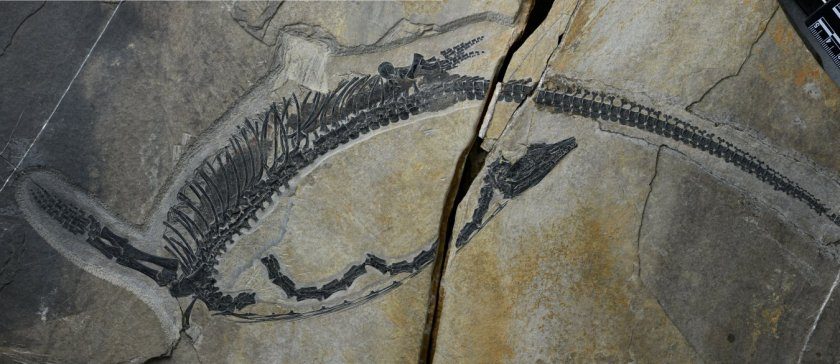
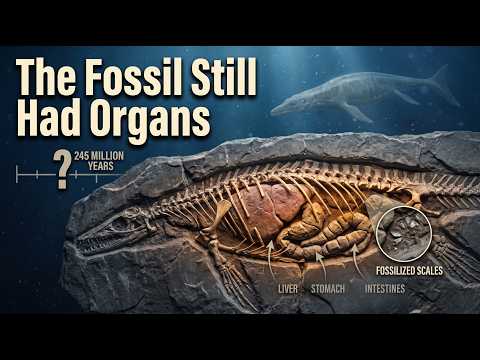
A 245-million-year-old marine reptile fossil from southern China is so well preserved that its stomach, liver, and intestines survive intact. It is the oldest complete digestive system ever found in a reptile.

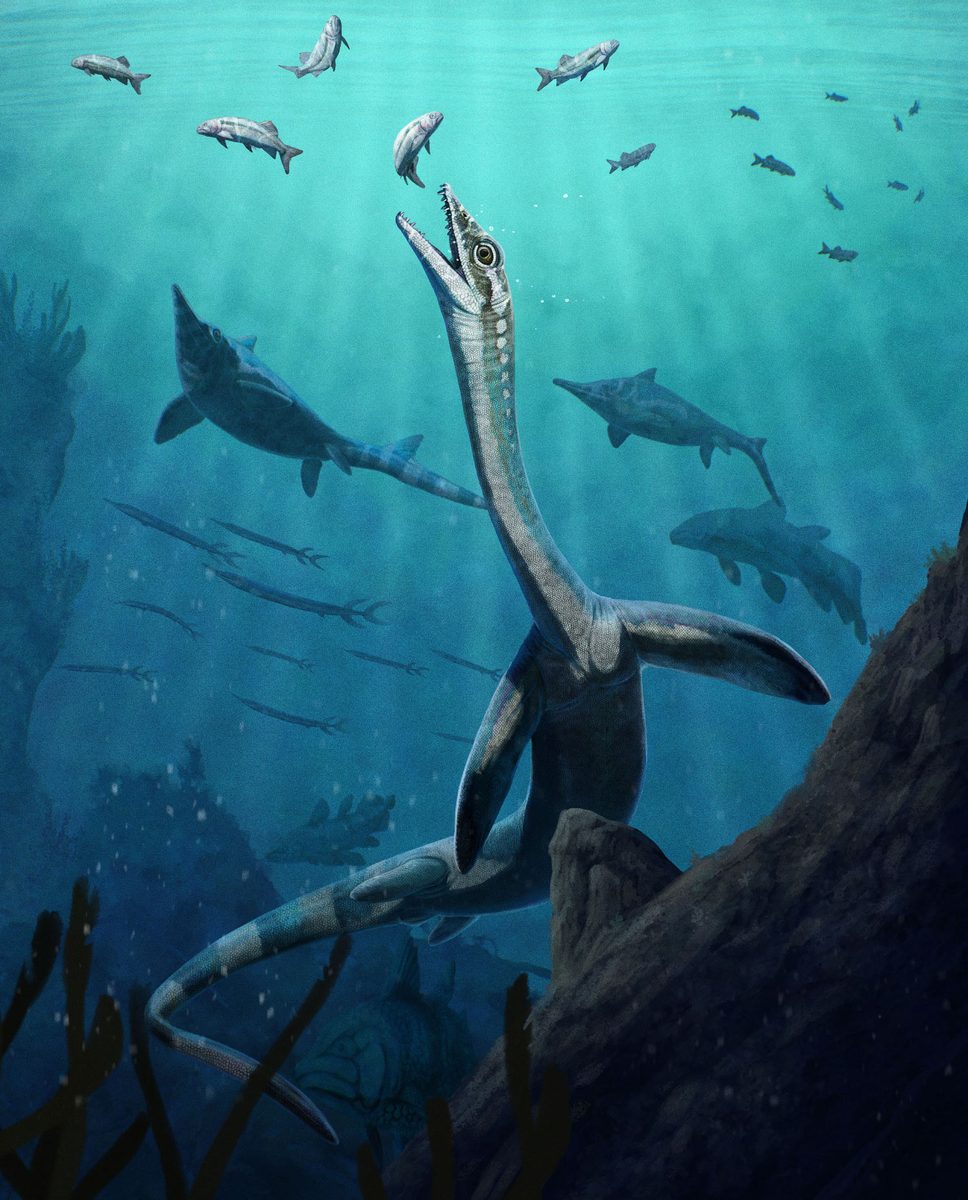
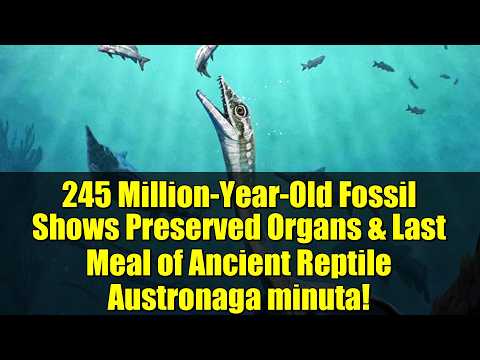
The fossil, Austronaga minuta, was a fast-swimming fish-eater with a long neck and paddle-like flippers. Its organs show a gut plan nearly identical to modern fish-eating reptiles. Reptile digestive anatomy has stayed stable for a quarter-billion years.

Why it matters

The oldest complete reptile digestive system ever found shows the basic gut plan has survived 245 million years of evolution.

Questions about this story

Free account needed to ask — your question is kept and asked for you right after sign-up. Answers are public.

No questions yet — be the first to ask.

Key Indicators

245 million years
Fossil age
Dated to the Middle Triassic Anisian stage, roughly 245 million years old
60 cm
Animal length
Austronaga minuta measured about 60 cm (2 feet) from head to tail
First
Complete reptile digestive system
The oldest largely complete digestive system known in any reptile

Voices

Curated perspectives — historical figures and your fellow readers.

Ever wondered what historical figures would say about today's headlines?

Sign up to generate historical perspectives on this story.

People Involved

Organizations Involved

Timeline

2023 September 2026

3 events Latest: 3 days ago
  1. ScienceDaily publishes report on the fossil

    Latest Coverage

    ScienceDaily reports on the marine reptile fossil and its preserved stomach, liver, and intestines.

  2. Study describes Austronaga minuta and its organs

    Publication

    Researchers publish findings revealing the oldest complete digestive system in a reptile, plus traces of the animal's last fish meal.

  3. Fossil discovered in Yunnan Province

    Discovery

    Team uncovers Austronaga minuta skeleton in Waina Village, Luoping County, split across two limestone slabs.

Scenarios

1

New imaging confirms or refines organ details in Austronaga fossil

Possible Resolves by End of 2028

Discussed by: Study authors quoted in EurekAlert and New Scientist

The organs were identified through UV photography, mass spectrometry, and chemical signatures. The paper itself notes these are interpretations. Advanced techniques like synchrotron X-ray tomography could resolve finer structure or confirm tissue identity. A follow-up study would deepen the understanding of Triassic reptile anatomy.

2

More soft-tissue fossils emerge from Luoping region

Possible Resolves by End of 2028

Discussed by: Researchers studying the Luoping biota

Luoping County is a known fossil hotspot with exceptional preservation. The region has already yielded many well-preserved Triassic fossils. Additional excavations could uncover more reptiles with internal organs, extending the record and confirming the Austronaga findings.

3

Organ identification in Austronaga fossil is challenged

Unlikely Resolves by End of 2028

Discussed by: The study itself, which calls the organ identifications interpretations

The organs were read from position, size, shape, and chemistry, not preserved cell structure. Another research group could dispute the stomach, liver, or intestine identification through re-analysis or alternative chemical interpretation. Scientific debate over such interpretations is normal.

Historical Context

2 moments from history that rhyme with this story — and how they unfolded.

2022

Devonian armoured fish organ record (2022)

Long and colleagues described a 380-million-year-old Devonian armoured fish preserving internal organs, regarded as the oldest known vertebrate organs.

Then

The find showed organ preservation can extend back hundreds of millions of years in vertebrates.

Now

It set a benchmark for soft-tissue preservation studies and deepened understanding of ancient anatomy.

Why this matters now

Austronaga minuta extends this type of preservation to reptiles, providing the oldest complete digestive system in the group.

19th century onward

Posidonia Shale ichthyosaur preservation (19th century)

Quarrying in Germany's Early Jurassic Posidonia Shale yielded ichthyosaurs with preserved soft tissue outlines and stomach contents.

Then

These became the classic examples of marine reptile soft tissue preservation.

Now

They showed exceptional conditions can record soft anatomy in ancient marine reptiles, though Triassic examples remain rare.

Why this matters now

The Austronaga fossil fills that Triassic gap, preserving internal organs from a period with few such finds.

Sources

(9)