
Blood vessels preserved in a broken rib of the largest known T. rex show healing in progress
New CapabilitiesScotty, the biggest Tyrannosaurus rex on record, died months after its rib fracture began healing, leaving a rare network of mineralized blood vessels
Today: Discovery tops Reddit's r/scienceNew here? Follow stories to track developments over time. Create a free account to get updates when stories you care about change.
Overview
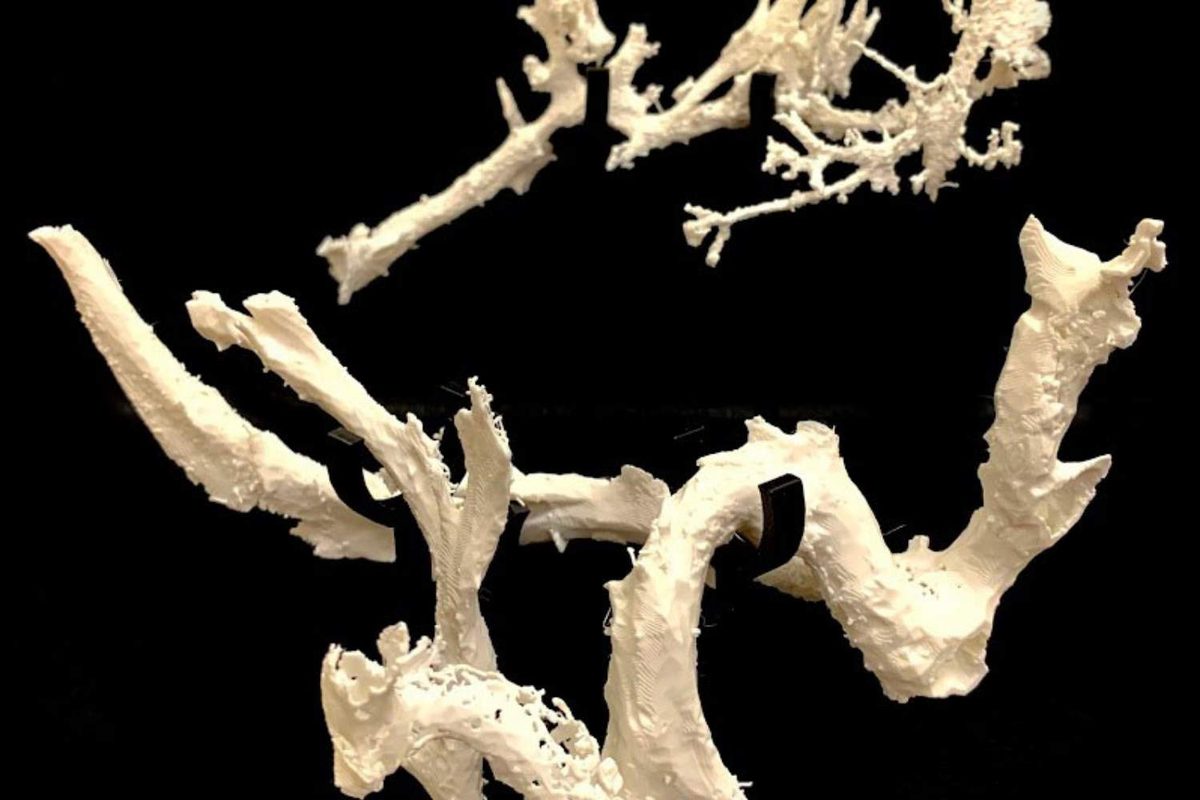
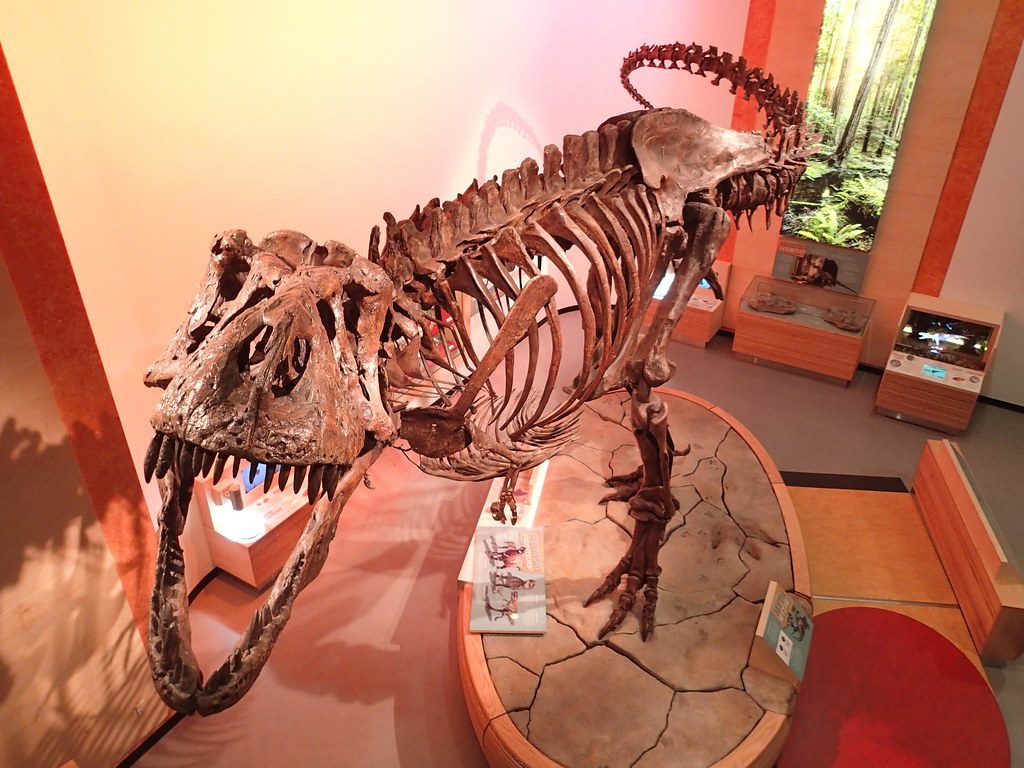
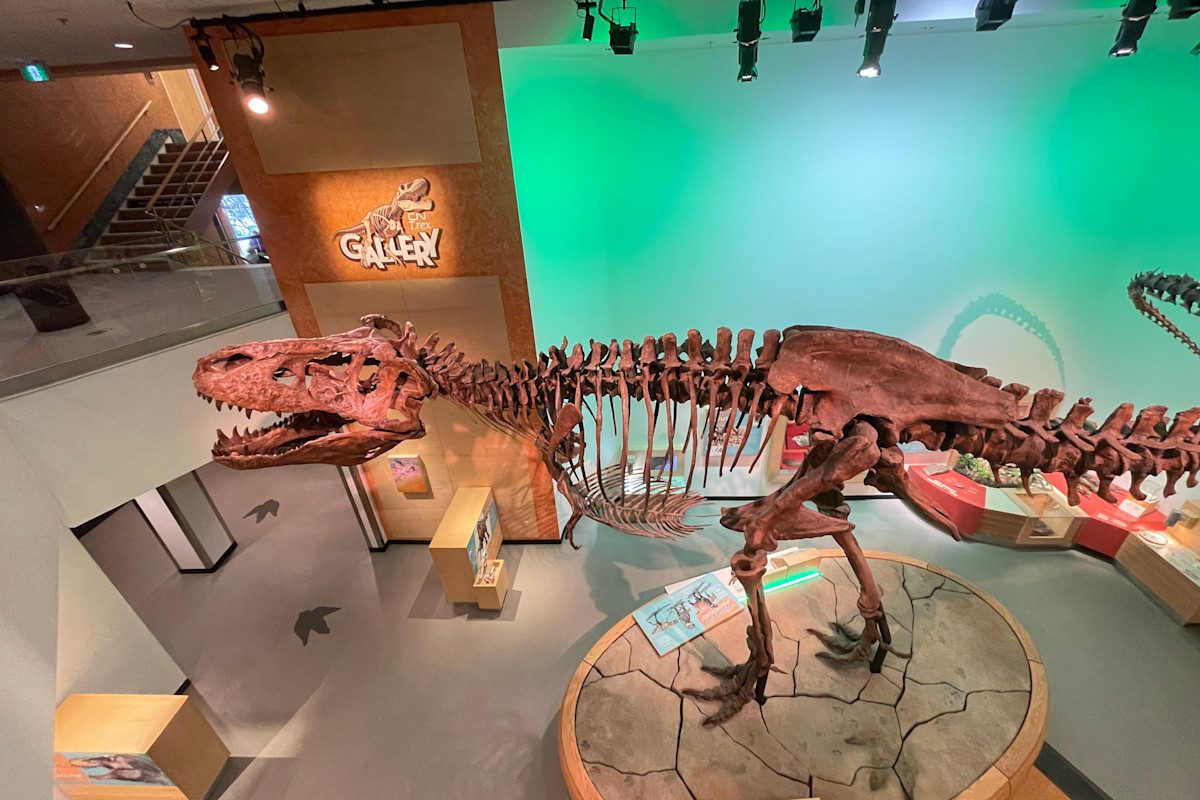
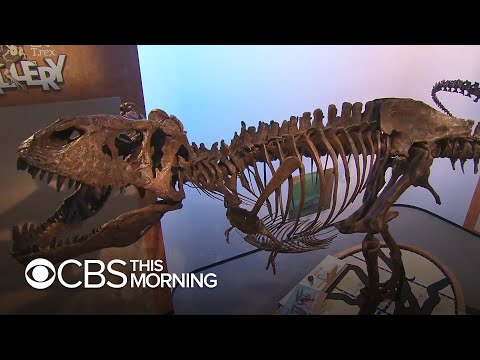
Updated 2 hours agoScotty, the largest Tyrannosaurus rex skeleton on record, died 66 million years ago with a broken rib that was still healing. The rib holds a dense network of mineralized blood vessels that formed as the dinosaur's body worked to repair the fracture.
The find is the first high-resolution 3D look at dinosaur healing blood vessels. It also points paleontologists toward a new hunting ground for soft tissue that survives deep time: broken bones.
Why it matters
Broken bones trigger a surge of blood vessels during healing, and those vessels may fossilize where normal ones don't. Paleontologists gain a new soft-tissue target.
Questions about this story
Free account needed to ask — your question is kept and asked for you right after sign-up. Answers are public.
No questions yet — be the first to ask.
Key Indicators
Voices
Curated perspectives — historical figures and your fellow readers.
Play
Exploring all sides of a story is often best achieved with Play.
Higher or Lower
A number from this story, against one from elsewhere in the news — guess which is bigger, then keep the chain going. 5 rounds, 3 strikes; a miss costs a strike and resets your streak.
Keyboard: ↓/L lower · ↑/H higher
0 points — sign up to put that on the leaderboard.
Connections
Sixteen names from the news. Find the four hidden groups of four. Four mistakes max.
Sign up to keep a daily streak — a new puzzle lands every day.
Exit debate?
Your progress in this debate will be lost.
- 1 Two AI personas square off on this story.
- 2 You predict who'll win each round — correct picks earn XP.
- 3 One crossfire question is yours to fire. Pick it carefully.
Couldn't generate a topic
Select Your Champions
Choose one persona for each side of the debate
DEBATE TOPIC
Choose personas with different perspectives for a more dynamic debate.
Select debater for this side:
No debate personas available right now.
Select debater for this side:
No debate personas available right now.
Who's Got This Round?
Make your prediction before the referee scores
The referee scores both sides on
Round Results
Set the Crossfire
Pick the question both personas must answer in the final round
Debate Oracle! You called every round!
Sharp Instincts! You know your debaters!
The Coin Flip Strategist! Perfectly balanced!
The Contrarian! Bold predictions!
Inverse Genius! Try betting the opposite next time!
XP Breakdown
Prediction History
People Involved
Organizations Involved
The Saskatchewan university whose physics department ran the synchrotron and neutron imaging of Scotty's rib.
The DOE lab whose MARS and VENUS neutron instruments let the team confirm the synchrotron findings without damaging the fossil.
The museum that holds Scotty's skeleton and authorized the imaging study of the rib.
Timeline
August 1991 September 2026
-
Discovery tops Reddit's r/science
Today MediaThe IFLScience report on the blood vessels reached the top of r/science, bringing the find to a mass audience.
-
NY Post covers Scotty's healing wound
MediaWider coverage framed the rib as evidence of how the apex predator died in a Canadian salt marsh.
-
Blood vessel finding reported to the public
MediaScienceDaily and other outlets detailed the discovery of iron-rich vessels in the healed rib.
-
Neutron imaging at Oak Ridge National Laboratory
ResearchThe team used the MARS and VENUS instruments to verify the synchrotron findings nondestructively.
-
Paper describes mineralized vessel casts
PublicationScientific Reports published the team's synchrotron analysis showing the vessels are casts of pyrite oxidized to goethite and hematite.
-
Mitchell flags preserved tissue in Scotty's rib
DiscoveryUniversity of Regina student Jerit Mitchell spotted vessel-like structures in the rib using micro-CT scans.
-
Scotty confirmed as largest T. rex on record
ResearchA study in The Anatomical Record estimated Scotty's mass at roughly 8.87 tonnes, above all other known T. rex specimens.
-
Scotty's skeleton discovered in Saskatchewan
DiscoveryAmateur paleontologist Robert Gebhardt found the T. rex skeleton in the Frenchman Formation near Eastend. Excavation took years.
Historical Context
2 moments from history that rhyme with this story — and how they unfolded.
Mary Schweitzer's B-rex soft tissue (2005)
Paleontologist Mary Schweitzer reported flexible, translucent vessels and cell-like structures inside a 68-million-year-old Tyrannosaurus rex femur known as MOR 1125. The find challenged the assumption that soft tissue cannot survive tens of millions of years.
The claim drew intense skepticism and replication attempts, with some labs unable to reproduce the results.
It opened a research field hunting for molecular and cellular remnants in dinosaur bone, and it remains contested today.
Scotty's rib vessels are the same kind of claim, extended to healing structures. The current team's careful chemical work responds directly to the criticisms Schweitzer faced.
The biofilm interpretation challenge (2008)
Thomas Kaye and colleagues argued in PLoS ONE that the "soft tissue" in Schweitzer's dinosaur bones was bacterial biofilm, not original vessels or cells. They presented scanning electron microscope images of slime-like structures on both modern and fossil bone.
The debate split the field, with supporters on both sides publishing follow-up evidence.
The episode set a standard: soft tissue claims now require chemical and structural evidence, not just visual similarity.
Scotty's team preempted this critique by chemically mapping the vessel casts' pyrite and iron oxide composition and tying their shape to the fracture callus.
