

Pull to refresh
Logo
CT scans identify the largest known scorpion in 415-million-year-old British fossils

CT scans identify the largest known scorpion in 415-million-year-old British fossils

New Capabilities

A 150-year naming dispute ends with three species folded into one meter-long predator that may have hunted in water

Overview

Updated Yesterday

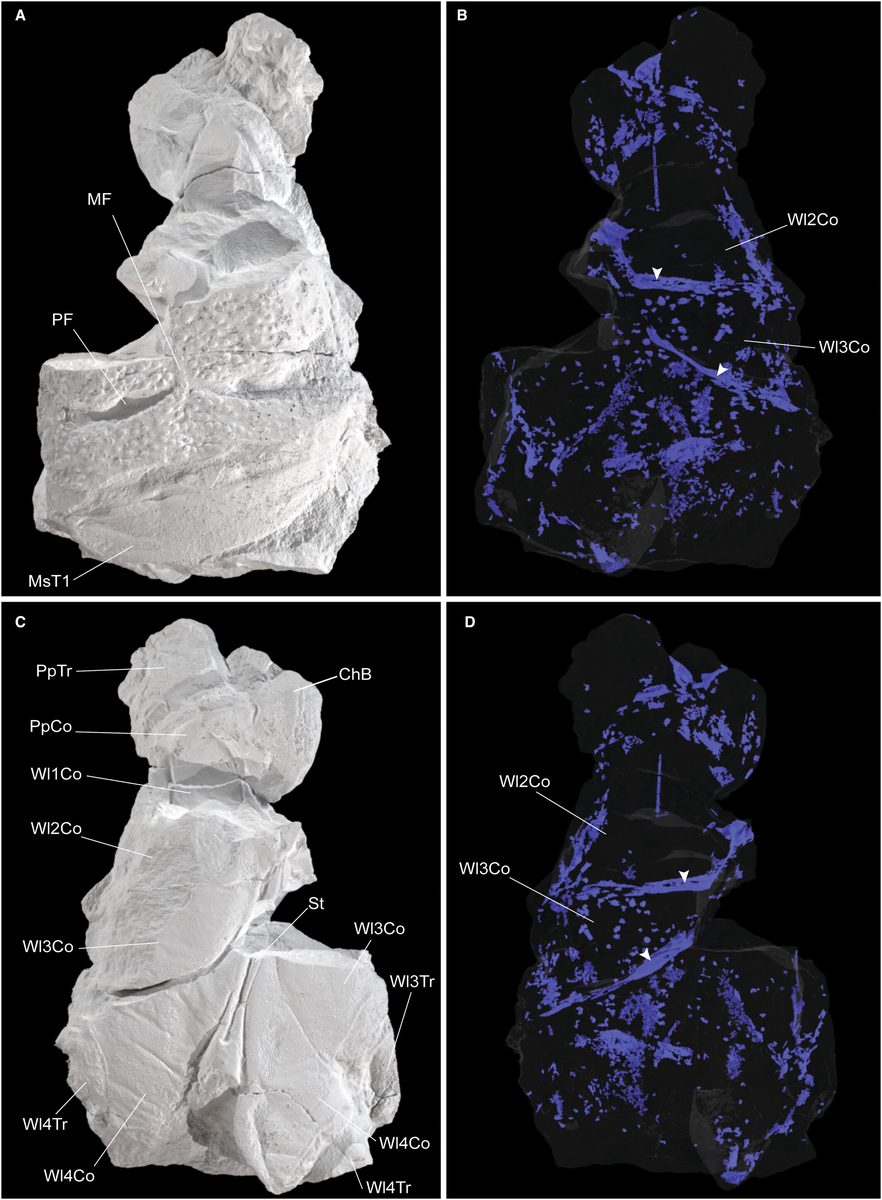
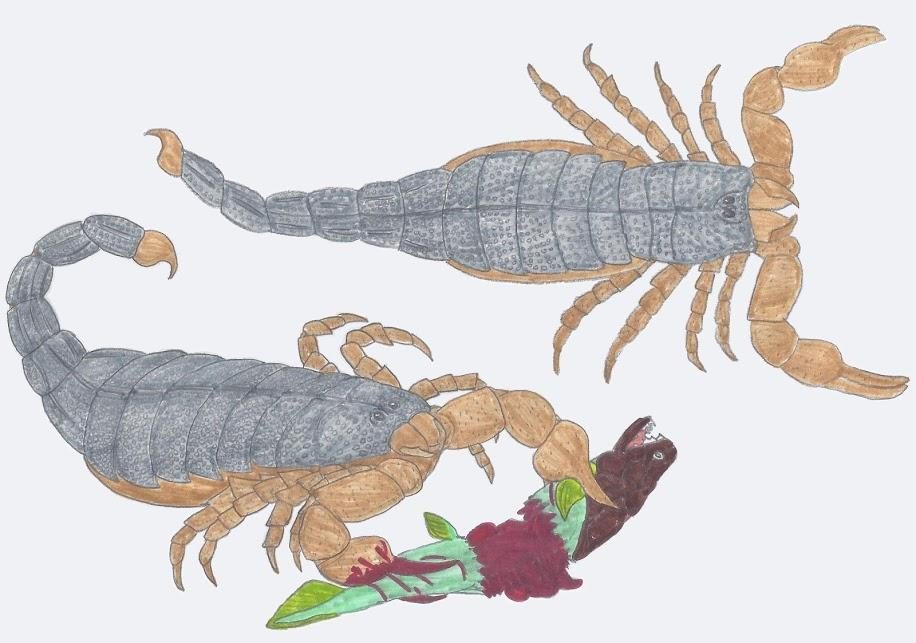
The Natural History Museum in London has held fragments of a large arthropod dug out of Devonian rocks in England and Wales since the 1870s. New tomographic scans and hand tracings of those fragments say they belong to one animal: Praearcturus gigas, a scorpion estimated at over a meter long, with pincers that measured 16 centimeters.

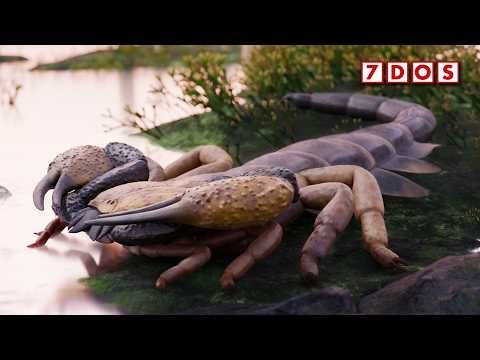
The revision, published in the journal Palaeontology, retires two other species names as junior synonyms: Brontoscorpio anglicus and Bennettarthra annwnensis. It also argues the animal was at least partly aquatic, making it a candidate example of an air-breathing lineage that returned to the water. Jason Dunlop at Berlin's Museum für Naturkunde cautions that the case rests on fragments of an animal, not a skeleton.

Why it matters

Three fossil names collapse into one dog-sized predator, and the case suggests scorpions went back to the water after colonizing land.

Questions about this story

Free account needed to ask — your question is kept and asked for you right after sign-up. Answers are public.

No questions yet — be the first to ask.

Key Indicators

16 cm
Length of one pincer
Longer than the entire body of many scorpions alive today.
>1 m
Estimated body length
Roughly a medium dog, reconstructed from partial fossils.
415M years
Age of the fossils
Lower Devonian rocks of the Old Red Sandstone in England and Wales.
2
Species names retired
Brontoscorpio anglicus and Bennettarthra annwnensis are now junior synonyms of P. gigas.

Voices

Curated perspectives — historical figures and your fellow readers.

Sign up to generate historical perspectives on this story.

People Involved

Organizations Involved

Timeline

1870 November 2026

4 events Latest: Yesterday
Tap a bar to jump to that date
  1. ScienceAlert reports the identification

    Latest Coverage

    ScienceAlert describes P. gigas as the largest known scorpion, over a meter long with 16-centimeter pincers.

  2. Revision published in Palaeontology

    Research

    CT scans and tracings support scorpion affinity; Brontoscorpio anglicus and Bennettarthra annwnensis become junior synonyms.

  3. Re-described as a gigantic scorpion

    Taxonomy

    Researchers reinterpret the material as a giant scorpion but illustrate it only sparingly, leaving the case vulnerable.

  4. Fossils described as an isopod

    Taxonomy

    Woodward names Praearcturus gigas from Devonian rocks in England and Wales, classifying it as a woodlouse-like crustacean.

Scenarios

1

Arachnid catalogues list Praearcturus as a scorpion without a dispute flag

Likely Resolves by End of 2028

Discussed by: The authors and the Natural History Museum present the scorpion assignment as settled

The re-description rests on pedipalp structure, a stridulatory surface on a coxa, and a sternum shape shared with the Silurian scorpion Eramoscorpius. If specialists accept those characters, the species enters reference catalogues as an unambiguous scorpion and the two synonymized names disappear from checklists.

2

New specimens settle whether the animal lived in water

Possible Resolves by End of 2030

Discussed by: Howard and colleagues, who infer an amphibious or aquatic life from crustacean-like epimera

The aquatic claim currently rests on flap-like epimera and the river deposits the fossils came from. A specimen preserving respiratory structures, or limbs built for swimming rather than walking, would move the argument from inference to evidence.

3

A published rebuttal contests the scorpion identification

Possible Resolves by End of 2027

Discussed by: Jason Dunlop, who says only fragments of the animal survive

Dunlop's objection is that the case is assembled from disassociated parts. If he or another specialist puts that argument into a formal comment or reply, the assignment stays open in the literature rather than being treated as settled.

Historical Context

3 moments from history that rhyme with this story — and how they unfolded.

1966-2020s

The Tully Monster (1966)

Francis Tully's odd fossil nodules from Illinois coal country were named Tullimonstrum gregarium in 1966. Its identity has been argued ever since, with a 2016 study placing it among vertebrates and later work pushing back toward an invertebrate animal.

Then

The fossil became a state symbol and a staple of paleontology arguments.

Now

It remains a case study in how hard it is to classify an animal known only from flattened impressions.

Why this matters now

Praearcturus faces the same problem: confident-sounding claims built on fossils that preserve shape but not always structure.

1892-1980s

Anomalocaris assembled from misidentified parts (1892-1980s)

A Canadian fossil was named Anomalocaris in 1892 from what looked like a shrimp. Its mouth and other pieces had been given separate names, including a jellyfish and a sponge, before researchers in the 1980s recognized them as parts of a single swimming arthropod.

Then

Several names were retired and one animal emerged.

Now

It reset how paleontologists treat disassociated Cambrian fossils and made 'parts of one animal' a standard hypothesis.

Why this matters now

The Praearcturus revision does the same thing: Brontoscorpio anglicus and Bennettarthra annwnensis turn out to be the same animal under different names.

Silurian period (Wenlock)

Eramoscorpius and the earliest scorpions (Silurian, Canada)

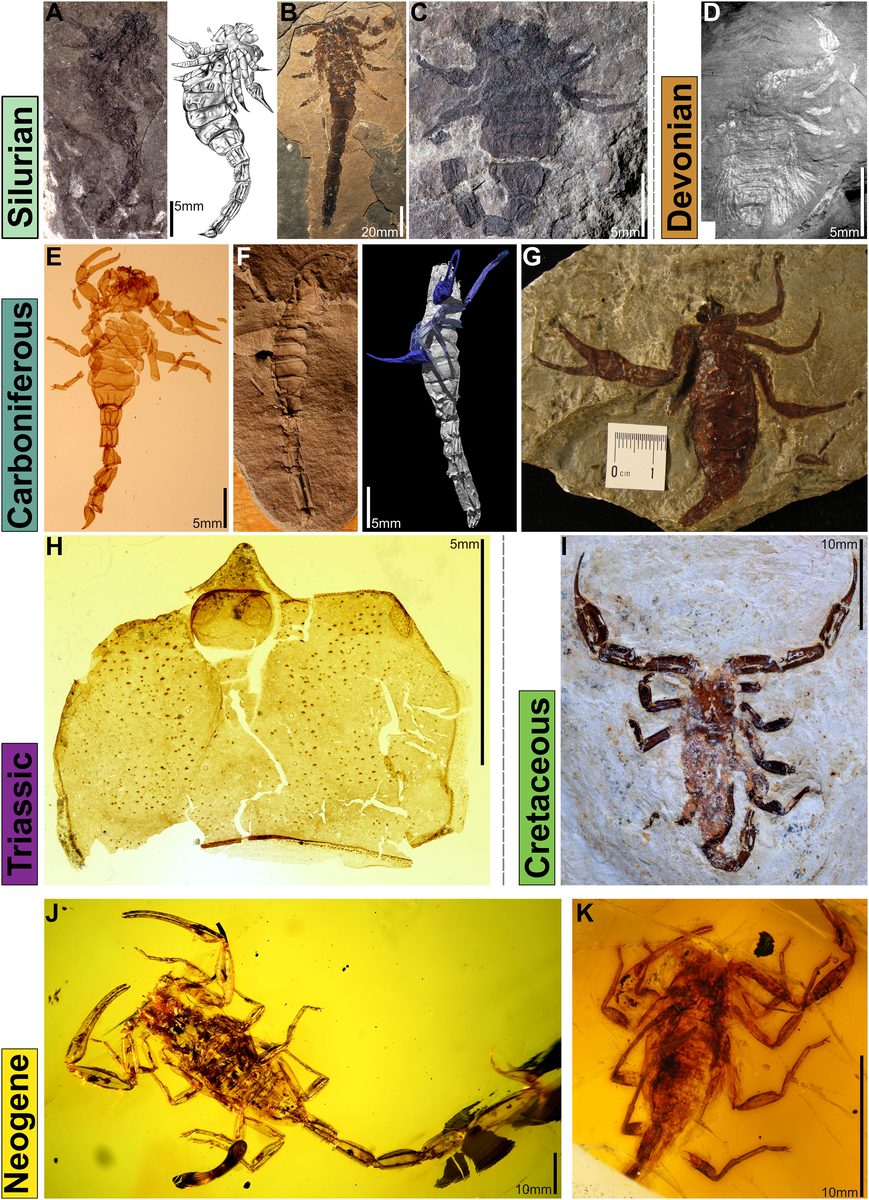
Eramoscorpius brucensis, from Silurian rocks in Canada, is treated as an unambiguous scorpion and was used as the comparison point for the British material. Its sternum shape matches the one the team found in Praearcturus.

Then

The comparison anchors Praearcturus inside the scorpion family tree.

Now

It supports the broader argument that some pre-Carboniferous scorpions were aquatic or amphibious.

Why this matters now

Without a well-identified early scorpion to compare against, the British fragments would have stayed unclassified.

Sources

(9)