
Pull to refresh
Logo
Genomic study restores 12 coral species on the Great Barrier Reef

Genomic study restores 12 coral species on the Great Barrier Reef

New Capabilities

DNA from museum type localities reverses decades-old synonymies in the branching coral genus Acropora

Overview

Updated 1 hour ago

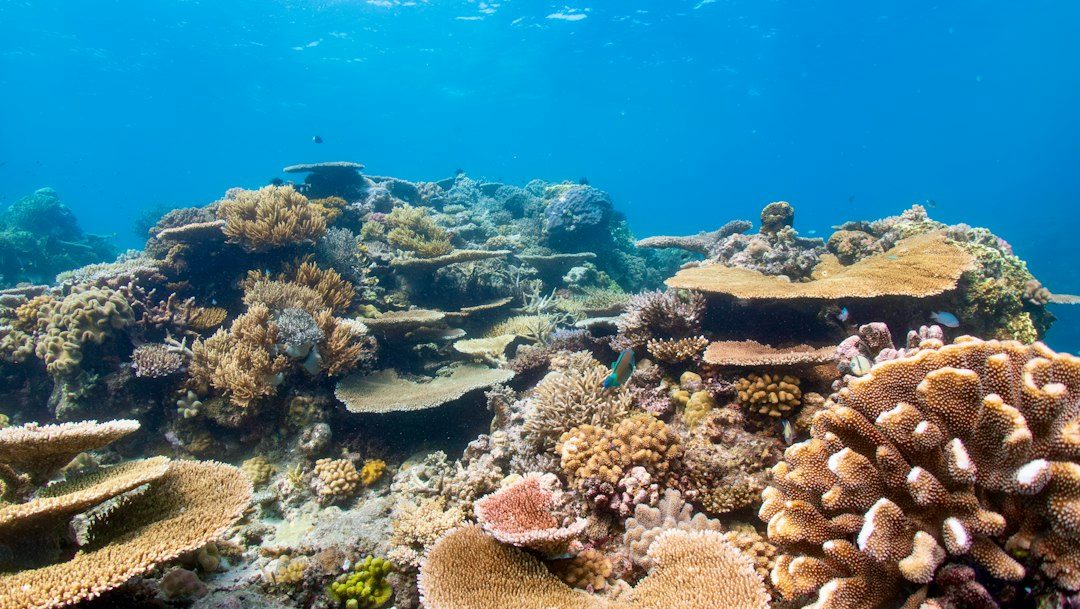
For most of the 20th century, coral taxonomists worked from bleached skeletons. Species that looked alike got merged, and names disappeared into longer lists of synonyms. A study published in Invertebrate Systematics has now reversed 12 of those mergers in Acropora, the branching corals that dominate many reef flats and slopes.

The authors did not find 12 new corals. They showed that 12 names retired by earlier taxonomists belong to real, separate species, and that four more specimens whose identity had stayed unresolved are valid species too. Of 53 Acropora names assessed, 47 held up as distinct after the team sequenced 369 specimens, including four holotypes and 49 topotypes collected near the original type localities.

Why it matters

Reef managers protect what they can name. Splitting one widespread coral into several narrow-range species changes which populations count as at risk.

Questions about this story

Free account needed to ask — your question is kept and asked for you right after sign-up. Answers are public.

No questions yet — be the first to ask.

Key Indicators

12
Acropora species reinstated from synonymy
Names that 20th-century taxonomists had folded into other species are valid again.
4
Previously unresolved taxa recognized as valid species
Corals whose identity had stayed uncertain now have formal species status.
47
Species supported as distinct out of 53 assessed
The study covered 40 names with type localities in eastern Australia plus 13 wider Indo-Pacific names.
369
Specimens in the phylogenomic analysis
Includes four sequenced holotypes and 49 topotypes taken from the corals' original locations.
7
New Acropora species named by Project Phoenix to date
The wider international collaboration this study belongs to, as described by lead author Augustine Crosbie.

Voices

Curated perspectives — historical figures and your fellow readers.

Sign up to generate historical perspectives on this story.

People Involved

Organizations Involved

Timeline

1900 November 2026

4 events Latest: Today
Tap a bar to jump to that date
  1. Study restores 12 Acropora species

    Today Research

    A topotype-anchored phylogenomic analysis of 369 specimens reverses 12 synonymies and recognizes four previously unresolved taxa.

  2. Skeleton-based monographs merge coral species

    Taxonomy

    Revisionary work through the 1970s and 1990s folds many named corals into synonymy without molecular data.

  3. Crossland describes an eastern Australian coral as Acropora brooki

    Taxonomy

    Cyril Crossland uses a name already occupied by Bernard's 1900 species, creating a collision that lasts decades.

  4. The name Acropora brooki is first used

    Taxonomy

    Bernard publishes the combination for one coral, which takes priority over any later use of the same name.

Scenarios

1

Project Phoenix applies the method to other coral genera

Likely Resolves by End of 2029

Discussed by: Augustine Crosbie, lead author, in comments to ConnectSci

Crosbie says the next step is extending the topotype-anchored genomic approach to other reef-building coral genera and to regions where historical synonymies have never been tested with DNA. If that happens, the count of recognized coral species rises well beyond Acropora, and range maps for many common reef corals shrink.

2

Eastern Australia's Acropora tally keeps climbing

Likely Resolves by End of 2028

Discussed by: Augustine Crosbie and Peter Cowman, both describing ongoing work

Crosbie says more new species are on the way from Project Phoenix, and Cowman has said the topotype approach usually reveals more species that need recognition. Each addition would come from the same eastern Australian reef system, further raising the region's known coral diversity.

3

Conservation assessments adopt the restored names

Possible Resolves by Q2 2029

Discussed by: Peter Cowman and Augustine Crosbie, both citing extinction-risk assessment as the point of the work

Cowman says correct species boundaries matter when assessing extinction risk and directing conservation money. The test is whether the bodies that publish threat assessments rewrite their coral accounts to match the restored names and their narrower ranges.

4

A published rebuttal disputes the reinstatements

Unlikely Resolves by End of 2029

Discussed by: No named critic; the study itself notes prior disagreement between morphological and genomic classifications

The paper argues that 20th-century synonymies do not match genomic evidence, but taxonomic revisions of this scale have drawn counterarguments before. A rebuttal would need to show that the topotype specimens used to anchor the names do not represent the original types.

Historical Context

3 moments from history that rhyme with this story — and how they unfolded.

1970s-1990s

The synonymization era (1970s-1990s)

Coral taxonomy at the time relied on the shape of bleached skeletons compared against a single type specimen. Reviewers decided that many separately named corals overlapped too much to be distinct, and merged them, without any DNA evidence.

Then

Species counts fell, and names that had been in use for decades became junior synonyms.

Now

Ecological surveys, bleaching studies and conservation assessments treated the merged groups as single widespread species with broad ranges.

Why this matters now

This study tests 53 of those names directly against genomic data and finds that 12 mergers were wrong.

1952

Crossland's naming collision (1952)

Cyril Crossland described an eastern Australian coral as Acropora brooki, a combination Bernard had already published in 1900 for a different species. The later name could not stand.

Then

The eastern Australian coral carried a name that was technically unavailable.

Now

The species was eventually folded into another name entirely. The new paper gives it the replacement name Acropora crosslandi.

Why this matters now

It shows how a naming technicality, not biology, can erase a species from the record for 70 years.

2020s

Project Phoenix and the genomic turn (2020s)

An international collaboration began pairing historical type material with modern sequencing, collecting fresh tissue from type localities because old skeletons contain no DNA. The collaboration has named seven new Acropora species to date.

Then

Genomic studies started producing family trees that did not match the 20th-century species catalogues.

Now

Taxonomists are now formally rewriting the catalogues rather than flagging the mismatch as an open question.

Why this matters now

This paper is the formal taxonomic act, not a preliminary signal that revision might eventually happen.

Sources

(5)