


Hall effect works with in-plane magnetic fields, Carnegie Mellon team shows
New CapabilitiesDiscovery overturns a 147-year-old assumption and could lead to simpler multi-axis magnetic sensors
3 days ago: Discovery gains wide coverageNew here? Follow stories to track developments over time. Create a free account to get updates when stories you care about change.
Overview
Updated 46 minutes agoFor 147 years, physicists relied on a simple rule: the Hall effect needs a magnetic field pointing straight at a material's surface. Carnegie Mellon researchers just showed that rule was wrong.
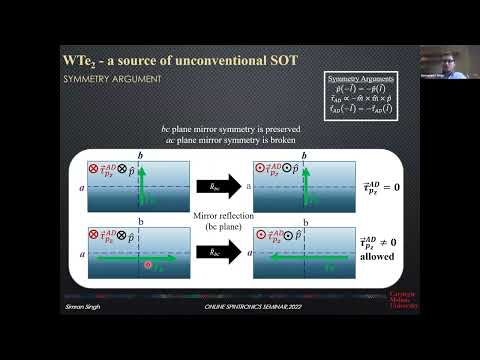
Their experiments detected a second Hall signal driven by an in-plane magnetic field in devices just a few atomic layers thick. A single sensor can now measure magnetic fields in multiple directions, something that previously required separate sensors.
Why it matters
A single ultra-thin sensor could soon replace the separate magnetic field detectors cars, phones, and medical devices rely on today.
Questions about this story
Free account needed to ask — your question is kept and asked for you right after sign-up. Answers are public.
No questions yet — be the first to ask.
Key Indicators
Voices
Curated perspectives — historical figures and your fellow readers.
Play
Exploring all sides of a story is often best achieved with Play.
Higher or Lower
A number from this story, against one from elsewhere in the news — guess which is bigger, then keep the chain going. 5 rounds, 3 strikes; a miss costs a strike and resets your streak.
Keyboard: ↓/L lower · ↑/H higher
0 points — sign up to put that on the leaderboard.
Connections
Sixteen names from the news. Find the four hidden groups of four. Four mistakes max.
Sign up to keep a daily streak — a new puzzle lands every day.
Exit debate?
Your progress in this debate will be lost.
- 1 Two AI personas square off on this story.
- 2 You predict who'll win each round — correct picks earn XP.
- 3 One crossfire question is yours to fire. Pick it carefully.
Couldn't generate a topic
Select Your Champions
Choose one persona for each side of the debate
DEBATE TOPIC
Choose personas with different perspectives for a more dynamic debate.
Select debater for this side:
No debate personas available right now.
Select debater for this side:
No debate personas available right now.
Who's Got This Round?
Make your prediction before the referee scores
The referee scores both sides on
Round Results
Set the Crossfire
Pick the question both personas must answer in the final round
Debate Oracle! You called every round!
Sharp Instincts! You know your debaters!
The Coin Flip Strategist! Perfectly balanced!
The Contrarian! Bold predictions!
Inverse Genius! Try betting the opposite next time!
XP Breakdown
Prediction History
People Involved
Organizations Involved
The university where the in-plane anomalous Hall effect was first demonstrated.
A leading peer-reviewed journal covering materials science and condensed matter physics.
Timeline
September 1879 September 2026
-
Discovery gains wide coverage
Latest MediaWide coverage follows Carnegie Mellon's announcement of the in-plane Hall effect finding.
-
Carnegie Mellon issues press release
AnnouncementCarnegie Mellon issues press release; ScienceDaily publishes the announcement.
-
Nature Materials publishes the in-plane Hall effect paper
PublicationCarnegie Mellon team publishes paper on in-plane anomalous Hall effect in Nature Materials.
-
Hall discovers the Hall effect
DiscoveryEdwin Hall discovers that a perpendicular magnetic field deflects current in a conductor.
Historical Context
3 moments from history that rhyme with this story — and how they unfolded.
Edwin Hall's Discovery (1879)
While a graduate student at Johns Hopkins University, Edwin Hall ran an experiment showing that a magnetic field perpendicular to a current-carrying conductor deflects moving charges, creating a measurable transverse voltage. He published the result later that year.
The finding gave physicists a way to measure charge carrier density and sign in materials.
The Hall effect became a standard tool in condensed matter physics and the basis for sensors used in cars, smartphones, and industrial equipment.
This is the same effect the CMU team just extended. Hall's original geometry assumed perpendicular fields; the new work shows the effect also works with in-plane fields.
Quantum Hall Effect (1980)
Klaus von Klitzing found that in a two-dimensional electron gas at very low temperatures and high magnetic fields, the Hall resistance becomes quantized in exact fractions. He won the 1985 Nobel Prize for the work.
The effect led to a new international standard for electrical resistance.
It spawned the field of topological physics and, later, the fractional quantum Hall effect, which remains an active research area.
This earlier 'new direction' for the Hall effect shows how expanding a known phenomenon can produce both fundamental physics insights and practical metrology tools.
Giant Magnetoresistance (1988)
Albert Fert in France and Peter Grünberg in Germany independently discovered that alternating ultra-thin magnetic and nonmagnetic layers change electrical resistance dramatically when exposed to magnetic fields. Both later shared the 2007 Nobel Prize in Physics.
IBM built the first giant magnetoresistance (GMR) read heads for hard drives within about a decade.
GMR and related spintronics technology enabled the terabyte-scale hard drives that made modern data storage possible.
Like the CMU discovery, GMR began as a thin-film physics finding in a lab and took years to reach commercial products. It shows the typical path from fundamental discovery to application.
