

Pull to refresh
Logo
Physicists find evidence of altermagnetism, a third type of magnetism

Physicists find evidence of altermagnetism, a third type of magnetism

New Capabilities

Layered material could enable faster, more efficient spin-based electronics

2 days ago: Experimental evidence of altermagnetism found

Overview

Updated 1 hour ago

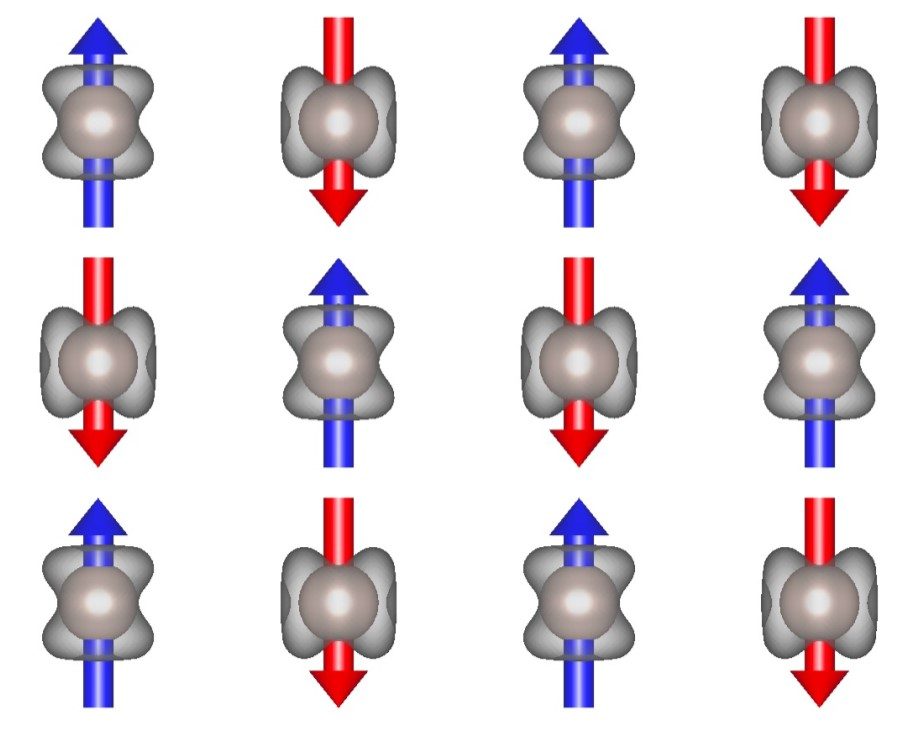
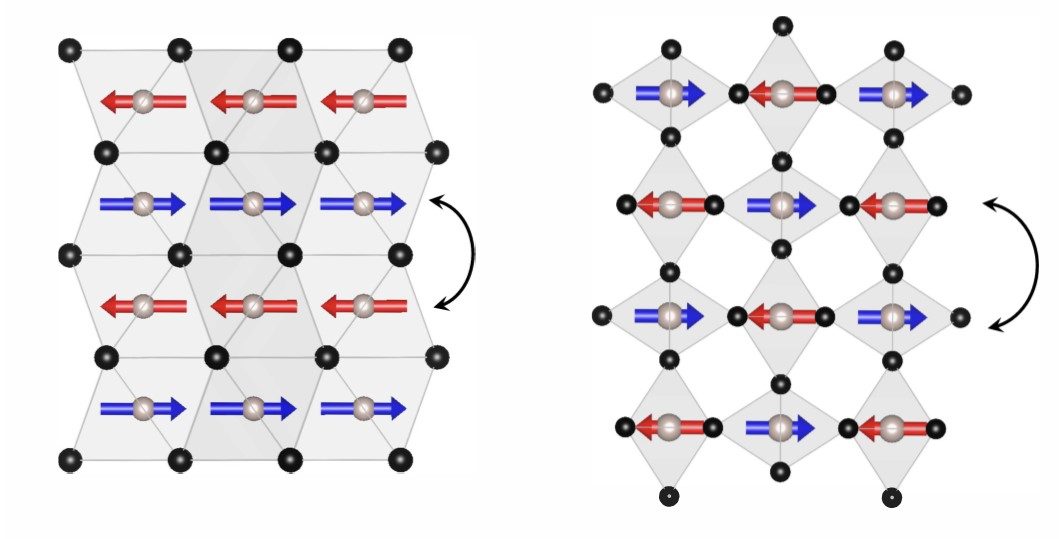
Electronics have run on electron charge for decades. A University of Central Florida team has found evidence of altermagnetism, a third type of magnetism, in a layered material that could let devices use electron spin instead.

Altermagnets combine useful traits of the two known magnetic states. They generate spin currents like ferromagnets but, like antiferromagnets, produce no stray magnetic fields. That combination could enable faster, more energy-efficient memory and logic devices.

Why it matters

If altermagnetic materials pan out, future computers could run on electron spin at terahertz speeds while using far less energy.

Questions about this story

Free account needed to ask — your question is kept and asked for you right after sign-up. Answers are public.

No questions yet — be the first to ask.

Key Indicators

3
Known fundamental types of magnetism
Altermagnetism joins ferromagnetism and antiferromagnetism as a third type.
2022
Year altermagnetism was first theorized
Theory predicted the magnetic state before experimental confirmation.
1,000x
Faster spin rotation vs. ferromagnets
Altermagnetic spins rotate about 1,000 times faster, enabling terahertz-speed memory.

Voices

Curated perspectives — historical figures and your fellow readers.

Ever wondered what historical figures would say about today's headlines?

Sign up to generate historical perspectives on this story.

People Involved

Organizations Involved

Timeline

2022 October 2026

2 events Latest: 2 days ago
  1. Experimental evidence of altermagnetism found

    Latest Scientific discovery

    UCF team reports altermagnetic signatures in Co 1/4 TaSe2 using ARPES.

  2. Altermagnetism theory proposed

    Scientific discovery

    Šmejkal theorizes altermagnetism based on symmetries rather than magnetization.

Scenarios

1

Co 1/4 TaSe2 becomes the standard altermagnetism testbed

Likely Resolves by Oct 5, 2028

Discussed by: Madhab Neupane and the UCF research team

The material's layered structure and tunability make it ideal for studying altermagnetism. Neupane says it offers a valuable testing ground for exploring how altermagnetism interacts with other magnetic and electronic effects. If other groups adopt it, the material could become the standard platform for altermagnetism research.

2

Altermagnetic spintronics reaches commercial devices

Possible Resolves by Oct 5, 2036

Discussed by: Stuart Parkin, director of the Max Planck Institute of Microstructure Physics

Parkin notes that GMR took about a decade to reach commercial impact, and the path from breakthrough to applications is strewn with obstacles. If altermagnetic materials prove manufacturable and durable, they could follow a similar path to commercial spintronic devices.

3

Further studies fail to confirm altermagnetism in Co 1/4 TaSe2

Unlikely Resolves by Oct 5, 2028

Discussed by: Condensed matter physics community, where replication is standard practice

The altermagnetic signature in Co 1/4 TaSe2 was identified through ARPES measurements that matched theoretical predictions. If independent groups cannot reproduce the results, the claim could be revised or withdrawn.

Historical Context

2 moments from history that rhyme with this story — and how they unfolded.

1988

Giant magnetoresistance discovery (1988)

Albert Fert and Peter Grünberg independently discovered that electrical resistance changes dramatically in layered magnetic structures. The effect, called giant magnetoresistance, was found in thin films of alternating magnetic and non-magnetic layers.

Then

IBM developed GMR-based read heads in the 1990s, leading to a 1,000-fold increase in disk memory capacity.

Now

The discovery launched the field of spintronics and won the 2007 Nobel Prize in Physics.

Why this matters now

GMR showed how a fundamental discovery about electron spin could transform consumer electronics. Altermagnetism could follow a similar path from lab to market.

2004

Graphene isolation (2004)

Andre Geim and Konstantin Novoselov isolated single-layer graphene at the University of Manchester using adhesive tape. The material had extraordinary electrical, thermal, and mechanical properties.

Then

The discovery won the 2010 Nobel Prize in Physics and sparked a wave of research into two-dimensional materials.

Now

Commercial applications took years to emerge, with graphene finding uses in composites, coatings, and electronics.

Why this matters now

Like graphene, altermagnetic materials are layered and could take years to move from lab discovery to practical devices.

Sources

(5)