

Pull to refresh
Logo
Attosecond X-ray pulses reach record intensity in a nanoscale spot

Attosecond X-ray pulses reach record intensity in a nanoscale spot

New Capabilities

European XFEL compresses 300-attosecond hard X-ray flashes into a 180 by 330 nanometre focus

Overview

Updated 1 hour ago

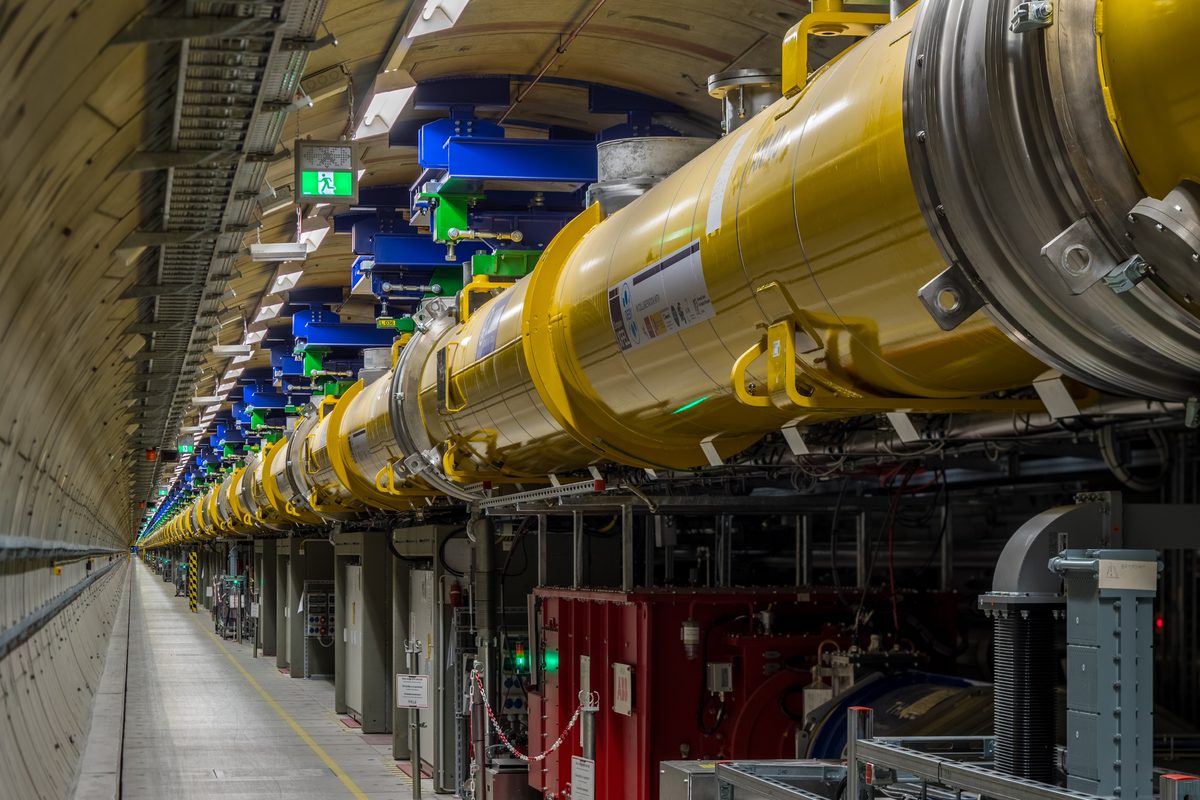
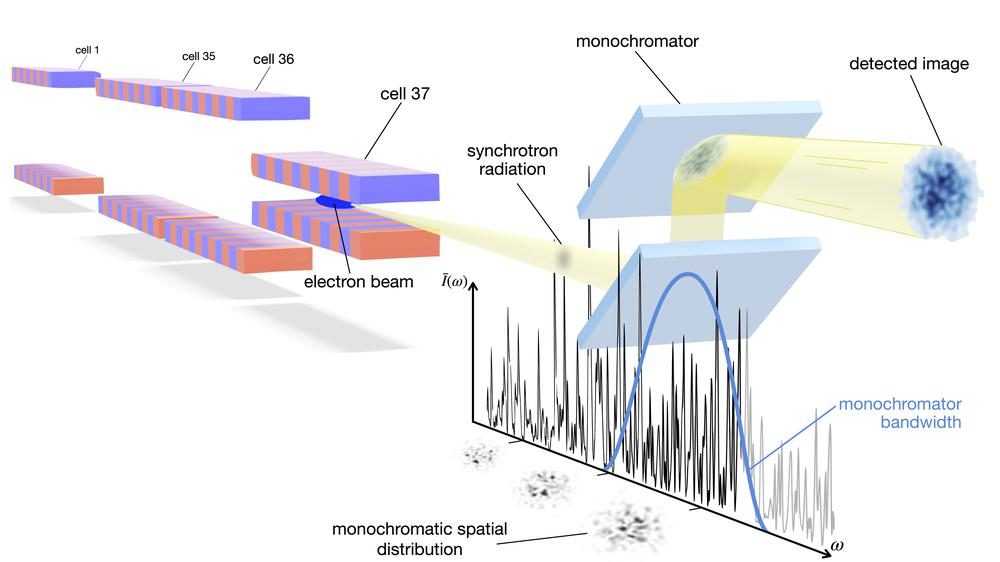
In April 2026, a team at the European X-ray free-electron laser near Hamburg squeezed hard X-ray flashes lasting about 300 attoseconds into a spot 180 by 330 nanometres across. Peak intensity passed 10^20 watts per square centimetre, which the authors call a record for an attosecond hard X-ray pulse.

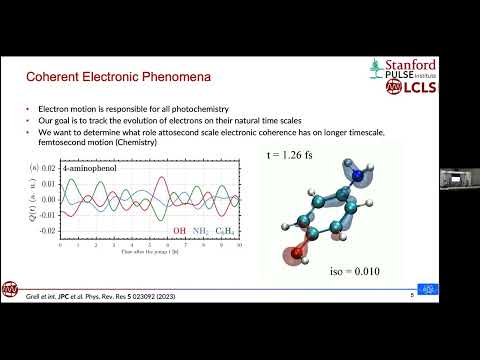
Electrons rearrange on exactly this timescale, so a shorter, brighter probe can catch them mid-motion before the beam damages the sample. The same intensity also pushes X-rays into nonlinear territory, where the light itself changes how matter responds.

Why it matters

A focused attosecond X-ray beam gives chemists a shutter fast enough to catch electrons rearranging during a reaction.

Questions about this story

Free account needed to ask — your question is kept and asked for you right after sign-up. Answers are public.

No questions yet — be the first to ask.

Key Indicators

300 as
Pulse duration
Estimated length of each hard X-ray flash, measured in attoseconds.
>10^20 W/cm²
Peak intensity
Confirmed by amplified spontaneous emission from a copper foil.
180 × 330 nm
Focal spot size
Width and height of the focused beam at the sample.
4
Mirror reflections per pulse
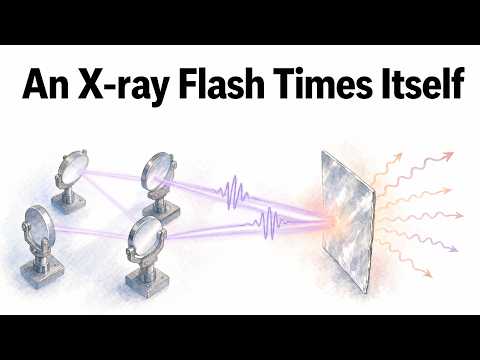
Two mirrors in the advanced Kirkpatrick-Baez system, each hit twice.
100,000×
Spot versus hair cross-section
How much smaller the focus is than a typical human hair.

Voices

Curated perspectives — historical figures and your fellow readers.

Sign up to generate historical perspectives on this story.

People Involved

Organizations Involved

Timeline

2019 November 2026

5 events Latest: Yesterday
Tap a bar to jump to that date
  1. Record intensity published in Optica

    Latest Publication

    The team reports 300-attosecond pulses focused to 180 by 330 nanometres, with peak intensity above 10^20 watts per square centimetre.

  2. Record run at the MID instrument

    Experiment

    The team fires focused attosecond pulses at a thin copper foil and observes amplified spontaneous emission and saturation.

  3. SLAC directly measures hard X-ray pulse lengths

    Research

    A Nature Photonics paper reports hard X-ray flashes lasting 100 to 400 attoseconds, the first direct measurement of their duration.

  4. European XFEL reaches terawatt attosecond pulses

    Research

    The facility reports hard X-ray pulses of a few hundred attoseconds with energies above 100 microjoules, at megahertz repetition rates.

  5. First attosecond X-ray flashes, in the soft band

    Research

    A SLAC-led team produces attosecond pulses at soft X-ray energies, showing the timing was possible but at lower photon energy.

Scenarios

1

European XFEL installs its own focusing system and opens it to users

Likely Resolves by End of 2027

Discussed by: European XFEL and DESY facility announcements

The record run relied on mirrors shipped from Japan. European XFEL has ordered its own advanced Kirkpatrick-Baez system, funded with the University of Hamburg and Germany's research ministry, with delivery expected in early 2027. Installation and commissioning would turn a one-off demonstration into a standing capability for visiting scientists at the MID instrument.

2

Nonlinear X-ray experiments produce published results using the focused beam

Possible Resolves by End of 2028

Discussed by: The paper's authors, who describe nonlinear X-ray-matter interactions as the next target

Intensity above 10^20 watts per square centimetre is high enough for X-rays to drive processes that weaker beams cannot, such as the amplified emission seen in copper. The test is whether independent groups use the setup to publish measurements of nonlinear absorption, ionization or scattering that could not be made before.

3

Other X-ray lasers match the combination of short pulse and tight focus

Possible Resolves by Q2 2028

Discussed by: Facility comparisons across SLAC, SwissFEL and European XFEL

SLAC's Linac Coherent Light Source has already demonstrated hard X-ray pulses of comparable duration, and SwissFEL has shown attosecond pulse synchronization. What European XFEL added is the tight focus that raises intensity. If other facilities pair their own short pulses with similar optics, the capability stops being unique to one site.

Historical Context

3 moments from history that rhyme with this story — and how they unfolded.

2019

First attosecond X-ray pulses at SLAC (2019)

A team led by Agostino Marinelli at SLAC produced X-ray flashes lasting attoseconds, but in the soft X-ray band, where each photon carries less energy. The result proved that X-ray lasers could be timed to electron motion.

Then

The work established a method for shortening X-ray pulses using accelerator physics rather than optics alone.

Now

It set the benchmark that later hard X-ray experiments, including the 2024 European XFEL result, were measured against.

Why this matters now

The new record is the hard X-ray successor to that soft X-ray first, and the same researcher appears in both lines of work.

November 2024

Terawatt attosecond pulses at European XFEL (2024)

European XFEL and DESY reported hard X-ray pulses exceeding 100 microjoules at a few hundred attoseconds, delivered at megahertz repetition rates. It was a power record, but not yet a delivery record.

Then

The facility could make intense pulses but had not shown them tightly focused at a sample.

Now

It shifted attention from generating pulses to concentrating them, which is the problem the 2026 experiment solved.

Why this matters now

The 2026 result is the same beam, focused. The authors describe it as moving from pulse generation to what actually reaches the sample.

2024

Seven-nanometre X-ray focus at 10^22 watts per square centimetre (2024)

Researchers using concave and convex mirrors focused 9.1 keV X-ray free-electron laser pulses to about 7 nanometres, reaching 1.45 × 10^22 watts per square centimetre and ionizing chromium into bare nuclei.

Then

The result showed that X-ray focusing could reach solid-density ionization regimes.

Now

It set a separate intensity benchmark for long-pulse X-rays, distinct from the attosecond record.

Why this matters now

It marks the boundary of the new claim: the 2026 record is for attosecond pulses, a narrower category than X-ray intensity overall.

Sources

(6)