

Pull to refresh
Logo
Time crystals synchronize across long distances in a semiconductor

Time crystals synchronize across long distances in a semiconductor

New Capabilities

Spin diffusion couples separated spin oscillators, locking billions into one shared rhythm

Today: Synchronization study published in Nature Communications

Overview

Updated 1 hour ago

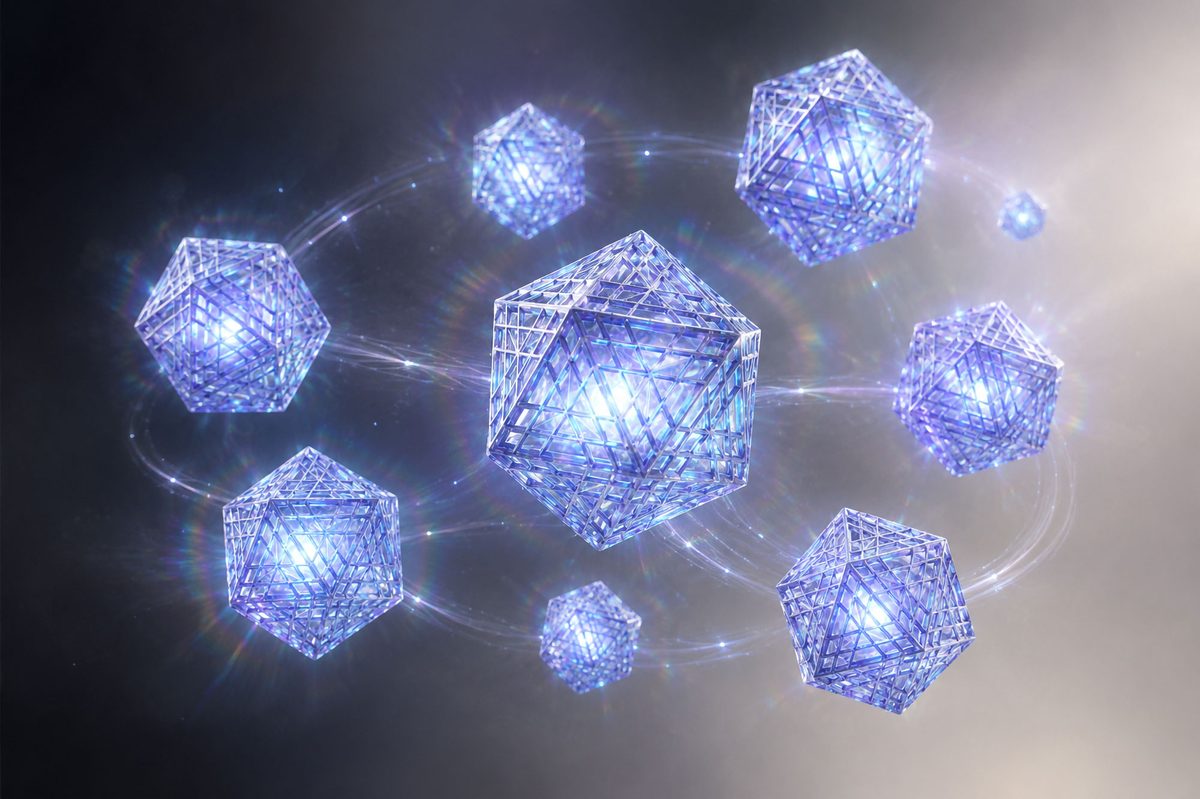
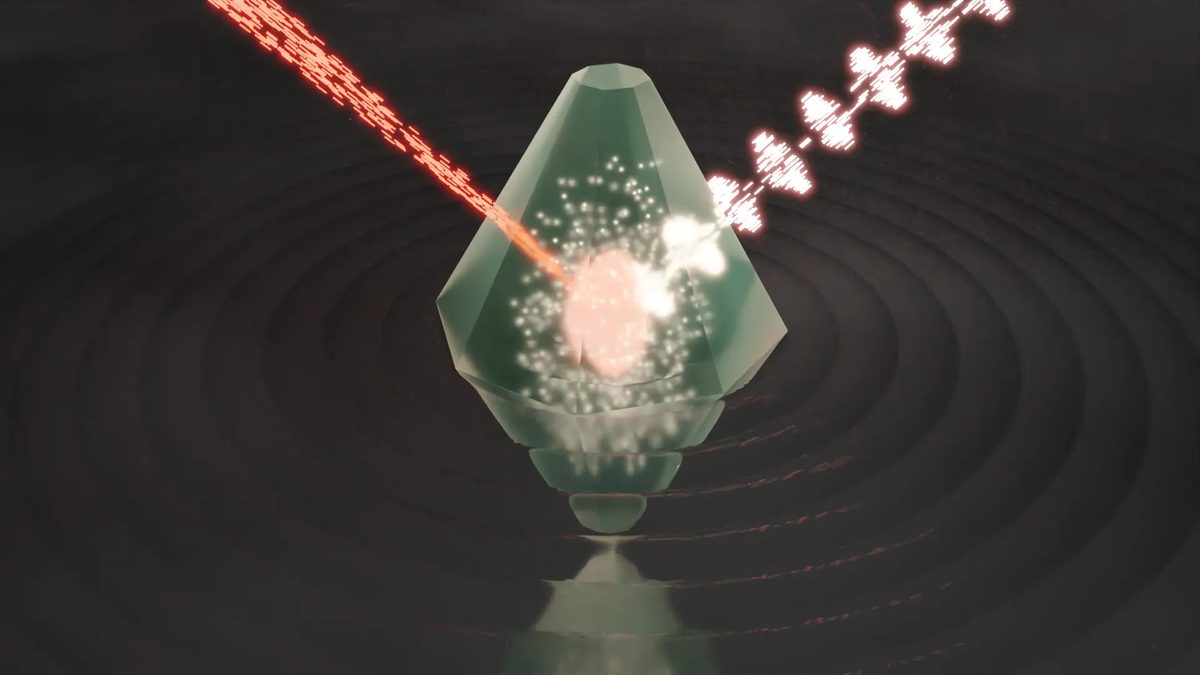
In 2012, physicist Frank Wilczek proposed the time crystal: a system that oscillates forever with no external drive. Now a German team has shown that separate time crystals inside a semiconductor can lock into one shared rhythm, up to 40 micrometers apart.

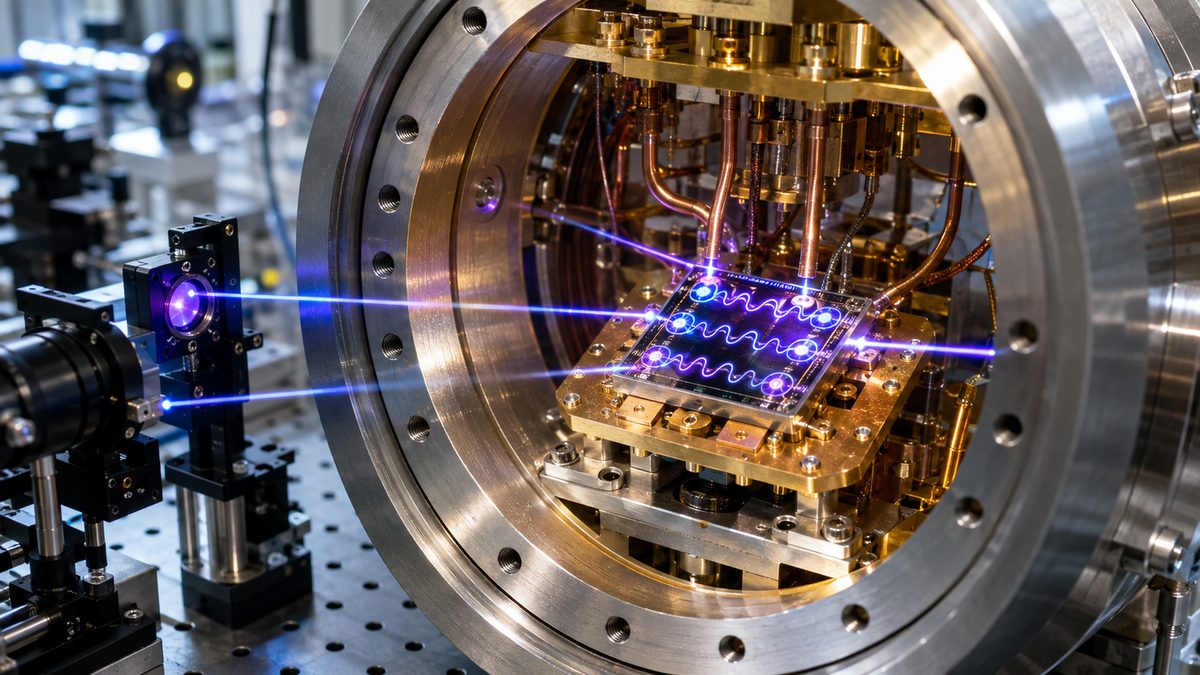
The coupling rides on diffusing electron spins. It pulls as many as a billion individual oscillators into collective motion, even when their natural frequencies differ by up to 40%. The discovery points to spin networks for spintronics and neuromorphic computing.

Why it matters

Synchronized spin oscillators could become the phase-based logic units of neuromorphic chips, processing information through collective rhythm instead of discrete gates.

Questions about this story

Free account needed to ask — your question is kept and asked for you right after sign-up. Answers are public.

No questions yet — be the first to ask.

Key Indicators

40 μm
Longest measured synchronization range
Spin oscillators in indium gallium arsenide lock to one frequency across about 40 micrometers, over 1,000 times their own size.
1 billion
Auto-oscillators that can lock together
Up to 10^9 donor-bound electron-nuclear spin systems contribute to a single synchronized state under wide-area pumping.
40%
Natural frequency spread still synchronizes
The oscillators lock even when their free-running frequencies differ by up to 40%.
17 μm
Electron spin diffusion length
The coupling mechanism's characteristic range, matching the observed synchronization distance of roughly 40 μm.

Voices

Curated perspectives — historical figures and your fellow readers.

Ever wondered what historical figures would say about today's headlines?

Sign up to generate historical perspectives on this story.

People Involved

Organizations Involved

Timeline

November 2025 September 2026

2 events Latest: Today
  1. Synchronization study published in Nature Communications

    Today Publication

    The paper 'Non-local synchronization of continuous time crystals in a semiconductor' is published, reporting synchronization over ~40 μm mediated by electron spin diffusion.

  2. Preprint posted to arXiv

    Publication

    TU Dortmund team shares results showing that separated electron-nuclear spin time crystals in InGaAs synchronize through spin diffusion.

Scenarios

1

Tunable spin synchronization in semiconductors demonstrated

Possible Resolves by Sep 24, 2028

Discussed by: TU Dortmund researchers in the Nature Communications paper's final section

The authors note that electrostatic gating or lateral drift control could convert the passive coupling into an actively tunable channel. A follow-up study demonstrating electrical or magnetic control of the synchronization would mark the step toward controllable spin networks for spintronics.

2

Spin-synchrony drives a neuromorphic prototype

Possible Resolves by Sep 24, 2029

Discussed by: The paper's closing discussion and neuromorphic computing researchers

If the synchronized spin system is wired into an oscillator array, it could act as an analog computing network processing information through collective phase dynamics. A proof-of-concept device would establish spin-based neuromorphic hardware as a practical direction.

3

Alternative coupling mechanism proposed

Unlikely Resolves by Sep 24, 2027

Discussed by: Reviewers and competing condensed matter labs

A different group could argue the synchronization stems from something other than spin diffusion, such as direct optical or thermal coupling. Such a proposal would refine or challenge the mechanism claim.

Historical Context

3 moments from history that rhyme with this story — and how they unfolded.

February 1665

Huygens' pendulum clocks (1665)

Christiaan Huygens noticed two pendulum clocks mounted on the same wall swung in perfect anti-phase, with no visible connection between them. He suspected a hidden 'sympathy' between the clocks.

Then

The effect became the founding observation of synchronization science.

Now

Modern physics explains it as weak mechanical coupling through the shared wall. It seeded the entire field of synchronization dynamics.

Why this matters now

The semiconductor time crystals sync through an invisible medium, exactly like Huygens' clocks syncing through the wall, but now in a solid-state system.

October 2016 - March 2017

First time crystals observed (2016-2017)

Frank Wilczek proposed time crystals in 2012: systems whose ground state oscillates in time. Harvard and University of Maryland groups created discrete time crystals in driven spin systems.

Then

The concept moved from theory to experiment within five years.

Now

Time crystals became a real research field, though early experimental realizations were fragile and required careful driving.

Why this matters now

The TU Dortmund work uses continuous time crystals in semiconductors, which are more robust, and shows they can interact over long distances.

1980s-present

Josephson junction arrays (1980s)

Superconducting Josephson junctions biased into oscillation naturally lock together into coherent arrays. Engineers exploited this synchronization for voltage standards and potential terahertz sources.

Then

Synchronized junction arrays became the basis of the international voltage standard.

Now

They remain a model system for how synchronization in solid-state oscillators creates practical value.

Why this matters now

Like junction arrays, the synchronized spin oscillators show that locking individual solid-state oscillators to a common rhythm can enable useful collective behavior.

Sources

(7)