




Pull to refresh
Logo
Hong Kong team unveils corrosion-resistant steel for seawater hydrogen

Hong Kong team unveils corrosion-resistant steel for seawater hydrogen

New Capabilities

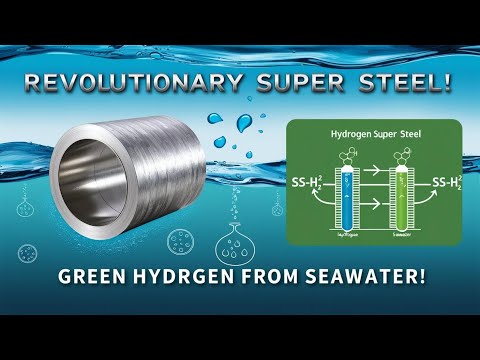
SS-H2 matches titanium in salt water electrolyzers at a fraction of the cost

Yesterday: Team reports titanium-level performance at lower cost

Overview

Seawater eats metal. That has forced makers of seawater electrolyzers to build them from titanium, a metal so costly it helps keep hydrogen made from seawater off the market.

A University of Hong Kong team says it has a cheaper stand-in. Its new stainless steel, called SS-H2, resists salt corrosion about as well as titanium. The group estimates it could cut the price of an electrolyzer's structural metal by roughly 40 times.

Why it matters

Green hydrogen from seawater has been too expensive to scale. A cheap, corrosion-proof steel removes one of its biggest material cost barriers.

Questions about this story

No questions yet — be the first to ask.

Key Indicators

1,700 mV
Corrosion resistance in salt water
Electrical potential SS-H2 withstands in chloride media before corroding.
~40x
Structural material cost cut
Estimated reduction from swapping titanium parts for SS-H2.
53%
Share of electrolyzer cost that is structural
Structural parts' share of a 10-megawatt PEM electrolysis system.
~$2.3M
Cost of a 10 MW electrolysis system
HKU's estimate of about HK$17.8 million for the reference tank system.

Voices

Curated perspectives — historical figures and your fellow readers.

Ever wondered what historical figures would say about today's headlines?

Sign up to generate historical perspectives on this story.

Play

Exploring all sides of a story is often best achieved with Play.

Most of these play right now — no account needed. Sign up to save scores, keep a streak, and unlock Debate and Predict. Log in Sign Up
Predict 4 ways this could play out. Back the one you believe — contrarian picks score more when a scenario has a resolution date. Log in to play

People Involved

Organizations Involved

Timeline

November 2023 August 2026

3 events Latest: Yesterday
  1. Team reports titanium-level performance at lower cost

    Latest Research

    In Materials Today, HKU says SS-H2 matches titanium in seawater electrolyzers and could cut structural material costs about 40-fold.

  2. Corrosion mechanism draws wider attention

    Research

    Coverage spreads of SS-H2's manganese-based protective layer, which resists salt corrosion up to 1,700 mV.

  3. HKU first unveils SS-H2 steel

    Research

    Huang's team reports a stainless steel that resists hydrogen embrittlement, aimed at hydrogen equipment.

Historical Context

3 moments from history that rhyme with this story — and how they unfolded.

1913

Brearley's stainless steel (1913)

Harry Brearley in Sheffield, England, was testing gun-barrel steels when he noticed a chromium alloy that resisted rust. The corrosion resistance was almost a side effect of another search.

Then

Cutlery makers adopted the alloy within a few years.

Now

Stainless steel became a building block of modern industry, from kitchens to chemical plants.

Why this matters now

SS-H2 is another corrosion surprise in steel, this time an unexpected manganese layer, hinting at how much chemistry these alloys still hold.

1980

Lithium cobalt oxide cathode (1980)

John Goodenough's Oxford lab identified a cathode material that made rechargeable lithium batteries practical. It sat as a lab result before industry picked it up.

Then

The discovery drew limited commercial interest at first.

Now

Sony shipped the first commercial lithium-ion battery in 1991, eleven years later, and the chemistry now powers phones and cars.

Why this matters now

It shows the gap between a promising material and a shipped product, the same gap SS-H2 must cross from pilot wire to real electrolyzers.

1986

High-temperature superconductors (1986)

Georg Bednorz and Alex Müller found ceramics that superconduct at higher temperatures than theory predicted. The effect won a fast Nobel Prize but defied existing explanation.

Then

A burst of research chased room-temperature superconductivity.

Now

Commercial use stayed narrow, and the mechanism is still debated decades later.

Why this matters now

Like SS-H2's manganese layer, this was a result that 'cannot be explained' by current theory, a reminder that surprise findings can be real yet slow to pay off.

Sources

(5)