

Pull to refresh
Logo
Laser-etched panels desalinate seawater without producing brine

Laser-etched panels desalinate seawater without producing brine

New Capabilities

University of Rochester's solar system extracts salts as solids and recovers lithium

Today: Brine-free solar desalination paper published

Overview

Updated 59 minutes ago

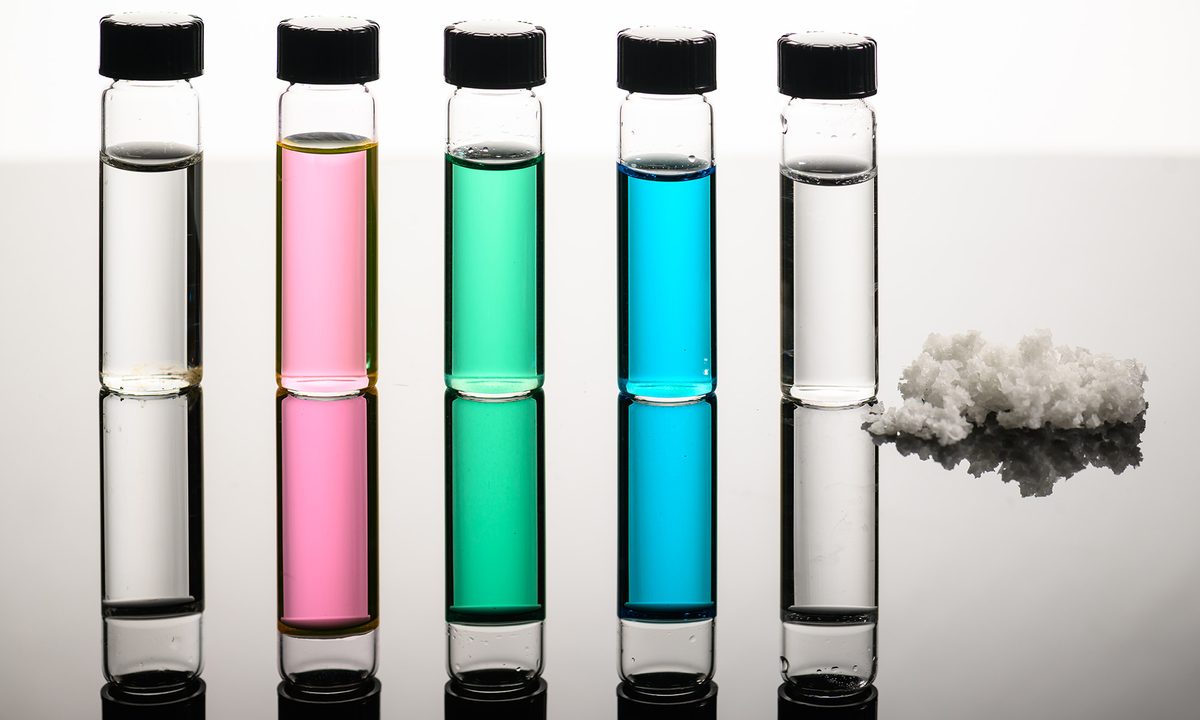
Existing desalination plants send more than half their intake back into the ocean as brine thick with chemicals. A University of Rochester team has demonstrated a solar-powered system that extracts nearly all the salt as a dry solid — no liquid waste at all.

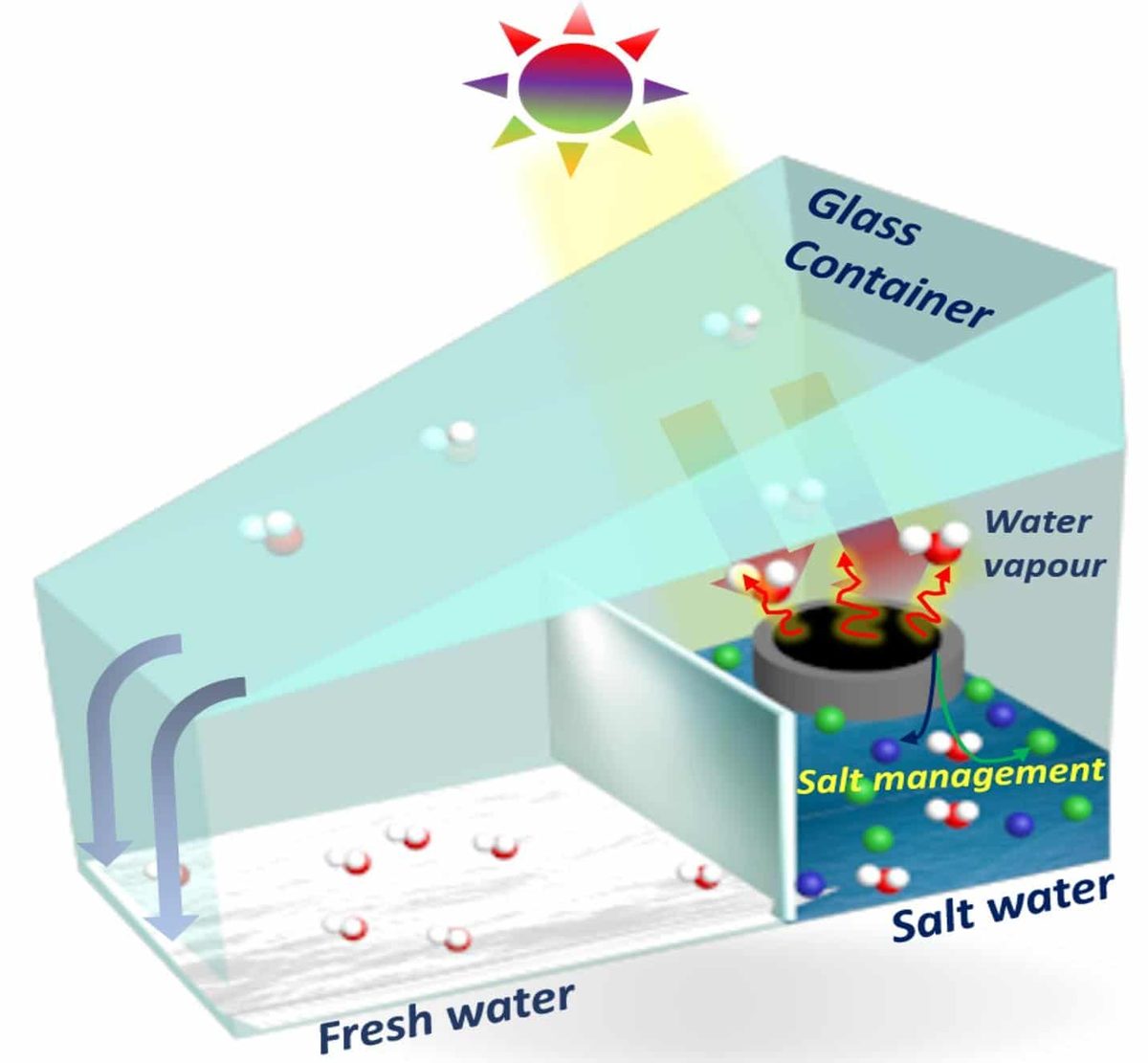
The device uses laser-etched metal panels that absorb nearly all sunlight and pull a thin film of seawater across their surface. Water evaporates under the sun. Crystallized salts collect at the panel edges for harvest, including lithium, which the team recovered from Great Salt Lake samples.

Why it matters

Every desalination plant now wastes more than half its intake as brine; this system could turn that waste stream into saleable salt and lithium.

Questions about this story

Free account needed to ask — your question is kept and asked for you right after sign-up. Answers are public.

No questions yet — be the first to ask.

Key Indicators

74%
Solar-to-vapor efficiency
Share of incoming sunlight converted to water vapor under one sun.
≈100%
Salt extracted in solid form
Nearly all salts captured as dry solids; zero liquid discharge.
50%
Lithium recovered from Great Salt Lake salts
Share of lithium extracted from residual desalination salts.
3
Oceans tested
Water from the Pacific, Atlantic, and Indian Oceans was purified.

Voices

Curated perspectives — historical figures and your fellow readers.

Ever wondered what historical figures would say about today's headlines?

Sign up to generate historical perspectives on this story.

People Involved

Organizations Involved

Timeline

1 event Latest: Today
  1. Brine-free solar desalination paper published

    Today Publication

    University of Rochester team reports in Light: Science & Applications that laser-etched panels desalinate ocean water, harvest salts as solids, and recover lithium.

Scenarios

1

Rochester teams with industry to scale brine-free desalination

Possible Resolves by End of 2027

Discussed by: Chunlei Guo (lead researcher) and Tech Briefs coverage

Guo says the fabrication methods are scalable and he is actively seeking industrial partners. If a water-treatment or desalination company licenses the technology, panels could be produced in volume for solar-driven plants in sunny coastal regions, moving beyond the proof-of-concept stage.

2

Combined solar-power and desalination panels enter pilot testing

Possible Resolves by Q2 2028

Discussed by: Chunlei Guo (in Tech Briefs interview) and ASME magazine

Guo's group has shown the desalination surface can cool photovoltaic cells, lifting their electrical output while producing fresh water. A pilot-scale unit combining both functions would be the clearest sign the technology is moving toward deployment rather than remaining a lab demonstration.

3

Battery supply chain taps desalination salts for lithium

Possible Resolves by Q2 2028

Discussed by: Futurity, Tech Briefs, and ASME magazine coverage

The team extracted about half the lithium from Great Salt Lake water samples, pointing to a way to source lithium from desalination waste rather than mining. If a battery maker or mining company pursues this, desalination plants could double as mineral refineries.

Historical Context

3 moments from history that rhyme with this story — and how they unfolded.

1963

Loeb-Sourirajan reverse-osmosis membrane (1963)

Chemists Sidney Loeb and Srinivasa Sourirajan at the University of California, Los Angeles developed the first asymmetric membrane that could desalinate seawater by reverse osmosis. Their 1963 paper is widely credited with launching modern membrane desalination.

Then

The membrane set off decades of scale-up work; the first major commercial reverse-osmosis plants opened in the 1970s.

Now

Reverse osmosis is now the dominant desalination technology worldwide, but it leaves a concentrated brine byproduct that plants discharge back into the ocean.

Why this matters now

Shows how long lab breakthroughs can take to reach industrial deployment, and frames the brine problem the Rochester system targets.

2012

Graphene-oxide desalination membranes (2012)

Researchers at the University of Manchester showed graphene-oxide membranes could filter salts from water in the lab, generating intense coverage and forecasts of cheap, energy-efficient desalination.

Then

The result drew years of follow-up research and startup attempts.

Now

Graphene membranes remain lab-scale; commercial seawater desalination still relies on reverse osmosis.

Why this matters now

A cautionary parallel: strong lab results don't guarantee industrial adoption, especially in a capital-heavy sector like water treatment.

2010s

Zero liquid discharge rule push (2010s)

China's 2015 Water Ten Plan and similar rules in India pushed industrial plants toward zero liquid discharge, forcing installation of energy-hungry thermal crystallizers to eliminate wastewater.

Then

Plants built crystallizer systems that meet the rules but consume large amounts of electricity.

Now

Zero-liquid-discharge remains expensive and niche outside regulated industries.

Why this matters now

Regulatory pressure for zero discharge already exists; the Rochester panels aim to hit that target with sunlight instead of electricity.

Sources

(6)