


Pull to refresh
Logo
Sila signs multiyear silicon anode supply deal with Panasonic

Sila signs multiyear silicon anode supply deal with Panasonic

New Capabilities

The first mass-market customer for a US-made silicon-carbon anode, backed by a $1.4 billion Pentagon loan commitment

Overview

Updated 3 hours ago

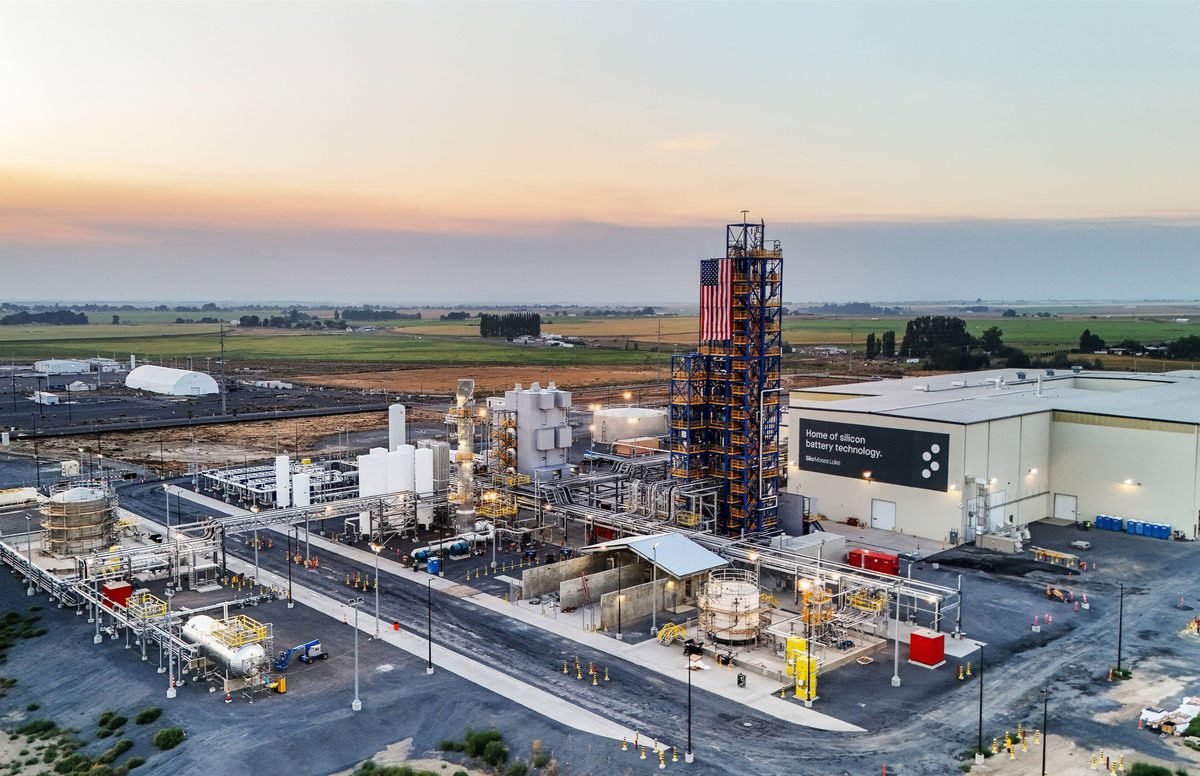
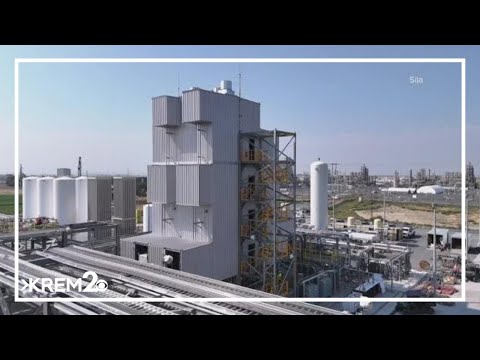
Sila opened its Moses Lake, Washington anode plant in September 2025 with about 100 employees and no mass-market buyer. On Wednesday the company said Panasonic Energy Corporation of North America will buy its Titan Silicon anode material under a multiyear agreement worth potentially more than $1 billion over time.

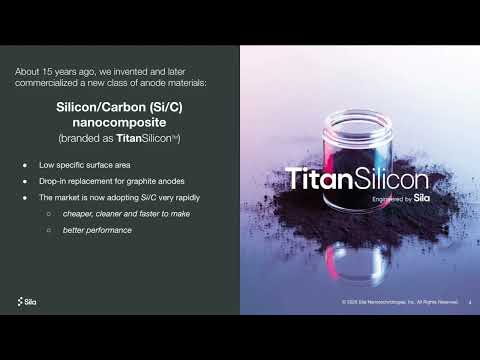
The contract is the first commercial-scale outlet for a US-made silicon-carbon anode, which can hold 20% to 40% more energy in the same space as graphite. It also tests whether a Pentagon-backed startup can do the part its peers keep failing at: turning laboratory material into factory output.

Why it matters

China processes more than 90% of the world's battery anode graphite. If Sila delivers at Panasonic's scale, the US gets a non-Chinese anode supply at commercial volume.

Questions about this story

Free account needed to ask — your question is kept and asked for you right after sign-up. Answers are public.

No questions yet — be the first to ask.

Key Indicators

$1B+
Potential offtake value
Sila describes this as potential value over time, not a guaranteed contract amount.
$1.4B
Conditional Pentagon loan commitment
From the Department of Defense's Office of Strategic Capital, awarded in August 2026 and not yet finalized.
500
Additional jobs from expansion
Estimated manufacturing and construction roles at the Moses Lake site as capacity grows.
2 GWh
Current plant capacity
Initial output, enough anode material for roughly 20,000 to 50,000 electric vehicles.
90%+
China's share of graphite production
Chinese processors dominate the anode material that silicon is meant to replace.
20–40%
Extra energy stored in the same space
Sila's stated gain from swapping graphite anodes for Titan Silicon.

Voices

Curated perspectives — historical figures and your fellow readers.

Sign up to generate historical perspectives on this story.

People Involved

Organizations Involved

Timeline

2011 November 2026

7 events Latest: Today
Tap a bar to jump to that date
  1. Sila and Panasonic announce multiyear offtake agreement

    Today Commercial

    Potential offtake tops $1 billion over time, with no minimum volumes, prices or schedule disclosed.

  2. Pentagon commits $1.4 billion conditional loan

    Federal financing

    The Office of Strategic Capital backs Sila's expansion, subject to financial, legal and technical conditions.

  3. Sila raises $300 million in private equity

    Funding

    The round precedes a larger federal loan commitment the following month.

  4. Moses Lake plant starts operating

    Production

    Sila begins making Titan Silicon with roughly 100 full-time employees on site.

  5. Panasonic places first order for Sila anode material

    Commercial

    The cell maker agrees to buy silicon anode material from the plant Sila is still building.

  6. Moses Lake plant announced with $100 million DOE grant

    Funding

    Sila picks a Washington site for its first factory and wins federal support under the Biden administration.

  7. Sila founded in Alameda

    Founding

    The company begins work on silicon-based anode material for lithium-ion batteries.

Scenarios

1

Panasonic qualifies Titan Silicon and takes commercial volumes

Likely Resolves by Q2 2029

Discussed by: Sila, Panasonic Energy, and trade coverage in Manufacturing Dive and GeekWire

Sila's material passes Panasonic's cell qualification and starts appearing in US-made battery cells at volume. Sila says it aims to begin manufacturing at the expanded Moses Lake facility in 2028, with output rising from there. This is the outcome the deal is built around, and the one the $1.4 billion loan depends on.

2

Pentagon loan closes and expansion construction begins

Possible Resolves by End of 2027

Discussed by: Sila's press materials and the Department of Defense Office of Strategic Capital

The $1.4 billion loan commitment becomes a finalized loan after Sila meets the financial, legal and technical conditions attached to it. Construction then starts on the expanded Moses Lake plant, and the estimated 500 additional manufacturing and construction jobs follow. Without the loan closing, the capacity Panasonic needs does not get built on schedule.

3

Expansion slips past its 2028 target

Unlikely Resolves by End of 2029

Discussed by: Credence Research and GeekWire, both of which flag qualification and scale-up as the open risks

Credence Research notes the agreement discloses no minimum volumes, prices or schedule and that "the real test is qualification." Sila's neighbors in Moses Lake, Group14, have delayed production repeatedly and now target mid-2027 for a first unit. If Sila's expansion slips the same way, Panasonic keeps graphite as its primary anode and the billion-dollar figure stays a ceiling rather than a forecast.

Historical Context

3 moments from history that rhyme with this story — and how they unfolded.

2009-2012

A123 Systems bankruptcy (2012)

A123 Systems was a Massachusetts lithium-ion battery maker backed by a Department of Energy grant, widely held up as a flagship of US battery manufacturing. It filed for Chapter 11 in October 2012 after failing to fix defects and ramp production fast enough.

Then

Most of the company's assets were sold to China's Wanxiang Group.

Now

The case became the standard cautionary tale for federally backed battery startups: the chemistry can work and the company can still fail on manufacturing.

Why this matters now

Sila's $1.4 billion loan and its Moses Lake scale-up carry the same risk A123 did, and Sila's CEO says manufacturing, not invention, is the hard part.

2025-2026

Group14's Moses Lake delays (2025-2026)

Group14 Technologies, a rival silicon-carbon anode maker, partially completed a Moses Lake plant but repeatedly pushed back the start of production. It now targets mid-2027 for the first of two production units, with no firm date for the second.

Then

The plant sits partly built while the company misses its own production targets.

Now

The delays show how long the gap between a working process and a working factory can be, even for well-funded anode startups in the same town.

2025-2026

24M and ESS Tech shutdowns (2025-2026)

Two battery companies valued in the billions, 24M and ESS Tech, declared bankruptcy and shut down within roughly a year of each other.

Then

Investors wrote off two of the more prominent names in next-generation US battery technology.

Now

The failures narrowed the field of credible US battery startups, making the survivors more important to the domestic supply chain and easier to pick out.

Sources

(7)