



Pull to refresh
Logo
Claros and Daikin sign deal for first full-scale commercial PFAS destruction system

Claros and Daikin sign deal for first full-scale commercial PFAS destruction system

New Capabilities

UV-photochemical reactor will destroy forever chemicals on-site at Daikin's Decatur, Alabama factory

Today: Claros and Daikin sign full-scale commercial agreement

Overview

Updated 1 hour ago

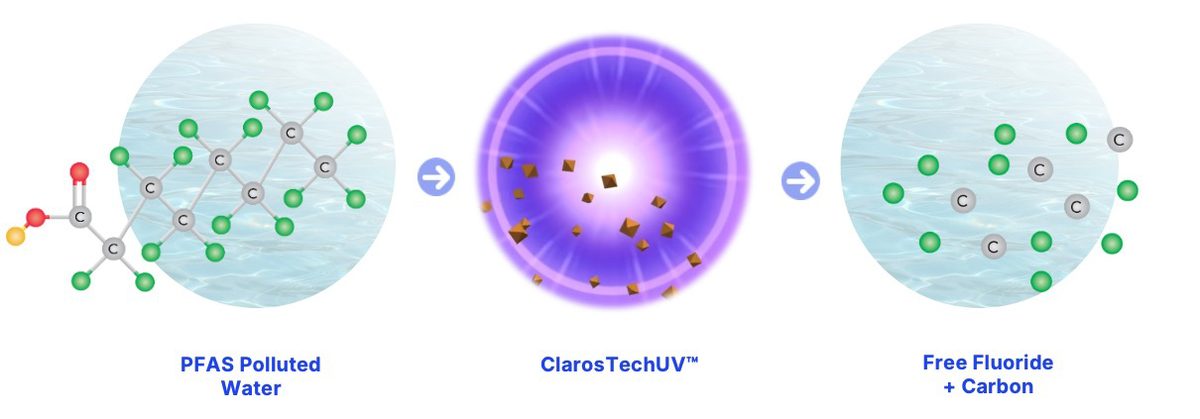
PFAS compounds are called forever chemicals because they survive heat, water, and most treatment processes. A Minneapolis technology firm and a Japanese-owned manufacturer just agreed to install the first full-scale commercial system that destroys them on-site rather than capturing or shipping them away.

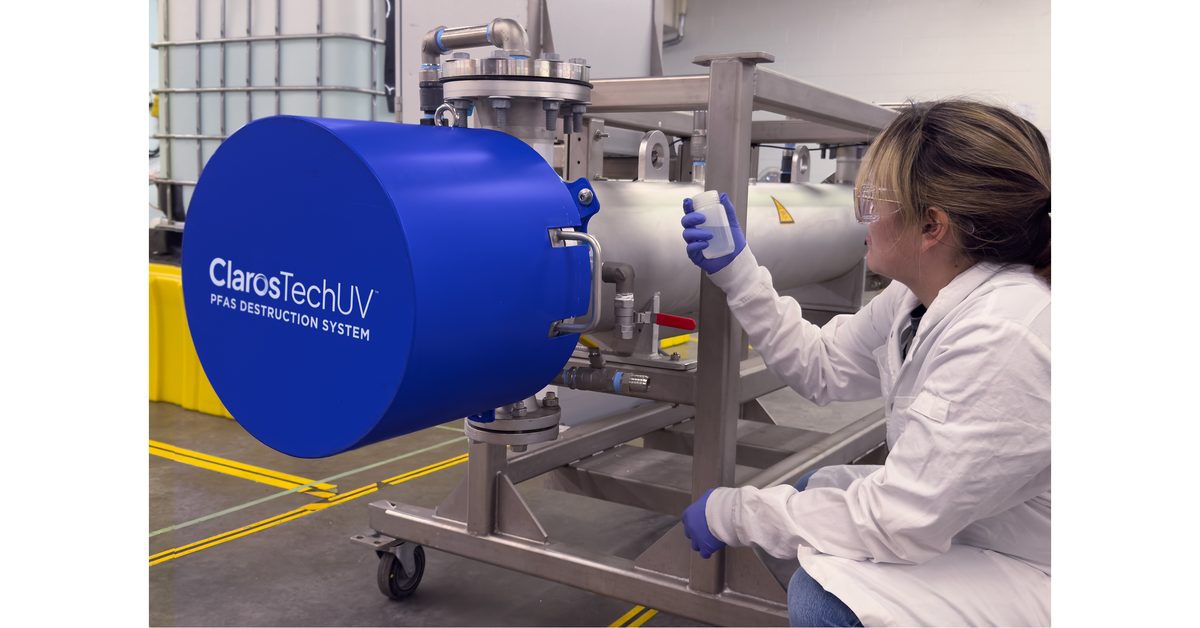
Claros Technologies will integrate its ClarosTechUV ultraviolet-photochemical system into Daikin America's factory in Decatur, Alabama. The deal follows a December 2025 test run that treated 170,000 gallons of industrial process water and destroyed more than 99.99% of target PFAS species, including short and ultra-short chain compounds.

Why it matters

If this installation performs as tested, manufacturers no longer must send PFAS-laden waste to landfills and incinerators — they can destroy the molecules where they are made.

Questions about this story

Free account needed to ask — your question is kept and asked for you right after sign-up. Answers are public.

No questions yet — be the first to ask.

Key Indicators

99.99%
PFAS destruction efficiency in Dec 2025 test run
Destruction of all targeted long, short, and ultra-short chain PFAS species at high flow rates.
170,000 gallons
Process water treated in commercial optimization run
Approximately 640,000 liters treated across the December 2025 test at Daikin's Decatur campus.
500,000+ gallons
Total industrial process water processed by Claros
Volume Claros says it has treated across all industrial partner sites to date.

Voices

Curated perspectives — historical figures and your fellow readers.

Ever wondered what historical figures would say about today's headlines?

Sign up to generate historical perspectives on this story.

Organizations Involved

Timeline

January 2025 October 2026

3 events Latest: Today
  1. Claros and Daikin sign full-scale commercial agreement

    Today Agreement

    Long-term deal integrates ClarosTechUV directly into Daikin's Decatur operations, with continuous monitoring via ClarosLabs.

  2. Commercial optimization run hits 99.99% destruction

    Milestone

    ClarosTechUV treated more than 170,000 gallons of process water at hundreds of gallons per minute, destroying over 99.99% of target PFAS.

  3. Claros and Daikin complete initial pilot

    Milestone

    Pilot demonstration of ClarosTechUV at the Decatur campus demonstrated the technology could treat industrial process water on-site.

Scenarios

1

Decatur installation goes live and meets destruction targets

Likely Resolves by End of 2028

Discussed by: Claros and Daikin, which both stated the system would be integrated into facility improvements over the next few years

Engineering specifications progress through design and construction, and the ClarosTechUV reactor begins continuous operation inside Daikin's manufacturing process. ClarosLabs continuous testing verifies on-going destruction of long, short, and ultra-short chain PFAS at full industrial flow.

2

Claros expands across Daikin's global operations

Possible Resolves by End of 2028

Discussed by: The commercial agreement itself, which creates a long-term strategic relationship and opportunities for additional applications across Daikin's worldwide facilities

A successful Decatur installation becomes the blueprint. Claros and Daikin evaluate the ClarosTechUV platform at other Daikin sites, and the Decatur project serves as a reference for the first repeatable commercial PFAS destruction deployment at an operating plant.

3

Decatur deployment stalls on cost or regulatory delays

Unlikely Resolves by End of 2028

Discussed by: Analysts at Environment+Energy Leader, who noted the companies are working on engineering specifications with a focus on scalability and integration

Integration into a live manufacturing line proves more complex or costlier than the pilot suggested, or shifting PFAS regulations change what the installation must achieve. Deployment is delayed, reduced in scope, or paused while the companies reassess.

Historical Context

2 moments from history that rhyme with this story — and how they unfolded.

April 2024

EPA sets first PFAS drinking water limits (2024)

The Environmental Protection Agency finalized the first national drinking water standards for six PFAS compounds, forcing thousands of water utilities to detect and remove them from tap water. Utilities that had used granular activated carbon or ion exchange found those methods concentrate contaminants into media that still must go somewhere.

Then

Utilities and industrial dischargers scrambled to identify treatment technologies that meet the new limits, spurring a wave of pilot projects.

Now

The rule created a compliance market for PFAS destruction rather than mere capture, giving technologies like ClarosTechUV a commercial path.

Why this matters now

The same regulatory pressure that pushed water utilities is now reaching industrial manufacturers, who generate PFAS-laden process water at the source — exactly where Claros and Daikin are deploying destruction.

2022-2023

3M exits PFAS manufacturing and settles cleanup costs (2023)

3M announced it would stop making PFAS by the end of 2025, after decades as one of the largest producers. In June 2023 it agreed to pay up to $12.5 billion to settle claims from public water systems, following similar payouts driven by firefighting-foam and contamination lawsuits against multiple manufacturers.

Then

The settlements made the long-term cleanup bill for PFAS concrete and enormous, signaling to every producer that downstream liability is real and growing.

Now

Manufacturers began seeking ways to destroy PFAS at the point of generation to reduce their own liability and regulatory exposure.

Why this matters now

Daikin, a producer of fluorinated materials, faces the same structural pressure 3M did — which is exactly why it is paying to install permanent destruction on-site rather than shipping waste off-site.

Sources

(7)