


Pull to refresh
Logo
FDA approves at-home Skyrizi induction for Crohn's disease

FDA approves at-home Skyrizi induction for Crohn's disease

New Capabilities

AbbVie's risankizumab can now be started with self-administered injections instead of clinic infusions, based on a 274-patient Phase 3 trial

Overview

Updated 1 hour ago

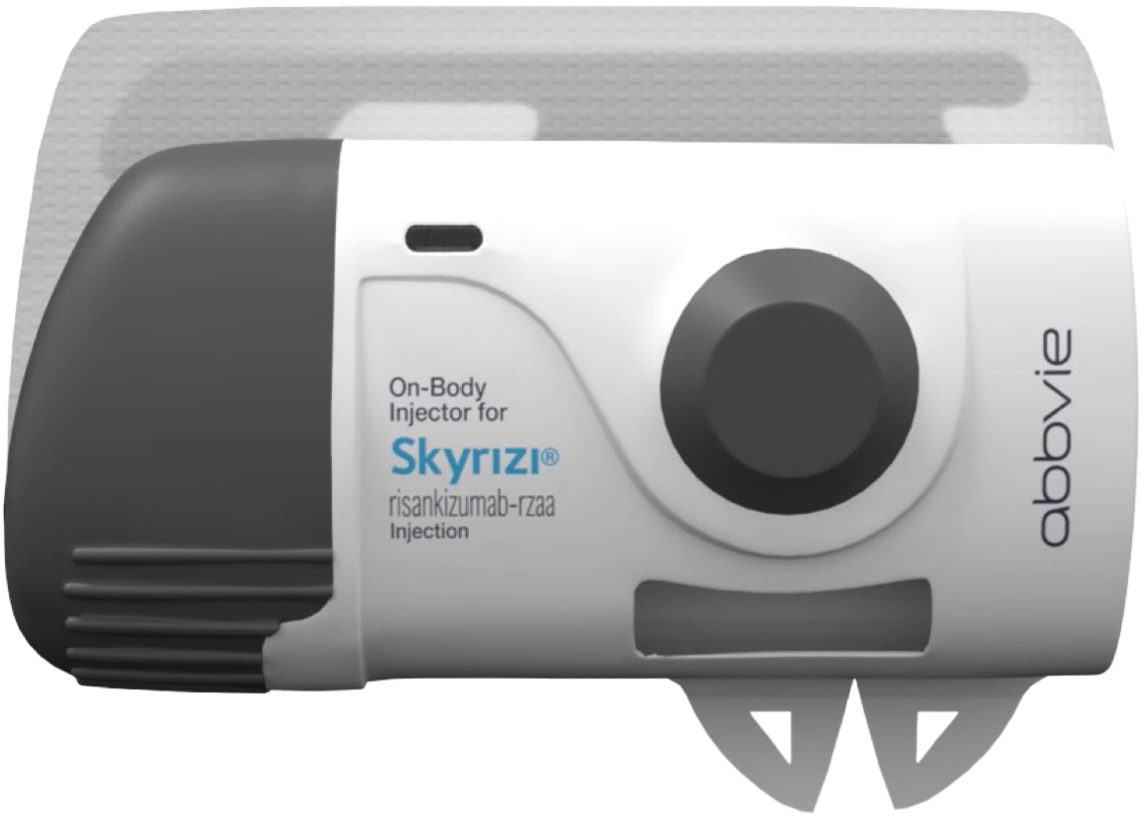
Since 2022, adults with moderately to severely active Crohn's disease have started Skyrizi with three intravenous infusions at weeks 0, 4 and 8, usually at a clinic. On October 23, the Food and Drug Administration approved a second path: 720 milligrams injected under the skin at weeks 0, 2, 4 and 8, given at home with an on-body injector.

The approval rests on AFFIRM, a Phase 3 trial that randomized 274 patients. At week 12, 56% of those on subcutaneous Skyrizi were in clinical remission against 30% on placebo. Among patients who had never failed an advanced therapy, 74% reached remission against 27%.

Why it matters

Patients can now begin a Crohn's biologic without scheduling a clinic infusion, moving the first months of treatment into the home.

Questions about this story

Free account needed to ask — your question is kept and asked for you right after sign-up. Answers are public.

No questions yet — be the first to ask.

Key Indicators

56%
Clinical remission at week 12, subcutaneous Skyrizi
Versus 30% on placebo across the full AFFIRM trial population.
74%
Remission in patients new to advanced therapy
Versus 27% on placebo, in a subgroup of 65 treated patients.
43%
Endoscopic response at week 12
Versus 15% on placebo, measured by central review of bowel inflammation.
720 mg
Subcutaneous induction dose
Given at weeks 0, 2, 4 and 8; the IV option is 600 mg at weeks 0, 4 and 8.
274
Patients in the AFFIRM trial
Randomized 2:1 to subcutaneous Skyrizi or placebo; 65% had already failed an advanced therapy.

Voices

Curated perspectives — historical figures and your fellow readers.

Sign up to generate historical perspectives on this story.

People Involved

Organizations Involved

Timeline

2022 October 2026

5 events Latest: October 23rd, 2026 · 1 week ago
Tap a bar to jump to that date
  1. FDA approves subcutaneous induction for Skyrizi in Crohn's

    Latest Approval

    Patients can start at home with 720 mg at weeks 0, 2, 4 and 8 via an on-body injector, then continue every eight weeks.

  2. FDA rewrites TB screening language across Skyrizi indications

    Regulation

    The label now lets clinicians decide whether tuberculosis testing is needed before starting treatment.

  3. AbbVie releases 24-week AFFIRM endoscopic results

    Data

    35.8% of subcutaneous Skyrizi patients reached endoscopic remission after induction and maintenance, against 9.1% on placebo.

  4. Tremfya offers Crohn's patients a subcutaneous start

    Competition

    Johnson & Johnson wins approval for guselkumab with both subcutaneous and intravenous induction.

  5. Skyrizi enters the Crohn's market with IV-only induction

    Approval

    Risankizumab is cleared for moderately to severely active Crohn's disease, started with intravenous infusions at weeks 0, 4 and 8.

Scenarios

1

Home induction becomes the standard start for Skyrizi in Crohn's

Likely Resolves by End of 2027

Discussed by: AbbVie executives and analysts following the immunology franchise

Gastroenterology practices already set up for self-injection move new patients onto the injector, and IV induction becomes reserved for patients who need supervised dosing. The trigger is payer coverage: if insurers reimburse the on-body injector pack without extra paperwork, prescribing shifts quickly.

2

Intravenous induction stays the default in practice

Possible Resolves by End of 2027

Discussed by: Gastroenterologists commenting on the trial design

The AFFIRM study did not compare subcutaneous and intravenous induction head to head, so no data show one route works better. Clinics that already have infusion capacity may keep using it, especially for patients who want a supervised first dose, leaving the injector as a secondary option.

3

Trial results in treatment-experienced patients limit enthusiasm

Uncertain Resolves by Q2 2027

Discussed by: Clinical readers of the AFFIRM subgroup data

About 65% of trial patients had already failed a biologic or JAK inhibitor, and in that group 45% reached remission against 31% on placebo. The 74% figure comes from 65 treated patients who had never failed advanced therapy, a small subgroup. If specialists focus on the harder-to-treat majority, adoption could be slower than the headline rate suggests.

Historical Context

3 moments from history that rhyme with this story — and how they unfolded.

February 2007

Adalimumab brings self-injection to Crohn's disease (2007)

The FDA approved adalimumab (Humira) for Crohn's disease, giving patients a biologic they could inject at home with a prefilled pen instead of traveling for an intravenous infusion. Earlier Crohn's biologics were given in infusion suites.

Then

Gastroenterology practices built training programs around self-injection, and patients took on the dosing themselves.

Now

Home injection became a normal expectation for Crohn's biologics, and drugmakers began competing on delivery devices as much as on efficacy.

Why this matters now

Skyrizi's on-body injector repeats that move from clinic to home, this time for a drug that has been infusion-only in Crohn's since launch.

March 2025

Tremfya's subcutaneous Crohn's approval (2025)

Johnson & Johnson won U.S. approval for guselkumab in Crohn's disease with both subcutaneous and intravenous induction, roughly 19 months before Skyrizi's subcutaneous option.

Then

Prescribers gained a home-injection induction option from a competing IL-23 inhibitor.

Now

The approval set the expectation that new Crohn's biologics would offer a self-administered start, putting infusion-only labels at a commercial disadvantage.

Why this matters now

This approval closes a competitive gap rather than opening a new one. The mechanism is parity, not novelty.

2022

Skyrizi's original Crohn's approval (2022)

Risankizumab was approved for moderately to severely active Crohn's disease and launched with intravenous induction at weeks 0, 4 and 8, followed by subcutaneous maintenance.

Then

Patients had to arrange clinic visits for their first three doses before switching to at-home maintenance injections.

Now

Induction stayed the one part of the treatment course that required a health care setting, until this label change.

Why this matters now

The new regimen removes the last clinic-dependent step from the standard Skyrizi course.

Sources

(6)