
Pull to refresh
Logo
Daily Brief
Following
Why
SOLV Energy goes public as America's second-largest solar builder

SOLV Energy goes public as America's second-largest solar builder

Money Moves
By Newzino Staff |

Private equity exit values utility-scale solar contractor at $4.7 billion amid policy uncertainty

February 2nd, 2026: IPO Roadshow Launches

Overview

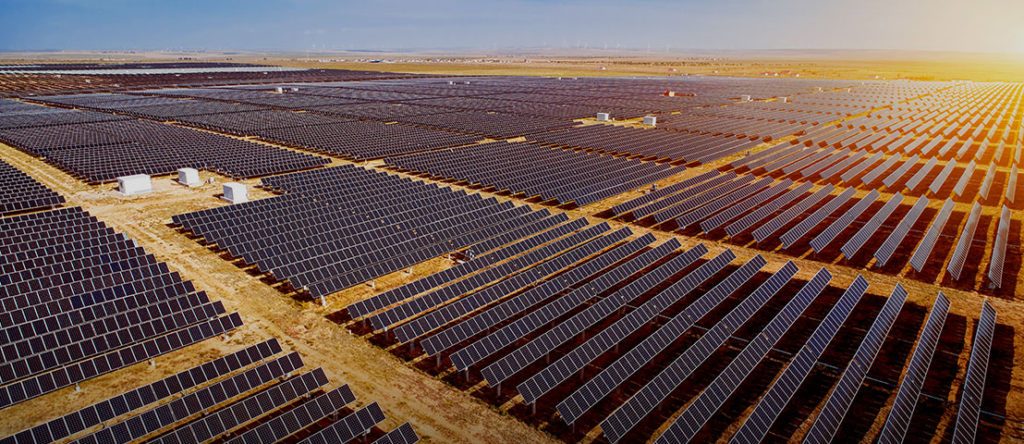
SOLV Energy launched its initial public offering roadshow on February 2, 2026, seeking to raise $482 million by selling 20.5 million shares at $22-$25 each. If successful, the offering would value America's second-largest utility-scale solar contractor at $4.7 billion and mark one of the largest solar infrastructure IPOs in U.S. history.

The timing carries both opportunity and risk. SOLV has built over 500 solar power plants totaling 20 gigawatts since 2008 and nearly doubled its installation capacity in 2024. But the company goes public just as the One Big Beautiful Bill Act has gutted solar tax credits—projects must begin construction before July 2026 to qualify for key incentives, creating a compressed window that could either flood SOLV with demand or leave it facing a cliff.

Key Indicators

$4.7B
Target Market Cap
At IPO midpoint price of $23.50 per share
20 GW
Installed Capacity
Solar capacity built across 500+ power plants since 2008
$1.7B
2025 Revenue (9 mo.)
21% increase year-over-year through September 2025
75%
American Securities Stake
Post-IPO ownership retained by private equity sponsor

Interactive

Exploring all sides of a story is often best achieved with Play.

Ever wondered what historical figures would say about today's headlines?

Sign up to generate historical perspectives on this story.

Sign Up

Debate Arena

Two rounds, two personas, one winner. You set the crossfire.

People Involved

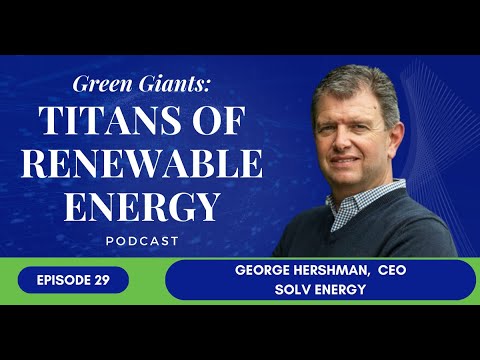
George Hershman
George Hershman
Chief Executive Officer, SOLV Energy (Leading company through IPO)

Organizations Involved

SOLV Energy
SOLV Energy
Solar EPC and O&M Company
Status: Launching IPO on Nasdaq under ticker MWH

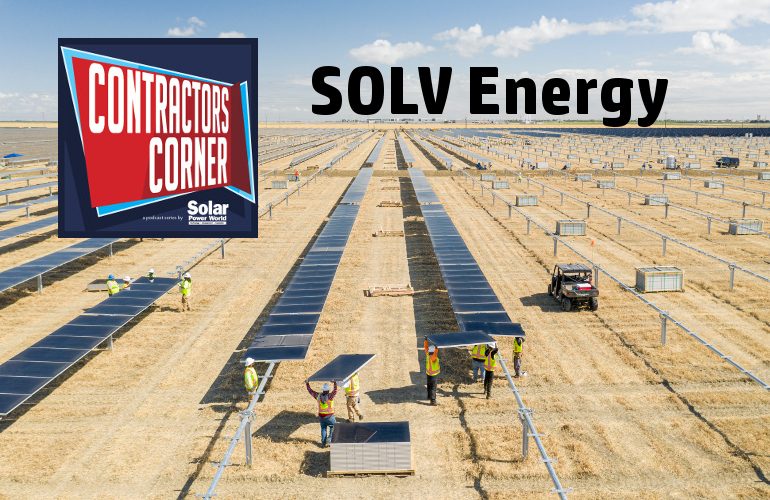
America's second-largest utility-scale solar contractor, providing engineering, procurement, construction, and operations services for solar and battery storage projects over 200 megawatts.

American Securities LLC
Private Equity Firm
Status: Selling shareholder, retaining 75% post-IPO stake

New York-based private equity firm that acquired SOLV Energy in 2021 and is now taking it public while retaining majority control.

Timeline

  1. IPO Roadshow Launches

    IPO

    SOLV Energy begins investor roadshow, offering 20.5 million shares at $22-$25 for $482 million raise.

  2. SOLV Energy Files IPO Registration

    IPO

    Company files S-1 with Securities and Exchange Commission for estimated $750 million offering.

  3. One Big Beautiful Bill Signed Into Law

    Policy

    Trump signs legislation ending residential solar tax credits and requiring utility projects to begin construction by July 2026 for full incentives.

  4. 6 GW in New Construction Contracts Announced

    Contracts

    At CLEANPOWER 2025, SOLV announces contracts to build over 6 gigawatts of utility-scale solar and storage projects.

  5. O&M Portfolio Reaches 17 GW

    Expansion

    SOLV Energy announces nearly 4.8 GW in new O&M contracts, bringing total operations portfolio to over 17 GW.

  6. Company Passes 20 GW Milestone

    Milestone

    SOLV Energy announces it has built over 20 gigawatts of solar capacity and is on track to deliver 4 GW in 2024 alone.

  7. Acquisition Completed, SOLV Energy Brand Launched

    M&A

    American Securities completes purchase and unifies EPC and O&M businesses under SOLV Energy name.

  8. American Securities Announces Acquisition

    M&A

    Private equity firm American Securities agrees to acquire Swinerton's renewable energy division and SOLV Inc.

  9. Operations Division Formed

    Expansion

    SOLV Inc. established to provide operations and maintenance services for solar plants.

  10. Swinerton Launches Solar Division

    Company Formation

    Swinerton Builders creates Swinerton Renewable Energy to provide solar EPC services, initially focused on commercial clients.

Scenarios

1

IPO Prices at Top of Range, SOLV Captures Tax Credit Rush

Discussed by: Renaissance Capital, Seeking Alpha solar analysts

Strong investor demand prices shares at $25, raising $512 million. The July 2026 construction deadline under the One Big Beautiful Bill Act creates a surge in utility-scale project starts, and SOLV's 6 GW backlog translates into record 2026-2027 revenues. American Securities begins secondary offerings to reduce stake.

2

Successful IPO Followed by Policy-Driven Revenue Cliff

Discussed by: Wood Mackenzie, SEIA market analysts

IPO succeeds in the $22-$25 range, but the compressed tax credit window causes a boom-bust cycle. Projects rush to break ground before July 2026, creating a strong 2026-2027, but the 2028 pipeline collapses as developers wait for potential policy changes. Stock declines 40%+ from highs.

3

IPO Prices Below Range Amid Policy Uncertainty

Discussed by: Bloomberg IPO analysts, solar industry skeptics

Institutional investors balk at utility-scale solar exposure given tax credit phase-out. IPO prices at $18-$20 or is postponed. SOLV remains profitable but growth story is damaged, and American Securities holds for longer exit timeline.

4

SOLV Pivots to Storage and Grid Services

Discussed by: Energy storage analysts, company S-1 filings

The One Big Beautiful Bill preserved battery storage tax credits through the next decade. SOLV leverages its 17 GW O&M portfolio and grid expertise to expand into storage integration and transmission services, partially offsetting solar slowdown and justifying premium valuation.

Historical Context

Array Technologies IPO (2020)

October 2020

What Happened

Solar tracker manufacturer Array Technologies went public on Nasdaq, pricing at $22 per share and raising $815 million. The stock doubled on its first day of trading, giving the company a $5 billion market cap—the largest solar IPO in U.S. history at that time.

Outcome

Short Term

The IPO validated investor appetite for utility-scale solar infrastructure during the clean energy boom.

Long Term

Array's stock fell over 70% from its 2021 highs amid supply chain disruptions and competition from Nextracker, illustrating the volatility of solar hardware valuations.

Why It's Relevant Today

SOLV enters at a similar valuation ($4.7 billion) but with a service-based EPC model rather than hardware manufacturing, potentially offering more stable margins but similar policy exposure.

Nextracker IPO (2023)

February 2023

What Happened

Solar tracker maker Nextracker raised $638 million in the largest U.S. IPO of early 2023, pricing above its range at $24 per share. The stock jumped 27% on debut, valuing the company at $3.5 billion.

Outcome

Short Term

Strong demand signaled continued institutional appetite for solar infrastructure plays following the Inflation Reduction Act.

Long Term

Nextracker shares roughly doubled over the following two years as utility-scale installations surged, rewarding investors who bought at IPO.

Why It's Relevant Today

Nextracker's success came in a favorable policy environment. SOLV faces the opposite—launching after tax credits have been cut, testing whether solar infrastructure demand persists without federal incentives.

SolarCity and Tesla (2016)

November 2016

What Happened

Tesla acquired residential solar installer SolarCity for $2.6 billion in an all-stock deal. SolarCity had pioneered the solar lease model but was burning cash and facing rising customer acquisition costs. CEO Elon Musk, who chaired SolarCity's board, pushed the controversial merger.

Outcome

Short Term

The deal closed despite shareholder lawsuits alleging conflicts of interest. Tesla absorbed $3 billion in SolarCity debt.

Long Term

Tesla's solar business shrank dramatically, falling from the nation's largest residential installer to a minor player. The acquisition is widely viewed as a bailout of a struggling company.

Why It's Relevant Today

Illustrates how quickly solar company valuations can collapse when business models face headwinds. SOLV's utility-scale focus and EPC margins differ substantially from SolarCity's residential lease model, but both depend on favorable policy.

10 Sources: