Pull to refresh
Logo
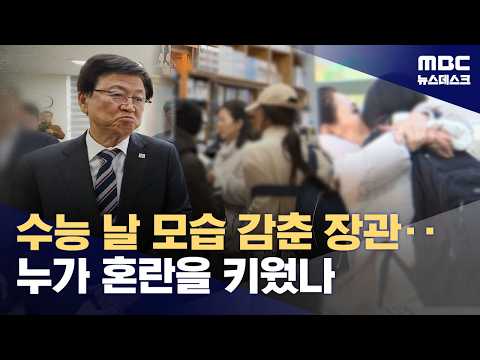
South Korea's education minister resigns after AI cheating measures disrupt national exam

South Korea's education minister resigns after AI cheating measures disrupt national exam

Rule Changes

Five test-takers now face criminal complaints after nationwide alerts found hidden phones; 111 device cases were logged, and Lee's office began a successor search.

Overview

Updated 3 hours ago

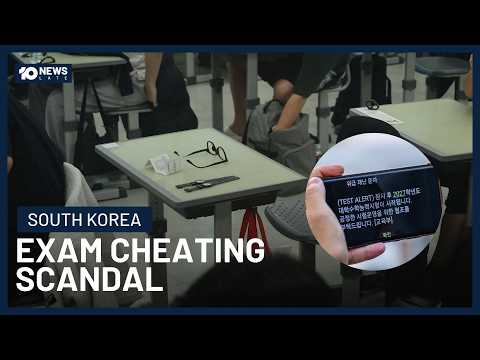
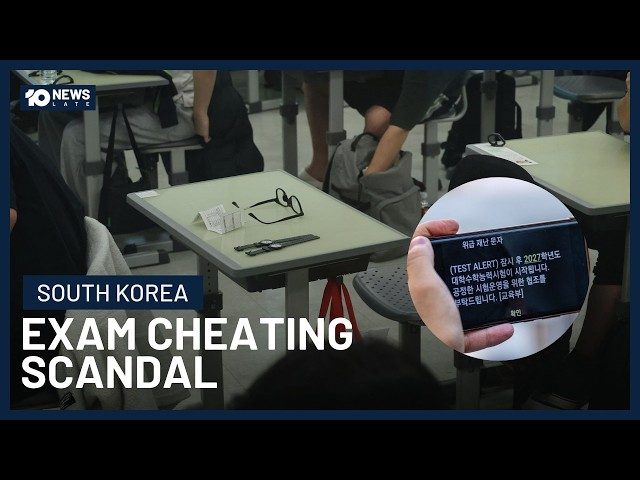
About 500,000 students sat South Korea's Suneung, the national college entrance exam, on Nov. 19, 2026, while officials worried about cheating with artificial intelligence. Three times that day, mobile phones across the country sounded a government emergency alert, even on silent mode; the alerts found hidden phones that had not been handed in.

Choi Kyo-jin resigned on Nov. 22, President Lee Jae Myung accepted within an hour, and the dismissal was approved later that day. On Nov. 23, the Education Ministry said it would file criminal complaints against five test-takers caught using smart glasses or miniature cameras; 111 device-rule cases had been found in all. Lee has ordered changes to block exam papers from being filmed or transmitted, officials are reviewing past exams, and the Labor Ministry is examining whether national qualification tests still work in the AI era.

Why it matters

Pocket AI can make cheating cheap, and the fixes can disrupt millions of people in a single morning.

Questions about this story

Free account needed to ask — your question is kept and asked for you right after sign-up. Answers are public.

No questions yet — be the first to ask.

Key Indicators

111
Device-rule cases identified
Cases involving banned electronic devices detected during the Nov. 19 exam; five involved actual device use.
5
Test-takers facing criminal complaints
People caught using smart glasses or miniature cameras during the exam.
54
Cases found through emergency alerts
Cases confirmed when hidden phones rang after the alerts.
500,000
Students who took the exam
Approximate number of candidates who sat the Suneung.
8,400
Extra staff deployed two days before
Extra proctors and device specialists added on Nov. 17.
3
Nationwide emergency alerts
Nationwide alerts sent during the exam.
₩100M
Minimum cheating-tip reward
Minimum reward Lee announced on Nov. 21 for each reported cheating case.

Voices

Curated perspectives — historical figures and your fellow readers.

Sign up to generate historical perspectives on this story.

People Involved

Organizations Involved

Timeline

April 2026 November 2026

13 events Latest: Today Showing 8 of 13
Tap a bar to jump to that date
  1. Education minister resigns; president orders overhaul

    Resignation

    Lee accepts within an hour and orders ID marks on exam papers.

  2. President formally approves Choi's dismissal

    Government

    Lee signed the dismissal order Sunday evening, about an hour after he accepted Choi's resignation. The presidential office said the search for a successor would follow normal procedures.

  3. Labor Ministry opens qualification-exam review

    Policy

    The Ministry of Employment and Labor said it would consult ministries and experts and outline reforms by year-end. The review will examine whether exam-based national qualifications still measure skills employers need as artificial intelligence spreads.

  4. Lee offers reward for cheating tips

    Policy

    Lee said on X that each reported cheating case would draw at least ₩100 million, with more added for each cheater. A cheater who confessed and named accomplices would get a lighter punishment and a reward.

  5. Choi says he will go if asked

    Statement

    At a task force meeting, Choi says he will resign whenever the president asks.

  6. Suneung held; phones ring nationwide three times

    Exam

    About 500,000 students sit the test; 111 device cases are logged.

  7. Pen rules changed the day before the exam

    Policy

    Officials restrict candidates to black pencils, reversing earlier guidance.

  8. Emergency staffing and clothing checks ordered

    Policy

    Ministry adds 8,400 proctors and device staff; candidates must cover shirt buttons.

  9. Minister says he cannot guarantee detection

    Statement

    At a National Assembly committee, Choi says he could not catch AI cheating, citing his age.

  10. Top scorer confesses to AI-assisted cheating

    Revelation

    Han admits photographing questions with a microcamera and using AI to check answers.

  11. A near-perfect score draws attention

    Background

    Han Won-seok finishes first on the tax accountancy exam, missing one of 160 questions.

Scenarios

1

National Assembly passes a 10-year restriction on AI-assisted cheating

Possible Resolves by Q2 2027

Discussed by: The government and the ruling Democratic Party of Korea, as reported by The Korea Herald

The government and ruling party have floated extending the restriction on candidates caught using AI to 10 years, possibly applying it to this year's exam. Passing it requires a bill and a plenary vote, and the party holds the majority. Retroactivity is the contested part: penalties would reach students who already sat the test.

2

Penalties land before Dec. 11, with no retroactive 10-year bar

Likely Resolves by Dec 11, 2026

Discussed by: Ministry officials cited by The Korea Herald

The Education Ministry's examination misconduct committee is reviewing the 111 cases and plans to decide penalties before scores are released on Dec. 11. If the committee treats the cases as ordinary device violations, this year's candidates face disqualification rather than a decade-long restriction, and the legislative push loses its urgency.

3

Past exam papers get reviewed, and more cheating cases surface

Uncertain Resolves by Q2 2027

Discussed by: The Ministry of Education, following President Lee's instruction, as reported by KBS

Lee ordered a review of past college entrance exams for possible AI-assisted cheating based on credible tips. Exam papers must be kept at test sites for at least a year, so anything older than the 2026 Suneung may already be destroyed. The review's reach depends on how far back the retained papers go.

4

Cheating-tip reward produces additional cases

Uncertain Resolves by Dec 11, 2026

Discussed by: President Lee Jae Myung, in a Nov. 21 post on X, as reported by ETNews

Lee offered at least ₩100 million for each reported cheating case and said the amount would rise with the number of cheaters. Officials are also reviewing wireless signals, AI-service records and past exam papers, so a tip could lead to a new case or just confirm what investigators already have.

5

National qualification exams get an AI-era overhaul by year-end

Likely Resolves by End of 2026

Discussed by: Ministry of Employment and Labor, as reported by Korea JoongAng Daily

The ministry said it will consult ministries and experts, then outline reforms by year-end. The review could remove qualifications with few candidates or weak industry demand, while keeping exams for fields employers still need.

6

Cabinet reshuffle brings a new education minister

Possible Resolves by End of 2026

Discussed by: Korea JoongAng Daily, citing talk around a second Cabinet reshuffle

The presidential office said the selection process will follow procedure after Choi's resignation. If a reshuffle moves ahead, the education post could be filled along with other Cabinet changes.

Historical Context

3 moments from history that rhyme with this story — and how they unfolded.

March 2019

Varsity Blues admissions scandal (2019)

US federal prosecutors charged dozens of parents, coaches and test administrators in a scheme to fake entrance exam scores and athletic credentials. Parents paid a consultant to arrange bribes and score manipulation.

Then

Several parents and the scheme's organizer were convicted and jailed.

Now

Universities tightened admissions oversight and testing agencies reviewed security around score reporting.

Why this matters now

It shows the price families will pay for a score edge, and how quickly testing bodies rewrite security rules once a method becomes public.

2011

Long Island SAT impersonation case (2011)

Students at a New York high school paid a recent graduate to sit the SAT for them, using fake identification at test centers. Prosecutors charged the students and the stand-in test taker.

Then

Charges were filed and the test center's procedures were criticized.

Now

The College Board added photo identification requirements at registration to tie the test taker to the name on the ticket.

Why this matters now

Countermeasures typically follow the specific hole that was exploited. Korea's phone alerts are the same logic applied to a different vulnerability.

2010s to present

China's gaokao security regime

China's national college entrance exam is administered with facial recognition, metal detectors and wireless signal jamming around testing sites. Cheating can bring criminal charges rather than just score cancellation.

Then

Detection improved and prosecutions for organized cheating became public cases.

Now

Security at test sites became routine infrastructure, with the exam treated as a national security-adjacent event.

Why this matters now

It is the closest existing model for what Korea is now debating: jamming was considered and rejected there on legal and technical grounds.

Sources

(20)