On June 29, 2026, Seoul ordered Samsung and SK Hynix to build four new memory fabs in the southwest, the core of an $880 billion, 10-year buildout. On July 6, the government picked Gwangju Military Airport as the site, but the base also serves the US Air Force, and Washington now wants a say before Seoul can relocate it.
Labor and markets have grown tense. Samsung's union says 84% of members oppose the Honam project, and engineers are leaving for SK Hynix's richer bonuses. A two-day KOSPI sell-off in July erased about $2 trillion in value, even as SK Hynix approved $38 billion for two fabs and Nvidia and Brookfield pledged up to $10 billion for Naver's data centers.
Why it matters
South Korea makes most of the world's advanced memory chips; this buildout decides whether it stays the supplier the AI boom runs on.
Questions about this story
Free account needed to ask — your question is kept and asked for you right after sign-up. Answers are public.
No questions yet — be the first to ask.
Key Indicators
$880B
Private investment targeted
At least 1,350 trillion won pledged over ten years; some reports put potential commitments near $1.3 trillion.
4 fabs
New memory-chip plants
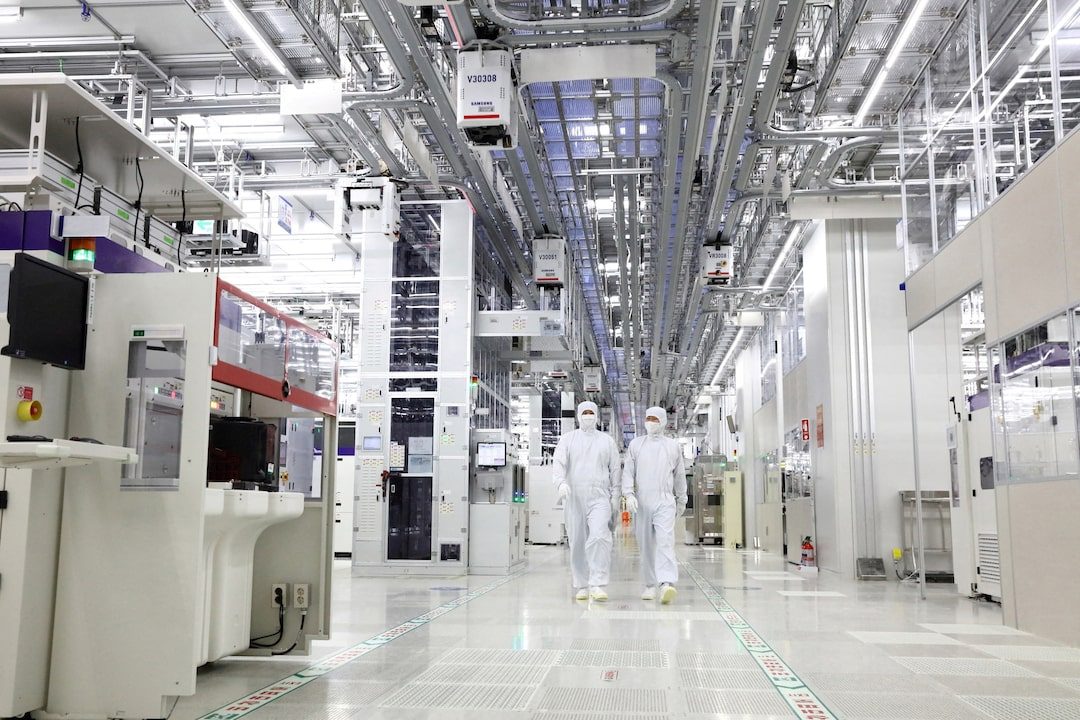
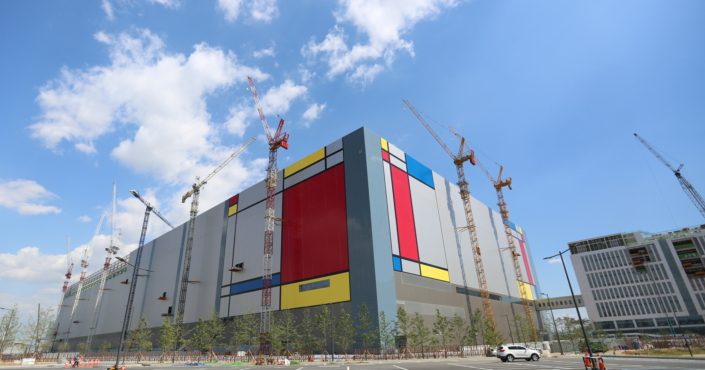
Samsung and SK Hynix will each build two fabs at the confirmed Gwangju Military Airport site, on 8.26 million square meters of already-cleared state land.
8.4 GW
AI data-center target by 2029
SK Group is building 5 gigawatts, GS Group 2.4 gigawatts in Donghae, and Naver 1 gigawatt; total capacity is meant to roughly double to 18.4 gigawatts by 2035.
2x
Memory output goal
The plan aims to double national memory-chip production within five years.
$523B
Semiconductor share
About 800 trillion won of the total goes to four fabs at the Gwangju Military Airport site.
$38B
SK Hynix's new fab commitment
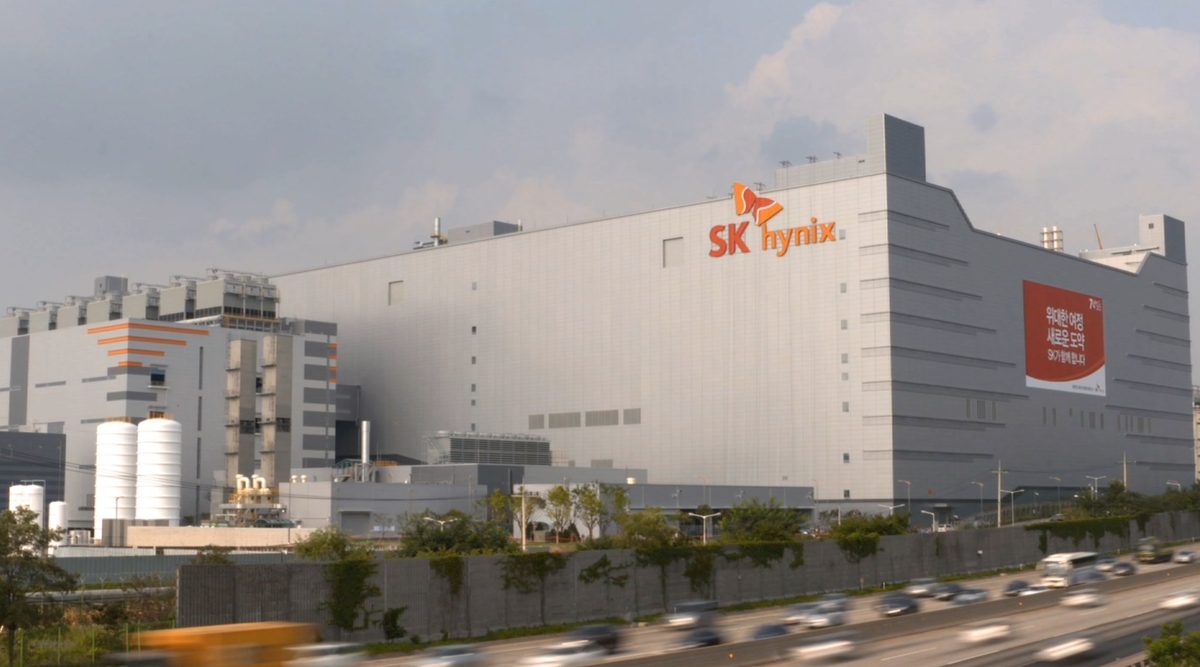
The board approved 54 trillion won on August 7 for a DRAM/HBM fab in Yongin and a NAND fab in Cheongju.
84%
Samsung union members opposed to Honam plan
A survey of 8,300 union members found most oppose the southwest project, citing job reassignments and working conditions.
20 events
Latest: August 4th, 2026 · 2 months ago
Showing 8 of 20
JK to step
Tap a bar to jump to that date
Jump to
August 2026
Student activists detained after breaching Osan Air Base over chip-hub dispute
LatestDiplomatic
Eight members of a Korean student group entered a US base to protest American control over Gwangju airport, the site chosen for the new chip cluster.
July 2026
KOSPI hits back-to-back circuit breakers as memory rally cracks
Market
Samsung and SK Hynix shares fell about 11-12% over two days, and Seoul's market lost roughly $2 trillion in value on doubts about AI spending and new competition from China's CXMT.
Industry ministry vows to speed up all three megaprojects
Policy
The trade ministry said it would fast-track administrative approvals through year-end and moved up the Yongin chip cluster's completion target to 2029.
Nvidia and Brookfield back Naver's AI data-center expansion
Investment
Nvidia agreed to invest $1 billion in Naver and Brookfield offered up to $9 billion in financing, tripling Naver's Sejong AI data center to 200 megawatts by 2028 on the way to a 1-gigawatt target.
Union survey: 8 in 10 Samsung foundry workers want to leave
Labor
Samsung's union found 81.5% of foundry employees plan to quit within two years, pointing to a bonus gap with the memory division that's pulling engineers toward SK Hynix.
Samsung union: 84% oppose Honam fab plan
Labor
A weekend survey of 8,300 Samsung union members found 84% oppose the southwest project, citing job reassignments, working conditions and benefits.
US military asserts claim over Gwangju airport ahead of relocation
Diplomatic
Washington told Seoul the airport, a Korea-US Air Force collocated base, holds strategic value for rapid F-22 and F-35 deployment. Any relocation needs consultation under the two countries' status-of-forces agreement.
Gwangju Military Airport picked as site for four new chip fabs
Site Selection
President Lee's office confirmed Gwangju Military Airport as the Honam cluster site, handing planners 8.26 million square meters of state land that's already cleared for construction.
Samsung and SK Hynix shares tumble as global chip sell-off hits Korea
Market
Samsung Electronics fell 7.7% and SK Hynix dropped 9.3% as a tech sell-off from Wall Street spread to Seoul. The KOSPI fell 6.25%, briefly triggering a circuit breaker.
Lee pitches Chungcheong as AI hub; Samsung and SK pledge 240 trillion won for the region
Announcement
President Lee held a public briefing in Asan to promote Chungcheong as the supply-chain spine for Korean AI. Samsung Group pledged 140 trillion won for semiconductor, display, battery, and packaging facilities, and SK Hynix committed 100 trillion won centered on its Cheongju NAND fab and advanced packaging.
Samsung union demands worker voice in southwest fab project
Labor
The Samsung Electronics chapter of the Samsung Group United Union called for a tripartite consultative body of workers, government, and management to oversee the southwest buildout and protect worker safety.
Gwangju and South Jeolla merge into a special city
Administrative
The southwest region set to host the four new fabs combines into a single administrative unit, easing the buildout.
Samsung and SK Hynix narrow Gwangju fab search to two candidate sites
Site Selection
Cheomdan District 3 in Gwangju Innopolis and the city's military airport zone emerged as finalists. Each fab needs about 660,000 square meters of land, 1 gigawatt of power, and 200,000 tons of water a day. Samsung named Gwangju as its leading candidate; SK Hynix said it needs more time.
Samsung executive calls for nuclear power expansion to run southwest fabs
Infrastructure
Samsung DS chief Jeon Young-hyun said stable power for the Honam cluster requires nuclear expansion alongside renewables. Samsung C&T announced nuclear-based hydrogen facilities in Yeonggwang, near the Hanbit nuclear plant.
June 2026
Government to raise Dongbok Dam 15 meters to supply water for four fabs
Infrastructure
South Korea committed about 465 billion won to heighten Dongbok Dam and tap nearby reservoirs, targeting 650,000 tons of water a day — the minimum needed for four advanced fabs running at once.
Gwangju land prices jump 42% as buyers move on candidate fab zones
Market
Real-estate deal sizes in Gwangju rose 42% in the days after the June 29 announcement, as buyers targeted parcels near the two candidate fab sites before official selection.
Seoul launches the 'Three Mega Projects'
Announcement
The government directs at least $880 billion of private investment into four new memory fabs, AI data centers, and physical AI. The goal is to double memory output in five years.
June 2025
Lee Jae Myung elected president
Political
Lee wins a snap election after his predecessor's impeachment, promising to steer growth into provinces outside Seoul.
March 2023
South Korea unveils Yongin chip cluster
Industrial Policy
Seoul backs a giant semiconductor cluster south of the capital, with Samsung as anchor tenant, plus tax-credit incentives.
August 2022
US CHIPS Act becomes law
Policy
Washington commits tens of billions to bring chip production onshore, pressuring allies to defend their own industries.
Scenarios
1
Samsung and SK Hynix break ground on all four southwest fabs
Possible
Resolves by End of 2028
Discussed by: CNBC, Bloomberg, Korea Herald
The companies move from pledge to construction, starting work on all four memory fabs in the Gwangju and South Jeolla region. Groundbreaking is the first hard test that the headline number converts into steel and concrete rather than aspiration.
2
South Korea hits its 8.4-gigawatt AI data-center target
Uncertain
Resolves by End of 2029
Discussed by: Korea Herald, Al Jazeera
The data-center pillar reaches the stated 8.4 gigawatts of AI computing capacity by the end of 2029. Meeting it would give domestic AI firms home-grown compute; missing it would expose a gap between announced and operational capacity.
3
Investment scaled back or delayed in a chip downturn
Possible
Resolves by Jun 29, 2028
Discussed by: Bloomberg, Business Standard
A memory-price slump or weaker AI demand pushes Samsung or SK Hynix to publicly cut or postpone part of the pledged spending. Korean chipmakers have trimmed capital plans in past downturns, so the ten-year figure carries real execution risk.
4
South Korea doubles its memory-chip output
Uncertain
Resolves by Jun 29, 2031
Discussed by: CNBC, CNN
The plan's headline production goal is met: national memory output roughly doubles within the five-year window the government set. This is the ultimate measure of whether the buildout achieves its stated industrial aim against Chinese and Taiwanese competition.
5
Memory downturn hits before Gwangju fabs break even
Possible
Resolves by End of 2030
Discussed by: UBS analysts, Korea Institute for Industrial Economics and Trade
UBS forecast a moderate memory market downturn starting in 2029 — after the new fabs are under construction but before they generate returns. A Korea Institute researcher said commodity DRAM and NAND face price declines after 2028. Each idled fab could carry annual depreciation costs of several trillion won.
The Gwangju site doubles as a Korea-US Air Force collocated base, and Washington wants consultation before it moves. If talks stall, construction on the Honam fabs could slip well past the government's fast-tracked timeline.
7
Samsung labor unrest disrupts the Honam buildout
Possible
Resolves by End of 2026
Discussed by: Korea JoongAng Daily, MIT Technology Review
Union opposition and an engineer exodus to SK Hynix threaten Samsung's ability to staff the new fabs. The union has said it will make Honam a central issue in the next bargaining round.
Historical Context
3 moments from history that rhyme with this story — and how they unfolded.
1 of 3
August 2022
US CHIPS and Science Act (2022)
The United States set aside about $52 billion in subsidies and tax credits to pull semiconductor manufacturing back onto American soil. The law pushed Taiwan's TSMC, Samsung, and Intel to commit to new US fabs.
Then
Chipmakers announced dozens of new US projects, though several later slipped on timelines and labor costs.
Now
It set off a global subsidy race in which governments now compete to anchor chip supply chains at home.
Why this matters now
Seoul's package is the same move on a larger scale: a state steering private capital to keep critical chip capacity inside its borders.
2 of 3
1987–2020s
Taiwan's rise as the chip foundry hub (1987 onward)
Taiwan backed TSMC and a dense supplier network around Hsinchu, turning a small island into the maker of most of the world's advanced logic chips. State support, talent, and clustering compounded over decades.
Then
TSMC grew into a contract-manufacturing giant that the largest tech firms depend on.
Now
Taiwan's chip dominance became a strategic asset that shapes global trade and security calculations.
Why this matters now
South Korea wants to defend its own version of that dominance in memory chips, the field where it leads, by building a second cluster before rivals close the gap.
Beijing poured hundreds of billions through its National Integrated Circuit Fund to build a domestic chip industry and cut reliance on imports. Progress was uneven, with corruption probes and US export controls slowing advanced production.
Then
China expanded mature-node output sharply but stayed behind on cutting-edge chips.
Now
The effort made China a growing competitor in memory and legacy chips, pressuring incumbents like Samsung and SK Hynix.
Why this matters now
China's memory ambitions are part of why Seoul is moving now; the plan names competition from China and Taiwan as the reason for the buildout.


![[WEEKLY FOCUS] Korea to build second mega chip cluster ...](https://img.youtube.com/vi/yIMN-JnaHe0/hqdefault.jpg)