



SpaceX turns its Colossus data centers into an AI compute-rental business
Money MovesA startup that has yet to ship a product agrees to pay SpaceX $150 million a month for Nvidia chips
June 23rd, 2026: Deal terms made publicNew here? Follow stories to track developments over time. Create a free account to get updates when stories you care about change.
Overview
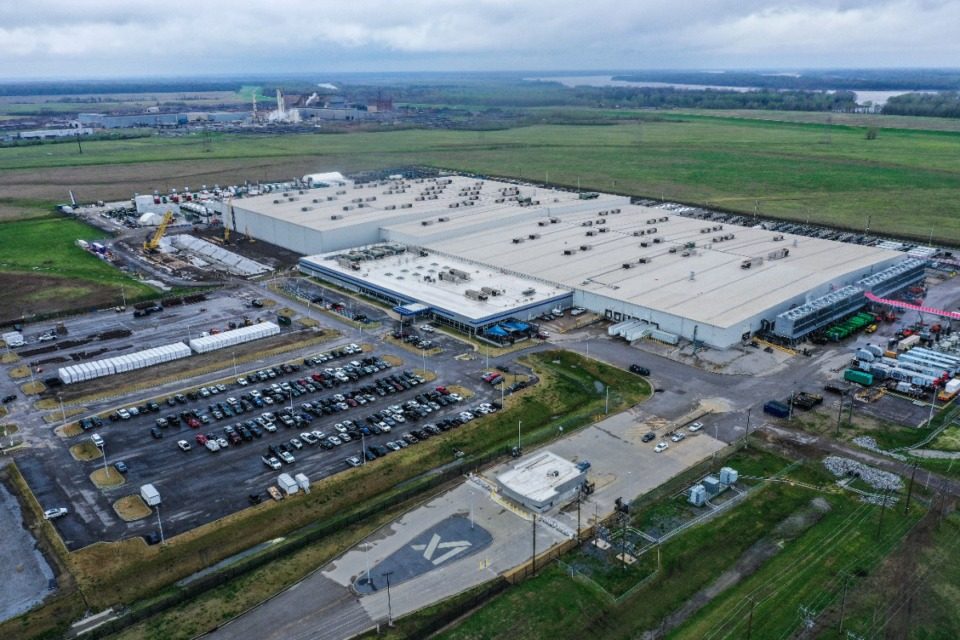
Updated Jun 23SpaceX is best known for rockets. As of this year, one of its largest businesses is renting out computing power. On June 22, it signed a deal with Reflection AI, a startup that has not yet released a product, to supply Nvidia chips for $150 million a month through 2029. Run its full term, the contract is worth about $6.3 billion.
The deal sits inside a tighter loop than it first appears. Nvidia has invested roughly $800 million in Reflection. Reflection now pays SpaceX, which buys its chips from Nvidia. SpaceX says its contracted AI-compute revenue now tops $2.3 billion a month, putting it among the largest sellers of rented AI capacity in the world.
Why it matters
A rocket company is now one of the biggest landlords of AI computing power, and the money to pay for it flows in a circle through Nvidia.
Questions about this story
Free account needed to ask — your question is kept and asked for you right after sign-up. Answers are public.
No questions yet — be the first to ask.
Key Indicators
Voices
Curated perspectives — historical figures and your fellow readers.
Play
Exploring all sides of a story is often best achieved with Play.
Higher or Lower
A number from this story, against one from elsewhere in the news — guess which is bigger, then keep the chain going. 5 rounds, 3 strikes; a miss costs a strike and resets your streak.
Keyboard: ↓/L lower · ↑/H higher
0 points — sign up to put that on the leaderboard.
Connections
Sixteen names from the news. Find the four hidden groups of four. Four mistakes max.
Sign up to keep a daily streak — a new puzzle lands every day.
Exit debate?
Your progress in this debate will be lost.
- 1 Two AI personas square off on this story.
- 2 You predict who'll win each round — correct picks earn XP.
- 3 One crossfire question is yours to fire. Pick it carefully.
Couldn't generate a topic
Select Your Champions
Choose one persona for each side of the debate
DEBATE TOPIC
Choose personas with different perspectives for a more dynamic debate.
Select debater for this side:
No debate personas available right now.
Select debater for this side:
No debate personas available right now.
Who's Got This Round?
Make your prediction before the referee scores
The referee scores both sides on
Round Results
Set the Crossfire
Pick the question both personas must answer in the final round
Debate Oracle! You called every round!
Sharp Instincts! You know your debaters!
The Coin Flip Strategist! Perfectly balanced!
The Contrarian! Bold predictions!
Inverse Genius! Try betting the opposite next time!
XP Breakdown
Prediction History
People Involved
Organizations Involved
The rocket company now runs one of the world's largest businesses renting out AI computing power.
A two-year-old open-model lab that agreed to pay SpaceX $150 million a month before releasing a product.
Nvidia invested in Reflection and supplies the GB300 chips Reflection is renting from SpaceX.
Timeline
January 2024 June 2026
-
Deal terms made public
Latest DisclosureReporting details the up-to-$6.3 billion value and a 90-day exit clause after three months.
-
SpaceX signs Reflection AI
DealSpaceX agrees to supply Nvidia GB300 chips to Reflection for $150 million a month through 2029.
-
Anthropic compute deal reported
DealAnthropic agrees to pay $1.25 billion a month for Colossus compute, reports say.
-
Colossus 2 comes online
InfrastructureThe Memphis-area cluster launches with 555,000 Nvidia GPUs bought for roughly $18 billion.
-
Reflection raises $2 billion
FundingThe startup raises $2 billion to build an American open frontier lab, with Nvidia backing.
-
Reflection AI founded
BackgroundEx-DeepMind researchers Misha Laskin and Ioannis Antonoglou start the open-model lab.
Historical Context
3 moments from history that rhyme with this story — and how they unfolded.
Telecom fiber overbuild (late 1990s)
Companies like Global Crossing and WorldCom borrowed heavily to lay fiber-optic cable, betting internet demand would fill it. Contracts and forecasts justified the spending. Much of the capacity sat unused.
Valuations soared, then collapsed when demand fell short and accounting problems surfaced.
Several giants went bankrupt, though the cheap fiber they left behind later powered the broadband era.
It is the cautionary case for compute deals financed on projected demand from customers who have not yet earned the revenue to pay.
Amazon launches Amazon Web Services (2006)
Amazon, a retailer, began renting out computing and storage capacity it had built for its own use. The cloud business started small and was dismissed by some as a distraction from selling books and electronics.
AWS grew quietly while competitors underestimated it.
It became Amazon's most profitable arm and the backbone of much of the internet, proving that an infrastructure side business can outgrow the core.
Like Amazon, SpaceX is turning infrastructure built for itself into a rental business that may rival its original purpose.
CoreWeave pivots from crypto mining to AI cloud (2023)
CoreWeave, which had run graphics chips to mine cryptocurrency, retooled its GPUs to rent AI computing power. Nvidia invested, and the company signed large contracts with AI labs hungry for chips.
CoreWeave's revenue and valuation jumped as the AI boom drove demand for GPUs.
It became a major neocloud, while critics warned its growth leaned on a few big customers and on Nvidia financing.
It is the closest model for SpaceX's move: Nvidia-backed compute rental with revenue concentrated in a handful of AI clients.
