


Pull to refresh
Logo
Daily Brief
Following
Why
Superhydrophobic materials engineering

Superhydrophobic materials engineering

New Capabilities
By Newzino Staff | |

From Nature-Inspired Coatings to Unsinkable Structures

January 30th, 2026: Unsinkable Aluminum Tube Design Published

Overview

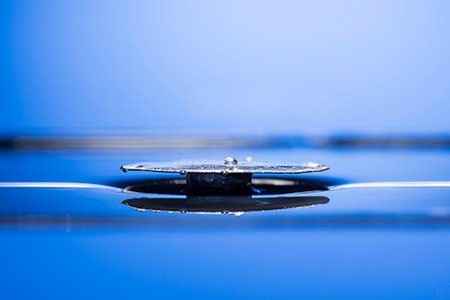
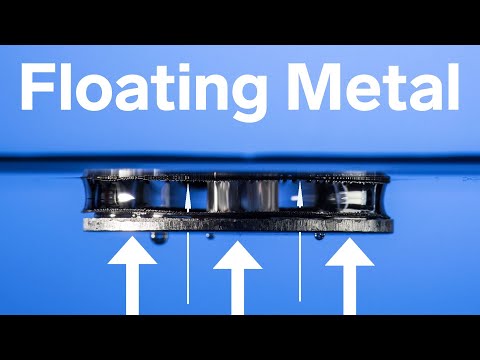
Ships sink when water floods their hulls. Researchers at the University of Rochester have developed aluminum tubes that trap air so effectively they float indefinitely—even riddled with holes. The breakthrough, published in Advanced Functional Materials, uses laser-etched surfaces that mimic how diving bell spiders and fire ants stay buoyant underwater.

Key Indicators

Half meter
Maximum tested tube length
Prototypes reached nearly half a meter, with technology designed for scaling to larger structures
Weeks
Turbulent water testing duration
Tubes maintained buoyancy in rough conditions for weeks with no degradation
2019→2026
Research timeline
Seven years from initial superhydrophobic disk prototypes to robust tube design
70%
Ship hull friction resistance
Frictional resistance on ship surfaces can account for over 70% of total drag—superhydrophobic coatings reduce this

Interactive

Exploring all sides of a story is often best achieved with Play.

Ever wondered what historical figures would say about today's headlines?

Sign up to generate historical perspectives on this story.

Sign Up

Debate Arena

Two rounds, two personas, one winner. You set the crossfire.

People Involved

Chunlei Guo
Chunlei Guo
Professor of Optics and Physics, University of Rochester (Leading superhydrophobic materials research)

Organizations Involved

University of Rochester Institute of Optics
Academic Research Institution
Status: Leading research on superhydrophobic materials

The oldest optics program in the United States, pioneering femtosecond laser materials processing and surface modification research.

National Science Foundation
Federal Research Funding Agency
Status: Primary funder of the research

Independent agency of the United States government that supports fundamental research and education in science and engineering.

Timeline

  1. Unsinkable Aluminum Tube Design Published

    Research Milestone

    Chunlei Guo's team published improved design in Advanced Functional Materials: internally-etched aluminum tubes with dividers that maintain buoyancy in turbulent conditions and despite severe puncture damage, overcoming limitations of earlier disk prototypes.

  2. Additively Manufactured Superhydrophobic Coatings Demonstrate Marine Durability

    Research Milestone

    Materials Advances published research showing lotus-inspired flame-sprayed coatings maintained superhydrophobicity for over 6,000 abrasion cycles with 21x drag reduction, advancing commercial viability for marine applications.

  3. Comprehensive Review of Maritime Superhydrophobic Applications Published

    Research Review

    Advanced Science published a review identifying durability and air plastron stability during prolonged submersion as the primary obstacles to commercial adoption of underwater superhydrophobic technology.

  4. First Superhydrophobic Floating Metallic Assembly Demonstrated

    Research Milestone

    University of Rochester researchers published a study in ACS Applied Materials & Interfaces showing sealed superhydrophobic disk pairs that remained buoyant after months of forced submersion, inspired by diving bell spiders and fire ants.

  5. Rochester Team Creates Super-Hydrophobic Metals via Laser

    Research Milestone

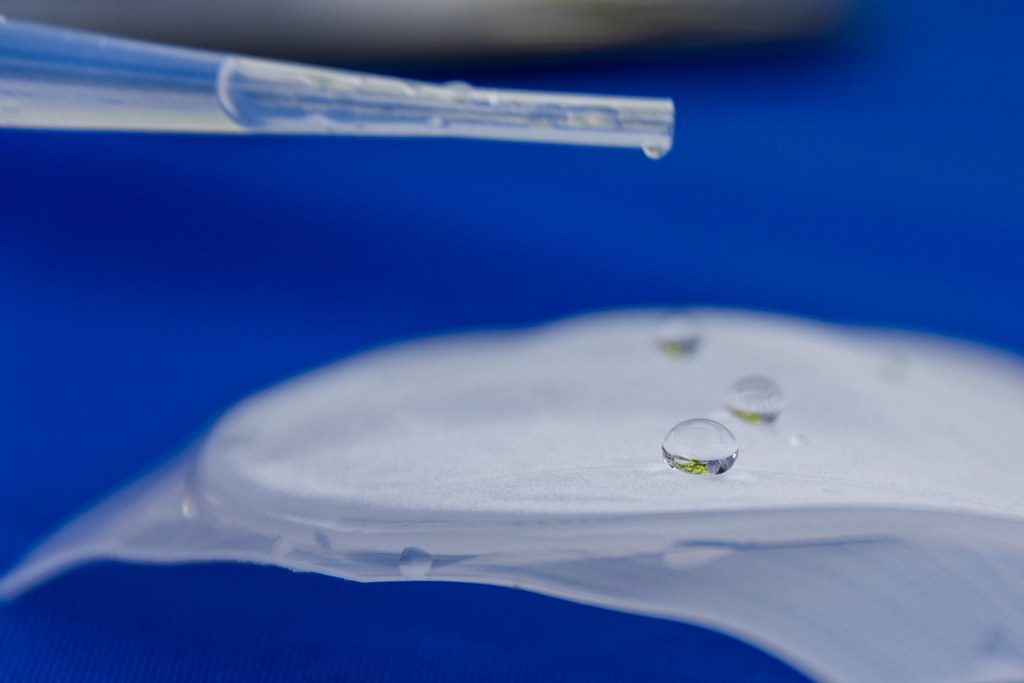
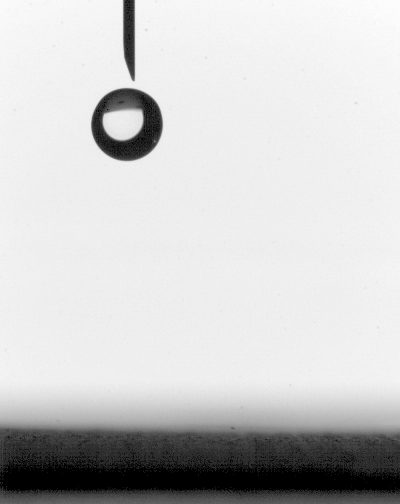
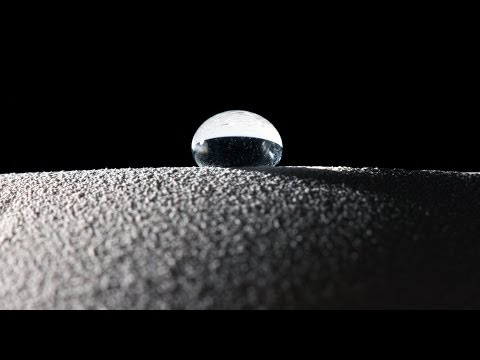
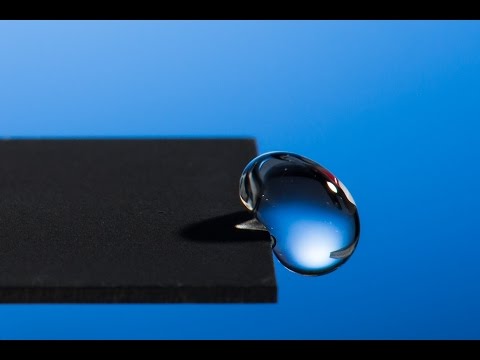
    Chunlei Guo's lab published research demonstrating laser processing that transforms metals into extremely water-repellent materials without temporary coatings—water slides off at tilt angles below five degrees.

  6. Femtosecond Laser-Assisted Etching Technique Proposed

    Scientific Foundation

    Marcinkevičius and colleagues first proposed femtosecond laser-assisted wet etching, demonstrating direct 3D micromachining inside silica and laying groundwork for superhydrophobic surface creation.

Scenarios

1

Superhydrophobic Coatings Become Standard for Marine Vessels

Discussed by: Advanced Science review (2024), Pacific Northwest National Laboratory researchers, maritime engineering analysts

Scaling the tube technology to commercial vessel sizes could enable ships that maintain emergency buoyancy even after hull breaches. The main pathway involves proving long-term durability in salt water and demonstrating cost-effectiveness compared to traditional compartmentalized hull designs. Success would represent a fundamental shift in maritime safety engineering.

2

Wave Energy Systems Adopt Superhydrophobic Floating Platforms

Discussed by: University of Rochester researchers, Ocean Harvesting Technologies, Frontiers in Energy Research

The Rochester team demonstrated wave energy harvesting using linked superhydrophobic tube rafts. With ocean wave energy resources estimated at 500 gigawatts globally, durable floating platforms that survive storm damage could accelerate commercialization of wave power—a renewable source that produces electricity more consistently than wind or solar.

3

Durability Challenges Limit Commercial Adoption

Discussed by: Advanced Science review authors, maritime coating researchers

Superhydrophobic nanostructures are inherently fragile and susceptible to degradation from friction, cleaning, and abrasion. If the Rochester tube design cannot maintain its properties under years of operational stress, applications may remain limited to specialized uses like emergency flotation devices rather than primary hull construction.

4

Military and Emergency Response Applications Drive Initial Adoption

Discussed by: Popular Mechanics, naval engineering analysts

The United States Navy has tested superhydrophobic hull coatings for submarines to reduce drag and acoustic signatures. Puncture-resistant flotation technology could find first commercial success in military vessels, disaster relief rafts, and ocean monitoring equipment before scaling to civilian shipping.

Historical Context

RMS Titanic Sinking (1912)

April 1912

What Happened

The Titanic struck an iceberg that produced six narrow openings totaling only 12-13 square feet of hull damage. Because the ship's watertight compartments were not capped at the top, water filled successive compartments as the bow sank, eventually flooding more compartments than the buoyancy design could tolerate. The ship sank in under three hours, killing over 1,500 people.

Outcome

Short Term

Immediate international outrage led to the first International Convention for Safety of Life at Sea (SOLAS) in 1914, establishing requirements for lifeboats, emergency procedures, and radio communications.

Long Term

The disaster established the principle that hull compartmentalization alone cannot guarantee buoyancy—a limitation the Rochester superhydrophobic design directly addresses by maintaining flotation independent of structural integrity.

Why It's Relevant Today

The Titanic demonstrated that traditional compartment-based buoyancy fails once enough sections flood. Superhydrophobic tubes offer a fundamentally different approach: buoyancy from trapped air that persists regardless of external damage.

Diving Bell Spider Research (Ongoing)

1758-Present

What Happened

Argyroneta aquatica, the diving bell spider, lives its entire life underwater while breathing air. It constructs dome-shaped webs between aquatic plants, fills them with air carried from the surface using superhydrophobic hairs on its legs and abdomen, and uses these underwater air pockets as oxygen reserves. Scientists have studied this mechanism since Linnaeus first described the species in 1758.

Outcome

Short Term

The spider's mechanism demonstrated that superhydrophobic surfaces could maintain stable air-water interfaces indefinitely under submersion.

Long Term

Biomimetic engineering research increasingly draws on natural superhydrophobic systems—spider hairs, lotus leaves, fire ant rafts—to design artificial materials with similar properties.

Why It's Relevant Today

The Rochester researchers explicitly modeled their design on the diving bell spider's strategy, proving that biological inspiration could solve the plastron stability problem that limited earlier superhydrophobic applications.

Lotus Effect Discovery (1997)

1997

What Happened

German botanists Wilhelm Barthlott and Christoph Neinhuis published research explaining why lotus leaves remain clean: microscale bumps covered with nanoscale wax crystals create a superhydrophobic surface where water beads up and rolls off, carrying dirt particles with it. They termed this self-cleaning property the 'Lotus Effect.'

Outcome

Short Term

The discovery launched a wave of biomimetic surface engineering research attempting to replicate natural superhydrophobic properties on artificial materials.

Long Term

Commercial applications emerged including self-cleaning paints, water-repellent textiles, and anti-fouling coatings, establishing superhydrophobicity as a viable engineering property rather than just a scientific curiosity.

Why It's Relevant Today

The Lotus Effect research established the scientific foundation for understanding how micro- and nano-scale surface structures create water repellency—the same principle Guo's lab exploits using femtosecond laser etching.

Sources

(10)