

Pull to refresh
Logo
Cardiovalve tricuspid replacement holds at three years as European approval review advances

Cardiovalve tricuspid replacement holds at three years as European approval review advances

New Capabilities

Venus Medtech's TARGET trial reports 76.9% of implanted patients with no or trace tricuspid regurgitation at three years, with a CE Mark decision pending

Overview

Updated 1 hour ago

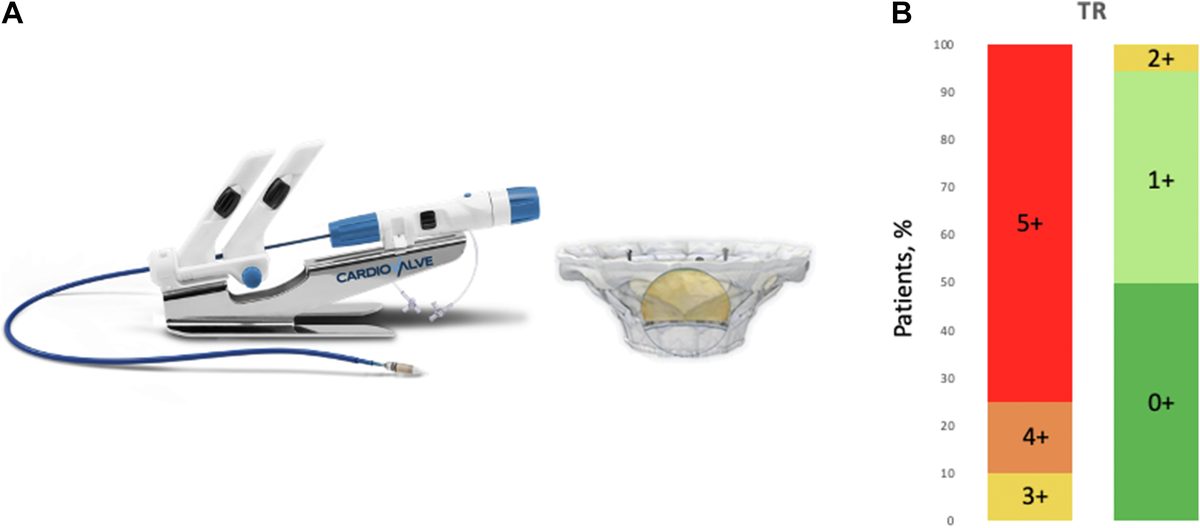
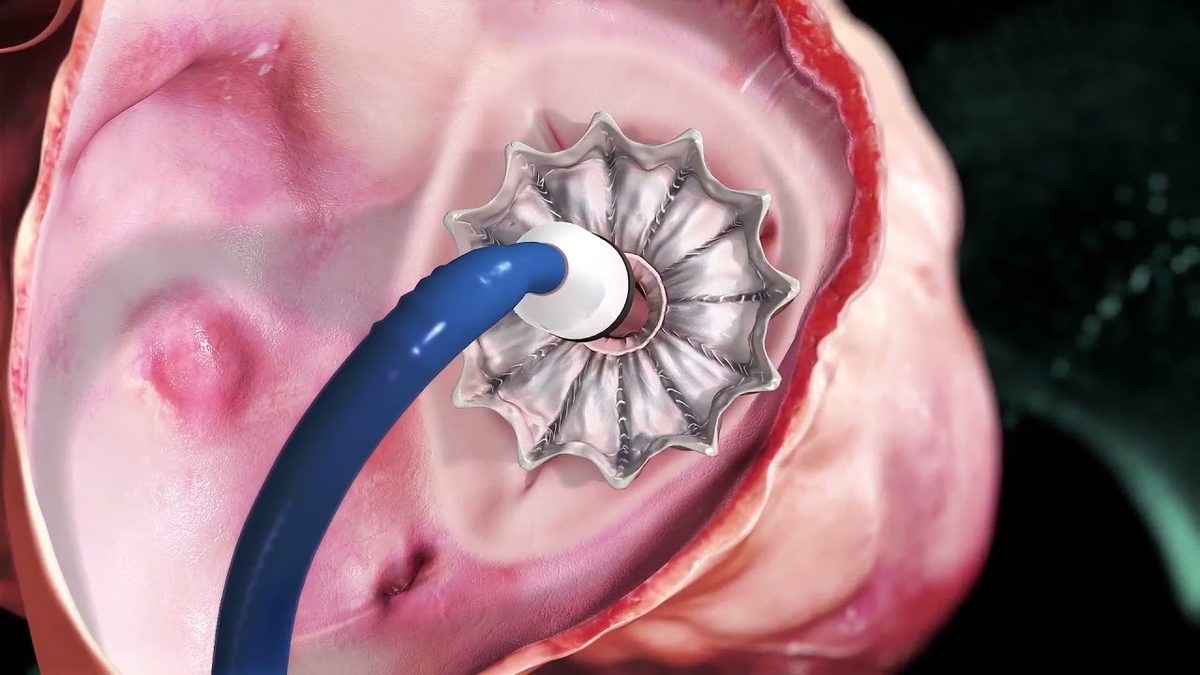
Severe tricuspid regurgitation lets blood leak backward into the right atrium, and many people who have it are too frail for open-heart surgery. In the TARGET trial, 148 of 157 such patients received the Cardiovalve TR System through a catheter in the leg. Three years later, 76.9% had no leakage or only a trace.

The trial is single-arm and open-label. Every patient got the device, so durability is measured against each patient's own baseline rather than a control group. That evidence is now with DEKRA, the German notified body reviewing the device for European approval. Venus Medtech, the Hangzhou parent company, says it expects European sales in the second half of 2027.

Why it matters

Severe tricuspid regurgitation has had no durable non-surgical fix. A replacement valve that still holds at three years gives these patients one.

Questions about this story

Free account needed to ask — your question is kept and asked for you right after sign-up. Answers are public.

No questions yet — be the first to ask.

Key Indicators

76.9%
No or trace tricuspid regurgitation at 3 years
Share of implanted patients whose leak was eliminated or reduced to trace on echocardiography.
157
Patients enrolled in TARGET
148 of them received an implant; mean age was 78 and 71% were women.
80%
NYHA class I-II at 3 years
Up from 39.9% at baseline, meaning most patients reported little or no limitation from breathlessness.
5.7%
All-cause mortality at 30 days
Death from any cause within a month of the procedure in a population averaging 78 years old.
5.0%
Major bleeding with the enhanced delivery system
Down from 21% with the first-generation delivery system, per the company's comparison.

Voices

Curated perspectives — historical figures and your fellow readers.

Sign up to generate historical perspectives on this story.

People Involved

Organizations Involved

Timeline

December 2022 November 2026

5 events Latest: Today
Tap a bar to jump to that date
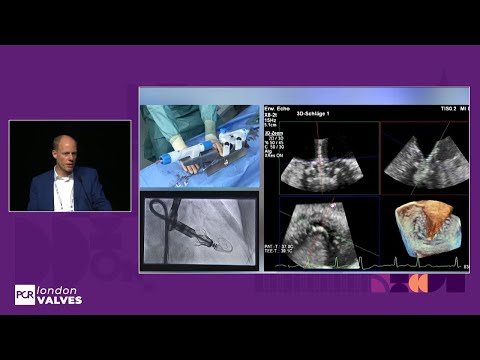
  1. Three-year TARGET data presented at PCR London Valves 2026

    Today Clinical trial

    76.9% of implanted patients had no or trace tricuspid regurgitation at three years.

  2. TARGET 2.0 begins recruiting

    Clinical trial

    Continuation study designed to support a marketing approval submission.

  3. Cardiovalve submits CE technical file to DEKRA

    Regulatory

    Filing starts the European review that precedes a CE Mark decision.

  4. Interim TARGET results presented at PCR London Valves

    Clinical trial

    First full-cohort safety and echocardiographic data shown for enrolled patients.

  5. TARGET trial begins

    Clinical trial

    Single-arm study opens at sites in Europe, the UK and Canada.

Scenarios

1

DEKRA grants CE Mark for the Cardiovalve TR System

Likely Resolves by End of 2027

Discussed by: Venus Medtech, which says it is in the final stages of preparing for regulatory milestones

The technical file submitted in November 2025 clears review, and DEKRA issues a CE certificate covering the device and its enhanced delivery system. That would make Cardiovalve one of a small group of transcatheter tricuspid replacements cleared for sale in Europe, alongside established competitors in repair and replacement.

2

Venus Medtech reports first commercial European implants in 2027

Possible Resolves by Q2 2028

Discussed by: Venus Medtech, which projects potential EU commercialization in the second half of 2027

Approval converts into revenue only if hospitals adopt the procedure. That requires trained implanting physicians, imaging protocols for the tricuspid position, and reimbursement decisions in individual European markets. The company's own timeline puts first sales in the second half of 2027, contingent on the CE decision.

3

DEKRA sends the file back for more clinical evidence

Possible Resolves by End of 2027

Discussed by: No party has predicted this publicly; it is the standard alternative path in European device review

TARGET is a single-arm study with no control group, and its benefits so far are measured in regurgitation grade, walking distance and quality-of-life scores rather than survival. A notified body could ask for longer follow-up or additional imaging data before certifying. That would push approval past 2027 and undercut the company's sales timeline.

4

TARGET 2.0 reaches primary completion

Likely Resolves by Q3 2028

Discussed by: The US clinical trial registry, which lists June 2028 as primary completion

The continuation study began recruiting in January 2026 with the same patient population and the intent of supporting a marketing submission. Reaching primary completion would give the device a second prospective dataset and strengthen any later filing in the US or an expanded European label.

Historical Context

3 moments from history that rhyme with this story — and how they unfolded.

2002-2011

Transcatheter aortic valve replacement, first implant to FDA approval (2002-2011)

Alain Cribier implanted the first transcatheter aortic valve in 2002 in a patient too sick for surgery. Edwards then ran high-risk-only trials of its Sapien valve, and the US Food and Drug Administration approved it in 2011 for patients surgeons had turned down.

Then

Approval was limited to inoperable and high-risk patients, with heart teams deciding who qualified.

Now

As data accumulated, the procedure expanded to lower-risk patients and became routine in many hospitals, while the earlier high-risk indication remained the foundation of the evidence base.

Why this matters now

TARGET follows the same sequence: a single-arm study in patients who cannot have surgery, followed by a regulatory filing. Whether Cardiovalve's indication widens will depend on post-approval data, just as it did for aortic valves.

2008-2013

MitraClip and the slow build of transcatheter mitral repair (2008-2013)

The MitraClip device won European approval in 2008 and US approval in 2013 for patients refused surgery. The procedure required advanced imaging and precise operator skill, and adoption grew slowly even after approval.

Then

Approval did not translate quickly into wide use; training and imaging requirements limited how many centers could offer it.

Now

Transcatheter mitral repair became an established option, but growth took years and depended on building operator experience.

Why this matters now

European approval for Cardiovalve would not automatically mean rapid sales. Tricuspid procedures require similar imaging expertise, which shapes how fast the company's 2027 revenue projection can be met.

2023

TRILUMINATE and the limits of symptom-based evidence (2023)

A randomized trial of a transcatheter tricuspid repair device found that it improved symptoms and quality of life and reduced regurgitation, but did not reduce deaths or hospitalizations for heart failure at one year.

Then

The result sharpened the question regulators and payers ask about tricuspid devices: whether symptom relief alone justifies the procedure.

Now

Tricuspid device trials shifted toward measuring quality-of-life and functional endpoints alongside hard clinical outcomes.

Why this matters now

TARGET reports the same kinds of endpoints, including a 20-point quality-of-life gain at one year. It has not shown a survival benefit, which is likely to shape how European reviewers and payers weigh the data.

Sources

(6)