

Pull to refresh
Logo
BD launches expandable liver shunt stent graft in the U.S.

BD launches expandable liver shunt stent graft in the U.S.

New Capabilities

First TIPS device with clinical data on small 6-7mm shunts targets the procedure's biggest complication

Overview

Updated 1 hour ago

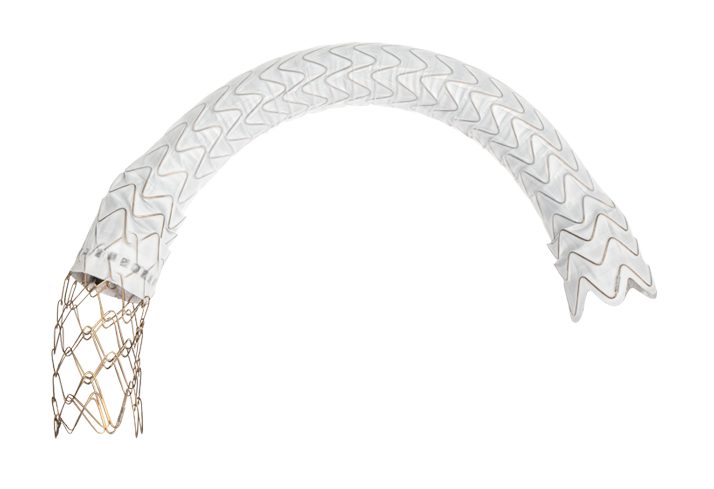
BD began selling a liver shunt device in the U.S. that lets physicians choose the shunt's diameter during the procedure, from 6 to 10 millimeters. The Liverty is the first TIPS system with clinical data on 6-7 mm shunts, the sizes tied to the lowest risk of the procedure's worst side effect.

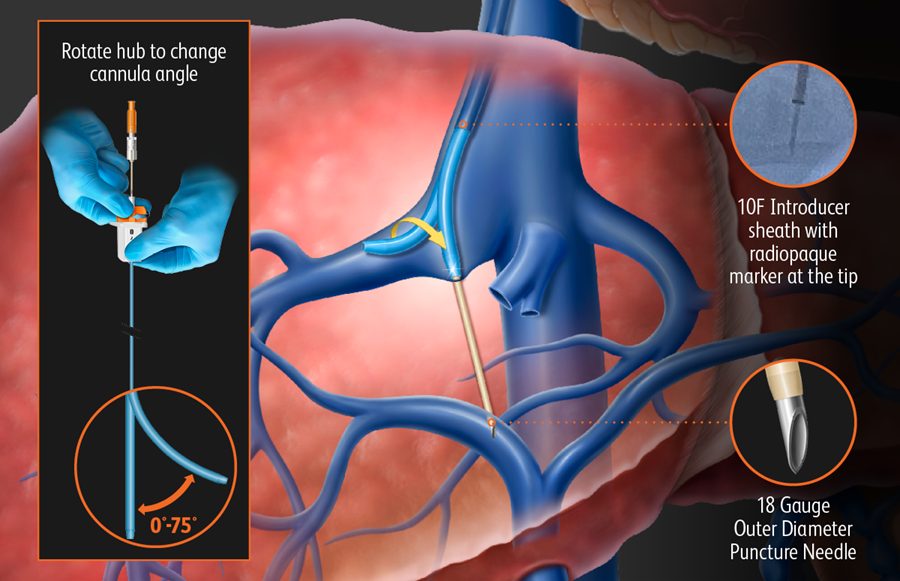
TIPS, short for transjugular intrahepatic portosystemic shunt, treats portal hypertension by creating a new channel through the liver. Bigger shunts control blood pressure better but let more blood bypass the liver, raising the risk of hepatic encephalopathy, a toxin-driven confusion that can progress to coma. BD's ARCH trial of 177 patients found no severe encephalopathy cases in people with 6-7 mm shunts, a result that could reshape how physicians size TIPS.

Why it matters

A shunt that starts small and enlarges only when needed could cut the encephalopathy that has limited TIPS for decades.

Questions about this story

Free account needed to ask — your question is kept and asked for you right after sign-up. Answers are public.

No questions yet — be the first to ask.

Key Indicators

90.4%
Freedom from shunt dysfunction at 6 months
Primary efficacy endpoint of the ARCH trial, meeting the 78% performance goal.
177
Patients in the ARCH trial
177 patients across 26 centers in the U.S., France, and Germany.
100%
Technical success rate
176 of 176 shunt creations succeeded in the trial.
0%
Severe encephalopathy in 6-7mm shunts
No grade 3+ hepatic encephalopathy cases among patients with the smallest shunts.
6-10mm
Expandable shunt diameter range
Physicians can post-dilate the device to any size within this range during the procedure.

Voices

Curated perspectives — historical figures and your fellow readers.

Sign up to generate historical perspectives on this story.

People Involved

Organizations Involved

Timeline

2026 October 2026

3 events Latest: Today
  1. BD announces U.S. commercial launch

    Today Launch

    BD began selling the Liverty in the U.S., citing the ARCH study and European experience as supporting evidence.

  2. FDA approves the Liverty TIPS Stent Graft

    Regulatory

    The FDA granted premarket approval under PMA P250050 for treatment of complications of portal hypertension.

  3. ARCH trial six-month results presented

    Clinical Data

    Investigators presented 90.4% freedom from shunt dysfunction, no severe encephalopathy in 6-7mm shunts, and 100% technical success.

Scenarios

1

Guidelines Adopt Small-Diameter TIPS as Initial Standard

Likely Resolves by End of 2028

Discussed by: Interventional radiology and hepatology guideline committees, including AASLD and SIR

If real-world adoption of the step-up approach matches trial outcomes, major liver disease and interventional radiology societies could update guidance to recommend starting with 6-7 mm shunts and enlarging only if pressures require. The ARCH data showed lower encephalopathy rates with small shunts and comparable clinical success for ascites control (84.8% in small-shunt patients). A guideline shift would cement the approach as the default for TIPS creation.

2

Rival Adjustable TIPS Device Reaches U.S. Market

Possible Resolves by End of 2029

Discussed by: Competing device manufacturers including W.L. Gore (Viatorr)

The leading TIPS device maker, W.L. Gore, and others may develop competing expandable-diameter systems. FDA approval of a rival device within three years would validate the small-shunt paradigm and show competitive response to BD's first-mover advantage in the U.S. Gore's Viatorr has held the covered TIPS market since the mid-2000s and would likely respond to protect share.

3

Post-Market Data Reveals Higher-Than-Expected Complication Rates

Possible Resolves by Q2 2028

Discussed by: FDA review documents and interventional radiology literature

The FDA approval summary noted thrombosis in small shunts during the trial that led to a protocol change requiring pre-dilation of the leading covered section with an 8 mm balloon. If real-world operators skip this step or encounter complications in more complex patients, post-approval studies or MAUDE reports could show higher complication rates than the trial. That would slow adoption and prompt additional training requirements.

Historical Context

2 moments from history that rhyme with this story — and how they unfolded.

Early 2000s

Covered TIPS stents replace bare metal (2000s)

Polytetrafluoroethylene-covered TIPS stents, led by Gore's Viatorr, replaced bare metal stents for transjugular intrahepatic portosystemic shunts. Bare metal stents clogged from tissue overgrowth within months; the ePTFE lining improved patency dramatically but locked the shunt at a fixed 10 mm diameter.

Then

Shunt patency improved sharply, reducing the need for repeat interventions to keep shunts open.

Now

The covered stent became the standard TIPS device, but the fixed diameter left physicians unable to tailor shunt size to individual patients.

Why this matters now

The Liverty carries the covered-stent design forward and adds adjustable diameter, the next step in the same iterative improvement that covered stents began.

Late 1980s

TIPS procedure introduced (late 1980s)

German interventional radiologists developed the transjugular intrahepatic portosystemic shunt as a minimally invasive alternative to surgical portosystemic shunting for portal hypertension. The procedure creates a new channel between the portal and hepatic veins to decompress the liver's blood flow.

Then

TIPS spread worldwide through the 1990s as a treatment for variceal bleeding and refractory ascites.

Now

TIPS became standard care but the fixed shunt size and encephalopathy risk limited broader use, particularly in patients with milder liver dysfunction.

Why this matters now

The Liverty's adjustable diameter directly targets the encephalopathy limitation that has constrained TIPS since the procedure's introduction.

Sources

(6)