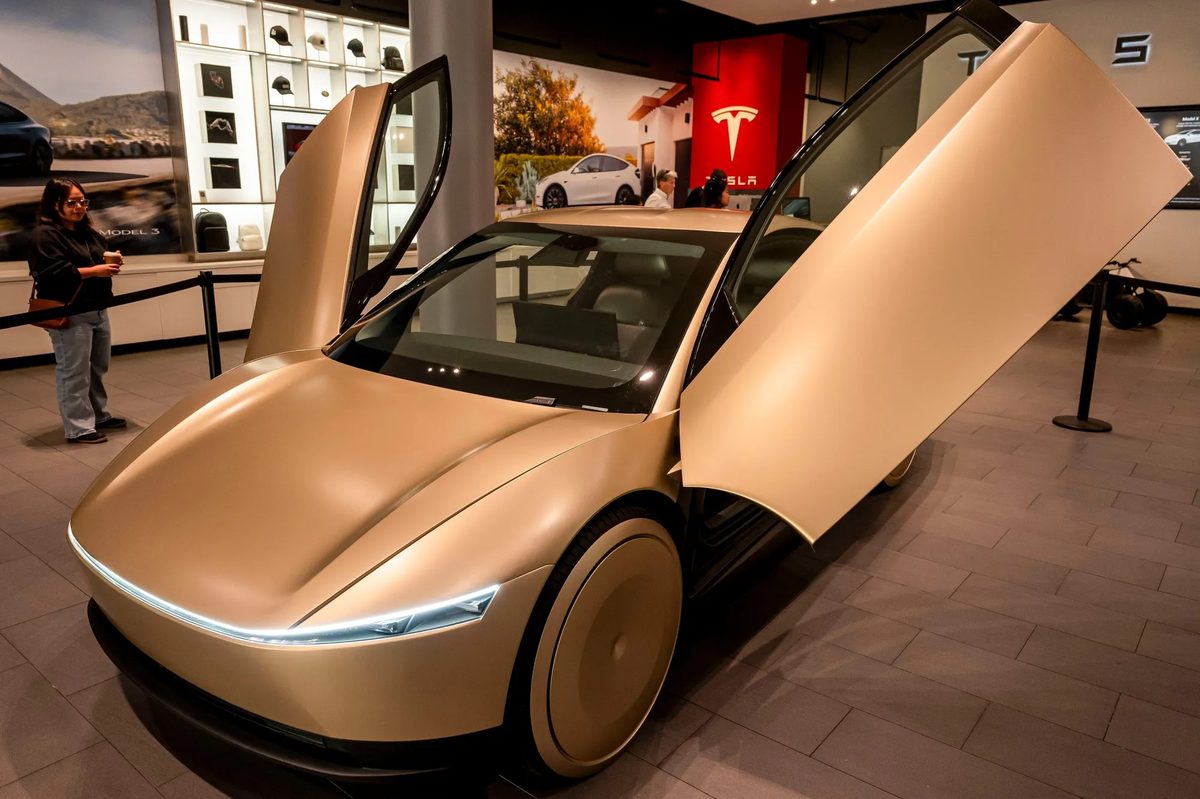
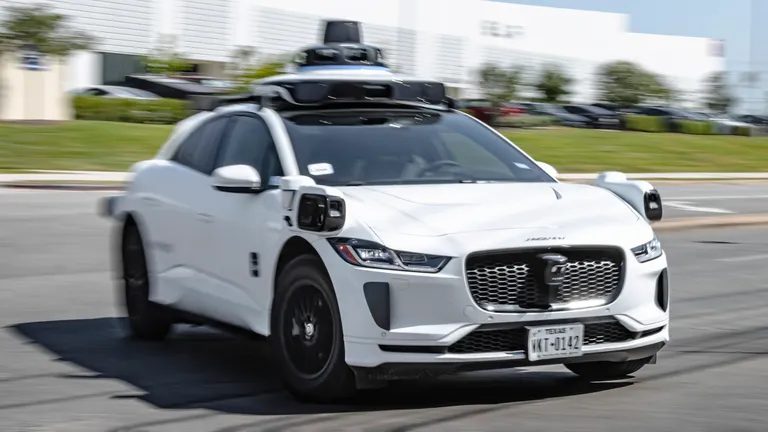
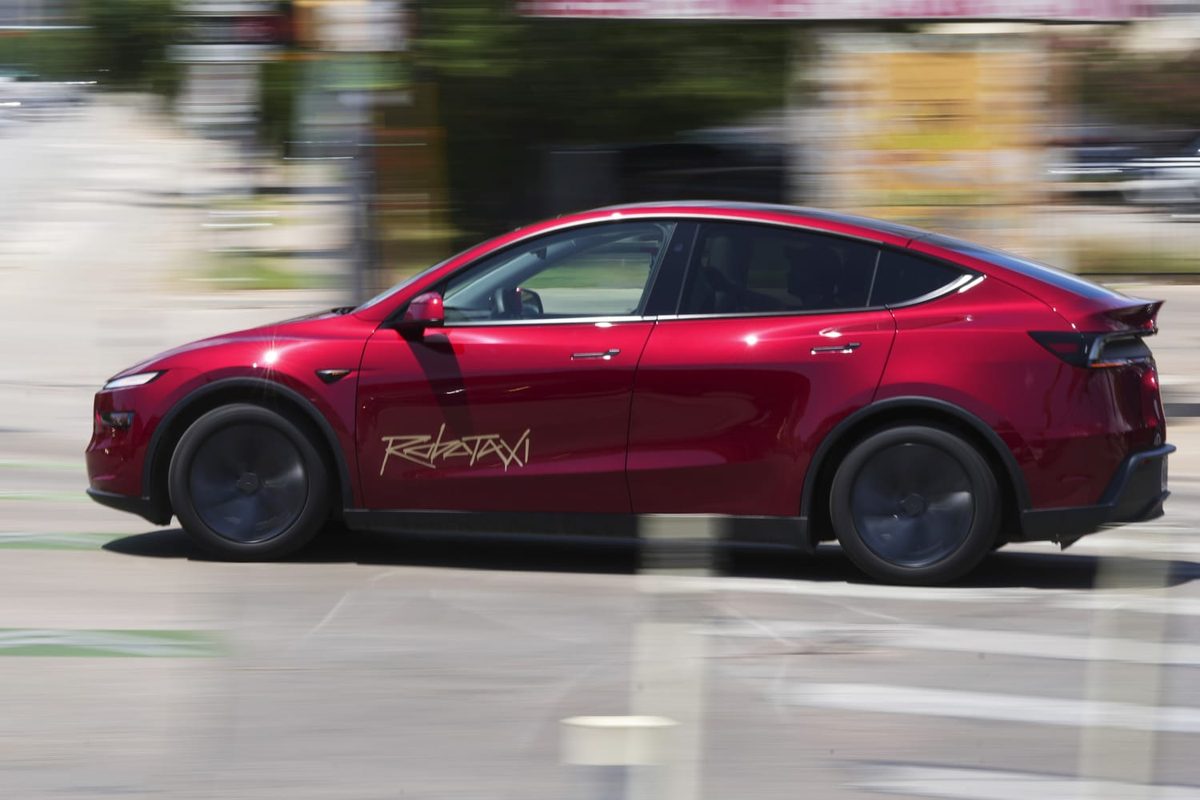
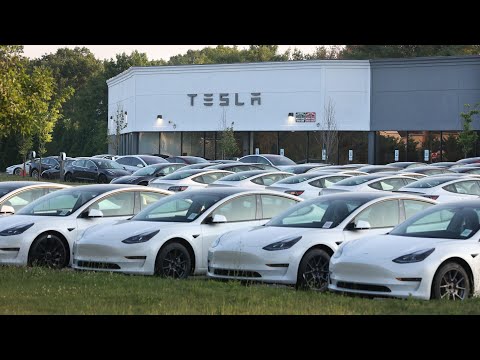
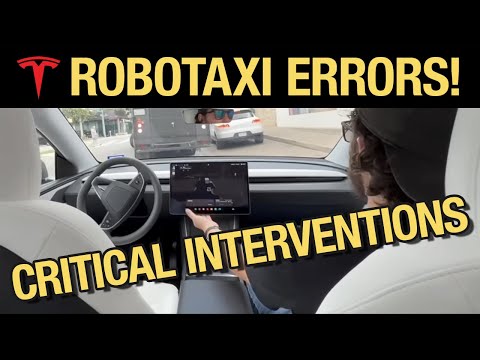
By April 2026, Tesla had expanded its unsupervised robotaxi service to Dallas and Houston, bringing the combined Texas fleet to about 573 vehicles. Newly unredacted crash reports tell a messier story: two of the 17 Austin incidents involved remote teleoperators who drove vehicles into a fence and a construction barricade.
NHTSA upgraded its FSD visibility investigation to Engineering Analysis in March 2026, covering 3.2 million vehicles — one step from mandating a recall. Cybercab production began in April. Tesla's Q1 earnings showed revenue up 16% to $22.4 billion, but Musk told investors robotaxi income won't be material until 2027.
Why it matters
Tesla's crash disclosures and NHTSA's pre-recall probe test whether federal oversight can keep pace with its rapid city-by-city expansion.
Questions about this story
Free account needed to ask — your question is kept and asked for you right after sign-up. Answers are public.
1
Is Waymo considered safer?
Yes — by a wide margin: Waymo is 92% safer than human drivers in serious crashes, while Tesla's robotaxi fleet crashes 4–9x more often than humans.
Why it matters: The gap isn't a rounding error — it's the difference between a system that has demonstrably beaten human safety and one that hasn't yet matched it.
—Waymo has logged 170+ million fully driverless miles and reports 92% fewer crashes causing serious or fatal injuries than human drivers in equivalent conditions.
—Tesla's Austin robotaxi fleet crashed roughly once per 55,000 miles — against a human benchmark of ~500,000 miles per crash, putting Tesla's rate 4–9x worse depending on the standard used — and every Tesla had a safety monitor aboard who could intervene.
—Waymo averages one incident per ~98,000 miles across its driverless fleet, still far better than Tesla even accounting for different geographies and conditions.
—Transparency differs sharply: Tesla was the only AV operator to fully redact crash narratives from NHTSA filings; Waymo, Aurora, Zoox, and Nuro all publish detailed incident accounts.
Tesla and some supporters argue its crash data reflects an immature early deployment with safety monitors — not the system's ceiling — and that 10 billion training miles (expected ~July 2026) will shift performance; Waymo's numbers come from years of incremental deployment with a far smaller fleet.
Waymo's December 2025 recall over repeated school bus violations — 20+ incidents in Austin alone — shows it isn't flawless, and critics note its safety claims are drawn from its own published research rather than independent audits.
AI-generated with web search — may be wrong. Check the linked sources.
Key Indicators
1:55,000
Tesla crash rate (miles per crash)
Tesla robotaxis crashed once every 55,000 miles between July and November 2025, based on nine reported collisions in Austin.
1:500,000
Human crash rate (miles per crash)
Average human drivers crash once every 500,000 miles in police-reported incidents, according to NHTSA data.
17
Total Austin crashes reported
Tesla disclosed 17 crashes from its Austin robotaxi program spanning July 2025 through March 2026, including two caused by remote teleoperators.
~573
Active robotaxis (3 cities)
Tesla's combined fleet across Austin, Dallas, and Houston as of April 2026.
Images from Openverse under Creative Commons licenses.
Videos from YouTube.
Voices
Curated perspectives — historical figures and your fellow readers.
Benjamin Franklin
(1706-1790) ·Enlightenment · wit
Fictional AI pastiche — not real quote.
"A man who promises perfection whilst still stumbling over his own feet deserves neither trust nor investment. 'Tis a curious arithmetic indeed—to value a company at three hundred times its earnings on the mere promise that machines shall outperform men, when the machines prove thrice as dangerous even with men standing ready to catch them when they fall."
100% found this insightful
Hannah Arendt
(1906-1975) ·Modernist · politics
Fictional AI pastiche — not real quote.
"The robotaxi fails not despite human oversight but through it—trained monitors whose very presence transforms vigilance into mere spectacle, rendering thought superfluous in the face of technological determinism. We witness here the bureaucratization of responsibility itself: when the crash comes, who shall we hold accountable, the algorithm or the man paid to watch it fail?"
100% found this insightful
Ever wondered what historical figures would say about today's headlines?
Sign up to generate historical perspectives on this story.
26 events
Latest: May 15th, 2026 · 5 months ago
Showing 8 of 26
JK to step
Tap a bar to jump to that date
Jump to
May 2026
Tesla Unredacts 17 Austin Crash Narratives, Reveals Teleoperator Incidents
LatestData Release
Tesla removed confidentiality designations from all 17 ADS crash reports filed with NHTSA, covering July 2025 through March 2026. Two crashes involved remote teleoperators: in July 2025, a teleoperator drove a vehicle up a curb into a metal fence; in January 2026, one struck a construction barricade at 9 mph. Tesla had been the only AV operator to fully redact its crash narratives.
April 2026
Tesla Confirms Cybercab Production Has Started
Announcement
Tesla confirmed that Cybercab production began, with units rolling off the line. The steering-wheel-free vehicle is designed exclusively for autonomous operation.
Tesla Q1 2026 Earnings: Robotaxi Revenue Pushed to 2027
Financial
Tesla reported Q1 2026 revenue of $22.4 billion, up 16% year over year. FSD subscribers reached 1.28 million. Musk said robotaxi revenue will remain immaterial in 2026, with meaningful contribution expected in 2027. The company committed over $25 billion in 2026 capital spending on AI, robotics, and new product ramps.
Tesla Launches Unsupervised Robotaxi in Dallas and Houston
Milestone
Tesla began operating fully unsupervised robotaxis in geofenced zones in Dallas and Houston, the first expansion beyond Austin. The combined three-city fleet reached approximately 573 vehicles. Initial availability was minimal — crowdsourced data showed roughly one active vehicle per new market at launch.
March 2026
NHTSA Escalates FSD Visibility Probe to Pre-Recall Engineering Analysis
Regulatory
NHTSA upgraded its investigation into FSD crashes in reduced-visibility conditions (fog, sun glare, and airborne dust) to Engineering Analysis (EA26002), covering 3.2 million Tesla vehicles. This is the agency's final investigative tier before it can mandate a recall. Nine incidents are under review, including one fatality.
February 2026
Tesla Gets Second Extension on FSD Traffic Violation Data Deadline
Regulatory
NHTSA granted Tesla a second deadline extension — to March 9, 2026 — for submitting raw crash data in the FSD traffic violation investigation (PE25012). Tesla reported 8,313 records still requiring manual review at a pace of about 300 per day.
Tesla and Waymo Defend Safety Before Senate Committee
Regulatory
Tesla and Waymo executives testified before the Senate Committee on Commerce, Science and Transportation on autonomous vehicle safety. Tesla's Lars Moravy stated the company would accept liability for software failures. Democrats introduced two new bills: the AV Safety Data Act (requiring NHTSA to mandate transparency on miles, injuries, and stoppages) and the Stay in Your Lane Act (requiring manufacturers to define safe operating conditions).
Waymo Raises $16 Billion at $126 Billion Valuation
Industry
Waymo secures historic funding round led by Dragoneer, DST Global, and Sequoia Capital to expand to 20+ cities globally, including London and Tokyo. The company provided 15 million rides in 2025, more than triple its 2024 volume.
January 2026
Crash Data Reveals 9x Higher Rate Than Human Drivers
Data Release
Analysis of Tesla's NHTSA filings shows nine crashes across roughly 500,000 miles—one per 55,000 miles—compared to human drivers' one per 500,000 miles. All crashes occurred with safety monitors present.
Tesla Reports Q4 2025 Earnings
Financial
Tesla beats estimates but reports first annual revenue decline on record. Company announces plans for $20 billion capital expenditure in 2026 for Cybercab, Semi, and Optimus production.
Musk Claims Chase Cars Removed From Unsupervised Robotaxis
Announcement
During Tesla's Q4 earnings call, Musk states that unsupervised robotaxis no longer have chase cars following them, though customer reports suggest truly unsupervised rides remain difficult to find.
Unsupervised Robotaxi Service Pauses After Winter Storm
Operational
Tesla quietly paused unsupervised robotaxi operations after a winter storm hit Austin. Service resumed but customers report all rides still include human safety monitors despite Musk's announcement of unsupervised operation.
Tesla Removes Safety Monitors From Some Robotaxis
Milestone
Musk announces some Austin robotaxis now operate without human monitors onboard. Reports emerge of chase vehicles following the robotaxis at 15-20 feet, raising questions about true autonomy.
Tesla Announces Expansion to Seven New Cities
Announcement
At the World Economic Forum in Davos, Musk announces plans to expand robotaxi service to Dallas, Houston, Phoenix, Miami, Orlando, Tampa, and Las Vegas in first half of 2026, claiming service will be 'widespread' across the U.S. by year-end.
NHTSA Grants Tesla Extension on FSD Investigation Response
Regulatory
Federal regulators extend Tesla's deadline by five weeks to February 23, 2026, for submitting data on FSD incidents involving traffic violations. Tesla cited 8,313 internal records remaining to review and burden of responding to multiple simultaneous NHTSA investigations.
Tesla Announces FSD Shifts to Subscription-Only Model
Financial
Musk announces Tesla will eliminate the $8,000 one-time FSD purchase option on February 14, 2026, moving exclusively to a $99/month subscription model. The shift ties to Musk's compensation package requiring 10 million active FSD subscribers by 2035.
Musk Admits Tesla Needs 10 Billion Miles for Safe Unsupervised FSD
Technical
After missing his end-of-2025 deadline for unsupervised autonomy, Musk states Tesla needs approximately 10 billion miles of data to achieve safe unsupervised self-driving. The fleet is expected to reach this threshold around July 2026.
December 2025
Waymo Recalls 3,067 Vehicles Over School Bus Violations
Industry
Waymo issues a recall after its Austin robotaxis passed stopped school buses an average of 1.5 times weekly. The company claimed a software fix, but five more violations occurred within two weeks.
October 2025
NHTSA Expands FSD Investigation
Regulatory
Federal regulators widen their probe to cover 2.9 million Tesla vehicles after documenting 58 incidents where FSD allegedly ran red lights or crossed into opposing traffic, resulting in 14 fires and 23 injuries.
Tesla Releases FSD v14
Technical
First major FSD update in nearly a year incorporates lessons from the Austin robotaxi program, adding emergency vehicle detection, navigation-integrated routing, and improved obstacle recognition.
September 2025
Four Crashes in Single Month
Incident
September sees Tesla's worst month: four crashes including an animal strike at 27 mph, a cyclist collision, a backing collision, and a parking lot incident.
July 2025
First Robotaxi Crashes Reported
Incident
Tesla reports three crashes in July to NHTSA, including an SUV collision in a construction zone and a fixed-object strike that caused minor injury.
June 2025
NHTSA Contacts Tesla Over Launch-Day Incidents
Regulatory
One day after launch, federal regulators reach out to Tesla following viral videos of robotaxis committing traffic violations and erratic maneuvers.
Tesla Launches Austin Robotaxi Pilot
Launch
Tesla begins offering rides in approximately 10 Model Y vehicles with human safety monitors. Videos immediately surface of erratic driving, wrong-way travel, and traffic violations.
December 2024
GM Shuts Down Cruise Robotaxi Division
Industry
General Motors ends funding for Cruise after spending $10 billion, citing competitive pressures and capital needs. The 2023 pedestrian-dragging incident in San Francisco had triggered regulatory suspension and leadership purges.
October 2024
Tesla Unveils Cybercab at 'We, Robot' Event
Announcement
Musk reveals 20 prototype Cybercabs—two-seater vehicles with no steering wheel or pedals—at Warner Bros. Studios in Burbank. He claims production will cost under $30,000 per vehicle.
The February 2026 NHTSA deadline results in a mandatory recall of FSD software. Tesla halts or significantly scales back its robotaxi expansion while implementing fixes. Stock drops sharply as the robotaxi timeline extends by 12-24 months, forcing investors to recalibrate valuations built on near-term autonomy revenue.
2
Tesla Expands Despite Data, Regulatory Scrutiny Intensifies
Likely
Discussed by: Electrek, industry observers, state regulators
Tesla presses forward with expansion to Texas cities and potentially California, arguing crash severity matters more than frequency. State regulators respond with new requirements—Texas's autonomous vehicle permit mandate takes effect May 2026, and California may impose additional conditions. A serious injury or fatality could trigger an immediate operational suspension similar to Cruise's 2023 shutdown.
3
Crash Rate Improves, Tesla Achieves Parity With Humans
Uncertain
Discussed by: Morgan Stanley, Tesla bulls, Seeking Alpha analysts
FSD v14 updates and accumulated training data reduce crash rates to human-comparable levels by mid-2026. Tesla points to the improvement as validation of its data-driven approach. Morgan Stanley's prediction of 1,000 robotaxis by year-end materializes, and the company begins generating meaningful ride-hailing revenue.
A fatality involving an unsupervised Tesla robotaxi triggers a federal investigation, potential criminal liability, and immediate operational suspension. The incident becomes Tesla's 'Uber Arizona moment,' setting back the entire autonomous vehicle industry and inviting congressional intervention through the pending SELF DRIVE Act legislation.
Historical Context
3 moments from history that rhyme with this story — and how they unfolded.
1 of 3
March 2018
Uber Arizona Fatality (2018)
A modified Volvo XC90 operating under Uber's autonomous testing program struck and killed Elaine Herzberg, 49, as she walked a bicycle across a road in Tempe, Arizona. The safety driver was watching television on her phone. It was the first pedestrian death caused by a fully autonomous vehicle.
Then
Uber suspended all autonomous testing nationwide. Arizona Governor Doug Ducey barred the company from further testing in the state. The safety driver was charged with negligent homicide.
Now
The incident forced the entire industry to slow expansion timelines and implement stricter safety protocols. It demonstrated that safety monitor presence alone does not guarantee intervention and established precedent that backup drivers can face criminal liability.
Why this matters now
Tesla's crash data shows all nine incidents occurred with trained monitors present—the same gap between assumed and actual human vigilance that contributed to the Herzberg fatality. As Tesla removes monitors, this precedent weighs heavily.
2 of 3
October 2023
GM Cruise San Francisco Shutdown (2023)
A Cruise robotaxi struck a pedestrian who had been hit by another vehicle, then dragged her 20 feet while attempting to pull over. California regulators alleged Cruise executives concealed the dragging for over two weeks. The California Public Utilities Commission suspended Cruise's driverless permit.
Then
Cruise halted all driverless operations nationwide. NHTSA fined the company $1.5 million. Leadership was purged and 25% of the workforce was laid off.
Now
GM shut down Cruise entirely in December 2024 after spending $10 billion, citing unsustainable costs and competitive pressure. The incident demonstrated how quickly a single serious crash can end a robotaxi program.
Why this matters now
Tesla faces similar regulatory scrutiny with NHTSA's February deadline and state permit requirements taking effect in May. The Cruise precedent shows how fast a robotaxi operation can collapse under combined regulatory, legal, and financial pressure.
3 of 3
December 2023 – February 2024
Tesla Autopilot 2-Million-Vehicle Recall (2024)
NHTSA concluded that Tesla's Autopilot system allowed driver misuse by not adequately ensuring attention, contributing to crashes. The agency mandated Tesla's largest-ever recall—approximately 2 million vehicles—to update software and add monitoring safeguards.
Then
Tesla implemented over-the-air updates adding stronger driver attention requirements. The recall was completed without major operational disruption.
Now
The recall established that NHTSA would intervene on driver assistance system design, not just crash response. It set precedent for the current FSD investigation covering 2.9 million vehicles.
Why this matters now
The current NHTSA investigation follows the same pattern: accumulating incident data leading to potential mandatory action. Tesla's February 2026 deadline could result in another large-scale recall affecting the robotaxi program directly.