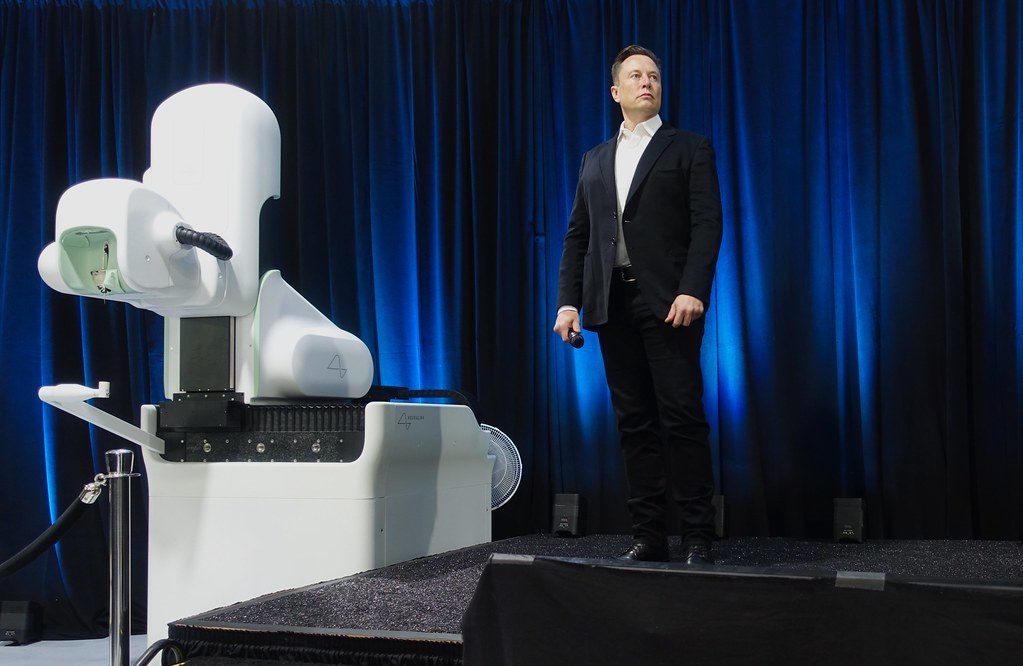
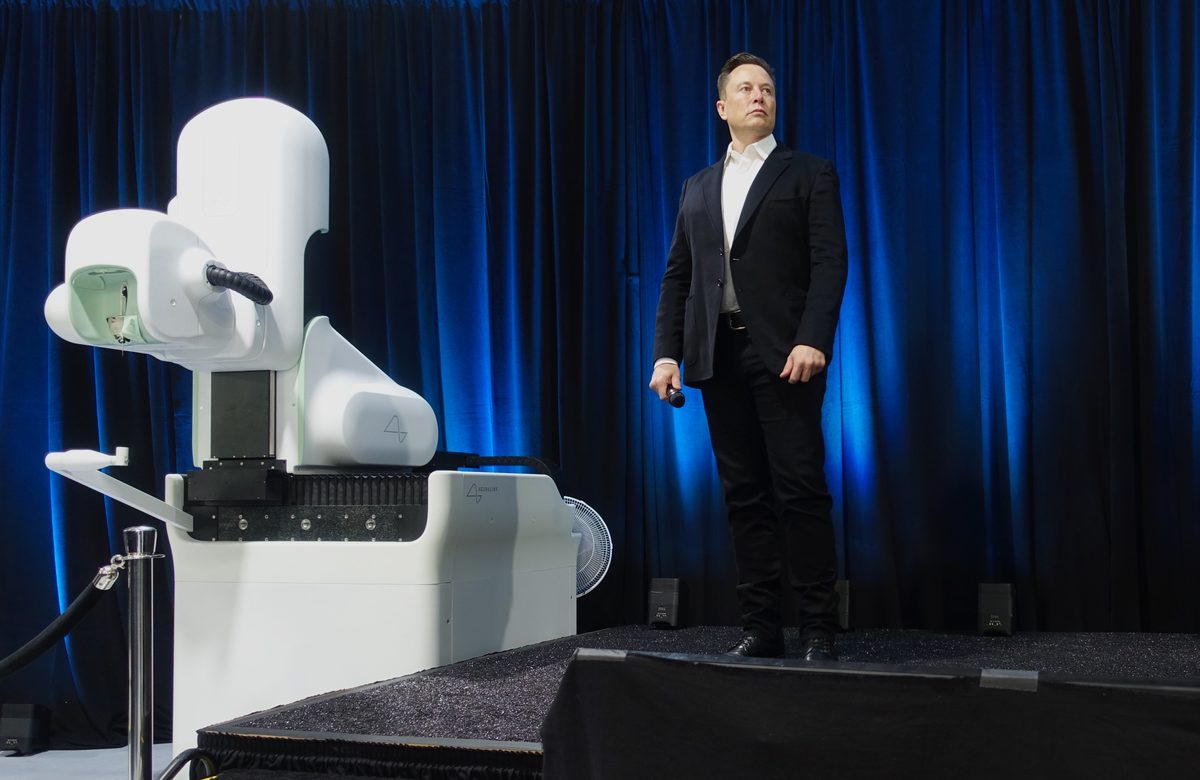
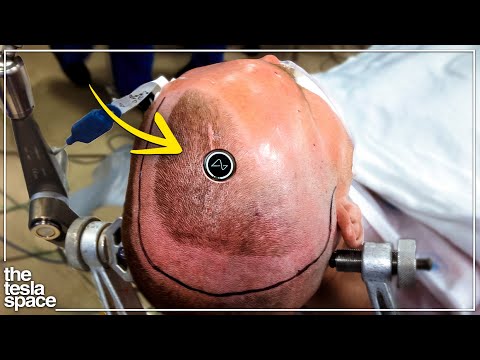
Two years ago, Neuralink implanted a coin-sized chip in Noland Arbaugh's brain—the first human to receive the company's Telepathy device. As of January 28, 2026, twenty-one people across four countries use Neuralink implants to control computers, phones, and robotic arms with their thoughts; several now exceed the cursor-control speed of able-bodied people using a mouse.
The expansion from one experimental patient to a multinational cohort of 21 marks the transition from proof-of-concept to scaled clinical testing. Neuralink has announced 2026 as its first year of high-volume production, with plans to automate implantation surgery and begin human trials for Blindsight, a device designed to restore vision to the fully blind.
Questions about this story
Free account needed to ask — your question is kept and asked for you right after sign-up. Answers are public.
No questions yet — be the first to ask.
Key Indicators
21
Total Participants
People with Neuralink implants across the United States, Canada, and the United Kingdom as of January 2026
40 WPM
Typing Speed
Words per minute achieved by participants typing through imagined finger movements
10+ BPS
Cursor Control
Bits per second achieved by some participants—exceeding the 8-10 BPS typical of able-bodied mouse users
0
Serious Device Events
Zero serious device-related adverse events reported across all trials
16 events
Latest: January 28th, 2026 · 8 months ago
Showing 8 of 16
JK to step
Tap a bar to jump to that date
Jump to
January 2026
Two-Year Milestone: 21 Participants
LatestMilestone
Neuralink announces it has expanded to 21 participants across four countries, with several exceeding able-bodied cursor-control speeds. The company reports zero serious device-related adverse events.
December 2025
Musk Announces 2026 Production Plans
Statement
Elon Musk announces on X that Neuralink will begin high-volume production of brain-computer interface devices in 2026, with a nearly fully automated surgical procedure.
October 2025
First UK Patient Implanted
Medical
Paul, a patient with motor neuron disease, receives the first UK Neuralink implant at UCLH's National Hospital for Neurology and Neurosurgery. He controls a computer cursor hours after surgery.
August 2025
First Surgery Outside United States
Medical
Dr. Andres Lozano performs the first Neuralink implant surgery outside the United States at Toronto Western Hospital. The Canadian patient controls a computer cursor within hours.
July 2025
GB-PRIME Study Launches in UK
Clinical
Neuralink launches the GB-PRIME study at two sites in Great Britain: University College London Hospitals and Newcastle Hospitals. The study will enroll up to seven participants.
June 2025
$650 Million Series E Funding
Financial
Neuralink closes a $650 million Series E round led by investors including ARK Invest, Founders Fund, and Sequoia Capital, valuing the company at $9 billion—more than double its 2023 valuation.
November 2024
Health Canada Approves CAN-PRIME Trial
Regulatory
Health Canada approves Neuralink's first clinical trial outside the United States, to be conducted at University Health Network in Toronto.
September 2024
Blindsight Gets Breakthrough Designation
Regulatory
The FDA grants breakthrough device designation to Neuralink's Blindsight implant, designed to restore vision by stimulating the visual cortex directly, bypassing damaged eyes.
August 2024
Second Patient 'Alex' Implanted
Medical
Alex, a former automotive technician with spinal cord injury, receives the second Neuralink implant. Modified surgical protocols—reducing brain motion and the gap between implant and brain—prevent thread retraction.
May 2024
Software Fix Restores Functionality
Technical
Neuralink modifies its algorithms to be more sensitive to neural signals, restoring significant cursor-control capability despite the physical thread retraction.
March 2024
Thread Retraction Setback
Technical
Up to 85% of electrode threads in Arbaugh's brain retract from their original positions, significantly reducing the device's signal capture. Air trapped in the skull during surgery is identified as a possible cause.
January 2024
First Human Implant: Noland Arbaugh
Medical
Noland Arbaugh, 29, becomes the first person to receive Neuralink's Telepathy implant at Barrow Neurological Institute. The two-hour surgery places a coin-sized chip connected to over 1,000 electrodes in his motor cortex.
May 2023
FDA Approves Human Clinical Trials
Regulatory
After additional safety testing, the FDA approves Neuralink's PRIME Study for human trials in patients with quadriplegia due to spinal cord injury or amyotrophic lateral sclerosis (ALS).
March 2022
FDA Rejects Human Trial Application
Regulatory
The FDA rejects Neuralink's application for human trials, citing dozens of concerns including lithium battery safety, potential wire migration, and device removal procedures.
July 2020
FDA Breakthrough Device Designation
Regulatory
The FDA grants Neuralink breakthrough device designation, allowing limited human testing under expedited guidelines.
2016
Neuralink Founded
Company
Elon Musk and eight neuroscientists establish Neuralink in San Francisco to develop implantable brain-computer interfaces.
Scenarios
1
Neuralink Receives FDA Approval for Commercial Device
Possible
Discussed by: IEEE Spectrum, industry analysts, and Morgan Stanley's $400 billion BCI market projection
If clinical trials continue demonstrating safety and efficacy through 2026-2027, Neuralink could seek premarket approval for the Telepathy device, potentially becoming the first high-bandwidth, fully wireless BCI approved for commercial use in paralysis patients. The FDA's breakthrough device designation for both Telepathy and Blindsight suggests regulatory willingness to expedite review. Approval would trigger rapid scaling given the reported 10,000-person waitlist.
2
Blindsight Restores Vision in First Human Patient
Possible
Discussed by: Neuralink updates, Musk statements, and ophthalmology publications
Neuralink has announced plans for its first Blindsight human implant in 2026, pending regulatory approval. Initial results will likely show low-resolution vision—Musk compared early capability to 'Atari graphics.' Success would represent a major breakthrough for the estimated 40 million blind people worldwide, though achieving functional vision useful for navigation remains uncertain.
3
Competitors Outpace Neuralink in Specific Applications
Likely
Discussed by: MIT Technology Review, STAT News, and Paradromics announcements
Synchron's less-invasive stentrode approach (inserted via blood vessels without open brain surgery) may prove more attractive to risk-averse patients and regulators. Paradromics received FDA approval for speech restoration trials in late 2025. Blackrock Neurotech's Utah Array has over 20 years of human implantation data. These competitors could win FDA approval for specific applications before Neuralink, fragmenting the market by use case.
4
Long-Term Safety Concerns Slow Expansion
Uncertain
Discussed by: Reuters investigations, medical ethicists, IEEE Pulse
The thread retraction in the first patient highlighted that long-term device stability remains uncertain. If participants experience significant complications at 3-5 years post-implant—such as additional thread retraction, infection, or cognitive effects—regulators could pause trials or require extensive redesign. The brain's response to permanent foreign objects over decades remains largely unknown.
Historical Context
3 moments from history that rhyme with this story — and how they unfolded.
1 of 3
June 2004
BrainGate and Matt Nagle (2004)
Matt Nagle, 25, became the first paralyzed person to control a computer cursor using an implanted brain-computer interface. After a stabbing left him quadriplegic, researchers at Brown University implanted a 96-electrode Utah Array in his motor cortex. Nagle could open emails, control a TV, and move a robotic hand—revolutionary capabilities that took years of academic research to achieve.
Then
Nagle demonstrated proof-of-concept for thought-controlled devices. The research team published landmark papers validating BCI technology for human use.
Now
BrainGate trials continued for over a decade, implanting dozens of patients and establishing the safety record that informed FDA guidance for all subsequent BCI devices, including Neuralink.
Why this matters now
Neuralink's achievement of 21 participants in two years, with some controlling devices within hours of surgery, shows how far the technology has advanced from the months of training required in early BrainGate trials.
2 of 3
1984-1995
Cochlear Implant Commercialization (1984-1990s)
The FDA approved the first cochlear implant for adults in 1984, then for children in 1990. These devices bypass damaged hearing structures to stimulate the auditory nerve directly—conceptually similar to what Neuralink's Blindsight aims to do for vision. Early cochlear implants faced skepticism about whether electronically-induced hearing could be functionally useful.
Then
Initial recipients reported basic sound awareness rather than natural hearing. Critics in the deaf community opposed the technology as unnecessary medicalization.
Now
Over one million people now use cochlear implants worldwide. Modern devices enable phone conversations and music appreciation. The technology became standard of care for severe hearing loss.
Why this matters now
Cochlear implants demonstrate how neural interface technology can progress from crude initial functionality to transformative capability over decades—a trajectory Neuralink hopes to replicate for motor control and vision.
3 of 3
2015-2018
Theranos Collapse (2015-2018)
Blood-testing startup Theranos, valued at $9 billion and led by a charismatic founder with bold promises, collapsed when investigations revealed its technology didn't work as claimed. The company had conducted limited testing on actual patients while publicly announcing revolutionary capabilities.
Then
Theranos dissolved. Founder Elizabeth Holmes was convicted of fraud in 2022.
Now
The scandal increased scrutiny of heavily-hyped health technology startups and reinforced the importance of transparent clinical data over founder promises.
Why this matters now
Neuralink shares surface similarities with Theranos—a $9 billion valuation, a famous founder making ambitious claims—but has publicly demonstrated its technology in identified patients and published clinical data, distinguishing it from Theranos's secretive approach.