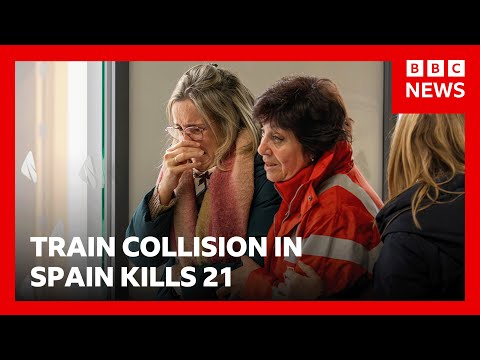
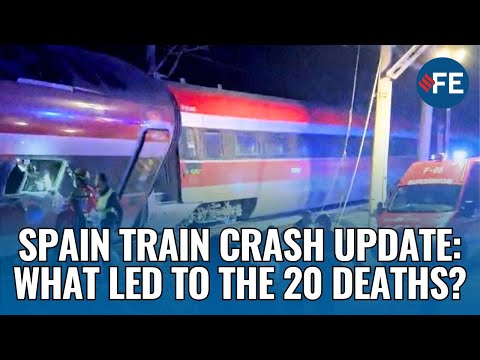
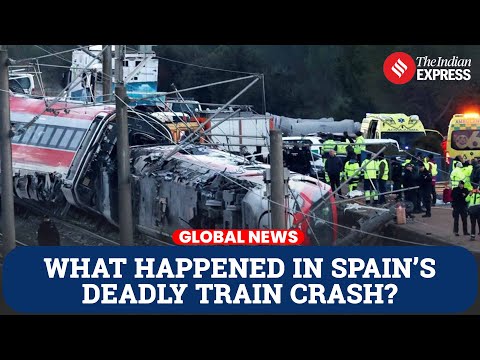
Spain's high-speed rail network had operated without a fatal accident on dedicated lines for 34 years. On January 18, 2026, an Iryo train from Malaga to Madrid derailed near Adamuz and hit a Renfe Alvia service head-on, killing 45 and injuring 292.
A preliminary investigation report published January 23 confirmed that a 30-centimeter crack in the track caused the derailment. Whether the fracture resulted from poor welding, fatigue, or deterioration remains under analysis. The derailment occurred on a straight section of track that had been renovated just eight months earlier at a cost of €700 million.
One wheel from the Iryo train has not been located. A train drivers' union had warned of severe track degradation on this corridor five months before the crash—warnings that ADIF, the state infrastructure manager, reportedly did not act on. The disaster triggered a nationwide rail workers' strike scheduled for February 9-11.
Questions about this story
Free account needed to ask — your question is kept and asked for you right after sign-up. Answers are public.
No questions yet — be the first to ask.
Key Indicators
45
Confirmed dead
Final death toll confirmed; 42 Spanish nationals, 3 foreign
21 events
Latest: February 5th, 2026 · 8 months ago
Showing 8 of 21
JK to step
Tap a bar to jump to that date
Jump to
February 2026
Rail strike talks collapse; action set for Feb 9-11
LatestResponse
Government-union negotiations fail to halt nationwide rail strike called by SEMAF, CCOO, UGT and others over safety concerns following Adamuz and Gelida crashes. Unions demand €1.5B safety upgrades and 2,000 new staff.
EU Commission requests data on Adamuz track funding
Investigation
European Commission asks Spanish authorities for details on execution of EU funds used for €700M Madrid-Seville line renovation after Adamuz crash exposed incomplete rail replacement.
Rail unions protest outside Transport Ministry
Response
Railway workers demonstrate in Madrid citing chronic delays, underinvestment, and safety failures post-Adamuz, signaling escalation ahead of planned strike.
Multiple unions endorse February rail strikes
Response
CCOO, UGT, USO, Sindicato Ferroviario join SEMAF strike call for Feb 9-11 across Renfe, ADIF, Iryo, Ouigo; Transport Minister schedules talks.
January 2026
Preliminary report confirms track crack as cause
Investigation
CIAF publishes preliminary findings: 30cm track crack caused derailment. Wheel notches on four Iryo carriages compatible with cracked track. Crack may result from poor weld, fatigue, or weather deterioration—further analysis ongoing.
Final death toll confirmed at 45
Development
Forensic teams complete identification of all 45 fatalities: 42 Spanish nationals and 3 foreign nationals (Morocco, Russia, Germany). Two additional bodies recovered from wreckage.
SEMAF announces nationwide rail strike for February 9-11
Response
Spain's largest train drivers' union calls three-day general strike across entire railway network, demanding criminal accountability for safety failures and guaranteed network reliability. Strike follows deaths of two drivers in Adamuz and Gelida crashes.
King Felipe VI and Queen Letizia visit crash site
Response
Spanish royals visit Adamuz as three-day national mourning period begins. Interior Minister confirms 3 more bodies believed trapped in wreckage.
Broken rail joint identified in preliminary investigation
Investigation
Investigators find broken weld joint on track that may have created gap. Transport Minister Puente emphasizes uncertainty about whether fracture caused derailment or resulted from it. Sabotage and human error ruled out.
Death toll rises to 41
Development
Updated casualty count shows 41 confirmed dead and 292 injured, with 15 in critical condition and 39 still hospitalized including four children.
ADIF imposes speed limits on Madrid-Barcelona route
Response
ADIF orders temporary 160 km/h speed limit on sections of Madrid-Barcelona high-speed line after train drivers report track bumps and vibrations.
Death toll rises to 39; national mourning declared
Development
PM Sánchez announces three days of mourning. Transport Minister Puente establishes independent investigation commission.
Madrid-Andalusia high-speed rail service suspended
Response
Civil Guard announces suspension of all high-speed service between Madrid and Andalusia (Córdoba, Seville, Málaga, Huelva, Cádiz, Algeciras, Granada). Approximately 200 trains cancelled. Suspension extended through January 23.
Iryo train derails near Adamuz
Accident
Train 6189 from Malaga to Madrid derails on a straight section at 110 km/h, 10 minutes after leaving Córdoba. Rear carriages swing onto adjacent track.
Collision with Renfe Alvia train
Accident
Twenty seconds after the derailment, a Madrid-to-Huelva Alvia traveling at 205 km/h strikes the derailed carriages. Front cars plunge down 4-meter embankment.
Emergency services confirm 21 dead
Response
Initial death toll reported as rescue operations continue through the night in difficult conditions.
Iryo train passes routine inspection
Maintenance
The train that would derail three days later completes its last scheduled inspection.
August 2025
SEMAF warns of severe track degradation
Warning
Train drivers' union sends letter to ADIF citing potholes, bumps, and overhead line problems causing frequent breakdowns.
May 2025
€700M track renovation completed
Infrastructure
ADIF completes major renovation of the Córdoba-Madrid high-speed corridor, including the Adamuz section.
November 2022
Iryo launches Spain's first private high-speed service
Spain's previous worst rail disaster: an Alvia train derails at 179 km/h on a curve with an 80 km/h limit. Driver distraction confirmed as cause.
Scenarios
1
Mechanical Failure Confirmed: Iryo and Manufacturer Face Liability
Likely
Discussed by: José Trigueros, president of the Association of Road Engineers, has suggested undercarriage failure based on preliminary analysis. Reuters and Spanish media report a wheel from the Iryo train has not been located.
Investigators determine that a wheel or axle failure on the Iryo Frecciarossa 1000 train caused the initial derailment. This would trigger liability claims against Iryo and potentially Hitachi-Bombardier, the train's manufacturer. The scenario would mirror the 1998 Eschede disaster in Germany, where a wheel fracture on an ICE train killed 101 people.
Discussed by: SEMAF union leadership and Reuters, which documented 10 infrastructure-related delays at Adamuz since 2022. Euro Weekly News reports Guardia Civil investigation is examining maintenance records.
Investigation finds that track defects—the 'potholes, bumps, and imbalances' SEMAF warned about—caused or contributed to the derailment. ADIF would face questions about why the August 2025 warning went unheeded and whether the €700M renovation was properly executed. Political fallout would center on Transport Minister Puente.
3
Combined Factors: Track and Train Issues Led to Derailment
Possible
Discussed by: Renfe President Fernández Heredia stated cause could be 'rolling stock or infrastructure.' Multiple Spanish transport experts quoted in media cite the possibility of interacting failures.
Investigators conclude that multiple factors combined—perhaps a marginal wheel defect that would not have caused derailment on properly maintained track, or vice versa. This outcome would distribute responsibility and complicate legal proceedings but could drive broader safety reforms across Spain's liberalized rail market.
4
Signaling or Safety System Gap Identified
Unlikely
Discussed by: Implicit in Fernández Heredia's comment that 20 seconds was 'too short to activate automatic braking.' Some railway analysts note the ETCS system should theoretically detect derailments.
Investigation reveals that existing safety systems—ERTMS/ETCS or automatic train protection—had gaps that prevented faster response to the derailment. This would prompt EU-wide review of high-speed rail safety protocols and potential mandates for additional derailment detection systems.
Historical Context
3 moments from history that rhyme with this story — and how they unfolded.
1 of 3
June 1998
Eschede Train Disaster (1998)
A single fatigued wheel on an ICE high-speed train fractured at 200 km/h near Eschede, Germany. The wheel rim caught in a track switch, directing the train into a bridge support. 101 people died—the deadliest high-speed rail accident in history.
Then
Deutsche Bahn replaced all wheels of similar design across its ICE fleet. Criminal charges against engineers were dropped after a lengthy trial.
Now
Germany redesigned bridge supports near track switches nationwide. The disaster drove global standards for high-speed wheel inspection protocols.
Why this matters now
A missing wheel from the Iryo train has not been located. If mechanical failure is confirmed, Adamuz would be only the second major high-speed derailment caused by wheel failure, making Eschede the closest precedent for understanding both technical causes and legal outcomes.
2 of 3
July 2013
Santiago de Compostela Derailment (2013)
An Alvia train entered a 80 km/h curve at 179 km/h outside Santiago de Compostela. The train derailed and struck a wall, killing 79 and injuring 144. The driver had been consulting a map while on a phone call with Renfe staff.
Then
Spain installed additional automatic braking balises on the approach to Santiago. The driver was charged with negligent homicide.
Now
In July 2024, the driver and ADIF's safety director each received 2.5-year sentences. The crash led to expanded ERTMS deployment across Spain's network.
Why this matters now
Before Adamuz, Santiago was Spain's deadliest rail disaster. That crash was caused by human error; officials have stated human error is 'practically ruled out' at Adamuz. The contrast underscores why investigators are focused on mechanical and infrastructure factors.
3 of 3
February 2020
Livraga Derailment (2020)
A Frecciarossa 1000 train—the same model operated by Iryo—derailed at 298 km/h near Livraga, Italy. Both drivers were killed; 30 passengers were injured. The train type had been in service for five years.
Then
Investigation found maintenance workers had overridden a faulty switch without properly resetting its position, causing the train to be directed onto a siding at high speed.
Now
Trenitalia (Iryo's majority owner) implemented new protocols for switch maintenance reporting. The Frecciarossa 1000 fleet's safety record remained otherwise unblemished.
Why this matters now
Livraga established that the Frecciarossa 1000's first fatal accident stemmed from infrastructure error, not train defects. If Adamuz proves to be mechanical failure, it would be the first such failure for the trainset.