India's railways date to 1853, when the first train ran 21 miles from Bombay to Thane under British colonial rule. For 170 years, long-distance overnight travel meant cramped, aging coaches.
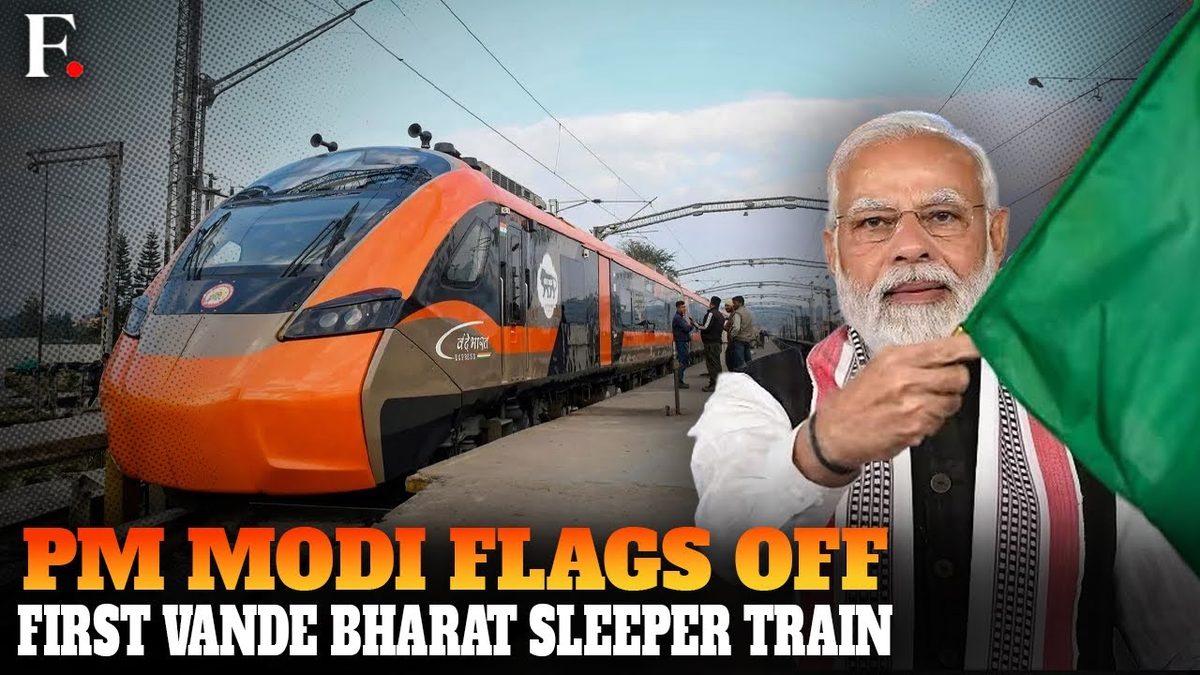
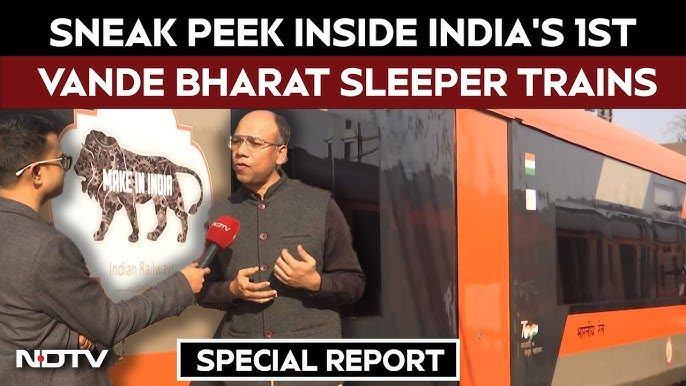
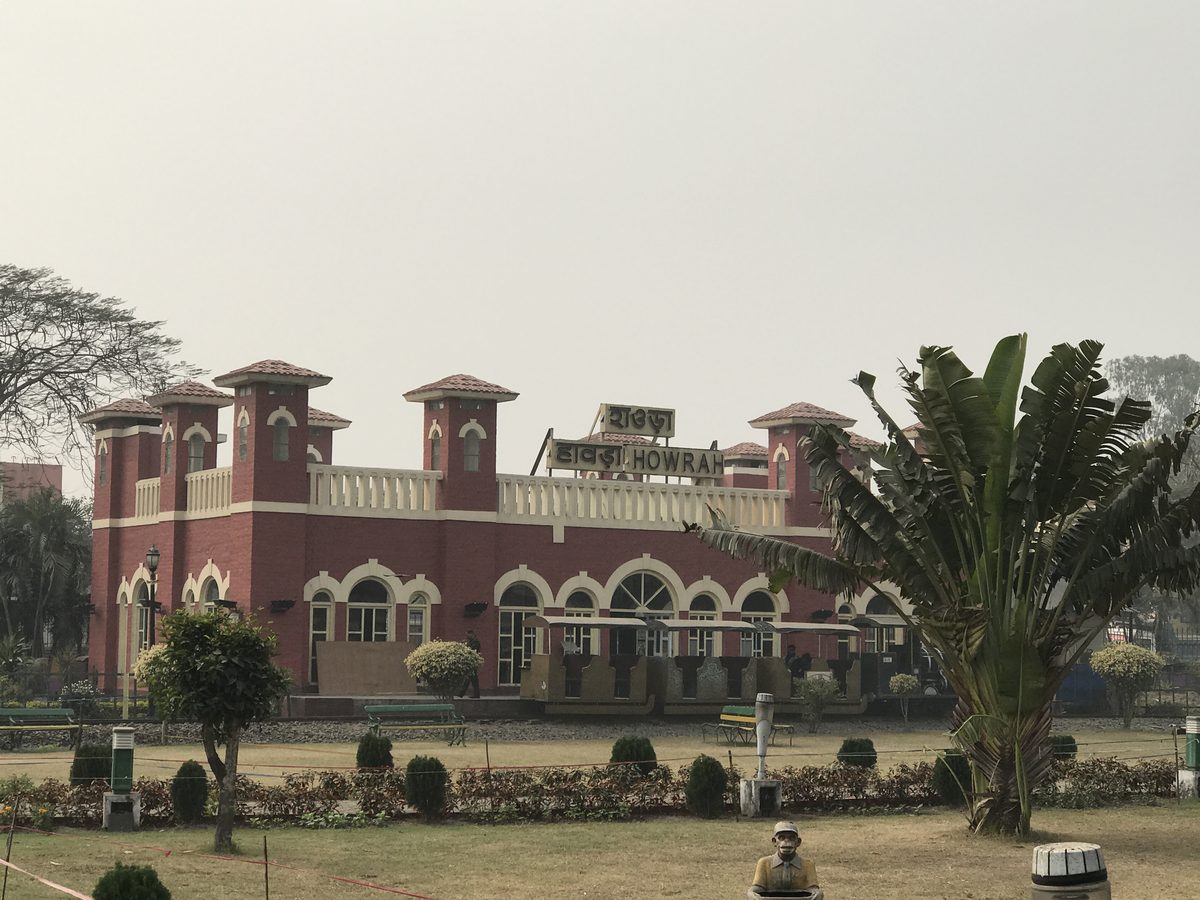
On January 17, 2026, India launched its first high-speed sleeper train: a 16-coach air-conditioned service covering 958 km between Howrah and Guwahati (Kamakhya) in 14 hours. Three hours faster than existing options. Commercial service began January 22, 2026, with no VIP quota, digital transactions only, and confirmed tickets exclusively — and plans for 260 Vande Bharat Sleeper trainsets.
Trains are built at the Integral Coach Factory in Chennai with 90% local content and reach 180 km/h. The Kavach automatic protection system commissioned a record 472 km in late January 2026 and now covers over 1,300 route km. With 164 services running and 800 trainsets targeted by 2030, the program has no VIP passes for senior officials and no emergency quotas.
Questions about this story
Free account needed to ask — your question is kept and asked for you right after sign-up. Answers are public.
No questions yet — be the first to ask.
Key Indicators
164
Vande Bharat services operational
Covering 274 districts with over 105% seat occupancy
7B+
Annual passengers
First time crossing 7 billion since pre-COVID, up 6% year-over-year
1,300+ km
Kavach coverage commissioned
Indigenous collision-avoidance system after record 472 km addition in Jan 2026, targeting 5,000 km annually
₹1.98L Cr
Bullet train revised cost
Mumbai-Ahmedabad corridor, second mountain tunnel breakthrough Feb 2026, first section opening 2026 (Surat-Bilimora)
17 events
Latest: February 4th, 2026 · 8 months ago
Showing 8 of 17
JK to step
Tap a bar to jump to that date
Jump to
February 2026
Second Mountain Tunnel Breakthrough on Bullet Train Corridor
LatestConstruction
Second mountain tunnel in Palghar district, Maharashtra completed for Mumbai-Ahmedabad high-speed corridor, advancing toward 2026 trial runs.
260 Vande Bharat Sleeper Trainsets Manufacturing Plan Announced
Policy
Ministry of Railways details phased rollout of 260 Vande Bharat Sleeper trainsets for long-distance routes up to 1,500 km, with two already operational.
January 2026
Vande Bharat Sleeper Begins Commercial Service
Launch
First commercial run departs Howrah at 6:20 PM, five days after inauguration. Train operates all days except Wednesday (Kamakhya-Howrah) and Thursday (Howrah-Kamakhya).
First Vande Bharat Sleeper Enters Service
Launch
PM Modi flags off India's first high-speed sleeper train from Malda, West Bengal. The 16-coach service covers 958 km between Howrah and Kamakhya in 14 hours at up to 180 km/h.
West Bengal Railway Infrastructure Investment
Policy
PM Modi dedicates and lays foundation for rail and road projects worth ₹3,250 crore aimed at strengthening connectivity in West Bengal and North-Eastern region. Ministry allocates ₹13,000 crore for West Bengal railway development.
First Mountain Tunnel Breakthrough on Bullet Train Corridor
Construction
Mountain Tunnel-5 in Palghar district, Maharashtra achieves breakthrough—first of seven mountain tunnels completed for Mumbai-Ahmedabad high-speed corridor. Electrification work begins at Purna River crossing in Navsari, Gujarat.
December 2025
Kavach Crosses 2,000 km Deployment
Milestone
Complete commissioning of Kavach safety system exceeds 2,000 route km across multiple corridors.
September 2025
First Bullet Train Tunnel Completed
Construction
5 km underground tunnel between Thane and BKC completed for Mumbai-Ahmedabad high-speed corridor.
November 2024
Record 30 Million Single-Day Passengers
Milestone
Indian Railways transports over 3 crore passengers in one day during festive season—an all-time record.
September 2024
Vande Bharat Sleeper Prototype Launched
Development
First Vande Bharat Sleeper prototype begins testing phase ahead of commercial deployment.
July 2024
Kavach 4.0 Specifications Approved
Technical
RDSO approves Version 4.0 with improved location accuracy and direct electronic interlocking interface.
June 2024
West Bengal Kanchanjungha Collision
Disaster
Freight train hits Kanchanjungha Express near Rangapani; 11 killed, 60 injured. Faulty signal and over-speeding blamed.
June 2023
Odisha Triple Train Collision
Disaster
Signal error causes Coromandel Express to derail into freight train, triggering three-way collision at Bahanaga Bazar. 296 killed, 1,200+ injured—India's deadliest rail accident in decades.
July 2020
Kavach Adopted as National Safety System
Policy
Ministry of Railways designates Kavach as India's National Automatic Train Protection System following SIL-4 certification.
February 2019
First Vande Bharat Express Launched
Launch
PM Modi flags off first Vande Bharat Express between New Delhi and Varanasi, India's first semi-high speed train.
October 2018
First Vande Bharat Prototype Completed
Milestone
ICF completes Train 18 prototype in 18 months at a cost of ₹97 crore, with 87% indigenous content.
January 2017
ICF Begins Vande Bharat Development
Development
Integral Coach Factory starts developing 'Train 18', a semi-high speed trainset designed for 160+ km/h operations with modern amenities.
Scenarios
1
Vande Bharat Reaches 800 Trainsets by 2030, Transforms Inter-City Travel
Possible
Discussed by: Ministry of Railways official statements, Swarajya infrastructure analysis
Indian Railways meets its target, with Vande Bharat becoming the dominant mode for premium inter-city travel. ICF scales production, indigenous content rises to 95%+, and exports begin to neighboring countries. The Kavach safety system covers all high-density corridors, and accident rates fall substantially.
2
Safety Incident Derails Expansion, Forces Program Reset
Possible
Discussed by: Business Standard, rail safety experts following 2023-2024 accidents
A major accident involving Vande Bharat trains—whether due to infrastructure gaps, signal failures, or Kavach limitations—forces a pause in expansion. Public confidence drops, political opposition intensifies, and the program undergoes a multi-year safety review before resuming at a slower pace.
3
Bullet Train Opens on Schedule, Validates High-Speed Strategy
Uncertain
Discussed by: NHSRCL official updates, Gulf News, Swarajya infrastructure coverage
The Mumbai-Ahmedabad corridor opens its first section by August 2027 as planned. Ridership exceeds projections, demonstrating demand for true high-speed rail. This success accelerates planning for additional corridors and positions India as a potential Shinkansen technology partner for other developing nations.
4
Manufacturing Bottlenecks and Delays Slow Rollout
Possible
Discussed by: Industry analysts, Business Standard on Kavach delays
Supply chain constraints, component shortages, or quality issues at ICF and other facilities slow Vande Bharat production below targets. Meanwhile, Kavach deployment continues to miss deadlines (as it did in December 2025). The modernization narrative weakens, though incremental progress continues.
Historical Context
3 moments from history that rhyme with this story — and how they unfolded.
1 of 3
1924 - 1951
Indian Railways Nationalization (1924-1951)
British colonial India nationalized its railway companies between 1924 and 1947, consolidating 42 separate railway systems. After independence in 1947, the new Indian government completed integration by 1951, creating a unified Indian Railways serving the world's second-most populous nation.
Then
Standardization of gauge, fares, and operations enabled coordinated national service for the first time.
Now
Indian Railways became the backbone of national integration, but chronic underinvestment left infrastructure aging. By 2023, the network still operated many colonial-era signaling systems and coaches.
Why this matters now
The Vande Bharat program represents the most significant break from colonial-era infrastructure since nationalization. It marks a shift from maintaining inherited systems to building indigenous high-speed capability.
2 of 3
October 1964
Japan Shinkansen Launch (1964)
Japan opened the Tokaido Shinkansen between Tokyo and Osaka just nine days before the 1964 Tokyo Olympics. The 515 km line operated at 210 km/h—the world's fastest scheduled service. It was built in five years to showcase Japan's post-war technological recovery.
Then
The line proved commercially successful immediately, carrying 100 million passengers within three years and recovering construction costs faster than projected.
Now
Set the global template for high-speed rail. The network expanded to 2,951 km with zero passenger fatalities from derailments in 60 years. Spawned France's TGV, Germany's ICE, and China's HSR.
Why this matters now
India's Vande Bharat program echoes Japan's approach: indigenous development, national pride, and using rail to signal technological capability. The key difference is that India is attempting this transformation while operating the world's largest railway network, rather than building from scratch.
3 of 3
August 2008 - December 2023
China High-Speed Rail Buildout (2008-2023)
China opened its first high-speed line (Beijing-Tianjin) in August 2008, reaching 350 km/h. Starting with licensed Japanese and German technology, China built 45,000 km of high-speed track in 15 years—more than the rest of the world combined.
Then
The 2011 Wenzhou collision (40 deaths) raised safety concerns and temporarily slowed expansion, but investment resumed in 2012.
Now
Created world's largest HSR network connecting 33 of 34 provinces. Transformed domestic travel patterns and reduced aviation demand on key routes. Exported technology to Indonesia, Thailand, and other countries.
Why this matters now
China demonstrated that rapid HSR expansion is possible with sustained political will and investment. India's challenge is different: modernizing an existing colonial-era network while maintaining 7+ billion annual passenger trips, rather than building new dedicated lines on greenfield sites.