
Pull to refresh
Logo
Mexico makes fraudulent commercial use of official logos a federal crime

Mexico makes fraudulent commercial use of official logos a federal crime

Rule Changes

The decree carries one to five years in prison and fines up to 1.17 million pesos; the government says satire is exempt, critics say the wording is broad

Overview

Updated 59 minutes ago

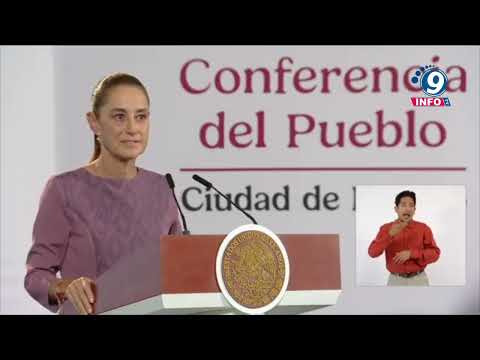
Mexico published a decree on 13 November 2026 making it a federal crime to use official logos, domains or documents at commercial scale to deceive people. It took effect the next day. Penalties run from one to five years in prison and from 1,000 to 10,000 UMA, or roughly 117,310 to 1,173,100 pesos.

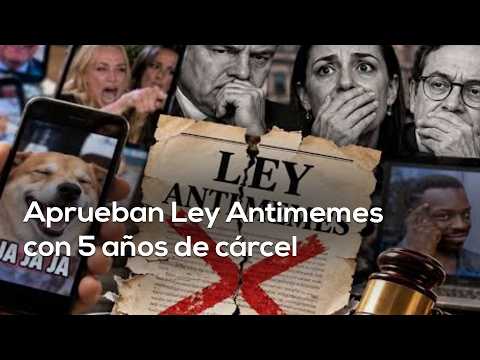
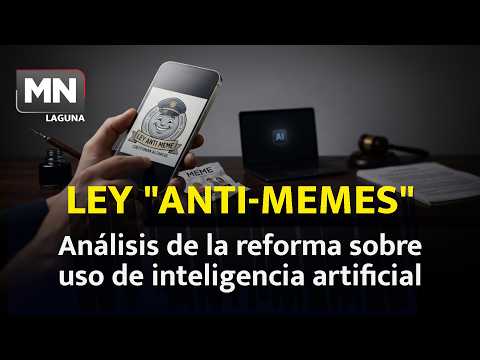
The target is impersonation: a fake tax authority site harvesting e.firma credentials, a cloned health ministry portal, a WhatsApp message with a forged municipal summons. Officials say satire and political parody are untouched. Critics focus on "commercial scale," a term the same law defines to include obtaining or using personal data, and warn the wording could reach journalists and meme accounts.

Why it matters

Mexico can now jail people who run fake government portals; critics say the same wording could reach satire.

Questions about this story

Free account needed to ask — your question is kept and asked for you right after sign-up. Answers are public.

No questions yet — be the first to ask.

Key Indicators

1–5 years
Prison sentence range
Term for anyone convicted under Article 403 Bis of the industrial property law.
1,173,100 pesos
Maximum fine
10,000 UMA at the 2026 daily value of 117.31 pesos.
10,000 UMA
Fine ceiling in UMA units
The minimum is 1,000 UMA; the unit is set annually by Inegi.
117.31 pesos
Daily value of one UMA in 2026
Fixed by the national statistics institute, Inegi.

Voices

Curated perspectives — historical figures and your fellow readers.

Sign up to generate historical perspectives on this story.

People Involved

Organizations Involved

Timeline

October 2026 November 2026

4 events Latest: 3 days ago
Tap a bar to jump to that date

Scenarios

1

First charges filed against a phishing network

Likely Resolves by Nov 14, 2027

Discussed by: Mexican legal and security analysts, including the Syswork México review of Article 403 Bis

Prosecutors use the new article against a group running a cloned tax authority or health ministry portal. The case turns on proving commercial scale and intent to deceive, both of which the text requires. A conviction would give the government its first concrete example of the law working as advertised.

2

A satirist or journalist is charged under 403 Bis

Unlikely Resolves by Nov 14, 2027

Discussed by: Opposition senators in the PRI, PAN and Movimiento Ciudadano, and law professor Daniela Carrasco

The fear raised during debate becomes a case: someone is investigated for a parody account, a satirical image or a news graphic that used official imagery. Even if the charge is later dropped, the case would test whether the phrase "commercial scale" reaches non-commercial publishing.

3

Supreme Court narrows or voids Article 403 Bis

Possible Resolves by Q2 2028

Discussed by: Civil liberties organizations and constitutional lawyers who flagged the article's ambiguity

An amparo challenge reaches the Suprema Corte de Justicia de la Nación, which reviews whether the article is vague enough to chill protected speech. A ruling could strike the article, narrow "commercial scale," or read in an explicit satire exemption.

4

Congress adds an explicit satire exemption

Unlikely Resolves by End of 2027

Discussed by: Legislators who said during debate that the text should be clarified

Rather than wait for a court, lawmakers amend Article 403 Bis to carve out satire, parody and journalism by name. That would mirror how other countries handled similar laws after public backlash, and would leave the anti-fraud core intact.

Historical Context

2 moments from history that rhyme with this story — and how they unfolded.

February 1996 – June 1997

Reno v. ACLU (1997)

The U.S. Congress passed the Communications Decency Act to criminalize indecent material sent to minors online. Civil liberties groups sued before enforcement began, arguing the statute was too vague to comply with.

Then

The Supreme Court struck the law down unanimously in June 1997.

Now

The ruling set the baseline that internet speech gets full First Amendment protection, and that vague criminal statutes covering online expression face a high bar.

Why this matters now

Mexico's article uses broad terms like "commercial scale" and "intent to deceive," the kind of language courts scrutinize when a law touches speech.

2016 – 2019

EU Copyright Directive, Article 17 (2019)

European lawmakers spent three years negotiating a copyright overhaul that would make platforms liable for user uploads. Meme and parody campaigns against the proposal drew wide attention, and the final text required member states to protect quotation, criticism, review, caricature, parody and pastiche.

Then

The directive passed in 2019 with explicit parody and pastiche protections written in.

Now

The episode became the reference case for how meme backlash shapes the drafting of platform and intellectual property rules.

Why this matters now

Mexico's text has no equivalent carve-out, which is why critics call the absence the main risk rather than the anti-fraud goal itself.

Sources

(8)