
Pull to refresh
Logo
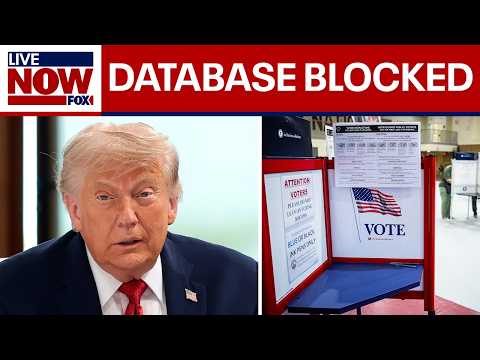
Supreme Court allows expanded citizenship-check database before midterms

Supreme Court allows expanded citizenship-check database before midterms

Rule Changes

Justices stay lower-court block, letting states use Social Security records to verify voters pending appeal

Today: Supreme Court allows program to resume

Overview

Updated 1 hour ago

Texas ran all 18 million of its registered voters through an expanded federal citizenship-check database in a single pass. On Friday, the Supreme Court cleared the way for that system to keep running through the November midterms.

The justices stayed a June order that had blocked the program for violating federal privacy law, with three liberals dissenting. Federal law bars systematic voter-roll purges in the 90 days before an election, so the near-term impact is limited to individual checks—though Travis County, Texas, found at least 10% of roughly 100 flagged voters were actually U.S. citizens.

Why it matters

States can now use Social Security data to challenge individual voters' citizenship before the midterms, though the system's error rate risks flagging naturalized citizens.

Questions about this story

Free account needed to ask — your question is kept and asked for you right after sign-up. Answers are public.

No questions yet — be the first to ask.

Key Indicators

18M
Voters checked in one bulk pass by Texas
Texas ran its entire registration list through the modified SAVE database at no cost.
10%+
Share of Travis County flagged voters who were citizens
Of nearly 100 voters flagged as non-citizens in Travis County, at least 10% were U.S. citizens, per U.S. media reports.
3
Non-citizens charged with illegal voting in Texas
Total since Texas began checking voter rolls with SAVE last year.
39
Days between the ruling and the November midterms
The stay issued on September 25, 2026, 39 days before the November 3 election.

Voices

Curated perspectives — historical figures and your fellow readers.

Ever wondered what historical figures would say about today's headlines?

Sign up to generate historical perspectives on this story.

People Involved

Organizations Involved

Timeline

January 1986 September 2026

5 events Latest: Today
Tap a bar to jump to that date
  1. DHS launches modified SAVE program

    Policy

    Expanded database adds Social Security record checks and bulk-search capability for state authorities.

  2. Trump signs executive order on voter citizenship checks

    Executive Action

    Executive Order 14248 directs DHS and SSA to build systems for states to verify voter citizenship.

  3. SAVE program created

    Policy

    Congress establishes Systematic Alien Verification for Entitlements to verify citizenship for benefit applications.

Scenarios

1

Appeals court upholds expanded SAVE program

Likely Resolves by Q2 2027

Discussed by: Supreme Court majority (wrote challengers' claims 'likely lack merit'); Trump administration

The D.C. Circuit or the Supreme Court, in a final ruling, concludes Congress authorized DHS to obtain citizenship and Social Security data, and that the Privacy Act claims fail. The modified SAVE program would remain available to states in future elections.

2

Expanded SAVE struck down on full review

Possible Resolves by Q2 2027

Discussed by: Judge Sooknanan; League of Women Voters; Electronic Privacy Information Center; three dissenting justices

On appeal, the D.C. Circuit or Supreme Court agrees the expanded program violates the Privacy Act's record rules or exceeds the agencies' statutory authority, permanently blocking the Social Security data checks and bulk searches.

3

NVRA ruling bars systematic voter removals

Uncertain Resolves by Q2 2027

Discussed by: Supreme Court footnote citing Republican National Committee v. Mi Familia Vota, No. 25-1017

In the companion case, the Court rules the National Voter Registration Act's 90-day quiet period bars states from running systematic removal programs before federal elections. That would block bulk SAVE checks in the weeks before votes but allow individualized citizenship inquiries.

Historical Context

3 moments from history that rhyme with this story — and how they unfolded.

1998–2000

Florida's 2000 voter purge

Florida hired a private vendor to remove felons from its voter rolls ahead of the 2000 presidential election. The error-prone list flagged thousands of eligible voters, many of them Black Floridians, who were stripped from the rolls or forced to cast provisional ballots.

Then

The purge fed into the recount controversy that decided the election; Florida later admitted errors and paid settlements.

Now

It became the standard example of how flawed lists disenfranchise eligible voters, shaping how courts scrutinize purge programs.

Why this matters now

Both programs remove voters based on error-prone government data, and both draw scrutiny over which voters bear the cost of the mistakes.

2017–2018

Georgia exact-match verification (2017–2018)

Georgia began requiring voter registrations to match state and federal databases exactly, flagging any record with a discrepancy. Naturalized citizens were disproportionately affected, as were voters whose middle names or suffixes differed.

Then

Civil rights groups sued, and Georgia stopped blocking registrations over database mismatches.

Now

Established that database-matching verification systems can violate the National Voter Registration Act when they burden eligible voters.

Why this matters now

Shows the recurring pattern: database-matching voter verification flags naturalized citizens at higher rates, the same error type SAVE critics document.

May 2017 – January 2018

Kobach election integrity commission (2017)

Trump created the Presidential Advisory Commission on Election Integrity to investigate his claims of widespread voter fraud, asking every state to hand over detailed voter records. Most states refused or limited what they provided.

Then

The commission dissolved in January 2018 without releasing findings.

Now

Produced no evidence of widespread non-citizen voting, but established the administrative push to verify voter rolls with federal data.

Why this matters now

The SAVE expansion is a successor to that push, again built on claims of mass non-citizen voting that election officials have not corroborated.

Sources

(10)