



Pull to refresh
Logo
UK creates National Centre for Information Defence to counter foreign disinformation

UK creates National Centre for Information Defence to counter foreign disinformation

New Capabilities

New agency will detect, attribute and disrupt AI-enabled hostile state attacks

Today: Burnham announces National Centre for Information Defence

Overview

Updated 2 hours ago

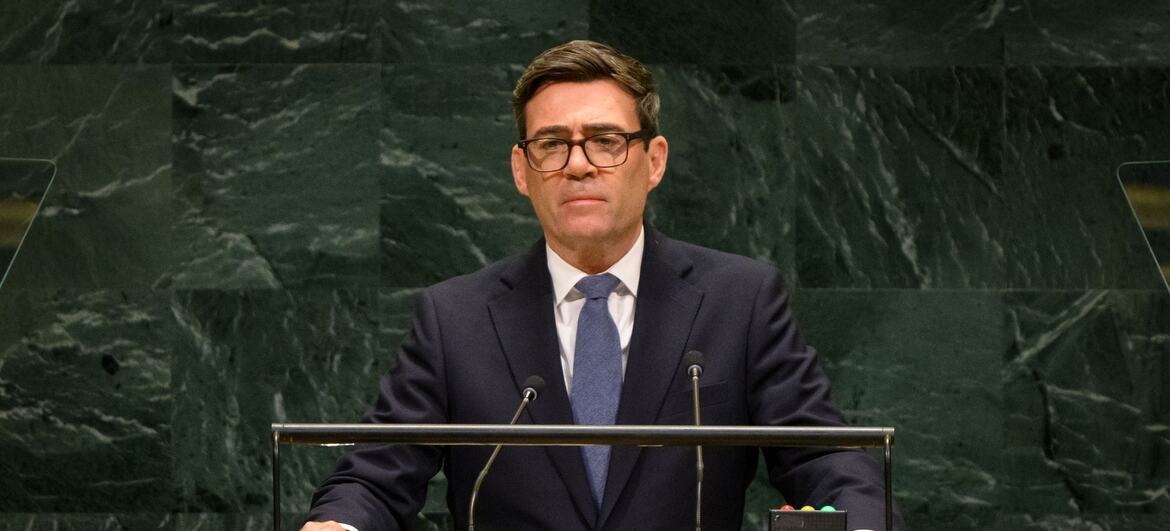
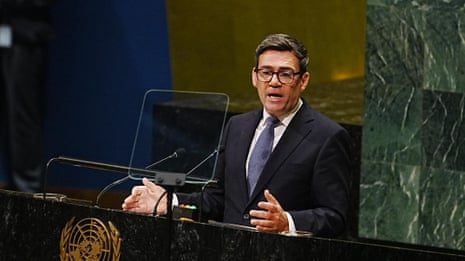
Britain is standing up a new state agency to fight foreign disinformation. Prime Minister Andy Burnham announced the National Centre for Information Defence on September 23 at the United Nations General Assembly in New York.

The centre will detect, attribute and disrupt hostile state information attacks, from bot networks to AI-generated deepfakes. It pools intelligence agencies, police, government departments and social media companies into one unit, and Burnham tied it to a bid for global AI safety standards during the UK's G20 presidency next year.

Why it matters

AI-generated deepfakes could flood UK elections and public debate, and a new state agency is the government's answer to detecting and disrupting them.

Questions about this story

Free account needed to ask — your question is kept and asked for you right after sign-up. Answers are public.

No questions yet — be the first to ask.

Key Indicators

$1.7B
Kremlin's estimated annual spending on information manipulation
Porto cited by Burnham in his UN address as the scale of the threat.
334M
Forecast annual deepfake fraud attempts by 2028
Projection from the 2026 Deepfake Fraud Detection Market Report, cited by industry analysts.
20+
Countries backing an AI safety declaration the UK has not signed
The declaration calls for human control of AI and mandatory pre-release testing of frontier models.

Voices

Curated perspectives — historical figures and your fellow readers.

Ever wondered what historical figures would say about today's headlines?

Sign up to generate historical perspectives on this story.

People Involved

Organizations Involved

Timeline

1 event Latest: Today
  1. Burnham announces National Centre for Information Defence

    Today Policy Announcement

    At the UN General Assembly, Burnham revealed the new agency to detect, attribute and disrupt hostile state disinformation, including AI-generated deepfakes, and pledged AI at the heart of the UK's G20 presidency.

Scenarios

1

UK signs international AI declaration, mandates frontier model testing

Possible Resolves by Q1 2027

Discussed by: Parliament News; former minister Darren Jones

Under pressure from MPs and allies, Burnham's government endorses the declaration backed by Germany, Canada and Ireland, and moves from voluntary to mandatory pre-release testing of frontier AI models. The G20 presidency in Manchester becomes the venue for brokering a broader agreement, including with Washington.

2

National Centre for Information Defence makes first major disruption

Possible Resolves by Sep 23, 2027

Discussed by: The Guardian; Government Technology

The centre matures from announcement to operation, then publicly attributes and disrupts a specific hostile state campaign targeting UK elections or critical infrastructure. Its success is judged on whether it can move beyond identifying threats to actually stopping them, as industry skeptics like iProov's Andrew Bud have warned.

3

Free speech challenge narrows the centre's powers

Unlikely Resolves by Q2 2027

Discussed by: GB News; civil liberties campaigners

Critics challenge the centre's mandate as a threat to legitimate dissent, despite Defence Secretary Wes Streeting's assurances that it will not police domestic political criticism. A court ruling or parliamentary amendment restricts the centre's ability to engage with content produced by UK-based actors, limiting it to foreign-origin threats.

Historical Context

3 moments from history that rhyme with this story — and how they unfolded.

Established 2015

EU East StratCom Task Force (2015)

After Russia's annexation of Crimea, the EU created the East StratCom Task Force to counter pro-Kremlin narratives across Europe. Its core output was daily debunking reports flagging false stories, rather than any power to stop their spread.

Then

The task force catalogued thousands of disinformation cases but could only correct false stories after they circulated.

Now

It showed the limits of a detection-and-correction model, since debunking rarely catches up with viral falsehoods.

Why this matters now

The UK's new centre adds a disruption mandate the EU body never had, directly addressing the gap between identifying disinformation and stopping it.

Created 2016

US State Department Global Engagement Center (2016)

Congress created the Global Engagement Center (GEC) to counter foreign propaganda and disinformation, consolidating US government efforts after Russian interference in the 2016 election.

Then

The GEC ran counter-narrative campaigns and research, but drew criticism for opaque operations and unclear results.

Now

It became a political flashpoint, losing funding amid disputes over its role, showing such agencies can become targets themselves.

Why this matters now

A cautionary precedent: counter-disinformation agencies can face scrutiny over their own legitimacy, a risk the UK's centre already faces over free speech concerns.

1940s-1990s

Cold War-era state broadcasting (1940s-1990s)

Western governments ran state-backed broadcasters like Radio Free Europe and Voice of America to counter Soviet propaganda, reaching audiences behind the Iron Curtain with factual reporting.

Then

These outlets provided alternative information in closed societies for decades.

Now

They established a precedent that democratic states can legitimately fund information defence, but also set expectations of editorial independence.

Why this matters now

The UK's move returns to state-led information defence, but the new threat is synthetic media that scales without human writers, changing what defense must look like.

Sources

(7)