

Pull to refresh
Logo
Venezuela opens its electricity sector to private generators

Venezuela opens its electricity sector to private generators

Rule Changes

The National Assembly unanimously approved 25-year concessions and dollar-indexed tariffs, ending a state monopoly held since 2007.

Overview

Updated 1 hour ago

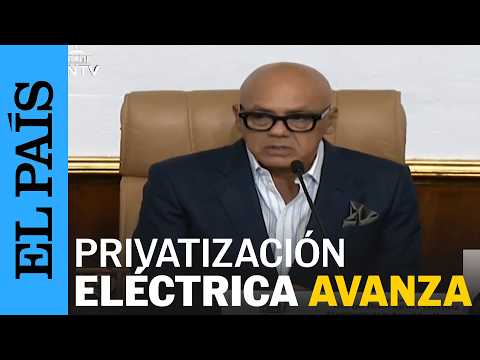
Venezuela's National Assembly voted unanimously on November 10 to let private companies generate and sell electricity, ending a state monopoly written into law in 2010. Concessions can run up to 25 years, and the law allows mixed companies with the state as well as wholly private operators. President of the Assembly Jorge Rodríguez said private parties could install plants, import power from a neighbor, and sell it to industrial and commercial users at a regulated rate.

The gap the law is meant to close is measurable. The state power company produces roughly 12,000 megawatts against demand that reached 16,400 megawatts in September, and under 40% of the country's generation capacity is operating, according to Reuters. Rates for private suppliers are indexed to the dollar, while the government says subsidies remain for households that cannot pay. The text now goes to the executive for promulgation.

Why it matters

Venezuela's grid fails for hours at a time; whether private plants get built and paid in dollars decides if the lights stay on.

Questions about this story

Free account needed to ask — your question is kept and asked for you right after sign-up. Answers are public.

No questions yet — be the first to ask.

Key Indicators

under 40%
Share of generation capacity operating
Reuters reports less than 40% of Venezuela's generating capacity is currently in service.
16,400 MW
Peak demand, September 2026
Demand hit 16,400 megawatts in September, according to expert estimates cited by France24.
~12,000 MW
Estimated state generation
Experts estimate the state power company generates about 12,000 megawatts.
25 years
Maximum concession length
Concessions to private operators can run up to 25 years under the new law.
2007
Year the grid was nationalized
The electricity system was nationalized in 2007; a 2010 law reserved the sector for the state.
14
Laws sanctioned in 2026
The National Assembly says it has passed 14 laws so far this year.

Voices

Curated perspectives — historical figures and your fellow readers.

Sign up to generate historical perspectives on this story.

People Involved

Organizations Involved

Timeline

2007 November 2026

6 events Latest: Yesterday
Tap a bar to jump to that date
  1. Assembly approves the electricity reform unanimously

    Latest Legislation

    Private and mixed companies can generate and sell power under concessions of up to 25 years.

  2. Second discussion of the reform begins

    Legislation

    Debate runs across four ordinary sessions after three postponements.

  3. Demand reaches 16,400 megawatts

    Data

    Demand outruns state generation estimated at about 12,000 megawatts.

  4. Maduro detained; Delcy Rodríguez takes over

    Political

    The interim government begins opening oil, gas and mining to private capital.

  5. Law reserves the sector for the state

    Policy

    A 2010 statute bars private participation in electricity; the new reform revokes it.

  6. Venezuela nationalizes its electricity system

    Policy

    The state takes over the grid, ending decades of private and foreign-owned utilities.

Scenarios

1

First private plant starts feeding the national grid

Possible Resolves by Q2 2027

Discussed by: Venezuelan government officials and energy analysts quoted by Reuters and France24

The law is promulgated, the new superintendency begins issuing habilitations, and an industrial group or oil company commissions self-generation capacity that adds supply to the national system. This is the outcome the government is selling: private capital arrives faster than state investment could. It requires financing and a tariff regulator that private operators trust.

2

Concessions signed, but the grid stays short of demand

Likely Resolves by Nov 10, 2027

Discussed by: Energy specialists cited by Reuters

The law takes effect and contracts are signed, yet the projects target self-supply for oil fields, mines and shopping centers rather than the residential network. Generation grows at the edges while household blackouts continue. Under this path the reform works as written but does not fix the deficit the government pointed to.

3

Reform stalls as political control shifts again

Uncertain Resolves by Nov 10, 2028

Discussed by: Investors cited by Reuters as cautious about Venezuela

The interim government's openings depend on who holds power. If a future government reverses course, as happened with earlier Venezuelan openings and with Mexico's 2013 energy reform, the 25-year concession promise loses value and capital stays away. Reuters notes investors remain wary despite the reform.

Historical Context

3 moments from history that rhyme with this story — and how they unfolded.

1990

Britain privatizes its electricity supply (1990)

The United Kingdom sold its state-owned electricity industry, splitting generation from transmission and creating regional supply companies that competed for customers. A regulator was set up to cap prices while the market matured.

Then

Private ownership arrived with a new price-cap regulator rather than immediate open competition.

Now

The model spread across Europe, but it also depended on a functioning regulator and enforceable contracts — the parts hardest to build quickly.

Why this matters now

Venezuela's law copies the basic structure: private generation, regulated tariffs, a new superintendency. Britain shows the regulator, not the statute, decides whether it works.

2013-2014

Mexico opens energy to private investment (2013)

Mexico amended its constitution to let private and foreign firms invest in oil, gas and electricity, ending a state monopoly held since 1938. Contracts and auctions followed under a new regulatory framework.

Then

Auctions drew bidders, though oil rounds and power contracts moved slower than officials promised.

Now

The 2021 electricity law reversed the priority, favoring the state utility over private generators, and the opening was substantially narrowed.

Why this matters now

Mexico is the closest regional precedent for opening a nationalized electricity system. It also shows the reform lasts only as long as the government that wrote it.

1993-2012

Argentina privatizes then renationalizes YPF (1993-2012)

Argentina sold its state oil company YPF in the 1990s as part of a broad privatization drive. In 2012 the government expropriated a 51% stake from Spain's Repsol, arguing the company had underinvested.

Then

The expropriation was popular domestically and costly internationally, with compensation disputes following.

Now

Investors learned that Argentine energy assets carried political risk that contracts alone did not cover.

Why this matters now

Venezuela is offering 25-year concessions. Argentina's reversal is the reason those terms may not convince foreign investors on their own.

Sources

(7)