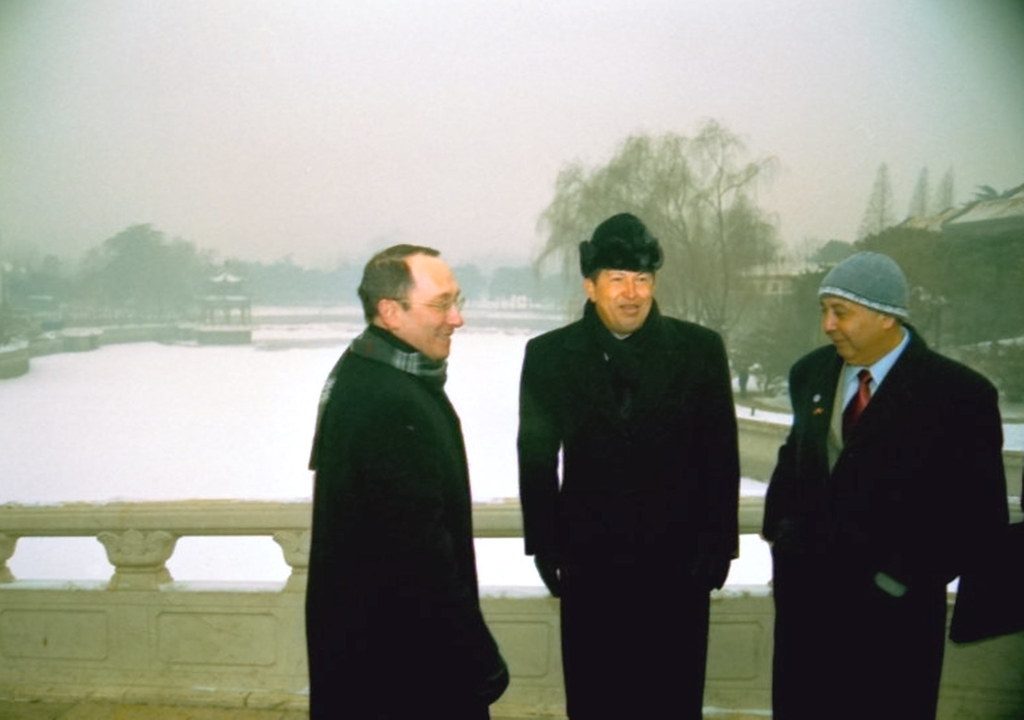
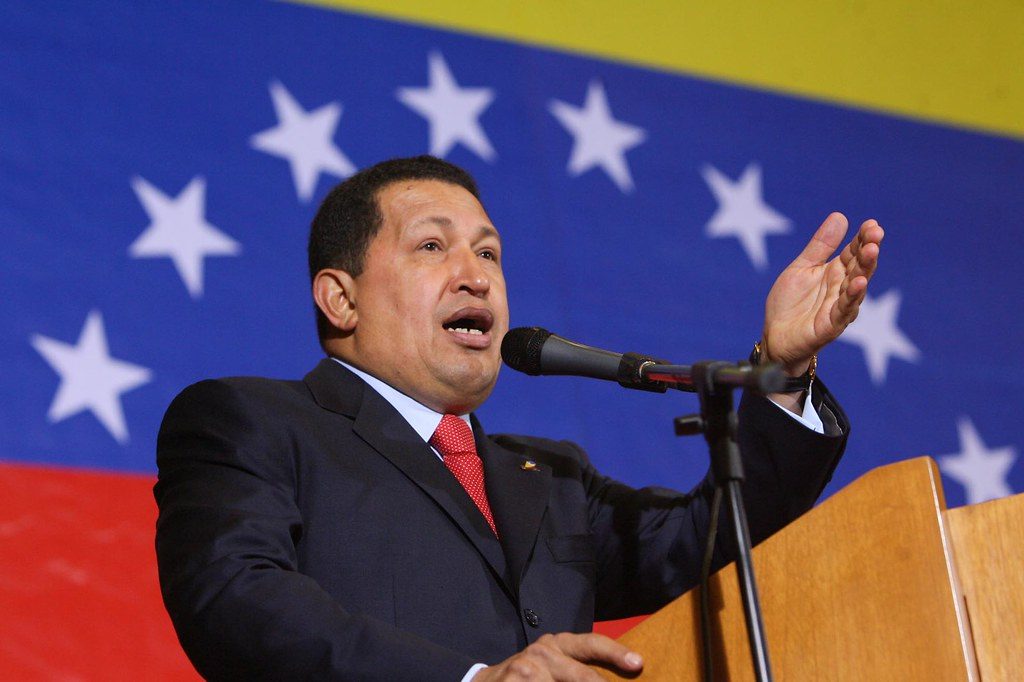
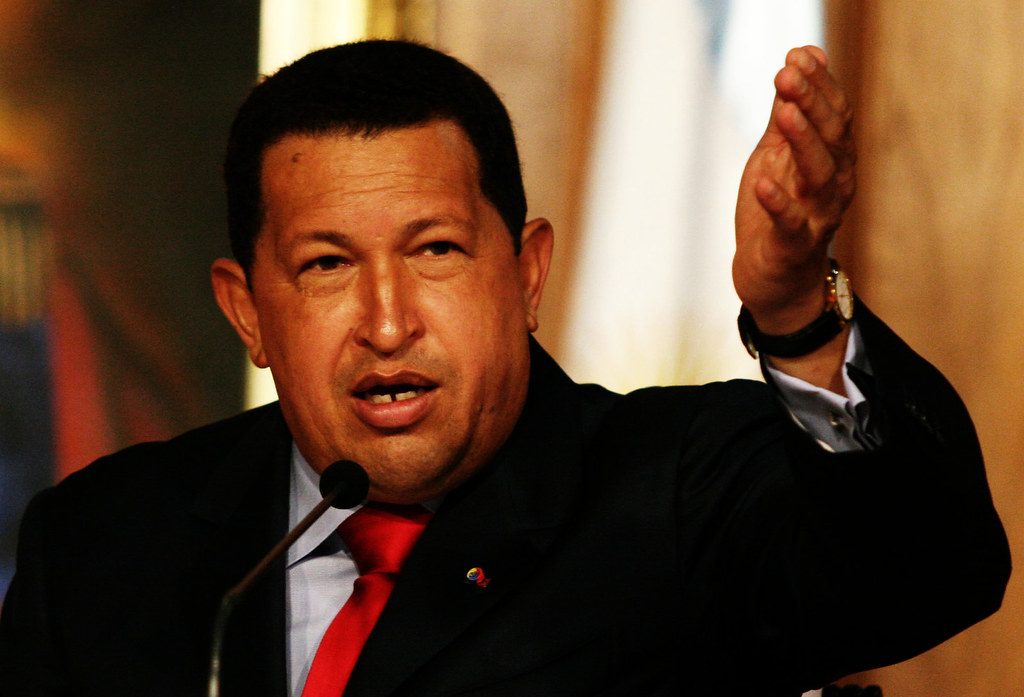
Hugo Chávez nationalized Venezuela's oil sector in 2007, expropriating assets from ExxonMobil, ConocoPhillips, and other foreign companies. Nineteen years later, less than a month after U.S. forces captured Nicolás Maduro, Venezuela's National Assembly passed legislation reversing that policy. Acting President Delcy Rodríguez signed it into law.
The reform opens the world's largest proven oil reserves (303 billion barrels) to privatization for the first time since Chávez's resource nationalism. It caps royalties at 30%, grants autonomy to private producers, and eliminates mandatory PDVSA joint ventures. The law allows private companies to independently operate oil fields, market crude, and settle disputes in international courts.
The bill was submitted on January 15, debated on January 23, and signed into law on January 29. It took just 14 days from introduction to enactment. As Rodríguez signed the law, the U.S. Treasury Department issued General License 46, authorizing U.S. energy companies to engage in Venezuelan oil activities, but explicitly excluding entities from China, Russia, Iran, North Korea, or Cuba.
Production has collapsed from 3.4 million barrels per day in 1998 to under 1 million today. Infrastructure is severely degraded. Major U.S. oil companies remain cautious.
Chevron CEO Mike Wirth called the reforms 'a positive direction' on January 30. He said the company could increase production 50% within 18-24 months, but confirmed no new capital spending is currently planned. ExxonMobil's CEO still calls Venezuela 'uninvestable,' and ConocoPhillips CEO Ryan Lance says debt restructuring must precede major investment.
Venezuela's opposition, led by María Corina Machado, declined to vote on the legislation, arguing that energy policy for the world's largest oil reserves should be 'a social pact' requiring broader stakeholder consultation. Restoring production to 3 million bpd costs $183 billion through 2040.
Questions about this story
Free account needed to ask — your question is kept and asked for you right after sign-up. Answers are public.
No questions yet — be the first to ask.
Key Indicators
303B
barrels in proven reserves
World's largest proven oil reserves, representing 17% of global total
~900K
barrels per day (current)
Down from 3.4 million bpd in 1998—a 74% decline over 27 years
$1.4B
forecast 2026 investment
Rodriguez projects 55% increase over 2025's $900M under new reform framework
15%
minimum royalty rate
New bill allows reduction from 30% for hard-to-develop projects
Images from Openverse under Creative Commons licenses.
Voices
Curated perspectives — historical figures and your fellow readers.
Dorothy Parker
(1893-1967) ·Jazz Age · wit
Fictional AI pastiche — not real quote.
"They've discovered the hard way that it's easier to seize an industry than to make it work—rather like marriage, only with more explosions and fewer lawyers. One would think that reducing the world's largest oil reserves to a trickle might inspire some caution, but hope springs eternal in the American petroleum breast, particularly when there's money to be lost."
0% found this insightful
Jane Addams
(1860-1935) ·Progressive Era · social reform
Fictional AI pastiche — not real quote.
"The pendulum swings from collective ownership to private enterprise, yet I observe that neither the zealous nationalist nor the skeptical capitalist has managed to extract prosperity for the Venezuelan people—perhaps because both viewed oil as a prize to be won rather than a resource to be stewarded for human welfare. One might reasonably ask whether the true collapse was not of production capacity, but of the democratic imagination that might have prevented such waste in the first place."
0% found this insightful
Ever wondered what historical figures would say about today's headlines?
Sign up to generate historical perspectives on this story.
27 events
Latest: February 3rd, 2026 · 8 months ago
Showing 8 of 27
JK to step
Tap a bar to jump to that date
Jump to
February 2026
OFAC Issues General License 47 for U.S. Diluents Exports
LatestSanctions
U.S. Treasury's OFAC authorizes export, sale, and supply of U.S.-origin diluents to Venezuela, critical for blending and transporting heavy crude. License covers transactions involving PDVSA but requires U.S. law governance and dispute resolution; addresses key operational barrier for oil exports.
Legal Analyses Detail GL 46 Reporting and Hydrocarbons Reform
Regulatory
Law firms publish compliance guides on GL 46's 10-day transaction reporting to State/Energy Depts for non-U.S. oil exports and 90-day ongoing updates. Analyses confirm Venezuelan Hydrocarbons Law Amendment repeals prior nationalization mandates, enables private operational control via new contracts.
January 2026
Chevron CEO Says Venezuela Taking 'Positive Steps' but Commits No New Capital
Corporate
Chevron CEO Mike Wirth tells CNBC that Venezuela's oil reforms represent 'a positive direction' that will 'encourage investment.' He confirms Chevron could increase production 50% within 18-24 months and process an additional 100,000 bpd at U.S. Gulf Coast refineries, but states there are 'no current plans to add additional capital spending just yet.' Exxon and Chevron both decline new spending commitments despite Trump administration pressure for $100 billion in industry investment.
PDVSA Workers Rally in Support of Oil Reform
Political
Workers of state-owned PDVSA hold rally in Caracas backing the oil reform bill. Rodríguez and congressional leaders visit PDVSA facilities to shore up internal support for the legislation.
Rodríguez Signs Oil Reform Into Law; U.S. Eases Sanctions
Legislative
Acting President Delcy Rodríguez signs the oil reform bill into law after National Assembly approval earlier the same day. The legislation opens Venezuela's oil sector to privatization, reversing 19 years of Chávez-era policy. Simultaneously, U.S. Treasury Department officially begins easing sanctions on Venezuelan oil.
U.S. Issues General License 46, Excluding China, Russia, Iran, North Korea, Cuba
Sanctions
Treasury's OFAC issues GL 46 authorizing established U.S. entities to engage in Venezuelan oil lifting, export, sale, storage, marketing, and refining. The license requires payments to blocked persons go to Foreign Government Deposit Funds per Executive Order 14373. Critically, GL 46 explicitly prohibits transactions involving entities owned or controlled by Chinese, Russian, Iranian, North Korean, or Cuban persons, and bars debt swaps or payments in gold or digital currency. Companies exporting Venezuelan oil to non-U.S. destinations must report to State and Energy Departments.
Investor Skepticism Emerges Over Legal Protections
Economic
International energy lawyers and investors say the proposed reform 'does not go far enough' to provide legal certainty needed for large-scale investment. Major concerns include insufficient protections against future expropriation.
Rodríguez Meets with Repsol, Chevron, and Shell Executives
Economic
Acting President Rodríguez meets with representatives from Repsol, Chevron, and Shell at PDVSA facilities in Caracas as part of mandatory public consultation phase. She forecasts $1.4 billion in oil investment for 2026—a 55% increase from 2025's $900 million.
Venezuela Releases 104 Additional Political Prisoners
Political
Acting President Rodríguez continues prisoner release process begun after Maduro's capture. Total released now exceeds 250 out of an estimated 800+ held, according to rights groups.
National Assembly Approves Oil Reform Bill on First Reading
Legislative
After two hours of debate, lawmakers give initial approval to legislation allowing private companies to independently operate oil fields, market crude, and access international arbitration. Second reading pending.
Opposition Declines to Vote on Oil Reform, Calls for 'Social Pact'
Political
Venezuela's opposition, aligned with María Corina Machado and Edmundo González, refuses to participate in the oil reform vote. Opposition lawmakers argue that legislation governing the world's largest oil reserves should be treated as 'a social pact' requiring thorough consultation among all stakeholders, not rushed through a Chavista-controlled legislature in two weeks. The bill passes without opposition support.
U.S. Completes First Sale of Venezuelan Oil
Economic
White House announces completion of first Venezuelan oil sale under new arrangement, valued at $500 million. Proceeds deposited in U.S.-controlled accounts per January 6 agreement.
Acting President Rodríguez Announces Oil Reform
Policy
In her annual address to the National Assembly, Delcy Rodríguez proposes a 'partial reform' of the Hydrocarbon Law to attract foreign investment.
Trump Announces U.S.-Venezuela Oil Deal
Policy
Trump states Venezuela will turn over '$3 billion in sanctioned oil.' Under the agreement, the U.S. will market and sell Venezuelan crude, depositing proceeds in U.S.-controlled accounts.
Maduro Arraigned in Manhattan Federal Court
Legal
Maduro and Flores appear in Southern District of New York court on narcoterrorism charges including cocaine importation conspiracy. Both plead not guilty.
U.S. Forces Capture Maduro in 'Operation Absolute Resolve'
Military
Delta Force operators capture Maduro and his wife Cilia Flores at Fort Tiuna in Caracas. The operation involves over 150 aircraft. Venezuela's Supreme Court orders Vice President Delcy Rodríguez to assume presidential powers.
July 2025
Trump Administration Renews Chevron License
Sanctions
Treasury issues a new six-month license allowing Chevron to resume Venezuelan operations, but prohibits cash payments to the government. Chevron must pay PDVSA in barrels of oil.
March 2025
Trump Revokes Chevron's Venezuela License
Sanctions
The Trump administration orders Chevron to wind down operations in Venezuela, reversing Biden-era authorization. The company is given until late May to comply.
January 2025
ConocoPhillips Arbitration Award Upheld on Appeal
Legal
International arbitration court upholds the $8.5 billion award against Venezuela. The country still has not paid any of its outstanding arbitration obligations.
Maduro Inaugurated for Third Term
Political
Maduro begins his third presidential term. The U.S., EU, UK, and Canada announce they do not recognize his presidency and impose additional sanctions.
July 2024
Maduro Claims Victory in Disputed Election
Political
Venezuela's electoral authority declares Maduro winner with 51% of the vote. Opposition and international observers reject the results. The U.S., EU, and others impose new sanctions.
November 2022
Biden Authorizes Chevron to Resume Venezuela Exports
Sanctions
U.S. Treasury issues General License 41, allowing Chevron to resume production and export Venezuelan oil to the U.S. for the first time in years.
October 2020
Venezuela Passes Anti-Blockade Law
Policy
Maduro's Constituent Assembly passes legislation allowing secret contracts with foreign investors to circumvent U.S. sanctions, signaling a partial opening of the oil sector.
April 2019
ConocoPhillips Awarded $8.5 Billion
Legal
ICSID arbitration panel orders Venezuela to pay ConocoPhillips for nationalized assets. This becomes the largest award in World Bank arbitration history.
October 2014
ICSID Awards Exxon $1.6 Billion
Legal
World Bank's International Centre for Settlement of Investment Disputes rules Venezuela must compensate ExxonMobil for expropriated assets. Venezuela disputes the amount and does not pay.
June 2007
ExxonMobil and ConocoPhillips Exit Venezuela
Corporate
Both companies refuse PDVSA joint venture terms and pull out of Venezuelan operations. Chevron, Total, and others accept minority stakes and remain.
February 2007
Chávez Decrees Oil Nationalization
Policy
President Hugo Chávez announces a law-decree nationalizing the last remaining oil production sites under foreign control, forcing companies into minority PDVSA joint ventures or expropriation.
Scenarios
1
Reform Passes, Chevron Expands; Majors Stay Out
Likely
Discussed by: CNBC, Goldman Sachs analysts, Rystad Energy
The oil reform bill passes quickly through the ruling party-dominated legislature. Chevron increases production by 50% within 18-24 months as promised. However, ExxonMobil and ConocoPhillips decline to re-enter until their combined $10+ billion in arbitration claims are resolved and political stability improves. Smaller 'wildcatter' companies fill some gaps, but the $58 billion infrastructure upgrade remains unfunded. Production rises modestly to 1.2-1.4 million bpd by 2028.
2
Major Investment Boom Restores Venezuelan Production
Possible
Discussed by: White House officials, Treasury Secretary Bessent, smaller independent oil companies
The reform attracts significant new investment beyond Chevron. Venezuela resolves outstanding arbitration claims or reaches settlements with ExxonMobil and ConocoPhillips. International banks provide financing for infrastructure upgrades. Production climbs toward 2 million bpd by 2030, returning Venezuela to significant global oil exporter status. This scenario requires sustained political stability under Rodríguez or a successor, plus oil prices high enough to justify the massive capital expenditure.
3
Reform Stalls as Political Crisis Deepens
Possible
Discussed by: CSIS analysts, opposition figures, Council on Foreign Relations
The opposition—led by María Corina Machado and Edmundo González Urrutia—refuses to accept Rodríguez's legitimacy. Internal Chavista factions compete for power. The reform bill stalls or passes but fails to attract investment amid continuing uncertainty. Venezuela becomes a contested space between U.S. commercial interests and residual Chavista control, with no clear path to democratic elections. Production remains flat near 900,000 bpd.
4
Nationalization Returns Under Future Government
Uncertain
Discussed by: Baker Institute resource nationalism researchers, historical pattern analysts
Following the cyclical pattern seen across Latin America, a future Venezuelan government reverses the reform and re-nationalizes foreign assets—particularly if oil prices spike. This has happened before: Argentina re-nationalized YPF in 2012, and Mexico under López Obrador dismantled its 2013 energy reform. Companies investing now face the risk of another expropriation cycle.
5
Chinese Companies Circumvent GL 46 Restrictions Through Shell Entities
Possible
Discussed by: Sanctions compliance attorneys at King & Spalding, Baker Botts; energy sector analysts
GL 46's explicit exclusion of Chinese, Russian, Iranian, North Korean, and Cuban entities from Venezuelan oil transactions creates enforcement challenges. Chinese state-owned companies—which have loaned Venezuela over $60 billion since 2007 and hold significant stakes in Orinoco Belt projects—may attempt to participate through non-Chinese subsidiaries, shell companies, or joint ventures structured to obscure beneficial ownership. Treasury would face difficulty detecting and prosecuting such arrangements, particularly if structured through third countries. Success would undermine GL 46's geopolitical objectives of limiting Chinese influence over Venezuelan oil.
Historical Context
3 moments from history that rhyme with this story — and how they unfolded.
1 of 3
December 2013 - October 2024
Mexico Energy Reform and Reversal (2013-2024)
President Enrique Peña Nieto ended Mexico's 75-year state oil monopoly in December 2013, opening the sector to private investment for the first time since the 1938 nationalization. Nine bidding rounds attracted 107 contracts from companies worldwide. The reform was deeply unpopular with nationalists who viewed Pemex as a symbol of sovereignty.
Then
Foreign investment poured in; production decline temporarily slowed.
Now
President López Obrador (2018-2024) systematically dismantled the reform through administrative and legislative changes. His successor Sheinbaum continued the reversal. Mexico dropped 85 places in resource nationalism risk rankings between 2018 and 2021.
Why this matters now
Venezuela's reform follows the same liberalization playbook Mexico used in 2013. Mexico's experience shows that opening oil sectors attracts investment—but also that such reforms can be reversed by subsequent governments, creating a cyclical pattern of nationalization and privatization.
2 of 3
March 2003 - 2010
Iraq Oil Sector After Saddam Hussein (2003-2010)
After the U.S.-led invasion toppled Saddam Hussein, the Coalition Provisional Authority declared Iraq 'open for business' in May 2003. Planners expected rapid production increases from Iraq's 115 billion barrels in reserves. Instead, insurgent sabotage, political disputes over revenue sharing, and infrastructure decay kept output stagnant for years.
Then
Over 130 sabotage incidents in the first year alone. Dreams of 6 million bpd by 2010 went unfulfilled.
Now
Iraq never passed a comprehensive hydrocarbon law despite drafts dating to 2007. Production eventually increased but remained constrained by political dysfunction. Iraq remains 90% dependent on oil revenues.
Why this matters now
Iraq demonstrates that regime change doesn't automatically unlock oil production. Political instability, infrastructure decay, and unresolved legal frameworks can stall recovery for years—all challenges Venezuela now faces.
3 of 3
April 2012
Argentina's YPF Re-Nationalization (2012)
President Cristina Fernández de Kirchner re-nationalized YPF by expropriating 51% of shares held by Spain's Repsol. Argentina had privatized YPF in the 1990s. The seizure came during a global commodity boom and amid accusations that Repsol was underinvesting.
Then
Spain threatened retaliation; Argentina paid $5 billion in compensation in 2014.
Now
YPF struggled to attract investment for years. Argentina's shale resources (Vaca Muerta) remain underdeveloped relative to potential.
Why this matters now
Argentina shows that resource nationalism can return even after privatization. Companies considering Venezuela must weigh the risk of a future government reversing reforms—particularly if commodity prices rise.