


Pull to refresh
Logo
Fossil long called the first reptile turns out to be an amphibious tetrapod

Fossil long called the first reptile turns out to be an amphibious tetrapod

New Capabilities

Synchrotron scans of Westlothiana lizziae found gills and fish-like teeth, moving the 345-million-year-old specimen off the reptile line

Overview

Updated 59 minutes ago

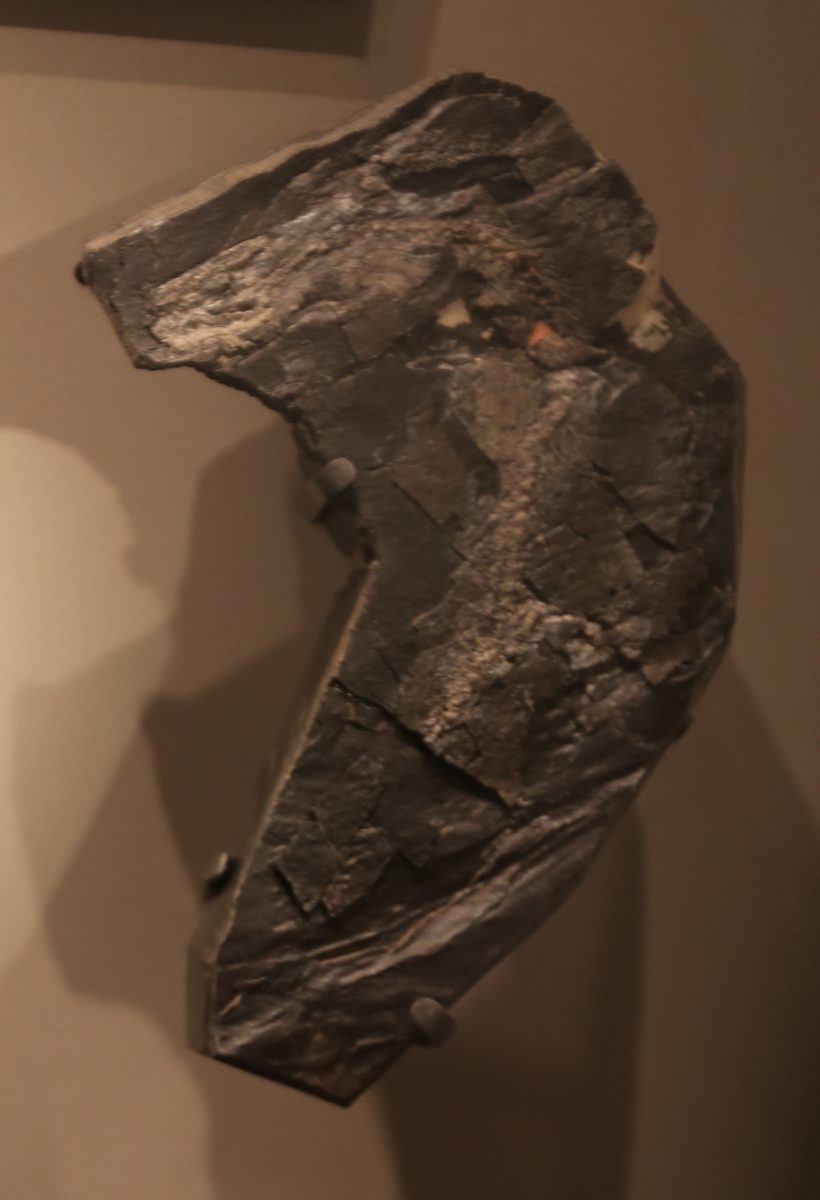
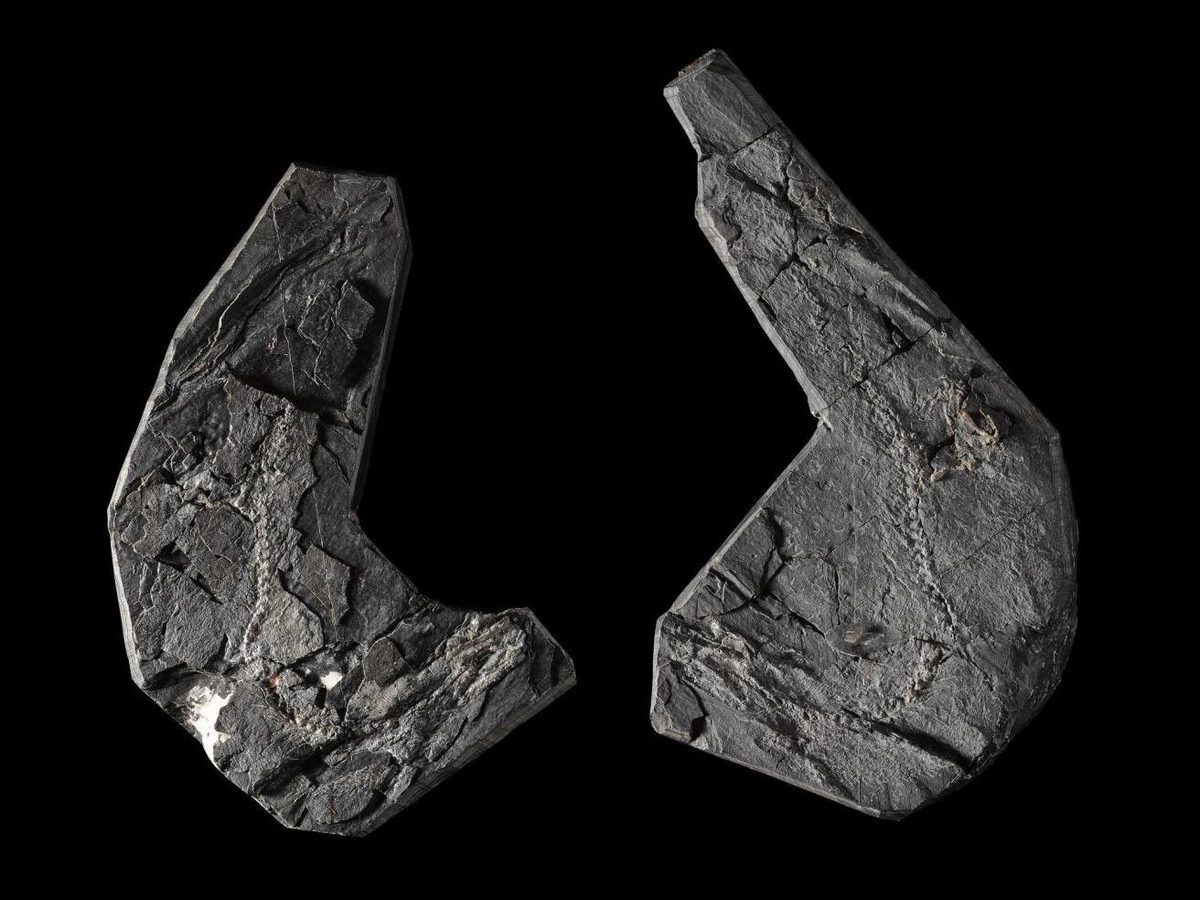
Westlothiana lizziae has been the textbook answer to a simple question: which animal was the first to live fully on land? A near-complete skeleton found in Scotland in 1984 and described in 1990 held that place for 36 years. X-ray imaging now shows it had gills, a primitive skull and thousands of tiny teeth.

The reanalysis, published in Nature on 30 September 2026, moves the animal off the reptile line and into an older group of four-limbed vertebrates that still lived in and around water. That changes the timing of claws, five-toed feet and weight-bearing limbs: those traits appeared before the move onto land, not as a result of it.

Why it matters

Textbooks used this fossil to date the reptile family's origin. It now shows land-ready anatomy appearing in animals that still had gills.

Questions about this story

Free account needed to ask — your question is kept and asked for you right after sign-up. Answers are public.

No questions yet — be the first to ask.

Key Indicators

345 million years
Age of the fossil
Westlothiana lived in the Early Carboniferous, roughly 345 million years ago.
36 years
Time classified as the earliest amniote
Described in 1990 as the earliest land-adapted vertebrate; reclassified in 2026.
2
Rock slabs holding the skeleton
The near-complete skeleton is preserved crushed across two slabs.
Thousands
Tiny teeth in the mouth and palate
Scans revealed dense denticles, a fish-like feeding apparatus.

Voices

Curated perspectives — historical figures and your fellow readers.

Sign up to generate historical perspectives on this story.

People Involved

Organizations Involved

Timeline

1984 November 2026

4 events Latest: Yesterday
Tap a bar to jump to that date
  1. Reclassification reported to general audience

    Latest Publication

    ScienceDaily carries the museum's account of the reanalysis and its implications for fossil trackways.

  2. Scans overturn its identity

    Research

    A Nature paper reports gills, a primitive skull and fish-like teeth, returning the animal as a stem tetrapod.

  3. Described as the earliest known amniote

    Research

    Westlothiana lizziae is named and placed on the lineage leading to reptiles, birds and mammals.

  4. Skeleton found in Scotland

    Discovery

    A near-complete fossil, later nicknamed Lizzie, is recovered from two crushed slabs of rock.

Scenarios

1

Devonian trackways reassigned to amphibious trackmakers

Possible Resolves by End of 2028

Discussed by: Xavier Jenkins and co-authors, who note the footprints are no longer a reliable amniote marker

Trackways older than 359 million years have been read as proof that amniotes existed in the Devonian, partly because they show claw-like digits. If a primitive relative like Westlothiana also had claw-like tips, some of those tracks may belong to amphibious animals. A follow-up study comparing trackway shapes with the feet of stem tetrapods would settle it.

2

Reference databases move Westlothiana out of Amniota

Likely Resolves by End of 2027

Discussed by: Paleontology reference projects, which update classifications after published phylogenetic analyses

The practical test of a reclassification is whether the reference tools researchers use every day adopt it. The study's own phylogenetic analysis returns Westlothiana as a stem tetrapod, which gives database curators a published source to cite when they change the entry.

3

More small-bodied fossils found to carry land-style anatomy

Possible Resolves by End of 2028

Discussed by: The study authors, who point to gaps in anatomical knowledge for small-bodied early tetrapods

The paper argues that claw-like tips, five-toed feet and weight-bearing forelimbs accumulated piecemeal in animals still tied to water. If that is right, other small, crushed fossils in museum drawers should show the same mix once scanned. Each new case would strengthen the case that these traits are not markers of a land-dwelling way of life.

Historical Context

3 moments from history that rhyme with this story — and how they unfolded.

1990

Acanthostega reanalysis (1990)

Acanthostega, a Devonian tetrapod from Greenland, had been reconstructed as a land animal with limbs built for walking. Jennifer Clack and Michael Coates showed its limbs were flipper-like, its ribcage could not have supported a body on land, and it had internal gills.

Then

The animal was reclassified as aquatic, and limbs were reinterpreted as paddles first, walking devices later.

Now

Acanthostega became the standard example that four limbs did not evolve for life on land.

Why this matters now

Westlothiana now makes the same point about feet, claws and weight-bearing limbs: the anatomy came before the habitat.

1977-2015

Hallucigenia reinterpreted (1977-2015)

A spiny creature from Canada's Burgess Shale was described in 1977 as a bizarre animal and reconstructed upside down for years. Later work, including electron microscopy published in 2015, identified its head and mouth and corrected the reconstruction.

Then

Museum displays and textbook illustrations were redrawn.

Now

The case became a standard warning that a crushed fossil's visible surface can point the wrong way.

Why this matters now

Westlothiana's identity rested on features visible on two crushed slabs until X-ray imaging showed what was inside.

1860s

Hylonomus lyelli named earliest amniote (1860s)

Fossils from Joggins, Nova Scotia, were described as small reptile-like animals from the Carboniferous, roughly 312 million years ago, and became the standard earliest amniote in textbooks.

Then

Hylonomus anchored the timeline for when vertebrates began reproducing on land.

Now

It remained the reference point even after younger and older candidates were proposed.

Why this matters now

With the 345-million-year-old Westlothiana removed from the amniote line, the older textbook answer regains its place.

Sources

(4)