

Pull to refresh
Logo
Microscopic plant traces reveal 25,000 years of ritual burning in Australian cave

Microscopic plant traces reveal 25,000 years of ritual burning in Australian cave

New Capabilities

Phytolith analysis shows GunaiKurnai ancestors carried whole grass plants into Cloggs Cave and burned them in thin layers

Today: ScienceDaily reports on the study

Overview

Updated 50 minutes ago

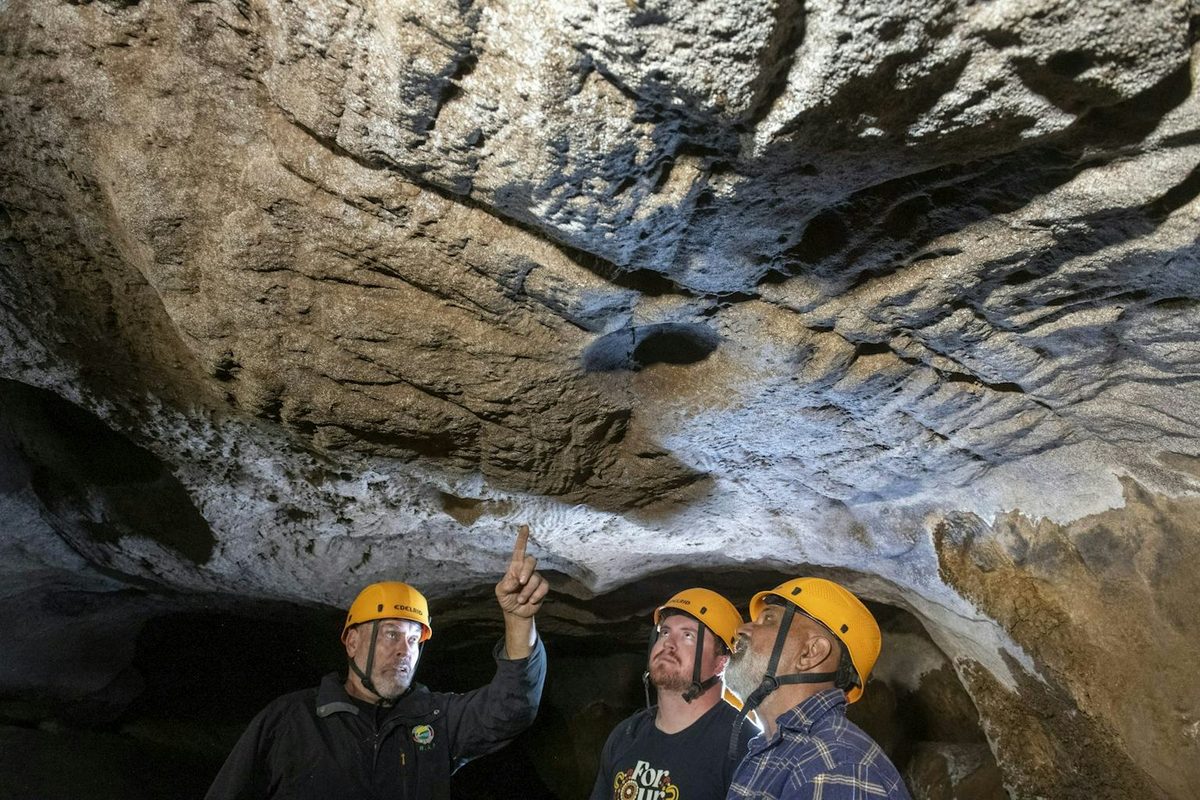
Microscopic silica particles left by plant cells show that GunaiKurnai ancestors carried whole grass plants into Cloggs Cave in southeastern Australia and burned them in thin layers. The practice spans at least 25,000 years, covering a thousand generations of ritual use at a single site.

The study, published in Frontiers in Environmental Archaeology, pairs phytolith analysis with cultural knowledge held by GunaiKurnai elders and practices recorded by anthropologist Alfred Howitt in the 1880s. It confirms the cave was a secluded ritual site where mulla-mullung, powerful learned men and women, performed healing, cursing and spiritual work.

Why it matters

The finding extends documented Indigenous ritual practice on GunaiKurnai Country back 25,000 years, pairing scientific analysis with traditional knowledge.

Questions about this story

Free account needed to ask — your question is kept and asked for you right after sign-up. Answers are public.

No questions yet — be the first to ask.

Key Indicators

25,000
Years of documented plant use at Cloggs Cave
Phytolith evidence shows people carried plants into the cave for roughly 25,000 years.
18.3%
Peak burnt phytolith share in one excavation unit
The highest proportion of heat-altered phytoliths recorded at the site, indicating low-temperature burns.
73
Thin ash layers around the standing stone
Repeated cool burns of soft plant matter around a stone erected roughly 2,000 years ago.
2
Miniature ritual fireplaces with fat-smeared Casuarina sticks
Dated to roughly 12,000 and 11,000 calibrated years before present, matching 19th-century ethnographic records of GunaiKurnai ritual installations.

Voices

Curated perspectives — historical figures and your fellow readers.

Ever wondered what historical figures would say about today's headlines?

Sign up to generate historical perspectives on this story.

People Involved

Organizations Involved

Timeline

1880s c. 9,05

9 events Latest: Today
Tap a bar to jump to that date
  1. Second miniature fireplace installed

    Upcoming Ritual installation

    A second fireplace with a fat-smeared Casuarina stick is laid down, matching GunaiKurnai ritual installations described in 19th-century ethnography.

  2. Standing stone erected inside cave

    Upcoming Ritual installation

    A 28.1 cm-high standing stone is erected; vegetation burning around it begins and continues roughly 400 years.

  3. Burning around standing stone ends

    Upcoming Ritual practice

    After roughly four centuries, the repeated cool burns of soft plant matter around the standing stone stop.

  4. Earliest plant use evidence in the cave

    Upcoming Archaeological evidence

    Phytoliths show people began carrying plants into Cloggs Cave for burning roughly 25,000 years ago.

  5. First miniature ritual fireplace built

    Upcoming Ritual installation

    People install a small fireplace with a trimmed Casuarina cunninghamiana or glauca stick smeared with animal or human fat.

  6. ScienceDaily reports on the study

    Today Media coverage

    ScienceDaily summarizes the Cloggs Cave findings for a broader audience, highlighting the 25,000-year ritual record and standing stone.

  7. Phytolith study published

    Publication

    Frontiers in Environmental Archaeology publishes the study showing burnt grass phytoliths across the cave's 25,000-year sequence, confirming ritual use.

  8. Josephine Flood excavates Cloggs Cave

    Excavation

    Archaeologist Josephine Flood performs the first excavations at Cloggs Cave, uncovering its stratified deposits for the first time.

  9. Ethnographers record GunaiKurnai ritual practice

    Ethnography

    Alfred Howitt and others document GunaiKurnai ceremonies using ash, charcoal and grass, including initiation rituals where men were smeared with ash and wore grass tufts.

Scenarios

1

New excavations at Cloggs Cave uncover more ritual features

Possible Resolves by End of 2028

Discussed by: Study authors; Monash University has an ongoing research program at the cave

Monash and the GunaiKurnai Land Council announce another excavation phase. The cave's deeper and lateral deposits remain untested, and the study authors note the phytolith record has limits that additional excavation could resolve. New finds would extend or refine the 25,000-year chronology.

2

Phytolith method applied to other GunaiKurnai caves

Possible Resolves by End of 2028

Discussed by: The study's methodology; the authors note other limestone caves in the region could be tested

The same phytolith approach is used at other caves in GunaiKurnai Country in East Gippsland. Results would show whether ritual grass burning was unique to Cloggs Cave or part of a broader regional practice across multiple sites.

3

Chronology of cave ritual use is revised by new analysis

Possible Resolves by End of 2028

Discussed by: The study authors, who acknowledge dating limits and phytolith production bias

A follow-up paper uses radiocarbon dating or additional phytolith morphotype analysis to refine the timeline. This could push the known start date earlier, narrow the span of ritual use, or clarify whether use was continuous or intermittent.

Historical Context

3 moments from history that rhyme with this story — and how they unfolded.

1968-1974

Mungo Man (1974)

Geomorphologist Jim Bowler found 40,000-year-old human remains at Lake Mungo in New South Wales. The discovery pushed back the known age of Aboriginal occupation of Australia by tens of thousands of years.

Then

Mungo Man rewrote Australian prehistory and triggered decades of debate over the age and significance of the find.

Now

Lake Mungo became a World Heritage site, and the remains were eventually returned to Aboriginal custodians in 2017 after a long repatriation effort.

Why this matters now

Like Cloggs Cave, Mungo Man showed Australian Indigenous heritage is far older than earlier scholarship assumed, but it was discovered largely without Indigenous consultation. Cloggs Cave represents the modern model: Indigenous elders as co-authors from the start.

2002-2008

Paisley Caves coprolite analysis (2008)

Researchers extracted ancient DNA from fossilized human feces found in Paisley Caves in Oregon, dating human presence to 14,000 years ago. The technique proved that coprolites could survive for millennia and carry usable genetic information.

Then

The results were contested by other archaeologists for years before being largely accepted.

Now

The method opened a new analytical lane in archaeology: using microscopic biological traces to settle debates about when people arrived and what they did at a site.

Why this matters now

Phytolith analysis at Cloggs Cave works the same way: microscopic plant remains, invisible to the naked eye, resolve questions about ancient human behavior that macrofossils cannot answer.

2012-2017

Madjedbebe rock shelter (2017)

Excavation at Madjedbebe in Australia's Northern Territory, working with Mirarr Traditional Owners, dated Aboriginal occupation to 65,000 years ago, the oldest known human presence in Australia.

Then

The dates were published in Nature and immediately challenged by some archaeologists who questioned the sediment dating.

Now

Madjedbebe set the standard for Indigenous-led excavation in Australia, with Traditional Owners embedded in the research team and decision-making.

Why this matters now

Cloggs Cave follows the same partnership model, and like Madjedbebe, its significance rests on combining high-resolution scientific techniques with Indigenous knowledge of Country.

Sources

(11)