


Pull to refresh
Logo
Daily Brief
Following
Why Sign Up
Trump's mid-decade redistricting push reshapes the 2026 map

Trump's mid-decade redistricting push reshapes the 2026 map

Rule Changes
By Newzino Staff |

President pressures Republican-controlled states to redraw congressional districts before the midterms—and punishes those who refuse

Today: Indiana primary tests Trump's retaliation campaign

Overview

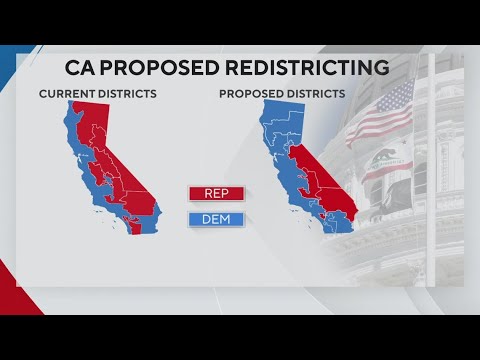
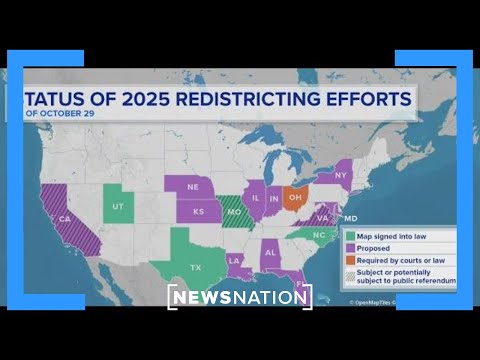
Congressional maps are normally redrawn once a decade, after the Census. In August 2025, Texas broke that convention at President Trump's urging—redrawing its map five years early to flip five Democratic-held seats. The move triggered a chain reaction: California redrew to flip five Republican seats back, Missouri and North Carolina followed, and the White House began pushing every Republican-controlled state to do the same.

Why it matters

Whoever controls the maps controls the House—and a single redrawn state can decide which party writes federal law for the next two years.

Key Indicators

7 of 8
Indiana incumbents Trump targeted
Trump endorsed primary challengers against seven of the eight Republican state senators up for reelection who voted against his redistricting bill.
~$9M
Outside spending in Indiana primaries
National Republican-aligned groups poured roughly $9 million into typically low-profile state senate races, including about $1.5 million from a Trump-aligned dark money group.
31–19
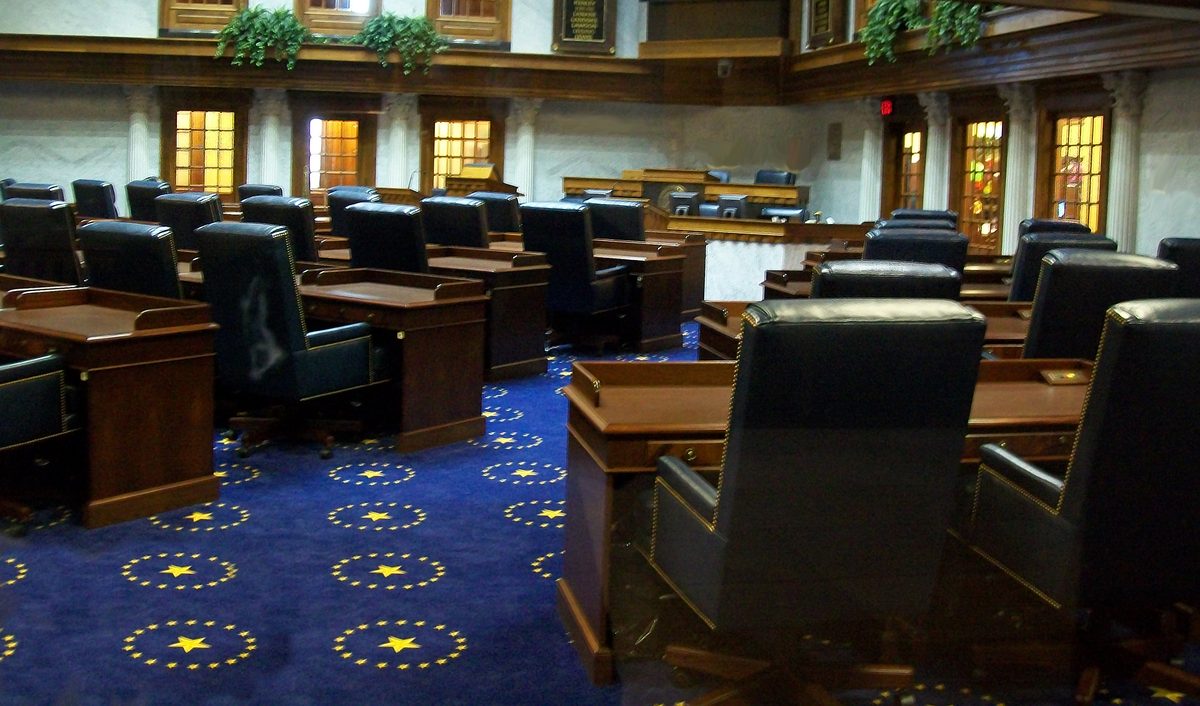
Indiana Senate vote killing the map
Twenty-one Republicans joined all ten Democrats on December 11, 2025 to defeat the Trump-backed redistricting bill in a Republican-supermajority chamber.
6 states
Have already redrawn maps
California, Missouri, North Carolina, Ohio, Texas, and Utah enacted new congressional maps mid-decade as of early 2026.
10 seats
Net swing in play nationally
Texas's redraw targets five Democratic seats; California's counter-redraw targets five Republican seats. Further state-level redraws could tip the balance further.

Interactive

Exploring all sides of a story is often best achieved with Play.

Ever wondered what historical figures would say about today's headlines?

Sign up to generate historical perspectives on this story.

Sign Up

Debate Arena

Two rounds, two personas, one winner. You set the crossfire.

People Involved

Organizations Involved

Timeline

  1. Indiana primary tests Trump's retaliation campaign

    Election

    Indiana Republicans vote in primaries where Trump-endorsed challengers, backed by roughly $9 million in outside spending, face seven incumbent state senators who defied the White House on redistricting. Results will determine whether Indiana revives its rejected map and whether other GOP-controlled states feel pressure to redraw.

  2. Trump endorses challengers to Indiana incumbents

    Political

    Trump issues primary endorsements against seven of the eight Republican state senators who voted against the December redistricting bill and are on the 2026 ballot.

  3. Missouri and North Carolina enact new maps

    Legislation

    Republican-controlled legislatures in Missouri and North Carolina pass mid-decade redistricting plans targeting Democratic seats.

  4. Indiana Senate kills Trump-backed redistricting bill

    Legislation

    Twenty-one Republicans join all ten Democrats to defeat the redistricting bill 31–19 in the Republican-supermajority Indiana Senate, ending the redraw effort.

  5. California voters approve counter-redistricting

    Election

    California voters approve a special-election ballot measure adopting a new congressional map designed to flip five Republican-held seats, neutralizing the Texas redraw.

  6. Texas enacts new congressional map

    Legislation

    Texas signs into law a new congressional map redrawing district lines mid-decade and targeting five Democratic seats, breaking the convention of redistricting only after a census.

  7. Trump publicly pressures Texas to redraw congressional map

    Political

    President Trump begins urging Texas Republicans to enact a new congressional map mid-decade to flip five Democratic-held seats ahead of the 2026 midterms.

Scenarios

1

Most incumbents fall, Indiana revives the map

Discussed by: Trump-aligned strategists, Turning Point Action, Jim Bopp

If a clear majority of the seven targeted incumbents lose, the Indiana legislature returns in 2027 with senators elected on a pro-redistricting platform and a clear mandate to pass the map. Holdouts in other Republican states—particularly those weighing redraws under White House pressure—read the result as proof that defying Trump on redistricting carries primary-level consequences and accelerate their own efforts.

2

Most incumbents survive, redistricting wave stalls

Discussed by: CNN political analysts, NOTUS, former Gov. Mitch Daniels' allies

If most incumbents win despite Trump endorsements and millions in outside spending, the result establishes a meaningful ceiling on presidential intra-party power and emboldens Republican state legislators elsewhere to resist further mid-decade redraws. Indiana's map stays dead through the 2026 midterms, and the redistricting wave that began in Texas loses momentum.

3

Mixed results yield ambiguous mandate

Discussed by: Cook Political Report, state-level political reporters

Trump-endorsed challengers win in some districts and lose in others, often along lines that track local issues more than redistricting. Both sides claim vindication. Indiana's redistricting effort remains stalled but not buried, and other Republican-controlled states proceed cautiously—case-by-case rather than as a coordinated wave.

4

Courts intervene before maps take effect

Discussed by: Voting Rights Lab, MultiState legal trackers

Regardless of the Indiana primary outcome, ongoing litigation in Texas, North Carolina, and elsewhere produces a federal or state court ruling that blocks one or more enacted mid-decade maps before the November 2026 election, scrambling the political math and forcing emergency redraws.

Historical Context

Texas mid-decade redistricting (2003)

May–October 2003

What Happened

House Majority Leader Tom DeLay engineered a mid-decade redrawing of Texas's congressional map—the first such redraw in modern memory not tied to a court order or census. Texas Democratic legislators twice fled the state to deny the legislature a quorum, fleeing first to Oklahoma and later to New Mexico. Republicans eventually passed the map, which flipped roughly six U.S. House seats from Democratic to Republican control.

Outcome

Short Term

The redraw delivered a net gain of about six House seats for Republicans in 2004 and was upheld in most respects by the U.S. Supreme Court in League of United Latin American Citizens v. Perry (2006), though one district was struck down under the Voting Rights Act.

Long Term

The 2003 Texas plan established that mid-decade redraws were legally permissible if the right political conditions held—directly supplying the precedent now being used by the 2025–2026 wave of state-level redraws.

Why It's Relevant Today

The 2003 Texas redraw is the template the current effort explicitly follows. What is new in 2025–2026 is its scale: instead of a single state acting opportunistically, the White House is coordinating a multi-state campaign and punishing intra-party defectors who refuse to participate.

Richard Lugar primary loss (2012)

May 2012

What Happened

Six-term U.S. Sen. Richard Lugar of Indiana, one of the chamber's most senior Republicans and a foreign-policy heavyweight, lost the Republican primary to State Treasurer Richard Mourdock by roughly 20 points. Tea Party–aligned outside groups spent millions framing Lugar as insufficiently loyal to the Republican base. Mourdock then lost the general election to Democrat Joe Donnelly.

Outcome

Short Term

Indiana sent a Democrat to the U.S. Senate for the first time in decades, and the Lugar defeat was widely cited as a cautionary tale about ideological purity tests.

Long Term

The race demonstrated that an Indiana Republican primary electorate, properly mobilized by national outside money, can unseat even deeply entrenched incumbents on questions of party loyalty—the exact dynamic Trump-aligned groups are now testing at the state senate level.

Why It's Relevant Today

Indiana's GOP primary electorate has done this before. The 2012 Lugar race is the most direct in-state precedent for whether national outside spending can flip incumbent state senators framed as disloyal to the party leader.

Eric Cantor primary loss (2014)

June 2014

What Happened

House Majority Leader Eric Cantor lost his Republican primary in Virginia's 7th District to economics professor Dave Brat, who spent roughly $200,000 against Cantor's $5 million. It was the first time in U.S. history a sitting House majority leader had lost a primary.

Outcome

Short Term

Cantor resigned his leadership post and left Congress; the result reshaped House Republican politics overnight and is widely credited with helping launch the populist insurgency that would carry Trump to the 2016 nomination.

Long Term

Established that primary electorates are willing to defeat senior incumbents over questions of base loyalty even when the incumbent vastly outspends the challenger—a dynamic now being applied in reverse, with the establishment-aligned forces (Trump and outside groups) targeting incumbents from above.

Why It's Relevant Today

Cantor showed that incumbency and money are not decisive in primaries when base voters perceive disloyalty. The Indiana primaries flip the script: now the president's allies are the ones outspending incumbents and casting them as disloyal—testing whether the same dynamic works when wielded from the top down.

Sources

(8)