The United States performed less than 1% of global uranium enrichment when the Department of Energy announced $2.7 billion in contracts to three companies on January 21, 2026. Russia controls 44% of global enrichment capacity and supplied roughly a quarter of American reactor fuel until Congress banned imports in 2024. The last U.S.-owned enrichment facility shut down in 2013.
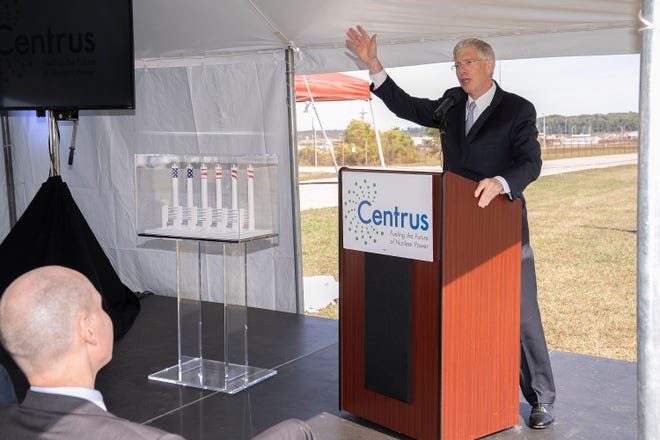
The investment is the largest federal commitment to domestic nuclear fuel production since the Cold War. Centrus Energy, General Matter, and Orano Federal Services each received $900 million to build or expand enrichment facilities in Ohio, Kentucky, and Tennessee. The goal: produce enough low-enriched uranium for existing reactors and the specialized high-assay fuel that advanced reactor designs require—fuel that currently comes only from Russia.
Questions about this story
Free account needed to ask — your question is kept and asked for you right after sign-up. Answers are public.
No questions yet — be the first to ask.
Key Indicators
$2.7B
Total contract value
Largest federal investment in domestic uranium enrichment since the Cold War
44%
Russia's global enrichment share
Russia controls nearly half of worldwide uranium enrichment capacity
920 kg
U.S. HALEU produced to date
Total domestic HALEU production from Centrus Piketon facility through June 2025
23 events
Latest: January 22nd, 2026 · 9 months ago
Showing 8 of 23
JK to step
Tap a bar to jump to that date
Jump to
January 2026
Kairos Power Finalizes HALEU Contract for Hermes
LatestContract
Kairos Power completes DOE contract to receive HALEU for first fuel load of Hermes demonstration reactor in Oak Ridge. Material will be processed into TRISO fuel pebbles in partnership with Los Alamos National Laboratory.
DOE Awards $2.7 Billion for Uranium Enrichment
Contract
Centrus, General Matter, and Orano each receive $900 million task orders to expand domestic LEU and HALEU enrichment capacity over ten years.
Standard Nuclear Receives First HALEU Feedstock Shipment
Milestone
Standard Nuclear becomes first company to receive physical HALEU shipment at Oak Ridge facility. The feedstock, allocated to Radiant Industries, will be processed into TRISO fuel for 2026 reactor demonstration—marking critical domestic supply chain milestone.
December 2025
Centrus Begins Domestic Centrifuge Manufacturing
Operations
Centrus announces commencement of domestic centrifuge production at Piketon to support commercial LEU enrichment activities, rebuilding manufacturing capability lost when American Centrifuge program was canceled.
August 2025
General Matter Signs Paducah Lease
Corporate
Peter Thiel-backed startup signs DOE lease for 100 acres at former Paducah plant, planning first privately-funded U.S. enrichment facility.
June 2025
Centrus Delivers 900 kg HALEU to DOE
Milestone
Centrus completes Phase II of HALEU demonstration, delivering 900 kilograms of high-assay fuel—a critical milestone for advanced reactor deployment.
May 2025
Trump Signs Nuclear Executive Orders
Policy
Four executive orders aim to quadruple U.S. nuclear capacity to 400 GW by 2050, streamline NRC licensing to 18 months, and deploy test reactors by July 4, 2026.
April 2025
First HALEU Allocations to Reactor Developers
Policy
DOE commits HALEU supplies to TRISO-X, TerraPower, Kairos Power, Radiant Industries, and Westinghouse for advanced reactor development.
November 2024
Russia Bans Uranium Exports to U.S.
Geopolitical
Russia imposes retaliatory temporary ban on enriched uranium exports to the United States through end of 2025.
October 2024
DOE Selects Six Enrichment Contractors
Contract
Department of Energy names companies eligible for enrichment contracts under the Russian uranium ban funding.
September 2024
Orano Selects Oak Ridge for New Facility
Corporate
French nuclear company Orano announces Oak Ridge, Tennessee as site for planned $5 billion LEU enrichment plant.
May 2024
Russian Uranium Import Ban Enacted
Legislation
President Biden signs law banning Russian uranium imports, effective immediately with waivers permitted until January 1, 2028. The law releases $2.72 billion for domestic enrichment.
October 2023
Centrus Begins HALEU Production
Operations
First U.S.-owned, U.S.-technology enrichment operations in 70 years commence at Piketon, Ohio.
February 2022
Russia Invades Ukraine
Geopolitical
Russian invasion accelerates Western efforts to reduce energy dependence, including nuclear fuel supply chains.
October 2019
DOE Signs HALEU Demonstration Contract
Contract
Centrus awarded three-year, $115 million cost-shared contract to demonstrate HALEU production using 16 AC-100M centrifuges at Piketon.
September 2015
Obama Administration Ends American Centrifuge Funding
Policy
DOE terminates support for the American Centrifuge demonstration program at Piketon, halting U.S. centrifuge technology development.
March 2014
USEC Files for Bankruptcy
Corporate
USEC Inc. declares bankruptcy, later emerging as Centrus Energy Corporation in 2014.
December 2013
Megatons to Megawatts Completes
Policy
Twenty-year program ends after converting 500 metric tons of Russian weapons uranium. At its peak, the program supplied 10% of U.S. electricity.
May 2013
Paducah Plant Closes
Shutdown
The last U.S.-owned uranium enrichment facility shuts down after 60 years of operation, ending domestic enrichment capability.
June 2010
URENCO USA Begins Operations
Operations
European-owned URENCO's New Mexico facility starts enrichment, becoming the only operating commercial plant in the United States.
May 2001
Portsmouth Plant Ceases Enrichment
Shutdown
Gaseous diffusion enrichment ends at the Portsmouth, Ohio facility after USEC consolidates operations at Paducah.
July 1998
USEC Privatized via IPO
Corporate
United States Enrichment Corporation goes public, transferring government enrichment operations to private ownership.
February 1993
Megatons to Megawatts Agreement Signed
Policy
U.S. and Russia agree to convert 500 metric tons of Russian weapons-grade uranium into commercial reactor fuel over 20 years. The deal made Russian enrichment services dominant in the U.S. market.
Scenarios
1
U.S. Achieves HALEU Self-Sufficiency by 2035
Possible
Discussed by: Department of Energy projections, industry analysts at Third Way and ANS Nuclear Newswire
All three awarded facilities reach full production on schedule. Centrus expands to commercial-scale HALEU capacity, General Matter begins operations by 2030, and Orano's Oak Ridge plant starts LEU production in 2031. Combined with URENCO's existing capacity, the U.S. produces enough enriched uranium to meet domestic demand without Russian imports. Advanced reactor deployment accelerates as fuel supply constraints ease.
2
Delays and Cost Overruns Push Full Capacity to Late 2030s
Likely
Discussed by: Energy analysts noting historical patterns in nuclear construction, GAO oversight reports on major DOE projects
NRC licensing takes longer than expected. General Matter, with no enrichment experience, encounters technical challenges. Orano's project faces the typical delays of large nuclear facilities. The U.S. relies on European suppliers (URENCO, Orano's French operations) to bridge the gap. Domestic capacity grows but falls short of targets, maintaining some import dependence into the 2030s.
3
Advanced Reactor Deployment Stalls on Fuel Constraints
Possible
Discussed by: TerraPower executives, nuclear industry analysts, HALEU availability program reviews
HALEU production scales slower than advanced reactor timelines. Centrus's small cascade cannot meet demand from multiple reactor developers. TerraPower, Kairos, and X-energy face delays or redesign reactors for lower-enrichment fuel. The commercial advanced reactor market shifts focus to traditional light-water reactor designs that use existing LEU supply chains.
4
Geopolitical Disruption Accelerates Investment
Uncertain
Discussed by: Energy security analysts, Congressional appropriators concerned about supply chain vulnerabilities
Further deterioration in U.S.-Russia relations or Russian supply disruptions to European allies trigger emergency appropriations. Congress adds billions more to domestic enrichment programs. DOE fast-tracks additional facilities beyond the three announced. U.S. enrichment capacity reaches levels not seen since the Cold War, potentially creating export opportunities to allies.
Historical Context
3 moments from history that rhyme with this story — and how they unfolded.
1 of 3
February 1993 - December 2013
Megatons to Megawatts Program (1993-2013)
Russia converted 500 metric tons of weapons-grade uranium from 20,000 nuclear warheads into commercial reactor fuel, sold to the United States over 20 years. The $8 billion program provided up to 10% of U.S. electricity at its peak. USEC served as the American commercial agent.
Then
Russia gained hard currency and employment for weapons scientists. The U.S. received cheap fuel and reduced weapons stockpiles.
Now
Russian enrichment services became dominant globally, suppressing Western investment in enrichment capacity. By 2022, Russia controlled 44% of global enrichment.
Why this matters now
The program's success created the dependency the current $2.7 billion investment aims to reverse. Cheap Russian fuel made domestic enrichment uneconomical for decades.
2 of 3
July 2009 - September 2015
American Centrifuge Program Cancellation (2009-2015)
The Obama administration denied USEC a $2 billion loan guarantee in 2009 to complete the American Centrifuge Plant at Piketon. USEC had invested $2.5 billion—much from government sources—but completed only 120 of 11,500 planned centrifuges. DOE terminated remaining funding in 2015.
Then
USEC declared bankruptcy in 2014, reorganizing as Centrus. The Piketon facility was mothballed.
Now
The U.S. lost a decade of enrichment technology development. The centrifuge technology was preserved, enabling the HALEU demonstration that began in 2023.
Why this matters now
The current investment rebuilds what was abandoned. Centrus's HALEU facility uses the same AC-100M centrifuge technology that survived the program cancellation.
3 of 3
1943 - 1985
Manhattan Project to Gaseous Diffusion Dominance (1943-1985)
The U.S. built the world's first industrial uranium enrichment facilities at Oak Ridge, Tennessee during World War II. Post-war, the government constructed massive gaseous diffusion plants at Portsmouth, Ohio (1954) and Paducah, Kentucky (1952) to supply both weapons and civilian reactors. The three plants made the U.S. the world's dominant enricher.
Then
The U.S. controlled most global enrichment capacity through the 1970s, enabling nuclear weapons superiority and civilian reactor exports.
Now
Gaseous diffusion technology proved energy-intensive and obsolete. The Oak Ridge plant closed in 1987, Portsmouth in 2001, Paducah in 2013. No U.S. replacement was built.
Why this matters now
Today's investment returns enrichment to the same regions—Ohio, Kentucky, Tennessee—where U.S. nuclear infrastructure originated. General Matter's Paducah facility will occupy the site where enrichment ended in 2013.