


Pull to refresh
Logo
Daily Brief
Following
Why
Rebuilding America's nuclear fuel supply chain

Rebuilding America's nuclear fuel supply chain

New Capabilities
By Newzino Staff |

How the U.S. is racing to end its dependence on Russian uranium

February 13th, 2026: Snow Lake Completes GUE Acquisition

Overview

For decades, the United States outsourced its nuclear fuel supply chain to Russia. That ended in May 2024 when President Biden signed a law banning Russian uranium imports, triggering a scramble to rebuild domestic capabilities before the waiver period expires in 2028. Snow Lake Energy's acquisition of Global Uranium and Enrichment, completed February 13, 2026, represents one piece of this larger puzzle—consolidating Wyoming uranium projects and gaining exposure to novel enrichment technology that could bypass the conversion bottleneck.

The stakes are straightforward: 93 American nuclear reactors generate 20% of the nation's electricity, but Russia controls 36% of global enrichment capacity versus America's 9.5%. The Department of Energy has committed $2.7 billion to expand domestic production, while junior mining companies are consolidating assets across the Western uranium belt. The race is on to build a supply chain that doesn't exist yet.

Key Indicators

36%
Russian enrichment share
Russia's Rosatom controls more than a third of global uranium enrichment capacity
$2.7B
U.S. government investment
Department of Energy contracts awarded to rebuild domestic enrichment capacity over 10 years
24-51M lbs
Pine Ridge exploration target
Estimated uranium oxide resources at Snow Lake's flagship Wyoming project
Jan 2028
Waiver deadline
Date when all Russian uranium import waivers must terminate

Interactive

Exploring all sides of a story is often best achieved with Play.

Ever wondered what historical figures would say about today's headlines?

Sign up to generate historical perspectives on this story.

Sign Up

Debate Arena

Two rounds, two personas, one winner. You set the crossfire.

People Involved

Philip Gross
Philip Gross
Chief Executive Officer and Chairman, Snow Lake Energy (Leading company through uranium pivot and GUE acquisition)

Organizations Involved

Snow Lake Energy
Snow Lake Energy
Public Company (NASDAQ: LITM)
Status: Acquiring company, now controls expanded uranium portfolio

A nuclear fuel cycle company that pivoted from lithium exploration to uranium development in 2024.

Global Uranium and Enrichment Limited
Public Company (formerly ASX: GUE)
Status: Acquired by Snow Lake; delisting from ASX February 16, 2026

Australian uranium exploration company with U.S. projects and a cornerstone stake in Ubaryon enrichment technology.

Ubaryon
Ubaryon
Private Company
Status: Developing next-generation uranium enrichment technology

Australian company developing chemical uranium enrichment that bypasses the conversion step required by traditional centrifuge methods.

Urenco
Urenco
Enrichment Consortium
Status: Second-largest non-Russian uranium enricher; expanding U.S. capacity

British-Dutch-German consortium that operates the only commercial uranium enrichment facility in the United States.

U.
U.S. Department of Energy
Federal Agency
Status: Coordinating domestic nuclear fuel supply chain expansion

Federal agency overseeing U.S. energy policy, including nuclear fuel security and enrichment capacity expansion.

Timeline

  1. Snow Lake Completes GUE Acquisition

    M&A

    Snow Lake Energy completed its acquisition of Global Uranium and Enrichment with 99% shareholder approval, creating a U.S.-focused nuclear fuel cycle company. GUE shares migrate to NASDAQ February 16.

  2. Australian Court Approves GUE Acquisition Scheme

    Regulatory

    The Federal Court of Australia approved the share scheme and option scheme for Snow Lake's acquisition of Global Uranium and Enrichment.

  3. DOE Awards $2.7 Billion for Domestic Enrichment

    Government

    The Department of Energy awarded contracts to American Centrifuge Operating, General Matter, and Orano Federal Services to expand domestic uranium enrichment capacity over 10 years.

  4. Snow Lake Announces GUE Acquisition

    M&A

    Snow Lake Energy entered a definitive agreement to acquire 100% of Global Uranium and Enrichment, consolidating Wyoming uranium projects and gaining exposure to Ubaryon technology.

  5. Urenco Invests in Ubaryon Enrichment Technology

    Investment

    Urenco completed a binding agreement to invest A$5 million for a 13% stake in Ubaryon, validating the chemical enrichment technology at readiness level 4.

  6. Ubaryon Shareholders Approve Urenco Partnership

    Corporate

    Ubaryon shareholders voted to accept a strategic partnership with Urenco, paving the way for A$5 million investment in chemical enrichment technology development.

  7. Russia Retaliates with Export Restrictions

    Geopolitical

    Russia's state nuclear company Tenex notified Centrus Energy that its export license had been rescinded, restricting uranium shipments to the United States through December 2025.

  8. Russian Uranium Ban Takes Effect

    Enforcement

    The import prohibition became enforceable 90 days after signing. The Department of Energy began monitoring for circumvention through third-party countries.

  9. Biden Signs Russian Uranium Import Ban

    Legislation

    President Biden signed the Prohibiting Russian Uranium Imports Act, banning imports of Russian low-enriched uranium with waivers available until January 1, 2028. The legislation unlocked $2.72 billion for domestic production.

Scenarios

1

U.S. Achieves Enrichment Independence by 2030

Discussed by: Department of Energy officials, Atlantic Council analysts

New centrifuge facilities from Centrus, Urenco, and Orano come online between 2027-2030, supplemented by emerging technologies like Ubaryon's chemical process. Domestic capacity reaches 10-15 million separative work units annually, meeting reactor demand without Russian inputs. This scenario requires sustained government investment, successful technology scale-up, and no major construction delays.

2

Supply Shortfall Forces Waiver Extensions

Discussed by: Nuclear Energy Institute, utility executives

New enrichment capacity falls short of projections due to construction delays, workforce shortages, or technology setbacks. With inventories depleted by 2028, the administration faces pressure to extend Russian import waivers or seek alternative sources from allied enrichers in Europe. Junior uranium miners benefit from sustained high prices, but energy security goals remain unmet.

3

Consolidation Creates Integrated U.S. Champions

Discussed by: PwC energy M&A analysts, Sprott uranium fund managers

Snow Lake's acquisition of GUE represents the first wave of consolidation that creates vertically integrated American nuclear fuel companies controlling mining, enrichment technology, and reactor development. Larger players acquire junior miners and technology startups, reducing competition but accelerating capital deployment across the supply chain.

4

Ubaryon Technology Disrupts Enrichment Economics

Discussed by: Urenco, nuclear industry analysts at Crux Investor

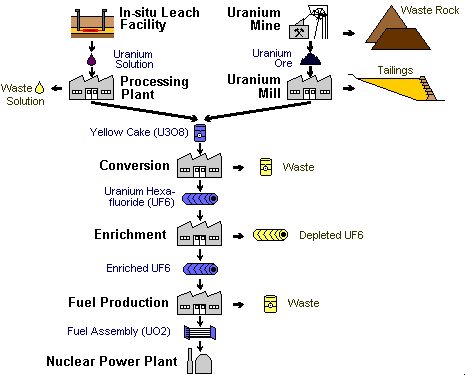
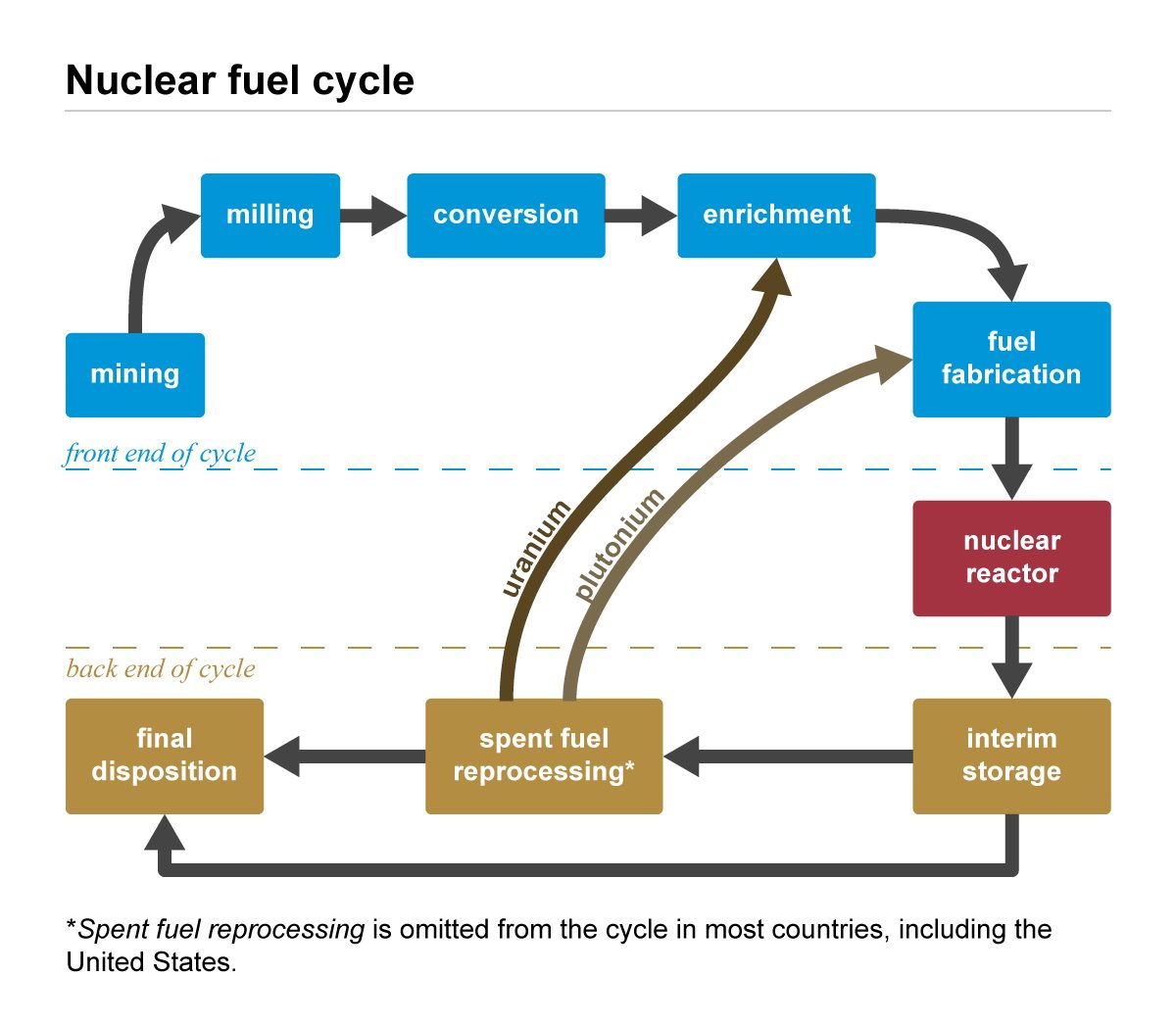
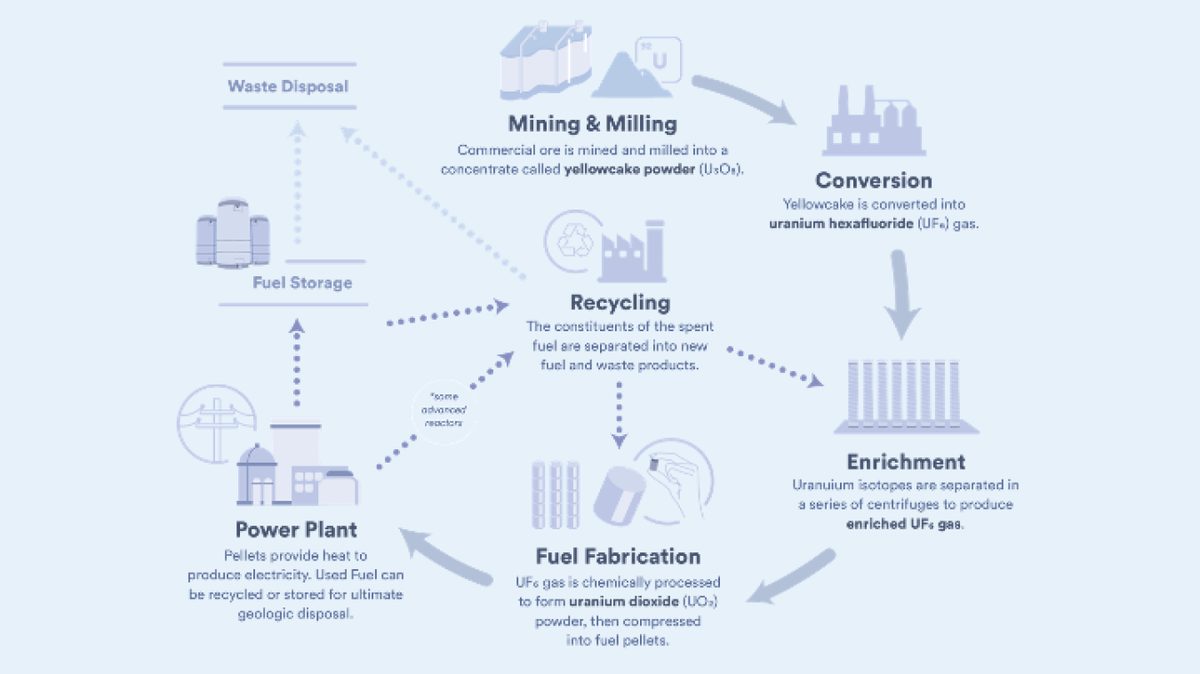
Ubaryon's chemical separation process advances to commercial readiness, eliminating the costly conversion step that currently requires uranium to be processed into gas before enrichment. The oxide-to-oxide pathway reduces capital costs and processing time, attracting investment from countries seeking enrichment independence without centrifuge infrastructure. Snow Lake's 21.9% stake becomes a strategic asset.

Historical Context

U.S. Uranium Enrichment Privatization (1998)

1998

What Happened

The U.S. government privatized its uranium enrichment operations, creating the United States Enrichment Corporation (USEC), later renamed Centrus Energy. For decades prior, the government had maintained strategic control over enrichment at facilities in Oak Ridge, Tennessee, and Paducah, Kentucky. The gaseous diffusion plants were energy-intensive and ultimately uncompetitive.

Outcome

Short Term

USEC became a publicly traded company, but struggled to compete with foreign enrichers using more efficient centrifuge technology.

Long Term

The U.S. lost domestic enrichment capacity as aging plants closed, leading to dependence on foreign suppliers including Russia's Rosatom.

Why It's Relevant Today

The current $2.7 billion government investment represents an attempt to reverse the strategic mistake of allowing domestic enrichment capability to atrophy after privatization.

Megatons to Megawatts Program (1993-2013)

February 1993 - December 2013

What Happened

The United States and Russia signed an agreement to convert 500 metric tons of highly enriched uranium from dismantled Russian nuclear warheads into low-enriched fuel for American power plants. Over 20 years, Russian bomb material generated approximately 10% of U.S. electricity.

Outcome

Short Term

American utilities gained access to cheap, abundant fuel while Russia earned $17 billion from former weapons material.

Long Term

The program created commercial relationships and infrastructure dependencies that continued after it ended, with Russia remaining a major supplier.

Why It's Relevant Today

The current ban on Russian uranium imports severs supply relationships that originated in post-Cold War cooperation, forcing a complete restructuring of fuel procurement.

Rare Earth Supply Chain Crisis (2010)

2010

What Happened

China, which controlled 97% of rare earth element production, restricted exports during a territorial dispute with Japan. Prices for critical minerals used in electronics and clean energy technology spiked 10-fold. Western manufacturers scrambled to secure alternative supplies.

Outcome

Short Term

Japan and Western nations launched emergency programs to diversify rare earth sources and develop recycling technologies.

Long Term

New mines opened in Australia and the U.S., reducing Chinese market share to roughly 60% by 2024, though processing remains concentrated in China.

Why It's Relevant Today

The uranium supply chain restructuring follows a similar playbook: a geopolitical shock revealing dangerous concentration, followed by government-backed efforts to rebuild domestic capability.

10 Sources: