




Pull to refresh
Logo
Stanford study finds the brain forms from two separate cell lineages

Stanford study finds the brain forms from two separate cell lineages

New Capabilities

Research in Nature Neuroscience challenges decades of textbook biology — and yields a way to grow human hindbrain neurons

Today: Dual-progenitor brain study published in Nature Neuroscience

Overview

Updated 2 hours ago

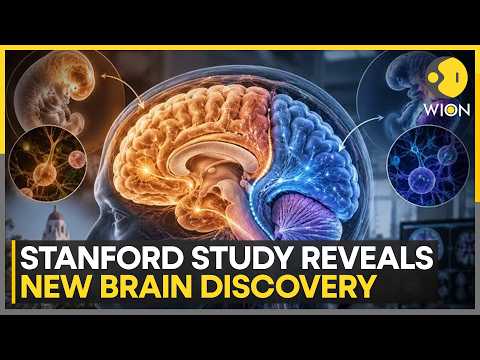
For decades, textbook biology said one common starter cell builds the entire brain. Stanford researchers now show the brain forms from two separate progenitor populations: one for the forebrain and midbrain, the other for the hindbrain — and the two never mix.

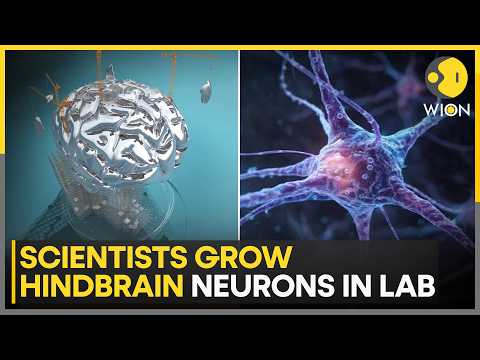
The study, published in Nature Neuroscience, also delivered a practical win: lab-grown human hindbrain motor neurons, grown for the first time in a dish. That capability could speed drug screening for ALS, spinal muscular atrophy, and appetite-related conditions.

Why it matters

A reliable way to grow human hindbrain neurons could speed drug discovery for ALS, spinal muscular atrophy, and weight-loss research.

Questions about this story

Free account needed to ask — your question is kept and asked for you right after sign-up. Answers are public.

No questions yet — be the first to ask.

Key Indicators

2
Distinct brain progenitor cell types identified
One expressing Otx2 forms forebrain and midbrain; one expressing Gbx2 forms hindbrain.
550M+ years
Estimated age of the dual-origin brain system
The two-progenitor pattern appears in chickens, zebrafish, mice, primates, and acorn worms.
First
First lab-grown human hindbrain motor neurons
Generated by differentiating pluripotent stem cells into hindbrain rhombomere 5/6-specific motor neurons.

Voices

Curated perspectives — historical figures and your fellow readers.

Ever wondered what historical figures would say about today's headlines?

Sign up to generate historical perspectives on this story.

People Involved

Organizations Involved

Timeline

July 2025 September 2026

2 events Latest: Today
  1. Dual-progenitor brain study published in Nature Neuroscience

    Today Publication

    The peer-reviewed study appears, showing two lineage-committed brain progenitors that never mix, with lineage tracing and human stem cell evidence.

  2. Stanford team posts dual-progenitor brain model as preprint

    Research

    Kyle Loh's lab publishes the two-parallel-progenitor model on bioRxiv, based on mouse embryos and human pluripotent stem cells.

Scenarios

1

Independent labs confirm the two-progenitor brain model

Likely Resolves by Sep 20, 2028

Discussed by: Developmental biology community; Nature news coverage notes the model challenges a long-held assumption

Other research groups replicate the finding across more species or with different lineage-tracing tools. The Nature news report notes not all scientists agree the brain descends from two non-mixing populations, so confirmation from independent labs would settle the debate. The acorn worm evidence, spanning 550 million years, strengthens the case.

2

Hindbrain neurons speed ALS and spinal muscular atrophy drug screening

Likely Resolves by Sep 20, 2028

Discussed by: Nature and New Scientist coverage; researchers studying motor neuron disease

The ability to grow functional human hindbrain motor neurons in a dish gives labs a platform for testing drugs against ALS, the most common motor neuron disease, and spinal muscular atrophy. The hindbrain also mediates GLP-1 drug effects on appetite, opening another drug-screening avenue. A published screening study using the team's method would confirm this payoff.

3

Rival labs challenge the dual-origin conclusion

Possible Resolves by Sep 20, 2027

Discussed by: Scientists quoted in Nature news who disagree with the two-population claim

The Nature news report notes not everyone agrees the brain descends from two cell populations that never mix. A competing group could publish evidence that a single common progenitor can generate both forebrain and hindbrain, using different markers or tracing methods. Such a challenge would reopen the textbook model question.

Historical Context

2 moments from history that rhyme with this story — and how they unfolded.

1868-1900s

Discovery of neural crest cells (1868)

Wilhelm His identified a distinct embryonic cell population, later named the neural crest, that migrates and forms diverse structures including facial bone and peripheral nerves.

Then

The discovery added a new cell lineage to embryology.

Now

Neural crest cells are now seen as a key evolutionary innovation of vertebrates.

Why this matters now

Like the Stanford finding, it uncovered a dedicated embryonic lineage that coexists with adjacent developing structures rather than descending from a single common pool.

1967-1980

Endosymbiotic theory (1967)

Lynn Margulis proposed that mitochondria and chloroplasts evolved from bacteria engulfed by early cells. The field dismissed the idea for years; it is now foundational biology.

Then

Margulis's papers were rejected and the theory widely criticized.

Now

Molecular evidence confirmed endosymbiosis; the once-controversial idea became textbook standard.

Why this matters now

Shows a long-held developmental model can be overturned when new lineage-tracing and stem cell evidence makes an alternative provable.

Sources

(9)