


Pull to refresh
Logo
Blood cells from 80-year-old donor become neural stem cells with molecular age under 20

Blood cells from 80-year-old donor become neural stem cells with molecular age under 20

New Capabilities

Direct conversion resets epigenetic clocks gradually over 50 days, giving researchers a new model for studying cellular rejuvenation

Today: Study published in Aging Cell

Overview

Updated 1 hour ago

Researchers at the University of Bonn took blood cell precursors from an 80-year-old donor and converted them directly into neural stem cells. The resulting cells carried an epigenetic age under 20—a reset of roughly 60 years.

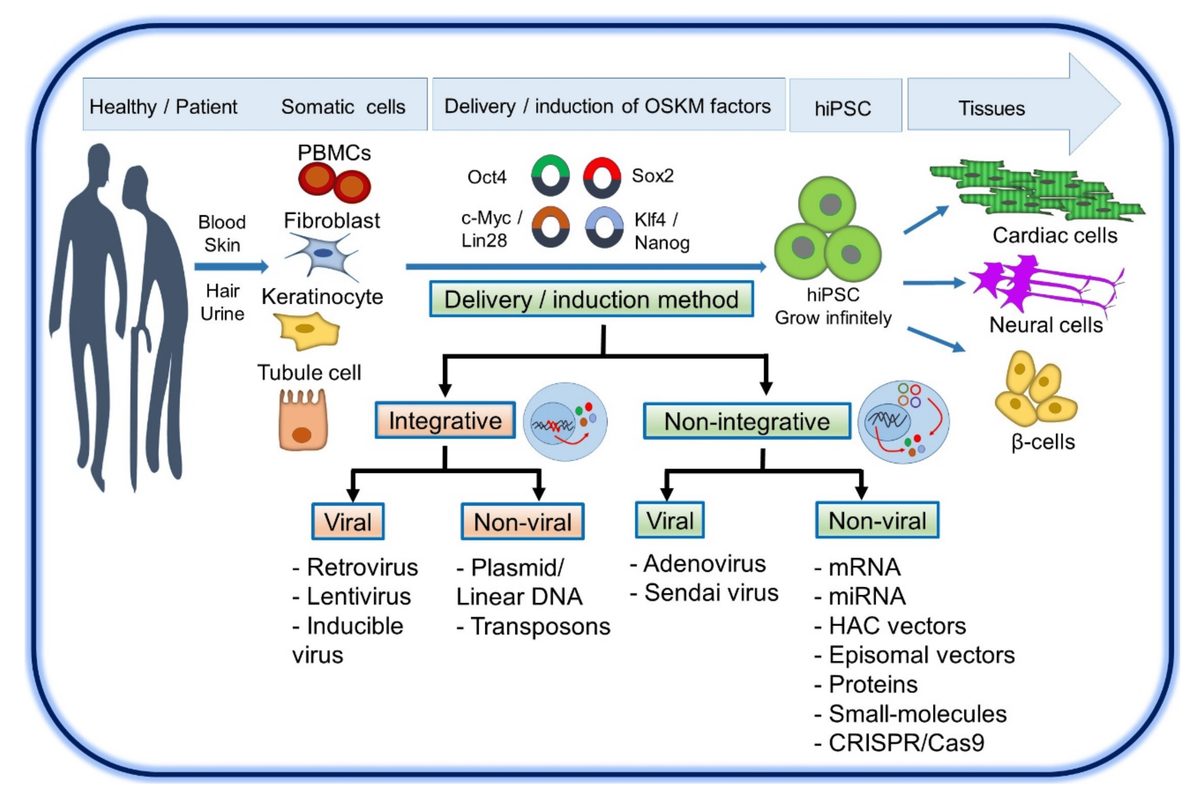
The team bypassed the pluripotent stem cell stage, using two transcription factors, SOX2 and cMYC, to convert the cells directly. Standard reprogramming resets epigenetic age in about 20 days; this direct conversion does it gradually over roughly 50 days. That slow, trackable process gives researchers a window into how cells rejuvenate.

Age is the single biggest risk factor for neurodegenerative diseases like Alzheimer's. The model could let researchers screen drugs and factors that accelerate or slow cellular de-aging. Earlier work from the same lab showed these neural stem cells form connections when transplanted into mouse brains.

Why it matters

Age is the biggest risk factor for Alzheimer's and other neurodegenerative diseases; this model lets researchers watch and potentially accelerate cellular rejuvenation.

Questions about this story

Free account needed to ask — your question is kept and asked for you right after sign-up. Answers are public.

No questions yet — be the first to ask.

Key Indicators

60 years
Age reduction achieved
Blood cells from an 80-year-old donor became neural stem cells with an epigenetic age under 20.
13%
Donor age retained at low passage
Early-passage iNSCs keep about 13% of the original donor's epigenetic age.
5%
Donor age retained at high passage
Established iNSC lines retain about 5% of donor age, even from donors up to 101.
50 days
Time for epigenetic reset
Most age-related epigenetic signatures reset within about 50 days of conversion.
101
Oldest donor age tested (years)
Donors ranged from newborn to 101 years old; all showed pronounced de-aging.

Voices

Curated perspectives — historical figures and your fellow readers.

Ever wondered what historical figures would say about today's headlines?

Sign up to generate historical perspectives on this story.

People Involved

Organizations Involved

Timeline

October 2025 October 2026

2 events Latest: Today
  1. Study published in Aging Cell

    Today Publication

    Peer-reviewed paper confirms blood cells from donors up to 101 years old convert to neural stem cells with epigenetic age under 20.

  2. Preprint posted on bioRxiv

    Publication

    Bonn team posts preprint showing direct blood-to-neural-stem-cell conversion de-ages cells gradually over weeks.

Scenarios

1

Other labs replicate the slow de-aging finding

Likely Resolves by Q2 2028

Discussed by: The research community; the paper frames the iNSC conversion model as ideal for mechanistic studies

Independent labs adopt the iNSC conversion model to study rejuvenation. The slow, trackable de-aging over 50 days makes it attractive for screening factors and drugs that affect the process.

2

A compound that accelerates rejuvenation is identified

Possible Resolves by End of 2029

Discussed by: Brüstle, who said the model can test 'which factors and active substances accelerate or slow down the rejuvenation process'

Using the iNSC conversion system, researchers screen compounds and identify one that measurably speeds up epigenetic de-aging. This would be a step toward therapeutic interventions for age-related disease.

3

iNSC-derived neurons enter clinical development

Unlikely Resolves by End of 2031

Discussed by: The long-term goal; Brüstle notes age is the biggest risk factor for neurodegenerative diseases

The team or partners move toward transplanting iNSC-derived neurons for neurodegenerative disease treatment. Earlier work showed these neurons form connections in mouse brains.

Historical Context

3 moments from history that rhyme with this story — and how they unfolded.

August 2006

Yamanaka's induced pluripotent stem cells (2006)

Shinya Yamanaka showed that four transcription factors could turn adult mouse fibroblasts back into pluripotent stem cells, capable of becoming any cell type. The finding won him the Nobel Prize in 2012.

Then

Reprogramming became a standard lab technique within years.

Now

Established that cellular identity and age can be reset, spawning the field of cellular reprogramming.

Why this matters now

This study is a direct-conversion alternative that skips the pluripotent stage and resets epigenetic age more slowly, offering a different window into the same phenomenon.

May 2010

Direct conversion of fibroblasts to neurons (2010)

Marius Wernig's Stanford lab converted skin fibroblasts directly into functional neurons using three transcription factors, without passing through a pluripotent stage.

Then

Showed direct transdifferentiation between distant cell types was possible.

Now

Opened the door to converting accessible cells like blood directly into neural cells.

Why this matters now

The Bonn team applies the same direct-conversion principle to blood cells, focusing on the epigenetic de-aging that accompanies it.

October 2013

Horvath's epigenetic clock (2013)

Steve Horvath published a DNA methylation-based algorithm that predicts biological age across tissues, now widely used as an 'epigenetic clock.'

Then

Gave researchers a standard tool to measure cellular age.

Now

Enabled studies like this one that quantify how much reprogramming resets a cell's age.

Why this matters now

The Bonn team used a Horvath-derived clock to show the converted cells had an epigenetic age under 20.

Sources

(7)