
Pull to refresh
Logo
Daily Brief
Following
Why Sign Up
Plaid Cymru to form Welsh government, ending 27 years of Labour rule

Plaid Cymru to form Welsh government, ending 27 years of Labour rule

Rule Changes

Welsh nationalists win largest share of seats in restructured 96-member Senedd; First Minister Eluned Morgan loses her own seat

Today: Ap Iorwerth confirms minority government plan

Overview

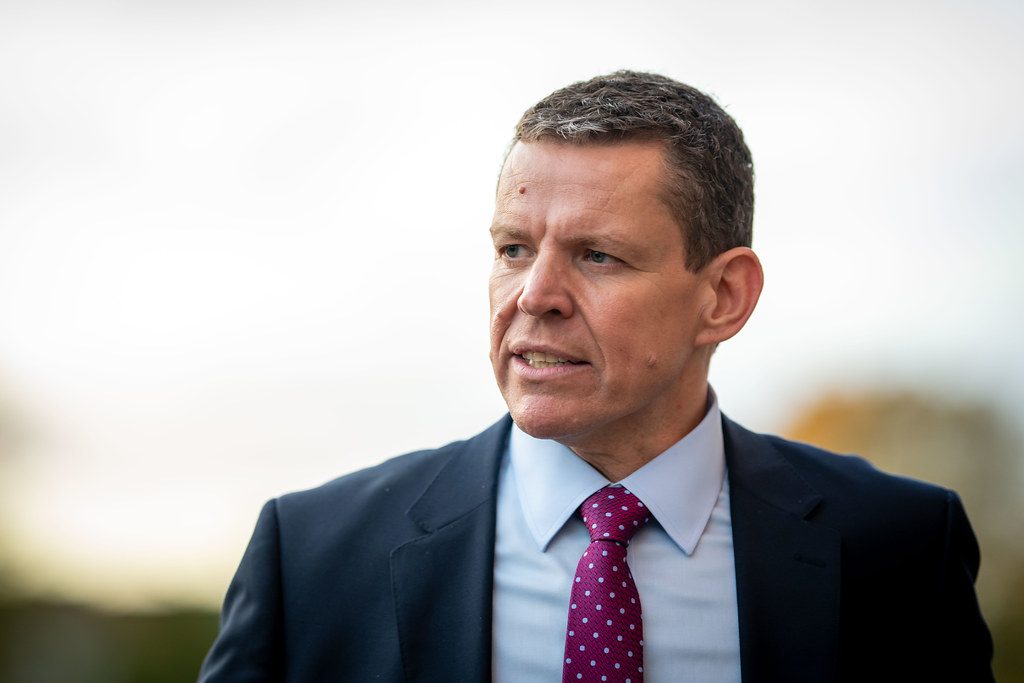
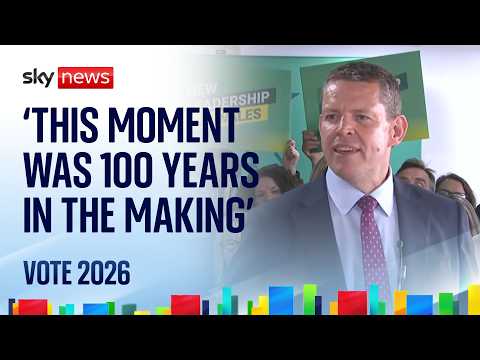
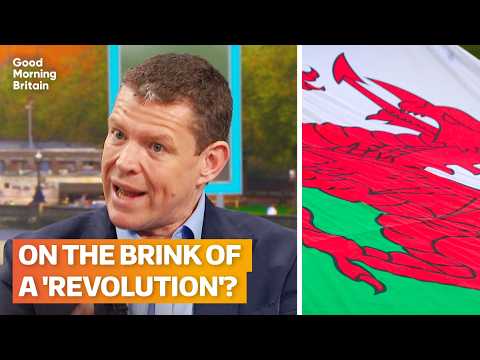
Wales had a Labour-led government for every day of its 27-year devolved history. Voters ended that on Thursday, and on Saturday Plaid Cymru leader Rhun ap Iorwerth said his party would form the next one.

Why it matters

Wales gets a non-Labour government for the first time since devolution, and its first ever Plaid Cymru First Minister.

Key Indicators

43 / 96
Plaid Cymru seats
Largest bloc in the new Senedd, six short of a majority.
27 years
Welsh Labour rule ended
Labour had led every Welsh government since devolution opened in 1999.
9 seats
Welsh Labour total
Down from 30 of 60 in the old chamber, with vote share falling to 11.1%.
34 seats
Reform UK breakthrough
First time Reform UK has won any Senedd seats; now the second-largest party.

Interactive

Exploring all sides of a story is often best achieved with Play.

Ever wondered what historical figures would say about today's headlines?

Sign up to generate historical perspectives on this story.

Sign Up

Debate Arena

Two rounds, two personas, one winner. You set the crossfire.

People Involved

Organizations Involved

Timeline

  1. Ap Iorwerth confirms minority government plan

    Statement

    Plaid Cymru leader tells supporters at the Senedd he will seek to be First Minister and govern through case-by-case deals, not a coalition.

  2. Morgan loses seat; Labour vote collapses

    Election results

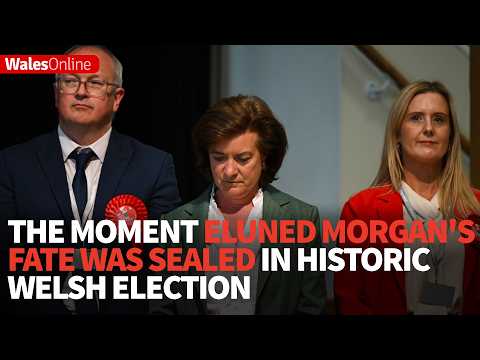
    Eluned Morgan finishes third in Ceredigion Penfro with 6,495 votes and resigns as Welsh Labour leader. Labour falls to nine seats.

  3. Plaid first; Reform UK second

    Election results

    Final returns show Plaid Cymru on 43 seats, Reform UK 34, Labour 9, Conservatives 7, Greens 2, Liberal Democrats 1.

  4. Senedd polls open under new system

    Election

    Welsh voters cast ballots under closed-list proportional representation for the first time. Turnout will reach 51.6%, the highest in devolution.

  5. Dan Thomas takes over Reform UK Wales

    Party leadership

    Reform UK names Thomas as its first Welsh leader, three months before the Senedd election.

  6. Eluned Morgan becomes First Minister

    Government formation

    Morgan replaces Vaughan Gething after his short tenure ends in a row over donations from a businessman convicted of environmental offences.

  7. Senedd expansion act passes

    Legislation

    The Senedd (Members and Elections) Act passes, raising the chamber to 96 members and replacing the old voting system with closed-list proportional representation.

  8. Labour and Plaid agree One Wales coalition

    Government formation

    Labour falls short of a majority and partners with Plaid Cymru. Plaid wins a deputy first ministership and a referendum on full lawmaking powers.

  9. Welsh devolution begins

    Constitutional

    The new National Assembly for Wales sits for the first time. Labour's Alun Michael leads the first devolved Welsh government.

  10. Labour first becomes largest party in Wales

    Historical

    Labour overtakes the Liberals in Wales at the 1922 general election, beginning a 104-year run as the country's biggest party.

Scenarios

1

Ap Iorwerth elected First Minister, Plaid governs deal by deal

Discussed by: ITV News Wales, Nation.Cymru, BBC Wales political coverage

The 28-day clock starts ticking on the First Minister vote. Plaid plus the Greens and Liberal Democrats reach 46 votes, three short of a majority. Ap Iorwerth wins the chamber vote because rivals split, then passes budgets and bills by negotiating issue-by-issue support from Labour or the Conservatives. This is the path his Saturday speech described and the SNP's 2007-2011 playbook in Scotland.

2

Plaid agrees confidence-and-supply with Welsh Labour

Discussed by: The Star, North Wales Live commentators

Plaid's nine-seat shortfall on common ground with Labour matches Labour's exact seat count, giving the two parties a stable working majority on devolved policy. Welsh Labour, freshly without Morgan and seeking relevance, may prefer formal influence to opposition. The two ran the One Wales coalition together from 2007 to 2011 and a co-operation agreement from 2021 to 2024. Ap Iorwerth has rejected a full coalition but a softer pact remains live.

3

First Minister vote deadlocks; fresh Senedd election triggered

Discussed by: Constitutional commentary in Nation.Cymru and Wales Online

Under the Government of Wales Act, if the Senedd does not nominate a First Minister within 28 days, the King dissolves the chamber and orders a new poll. With Plaid as the largest party and other groupings unable to assemble 49 votes against ap Iorwerth, this requires Reform UK and Labour to combine to block him. There is no public sign either party wants that outcome.

4

Reform UK uses 34-seat bloc to set the opposition agenda

Discussed by: Politics Home, Irish Times UK politics coverage

Reform's vote share matches Plaid's reach in much of south Wales and gives Dan Thomas formal opposition leader status. Without coalition leverage, the party's influence runs through committee chairs, set-piece debates, and pressure on Plaid to harden positions on immigration and net zero. Westminster Reform leader Nigel Farage now has a Senedd platform to test policies before the next UK general election.

Historical Context

SNP minority government in Scotland (2007)

May 2007 – May 2011

What Happened

Alex Salmond's Scottish National Party won 47 of 129 Holyrood seats, one ahead of Labour. Salmond became Scotland's first nationalist First Minister and governed for four years without a coalition, building case-by-case majorities with the Greens and Conservatives.

Outcome

Short Term

The SNP passed budgets and signature bills through bilateral deals after Labour and the Liberal Democrats refused coalition.

Long Term

The SNP won an outright majority in 2011 and called the 2014 independence referendum, locking Holyrood into a nationalist-versus-unionist axis.

Why It's Relevant Today

This is the model ap Iorwerth has signalled he will follow: nationalist plurality, no formal coalition, legislation built vote by vote.

Labour-Plaid 'One Wales' coalition (2007)

July 2007 – May 2011

What Happened

Welsh Labour came three seats short of a majority in the 2007 Assembly election. After two months and a near-rainbow alternative involving Plaid, the Conservatives, and Liberal Democrats, First Minister Rhodri Morgan struck a coalition with Plaid leader Ieuan Wyn Jones. Plaid took the deputy first ministership and a commitment to a referendum on full lawmaking powers.

Outcome

Short Term

The coalition delivered the 2011 referendum, which granted the Senedd primary lawmaking powers.

Long Term

Plaid lost ground at the 2011 election as the junior partner, a memory party strategists cite for refusing another coalition in 2026.

Why It's Relevant Today

The last time Welsh government formation was unsettled, Plaid joined as a junior partner and paid for it. Ap Iorwerth has chosen the opposite path.

Wales realigns to Labour (1922)

November 1922

What Happened

At the 1922 UK general election, Labour overtook the Liberals to win the largest share of Welsh seats and votes. Industrial South Wales miners and steelworkers swung from Liberal to Labour, and Welsh Liberalism's century-long dominance ended.

Outcome

Short Term

Labour locked down the South Wales coalfield and most urban seats within a decade.

Long Term

Wales remained Labour's most reliable nation through every UK general election from 1922 to 2024 and the entire devolved era until 2026.

Why It's Relevant Today

The 104-year run that started in 1922 ended on May 8, 2026. Plaid's win is the first realignment of Welsh politics on this scale in over a century.

Sources

(8)