
Pull to refresh
Logo
Daily Brief
Following
Why Sign Up
Denmark's Social Democrats suffer worst election result in over a century, triggering coalition deadlock

Denmark's Social Democrats suffer worst election result in over a century, triggering coalition deadlock

Rule Changes
By Newzino Staff |

Prime Minister Frederiksen resigns after snap election gamble backfires, leaving centrist kingmaker to decide the next government

Today: Frederiksen submits government resignation

Overview

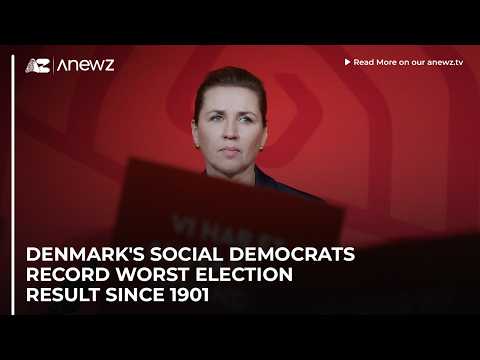
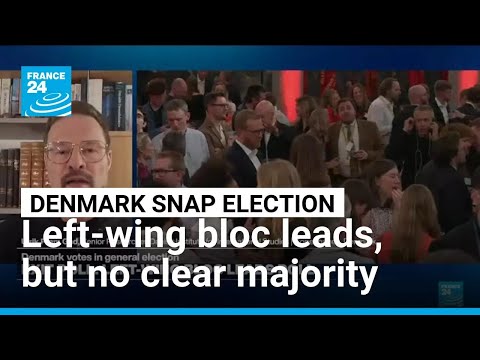
Denmark's Social Democrats have been the country's dominant political force for a century, holding more parliamentary seats than any other party for 77 consecutive years starting in the 1920s. On Tuesday, the party posted its worst result since 1903 — winning just 38 of 179 seats in the Folketing, down from 50 — after Prime Minister Mette Frederiksen called a snap election hoping to ride a wave of popularity from her standoff with President Trump over Greenland. Voters had other priorities.

Why it matters

A NATO ally's government is in limbo during a period of intense geopolitical pressure over Greenland and Arctic security.

Key Indicators

38
Social Democrat seats (down from 50)
The party's worst result since 1903, when it won 20.4% of the vote.
84 vs 78
Left bloc vs right bloc seats
Neither side reached the 90-seat majority threshold, leaving 14 centrist Moderates seats as the deciding factor.
12
Parties winning seats
First time since the electoral threshold was introduced in 1953 that every party on the ballot won representation.
16
Danish People's Party seats (up from 5)
The anti-immigration party nearly tripled its representation, the election's biggest single-party gain.

Interactive

Exploring all sides of a story is often best achieved with Play.

Ever wondered what historical figures would say about today's headlines?

Sign up to generate historical perspectives on this story.

Sign Up

Debate Arena

Two rounds, two personas, one winner. You set the crossfire.

People Involved

Organizations Involved

Timeline

  1. Frederiksen submits government resignation

    Political

    Frederiksen formally resigns to King Frederik X, as required by convention when a government loses its parliamentary majority. She remains caretaker prime minister during coalition talks.

  2. Election delivers inconclusive result; Social Democrats at historic low

    Election

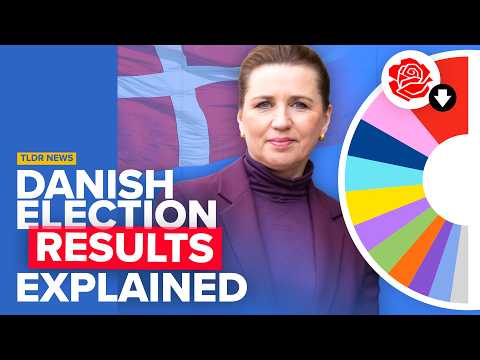
    The Social Democrats win 38 seats (21.9%), their worst showing since 1903. The left bloc takes 84 seats and the right bloc 78 — neither reaching the 90-seat majority. All 12 parties on the ballot win seats, a first since 1953.

  3. Venstre leader rules out governing with Social Democrats

    Political

    Liberal Party leader Troels Lund Poulsen declares he will not enter another government led by Frederiksen, complicating a repeat of the outgoing cross-bloc coalition.

  4. Frederiksen calls snap election

    Political

    The prime minister dissolves parliament months ahead of schedule, seeking to capitalize on her improved standing from the Greenland standoff and secure a third term.

  5. Social Democrats hit polling low of 17%

    Polling

    Before the Greenland crisis boosted Frederiksen's standing, the Social Democrats had sunk to roughly 17% support after suffering large losses in local elections.

  6. Trump renews push to acquire Greenland

    Geopolitical

    President Trump, back in office, escalates his interest in the strategically located, mineral-rich Danish territory, at times refusing to rule out military force or economic coercion.

  7. Frederiksen refuses to cede Greenland, rallies European allies

    Diplomacy

    Frederiksen firmly opposes Trump's Greenland demands and mobilizes European support for Denmark's sovereignty, boosting her international profile and domestic polling.

  8. Frederiksen wins 2022 election, forms unprecedented coalition

    Election

    Social Democrats win 50 seats. Frederiksen forms a broad left-right coalition with the Moderates and the Liberals — the first time these parties have governed together.

Scenarios

1

Frederiksen returns with new cross-bloc coalition

Discussed by: Danish political analysts, Washington Post, Euronews

Frederiksen convinces Rasmussen to continue their partnership and recruits one or more additional parties to reach 90 seats. The Social Democrats remain Denmark's largest party, and Rasmussen has publicly favored the cross-bloc model. However, with Venstre refusing to participate, the coalition would need a different configuration than the outgoing government — possibly including the Socialist People's Party or the Conservatives. This would give Frederiksen a third term but from a significantly weakened position.

2

Rasmussen sides with the right to form center-right government

Discussed by: Irish Times, NordiskPost, Troels Lund Poulsen's public statements

Poulsen's appeal to Rasmussen for a 'blue-centre government' gains traction. The right bloc's 78 seats plus the Moderates' 14 would yield 92 — just enough for a majority. This would end 7 years of Social Democrat-led government and could mean either Rasmussen or Poulsen as prime minister, depending on negotiations. The challenge: the right bloc includes the Danish People's Party, whose hardline immigration positions could clash with the Moderates' centrist platform.

3

Protracted negotiations produce fragile minority government

Discussed by: Atlantic Council, The Local Denmark, political commentators

If neither bloc can agree on a stable majority coalition with the Moderates, Denmark could end up with a minority government that depends on shifting parliamentary support for each vote. Danish politics has a long tradition of minority governments — most governments since 1920 have lacked a formal majority. This outcome would leave Denmark's next government vulnerable to collapse and could produce another election within a year or two.

Historical Context

Theresa May's snap election backfire (2017)

April-June 2017

What Happened

British Prime Minister Theresa May called a snap election in April 2017, holding a 20-point polling lead and seeking a stronger mandate for Brexit negotiations. Her Conservative Party lost its parliamentary majority, dropping from 330 to 318 seats, forcing May into a confidence-and-supply arrangement with Northern Ireland's Democratic Unionist Party.

Outcome

Short Term

May clung to power with a fragile minority government, her authority badly damaged. Brexit negotiations proceeded from a position of weakness.

Long Term

May resigned two years later after failing to pass a Brexit deal. The episode became a cautionary tale about the risks of calling elections to capitalize on temporary polling leads.

Why It's Relevant Today

Frederiksen's gamble mirrors May's almost exactly: a leader riding a temporary popularity surge calls an early vote, only to find that voters care more about domestic bread-and-butter issues than the foreign policy drama that boosted the leader's profile.

Jacques Chirac dissolves French parliament (1997)

April-June 1997

What Happened

French President Jacques Chirac dissolved the National Assembly a year early, expecting his center-right coalition to strengthen its majority. Instead, the Socialist Party under Lionel Jospin won a decisive victory, forcing Chirac into an awkward power-sharing arrangement known as 'cohabitation' — a president and prime minister from opposing parties.

Outcome

Short Term

Jospin became prime minister and governed for five years alongside the center-right president, with each controlling different levers of power.

Long Term

The episode reinforced a rule of European politics: snap elections called from a position of perceived strength often backfire when voters use the unexpected ballot to punish incumbents on unrelated grievances.

Why It's Relevant Today

Like Chirac, Frederiksen misread her political moment. The Greenland standoff gave her a foreign policy boost, but voters used the ballot to express frustration over immigration, cost of living, and welfare — issues where her government was vulnerable.

Denmark's 2011 coalition shift after close election

September 2011

What Happened

After a decade of center-right rule, Denmark's 2011 election produced a narrow left-bloc majority of 89 seats (out of 179). Social Democrat leader Helle Thorning-Schmidt became prime minister by assembling a four-party coalition with the Social Liberals, Socialist People's Party, and Red-Green Alliance — a fragile government that relied on every seat.

Outcome

Short Term

Thorning-Schmidt governed for four years but faced constant internal tensions among coalition partners with divergent priorities.

Long Term

The coalition collapsed ahead of schedule, and Thorning-Schmidt lost the 2015 election to Lars Løkke Rasmussen — the same figure who now holds kingmaker status in 2026.

Why It's Relevant Today

Denmark's last razor-thin coalition outcome shows what Frederiksen faces: even if she assembles a majority, governing without margin for error is inherently unstable. And Rasmussen, who benefited from the last coalition's collapse, is once again at the center of the equation.

Sources

(10)