

Pull to refresh
Logo
US confirms for first time it has weapons deployed in orbit

US confirms for first time it has weapons deployed in orbit

Force in Play

Air Force Secretary Troy Meink acknowledged on-orbit 'space-control weapons' at the Air, Space and Cyber Conference

Today: US confirms space weapons in orbit

Overview

Updated 19 minutes ago

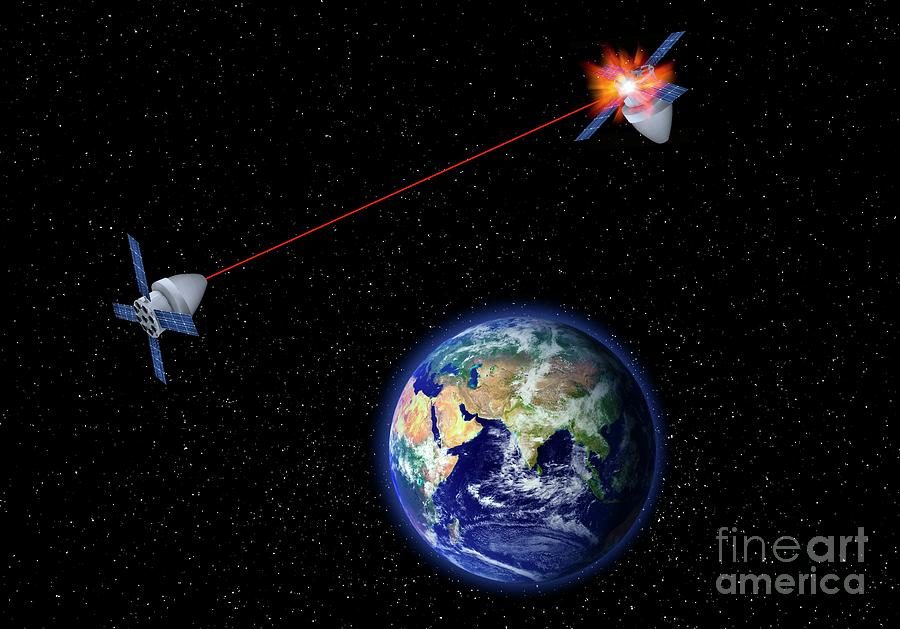
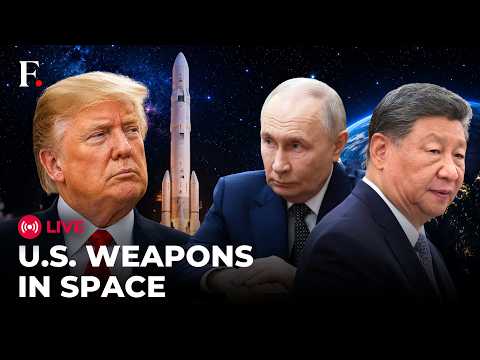
The United States has weapons deployed in orbit. Air Force Secretary Troy Meink confirmed it Monday at the Air, Space and Cyber Conference, saying the 'space-control weapons' are needed to defend against hostile adversaries.

It's the first time the US has publicly acknowledged offensive space capabilities. The announcement comes as China and Russia develop ways to attack satellites, and as the Trump administration pushes its Golden Dome missile defense system with space-based interceptors.

Why it matters

The US has acknowledged weapons in orbit for the first time, potentially accelerating a space arms race with China and Russia.

Questions about this story

Free account needed to ask — your question is kept and asked for you right after sign-up. Answers are public.

No questions yet — be the first to ask.

Key Indicators

First
First public acknowledgment of US on-orbit weapons
No US government official had previously confirmed offensive space capabilities.
59
Years since Outer Space Treaty
The 1967 treaty banned weapons of mass destruction in orbit but left conventional weapons unregulated.
7
Years since US Space Force established
The Space Force was created in 2019 as the newest military branch.

Voices

Curated perspectives — historical figures and your fellow readers.

Ever wondered what historical figures would say about today's headlines?

Sign up to generate historical perspectives on this story.

People Involved

Organizations Involved

Timeline

January 1967 September 2026

5 events Latest: Today
Tap a bar to jump to that date
  1. US confirms space weapons in orbit

    Today Statement

    Air Force Secretary Troy Meink acknowledged on-orbit 'space-control weapons' for the first time. He also said Golden Dome space-based interceptors are now flight-ready.

  2. Trump executive order on Space Force

    Policy

    Trump issued an executive order underlining the Space Force's role as an attacking force, not just a defensive one.

  3. Russia conducts ASAT test

    Military Action

    Russia destroyed a defunct satellite, creating debris that threatened the International Space Station.

  4. US Space Force established

    Institutional

    The newest military branch was created to protect American assets in space.

  5. Outer Space Treaty signed

    Treaty

    The treaty banned weapons of mass destruction in orbit but left conventional weapons unregulated.

Scenarios

1

China and Russia confirm their own space weapons

Possible Resolves by Q2 2027

Discussed by: Defense One, space security analysts

Following the US acknowledgment, China and Russia may feel compelled to publicly confirm their own counterspace capabilities. Victoria Samson of the Secure World Foundation noted the US must now accept China and Russia doing the same. This could accelerate an arms race in orbit as each nation seeks to match the others' capabilities.

2

US discloses details of space weapons capabilities

Possible Resolves by End of 2026

Discussed by: Secure World Foundation, The War Zone

The US may provide more specifics about its space-control weapons, potentially revealing whether they are kinetic interceptors or electronic warfare systems. Samson speculated the weapons are likely non-kinetic systems like space-based jammers, given US officials' stated concerns about debris. The Space Force has said it will not discuss specific operational methods or payloads.

3

New space arms control negotiations begin

Unlikely Resolves by End of 2027

Discussed by: Arms control advocates, diplomatic observers

The acknowledgment could prompt renewed diplomatic efforts to negotiate limits on space weapons. The 1967 Outer Space Treaty left conventional weapons unregulated, and this announcement may spur calls for a new framework. However, the US, Russia, and China have shown little appetite for new arms control agreements in recent years.

Historical Context

3 moments from history that rhyme with this story — and how they unfolded.

January 1967

Outer Space Treaty (1967)

The treaty, signed by the US, Soviet Union, and other nations, banned nuclear weapons and other weapons of mass destruction from orbit. It left conventional weapons unregulated, creating a legal gap that persists today.

Then

Prevented nuclear weapons in space during the Cold War.

Now

Created a framework that allows conventional space weapons like jammers and interceptors.

Why this matters now

The current US weapons deployment operates in the legal space the treaty left open.

March 1983

Strategic Defense Initiative (1983)

President Ronald Reagan proposed a space-based missile defense system, nicknamed 'Star Wars,' to shoot down Soviet missiles. The program was never fully deployed but shaped decades of space defense thinking.

Then

The program was scaled back and eventually canceled in the 1990s.

Now

Set a precedent for space-based missile defense concepts that continues with Golden Dome.

Why this matters now

Golden Dome is a modern version of this concept, with space-based interceptors now described as flight-ready.

November 2021

Russia's ASAT test (2021)

Russia destroyed a defunct satellite with a ground-launched missile, creating thousands of pieces of debris that threatened the International Space Station and its crew of Russian, American, and European astronauts.

Then

The US pledged not to conduct debris-generating antisatellite tests.

Now

Highlighted the dangers of kinetic space weapons and pushed nations toward non-kinetic options.

Why this matters now

Shows why the US may prefer non-kinetic space weapons like electronic jammers over kinetic interceptors.

Sources

(7)