
Pull to refresh
Logo
Daily Brief
Following
Why
American consumer spending divergence

American consumer spending divergence

Money Moves
By Newzino Staff | |

Flat retail sales expose deepening fractures as wealthy households drive growth while middle- and lower-income consumers both pull back, creating nested divergence

5 days ago: Chicago Fed President Signals Openness to Rate Cuts

Overview

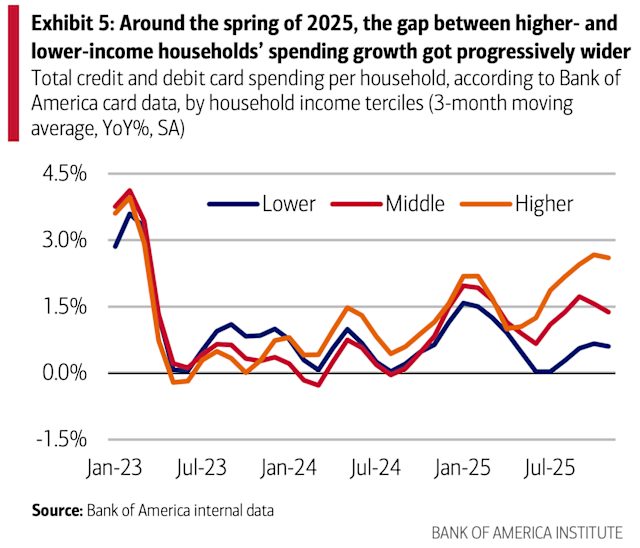
American retail sales went nowhere in December, the weakest holiday shopping finish since 2018. The Commerce Department reported $735 billion in sales—unchanged from November—while economists expected 0.4% growth. Eight of thirteen retail categories declined, with furniture and auto sales hit hardest by tariff-driven price increases. The data, delayed more than a month by a 43-day government shutdown, sent money markets repricing Federal Reserve rate cuts from two to three for 2026. New analysis from Bank of America reveals the structural fracture runs deeper than initially understood: in January, higher-income households' spending grew 2.5% year-over-year, while middle-income households managed just 1% and lower-income households only 0.3%.

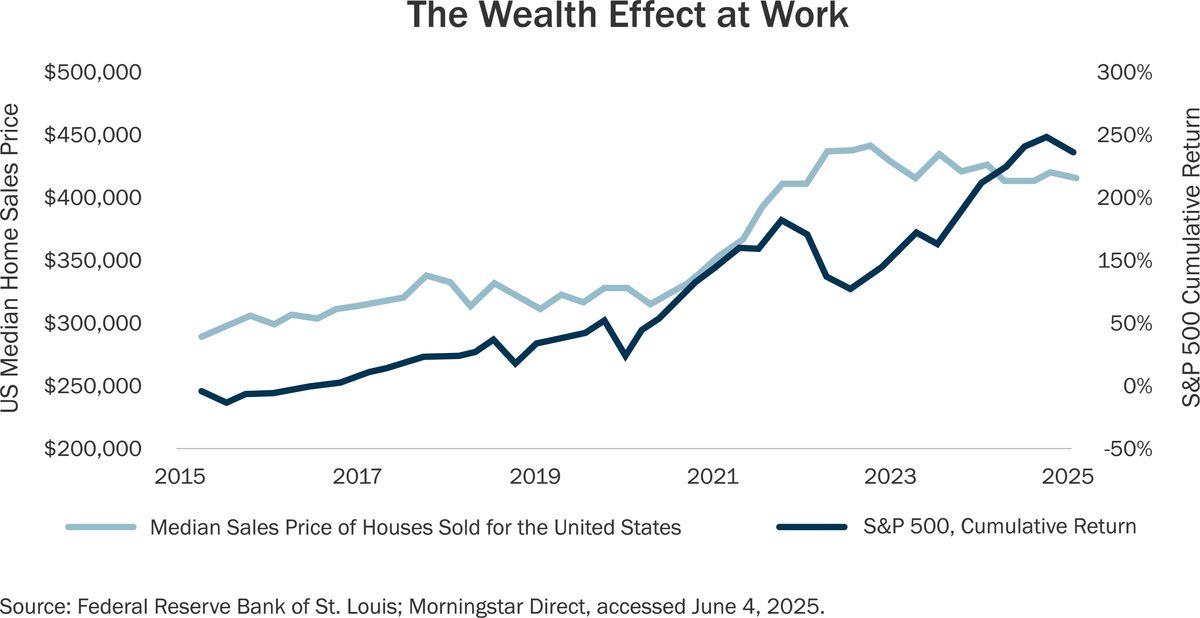
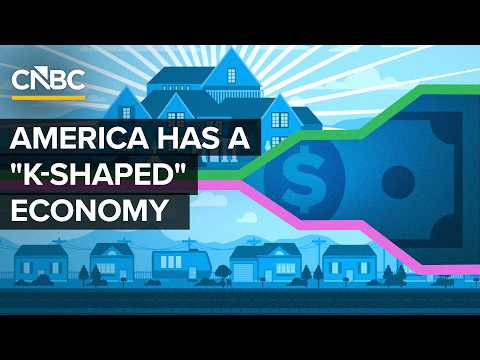
The K-shaped economy is now fracturing into nested divergence. The wealthiest 20% of households account for 59% of all consumer spending—a record—while the bottom 80% have pulled back to historic lows. More troubling, middle-income households ($40,000–$125,000) are now experiencing spending weakness comparable to lower-income groups, creating what economists describe as 'a K within a K' or an emerging 'E-shaped' economy. Wage growth tells the same story: higher-income households saw 3.7% year-over-year wage growth in January, while middle-income families managed just 1.6% and lower-income workers 1.4%. Delta Air Lines reports premium seat revenue up 9% as basic economy falls 7%. Fast-food chains push value meals while airlines race to add luxury cabins. The question is no longer whether the top can carry the bottom, but whether concentrated spending at the very top can sustain overall economic momentum as the middle class joins the lower-income squeeze.

Key Indicators

0.0%
December retail sales growth
Flat month-over-month, missing the 0.4% forecast
2.5% vs 1% vs 0.3%
January spending growth by income tier
Higher-income (2.5%), middle-income (1%), lower-income (0.3%) year-over-year—widest gap since mid-2022
59%
Spending by top 20%
Record share of consumer spending from highest-income households
22%
Households trading down to store brands
Up from 19% a year ago; reflects budget stress across income spectrum
3
Expected Fed rate cuts
Up from two, now priced into 2026 money markets; timing uncertain pending inflation data
$1,500–$2,100
Annual tariff cost per household
Projected 2026 impact; regressive burden hits lower-income households at 4–5% of gross income vs 2–3% for upper-income

Interactive

Exploring all sides of a story is often best achieved with Play.

Ever wondered what historical figures would say about today's headlines?

Sign up to generate historical perspectives on this story.

Sign Up

Debate Arena

Two rounds, two personas, one winner. You set the crossfire.

People Involved

Jerome Powell
Jerome Powell
Chair, Federal Reserve Board of Governors (Navigating pressure to cut rates amid elevated inflation; term as chair ends May 2026; facing unusual situation where weak retail data and nested K-shaped spending patterns push markets to expect deeper cuts despite inflation above 2% target)
Heather Long
Heather Long
Chief Economist, Navy Federal Credit Union (Prominent voice on consumer economy divergence)
Austan D. Goolsbee
Austan D. Goolsbee
President, Federal Reserve Bank of Chicago (Signaling conditional openness to rate cuts if inflation proves transitory)
David Tinsley
David Tinsley
Senior Economist, Bank of America Institute (Leading analysis of nested income divergence in consumer spending)

Organizations Involved

Board of Governors of the Federal Reserve System
Central bank
Status: Balancing inflation concerns against weakening consumer demand

The U.S. central bank sets interest rates and manages monetary policy to promote maximum employment and stable prices.

U.S. Department of Commerce
Federal Agency
Status: Resumed economic data releases after 43-day shutdown

Federal department responsible for economic data collection, including retail sales figures through the Census Bureau.

National Retail Federation
Industry Association
Status: Tracking consumer sentiment-spending disconnect

The world's largest retail trade association, representing merchants from small businesses to major chains.

Bank of America Institute
Research Division
Status: Publishing influential analysis of nested consumer spending divergence

BofA's research arm analyzing credit and debit card spending patterns across income tiers.

Big Chalk Analytics
Big Chalk Analytics
Consumer Analytics Firm
Status: Tracking trading-down behavior and budget stress across income spectrum

Analytics firm working with retailers, restaurants, and packaged goods companies to monitor consumer behavior.

Timeline

  1. Chicago Fed President Signals Openness to Rate Cuts

    Monetary Policy

    Austan Goolsbee says multiple rate cuts remain possible in 2026 if inflation continues declining toward 2% target, but wants 6-8 months of evidence before committing. Markets price 7.8% probability of March cut, 23.6% for April.

  2. Bank of America: 'K Within a K' Emerging in Consumer Spending

    Economic Research

    BofA economists report middle-income households' spending growth (1% YoY in January) now diverging sharply from higher-income (2.5%) and approaching lower-income levels (0.3%). Wage growth shows similar pattern: higher-income 3.7%, middle-income 1.6%, lower-income 1.4%. Spending gap between high and all others at largest since mid-2022.

  3. Trading-Down Accelerates: 22% of Households Switching to Store Brands

    Consumer Behavior

    Big Chalk Analytics reports 22% of households now actively trading down from premium to store brands, up from 19% a year ago. Retailers responding by promoting private-label assortments and rightsizing inventory to avoid markdowns.

  4. December Retail Sales Disappoint

    Economic Data

    Commerce Department reports retail sales unchanged in December at $735 billion, missing 0.4% forecast; eight of thirteen categories decline. Money markets reprice to three Fed cuts.

  5. K-Shaped Economy Data Published

    Economic Research

    New data shows top 20% of earners account for 59% of spending while bottom 50% hold just 2.5% of net wealth—both records.

  6. Fed Pauses Rate Cuts

    Monetary Policy

    Federal Reserve holds rates at 3.5%-3.75% as inflation remains elevated at 2.9%; cites 'solid' economic activity despite tariff pressures.

  7. Consumer Confidence Falls Fifth Straight Month

    Economic Data

    Conference Board Consumer Confidence Index drops to 89.1; Expectations Index remains below 80, historically a recession signal.

  8. November Retail Sales Rebound

    Economic Data

    Retail sales rise 0.6% to $735.9 billion, the largest monthly gain since July, driven by auto sales and holiday shopping.

  9. 43-Day Shutdown Ends

    Political

    Congress passes funding legislation ending the longest government shutdown in U.S. history; October 2025 remains a permanent data blind spot.

  10. Major Furniture Tariffs Take Effect

    Trade Policy

    A 25% tariff on upholstered furniture is implemented, scheduled to rise to 30% in January 2027; furniture prices already running 3.1% above pre-2025 trend.

  11. Government Shutdown Begins

    Political

    Fiscal year 2026 starts without funding agreement; shutdown halts economic data collection at Commerce Department and Bureau of Labor Statistics.

  12. Consumer Spending Slows Sharply

    Economic Data

    Real consumer spending growth flattens after post-tariff buying exhausts demand; inflation-adjusted consumption remains largely unchanged from December 2024.

  13. April Surge Continues Pre-Tariff Rush

    Consumer Behavior

    Electronics and appliance sales spike 10.5% year-over-year as consumers continue pulling purchases forward before higher prices take effect.

  14. Tariff-Driven Buying Surge Begins

    Consumer Behavior

    March retail sales jump 1.4% as consumers stock up on cars, electronics, and appliances ahead of anticipated tariff increases.

  15. Fed Begins Rate-Cutting Cycle

    Monetary Policy

    Federal Reserve cuts rates by 50 basis points, signaling confidence that inflation was retreating toward the 2% target.

Scenarios

1

Fed Cuts Revive Spending, Soft Landing Achieved

Discussed by: Goldman Sachs, Federal Reserve regional bank economists

Three rate cuts beginning in June bring borrowing costs low enough to revive auto and home sales without reigniting inflation. The labor market stabilizes around 4.5% unemployment. Lower-income consumers gradually increase spending as wage growth outpaces price increases. By late 2026, the K-shaped divergence begins to narrow.

2

Stagflation Lite: Growth Stalls, Inflation Persists

Discussed by: Tufts University economists, Wellington Management

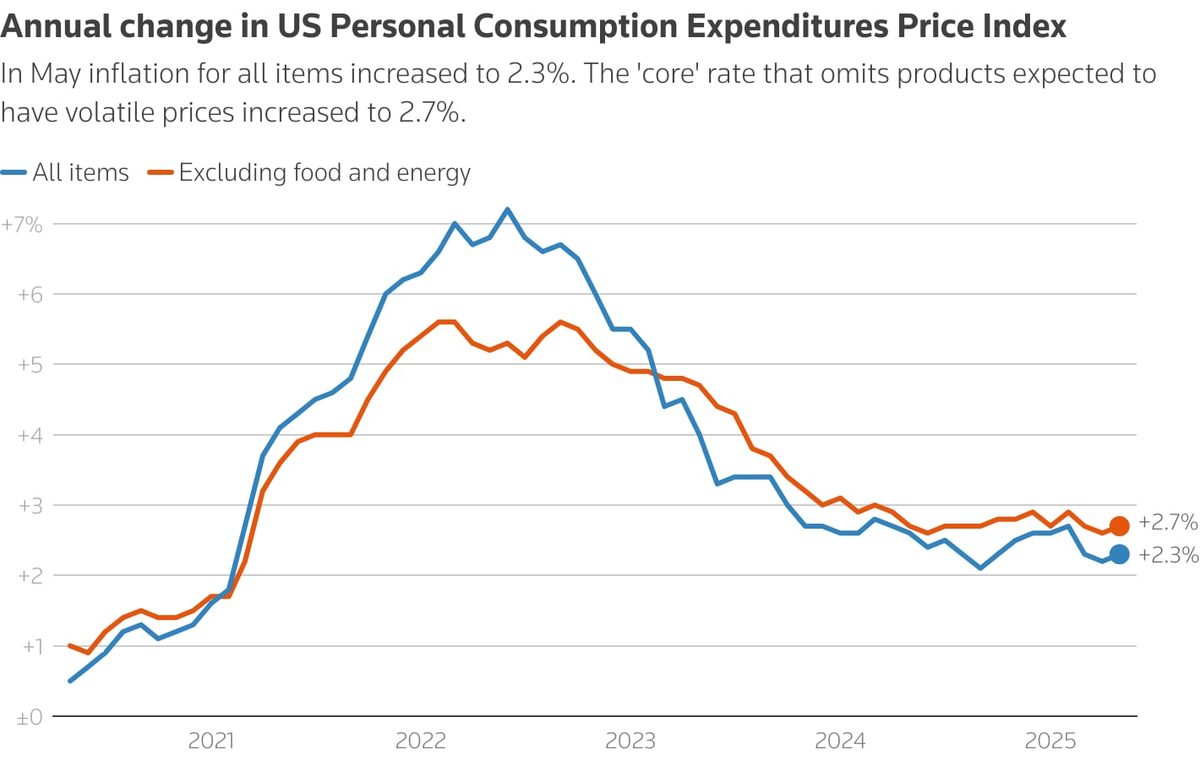
Tariff-driven inflation keeps the Personal Consumption Expenditures index above 2.5% through 2026, preventing the Fed from cutting aggressively. Consumer spending growth slows to under 1.5% as middle-income households exhaust savings. GDP growth dips below potential without technically entering recession—a prolonged period of anemic expansion with elevated prices.

3

Recession Arrives as Wealthy Consumers Pull Back

Discussed by: Moody's Analytics, Dallas Federal Reserve research

The top 20% who have been propping up the economy reduce spending as stock market volatility erodes wealth effect. With 59% of spending concentrated in this group, even modest pullback triggers broader contraction. Conference Board Expectations Index, already below 80, proves prescient. Fed cuts cannot offset the demand shock quickly enough.

4

Two-Track Economy Becomes Permanent Feature

Discussed by: Morgan Stanley Research, National Retail Federation

Rather than converging, the K-shaped split deepens into a stable but unequal equilibrium. Luxury retail and premium services continue growing while discount and value sectors dominate mass-market spending. Aggregate GDP looks healthy, but the bottom 80% experience persistent constraint. Policy debates shift from recession prevention to redistribution.

5

Middle-Class Spending Collapse Triggers Recession

Discussed by: Bank of America Institute, Big Chalk Analytics

If middle-income households' spending growth continues to soften below 1%, the economy loses its second pillar of support. With top 20% already showing signs of wealth-effect sensitivity and middle class now squeezed by tariffs and wage stagnation, aggregate consumer spending could contract sharply. Fed rate cuts may arrive too late to prevent demand destruction.

6

Tariff Pass-Through Accelerates, Deepening Regressive Burden

Discussed by: JPMorgan, Street Stocker analysis

By late 2026, tariff absorption shifts from 80% corporate/20% consumer to 20% corporate/80% consumer. Household costs rise to $1,500–$2,100 annually, hitting lower-income households at 4–5% of gross income. This structural price-level increase compounds annually, forcing sustained demand destruction in tariff-sensitive categories (apparel, electronics, home goods) and creating negative multiplier effects in services sectors.

Historical Context

Great Recession Retail Collapse (2008)

September 2008 - June 2009

What Happened

Retail sales fell for three consecutive months for the first time on record, dropping to 35-year lows. September 2008 saw a 1.2% decline—nearly double what economists expected. Furniture and electronics were hit hardest, down 2.3% and 1.5% respectively, as credit markets froze and unemployment spiked to 10%.

Outcome

Short Term

Retailers slashed prices by up to 80% to clear inventory. Major chains including Circuit City and Linens 'n Things liquidated entirely.

Long Term

Consumer deal-hunting became permanently ingrained, reshaping retail strategy around discounts and value positioning. Recovery to pre-crisis spending levels took three years.

Why It's Relevant Today

Today's flat December reading is not yet comparable—that was demand destruction from credit crisis, this is demand redistribution from income divergence. But the 2008 experience shows how quickly retail weakness can become self-reinforcing if confidence collapses.

1970s Stagflation Era (1973-1982)

October 1973 - November 1982

What Happened

Oil embargoes quadrupled energy prices, pushing inflation to 13.5% while unemployment exceeded 9%. The Federal Reserve under Paul Volcker ultimately raised rates to 20% to break inflation, triggering back-to-back recessions. Consumers faced simultaneous price spikes and job losses—the defining 'stagflation' era.

Outcome

Short Term

Real wages fell as price increases outpaced pay. Consumers shifted heavily toward discount retailers and private-label goods.

Long Term

Central banks adopted inflation-targeting frameworks that remain dominant today. The experience made the Fed extremely wary of letting inflation expectations become entrenched.

Why It's Relevant Today

Current conditions show echoes but not equivalence. Tariffs have raised prices on goods by 3-4% but not the quadrupling of 1970s oil shocks. The Fed's 2% target framework—born from this era—is now being tested by tariff-driven goods inflation sitting at 2.9%.

Pre-Tariff Buying Panic (March-April 2025)

March - April 2025

What Happened

When tariff implementation dates were announced, American consumers surged into stores. Retail sales jumped 1.4% in March, driven primarily by car purchases before auto tariffs took effect. Electronics and appliance sales spiked 10.5% year-over-year in April as households stocked up on goods they expected to cost more.

Outcome

Short Term

Retailers reported the strongest spring sales in years. Auto dealers cleared inventory at pre-tariff prices.

Long Term

The buying surge pulled demand forward, leaving subsequent months with artificially suppressed sales as consumers had already made major purchases.

Why It's Relevant Today

December's flat reading may partly reflect this demand exhaustion—households that bought refrigerators and cars in spring 2025 don't need new ones six months later. The question is whether this is temporary payback or structural shift.

16 Sources: